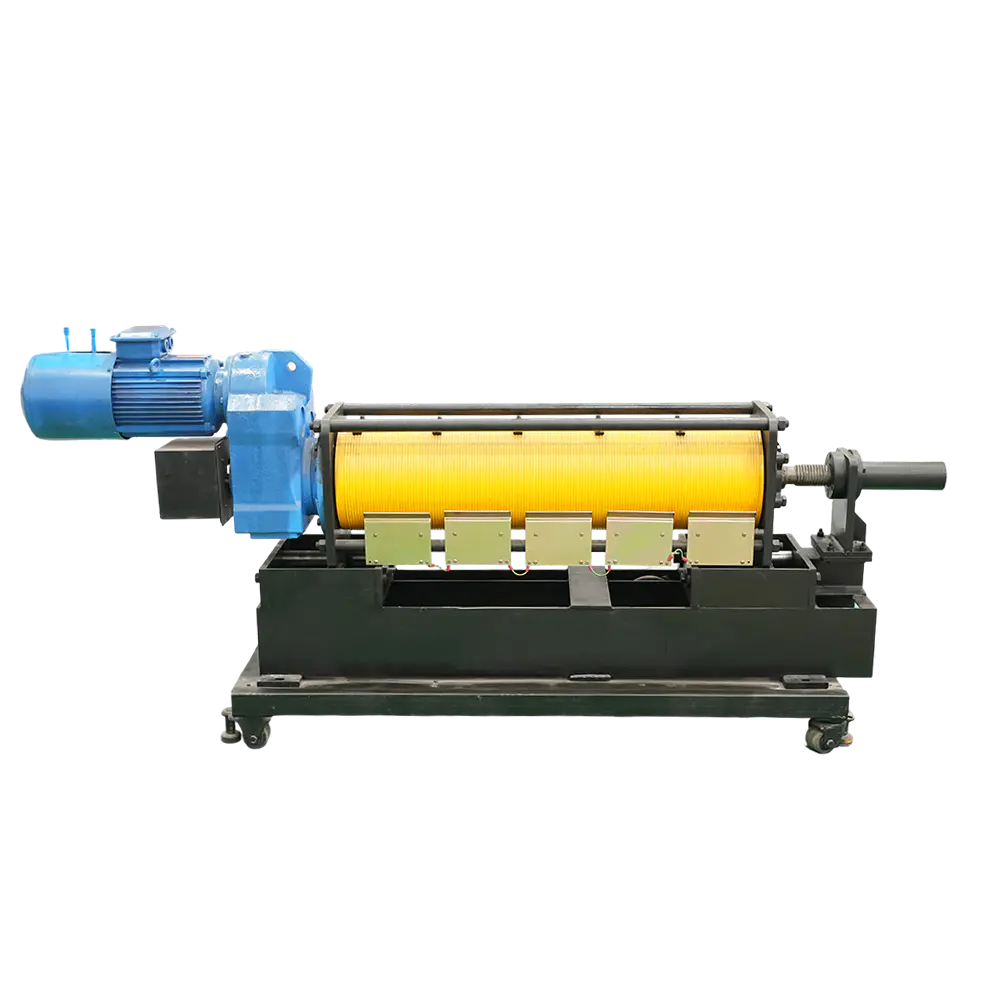
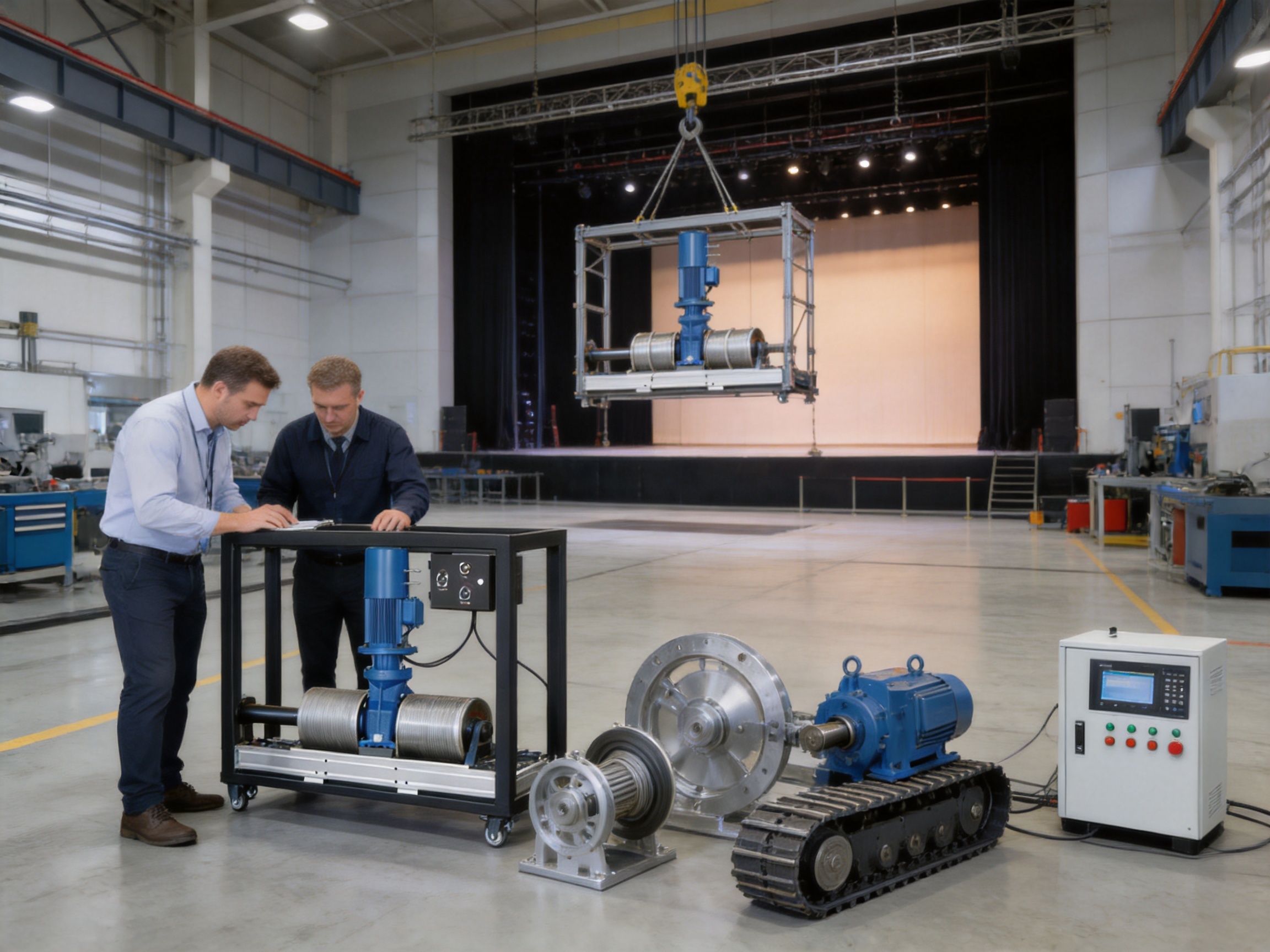
Modern stage productions demand lifting equipment that combines safety, precision, portability, and rapid deployment. Touring productions, temporary venues, cultural centers, conference facilities, and permanent theaters all require dependable machinery capable of handling suspended scenery, lighting systems, audio equipment, projection structures, and other technical loads. At the same time, stage operators increasingly expect equipment to occupy less space, install faster, require less adjustment, and provide stable performance through repeated operating cycles.
The Dual-Point Zero-Fleet Stage Winch is designed to address these requirements through a combination of dual-point lifting, adaptive zero-fleet rope management, intelligent sensing, compact construction, and redundant braking. With a rated payload capacity of up to 500 kg, the system provides a practical solution for professional stage applications in which stable positioning and efficient deployment are essential.
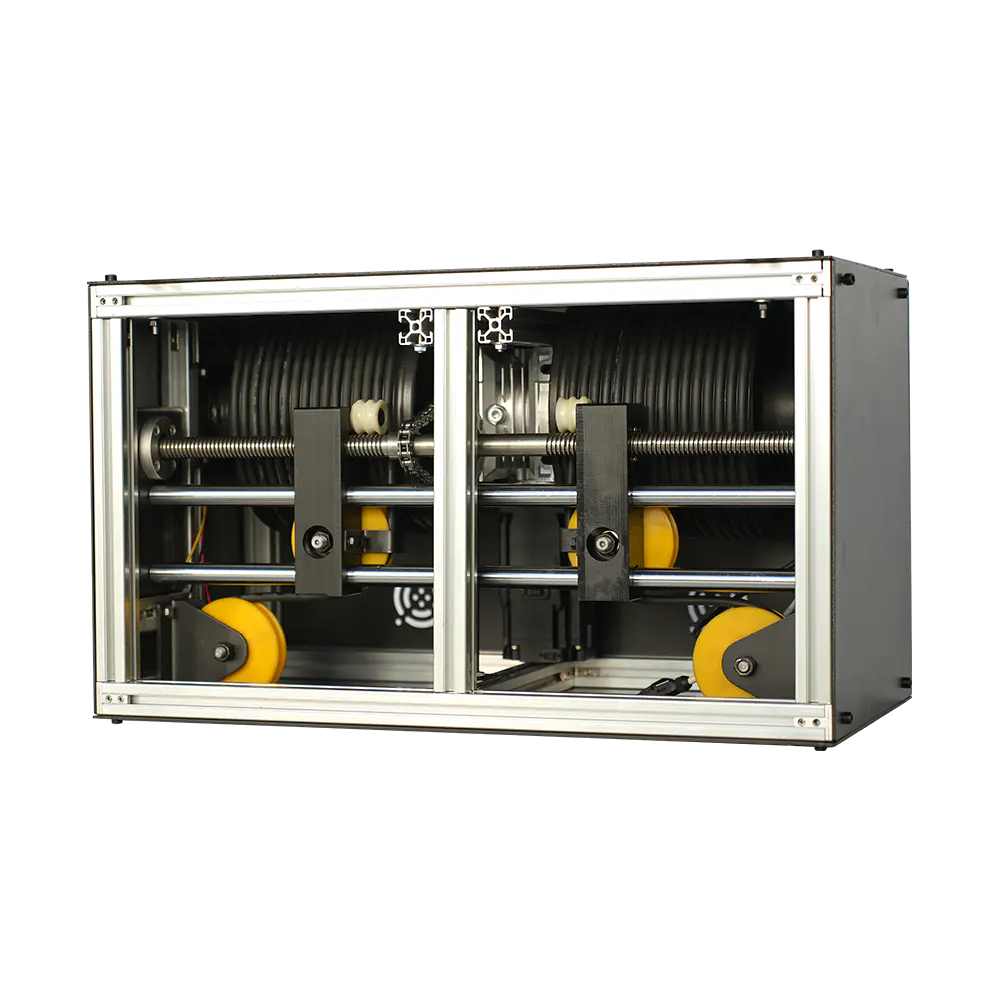
Unlike a conventional single-point winch, the dual-point configuration distributes lifting forces through two coordinated positions. This arrangement improves balance and helps limit tilting, swinging, and uneven movement when a suspended load has a broad structure or an uneven center of gravity. The integrated zero-fleet technology keeps the wire rope aligned with the drum, supporting smoother operation and reducing the possibility of rope overlap, tangling, or irregular winding.
The product is particularly suitable for touring shows and temporary staging. Its lightweight base assembly simplifies transport and installation while retaining the high safety factor and dual-braking redundancy expected in professional stage machinery. A single-layer tracked drum further supports reliable rope handling during repeated strikes, dismantling, relocation, and setup operations.
Suspended stage loads are often wide, long, or structurally complex. A scenery panel may extend across a large part of the stage, a lighting truss may carry multiple instruments, and an audio or projection structure may need to remain level while being raised or lowered. When such a load is supported from only one point, the load can rotate, tilt, or swing unless additional stabilization measures are used.
A dual-point lifting system supports the load from two coordinated positions. This basic mechanical arrangement improves the distribution of forces and helps maintain a more level orientation throughout the travel path. It also makes it easier for operators to achieve consistent positioning during scene changes, rehearsal, maintenance, and performance operations.
The benefits are especially clear when the load has a large horizontal dimension. Two lifting points reduce the tendency of the structure to pivot around a single suspension point. When the winches operate in synchronization, the system can maintain a more stable relationship between the two sides of the suspended object. This supports smoother movement and reduces the need for manual correction.
Dual-point lifting also supports more accurate stage automation. Modern productions may require a suspended element to move to a predetermined height repeatedly, sometimes several times during one performance. Accurate encoders, travel sensors, limit switches, and coordinated control logic allow the system to monitor the movement and support repeatable positioning.
Although a dual-point arrangement improves stability, the design of the rope path and drum is equally important. If the rope is not arranged correctly, it may overlap, move laterally, or accumulate unevenly on the drum. The Dual-Point Zero-Fleet Stage Winch addresses this issue through adaptive zero-fleet technology, which helps maintain the alignment between the rope and the drum as the winch operates.
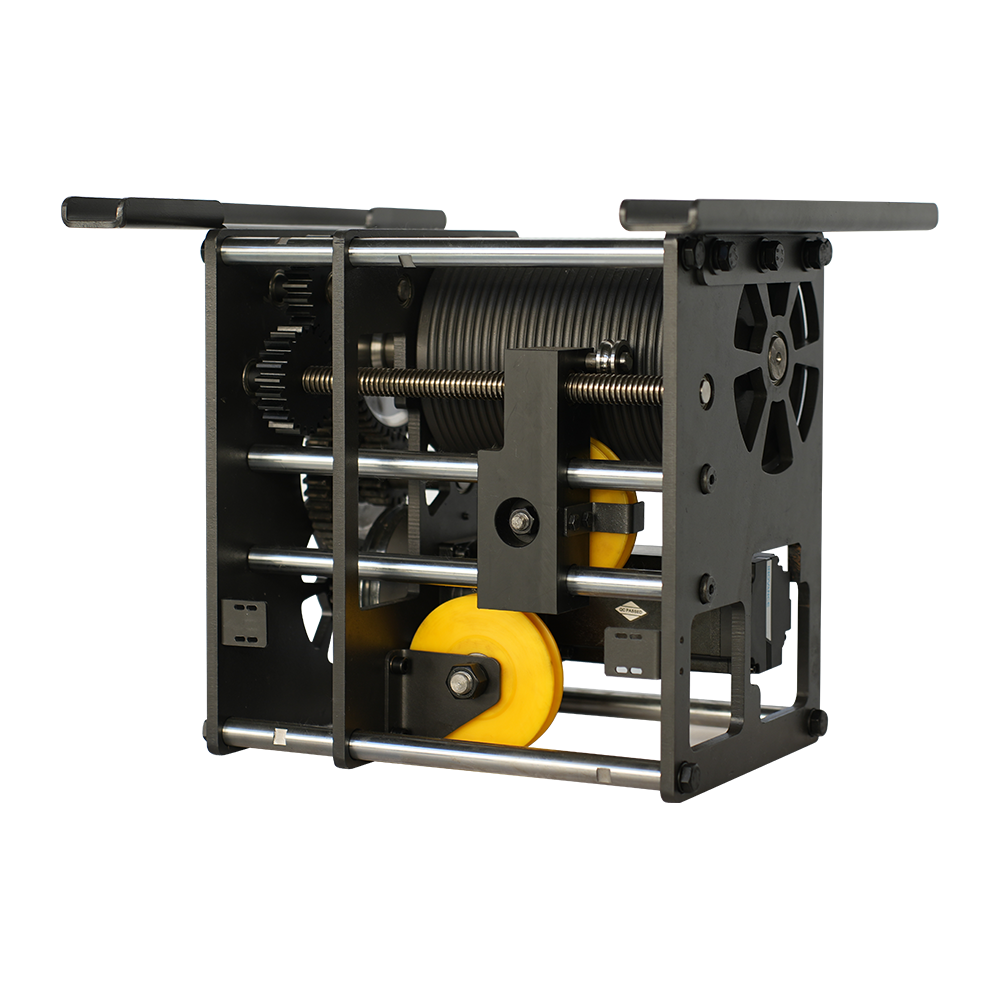
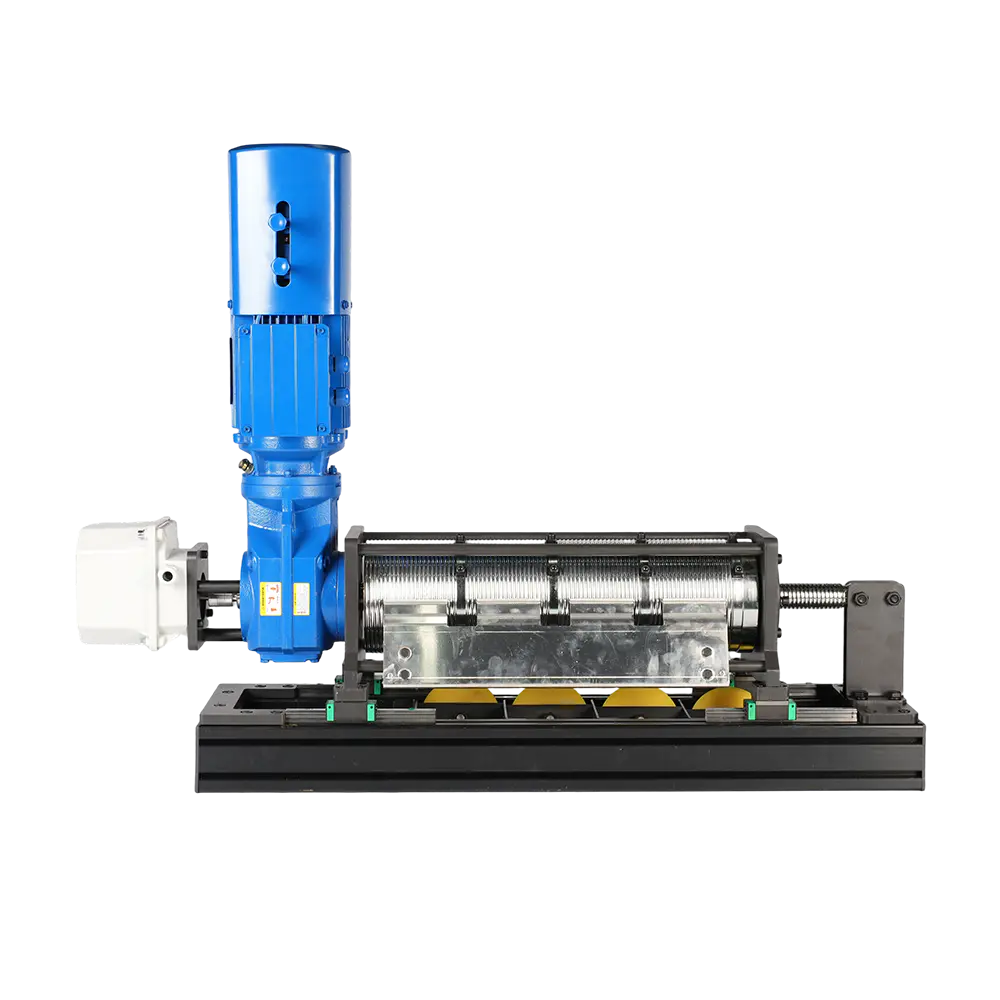
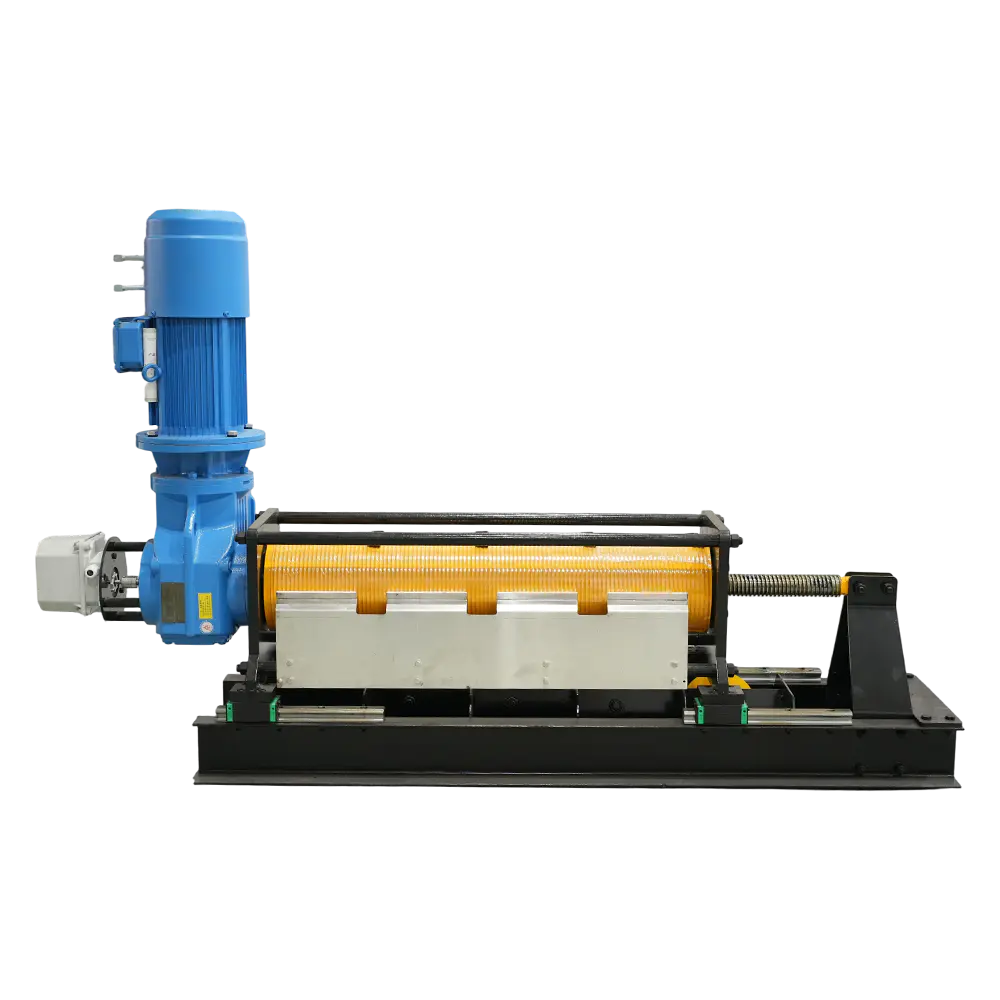
The Dual-Point Zero-Fleet Stage Winch combines mechanical lifting components with electronic monitoring and control. Its primary components include electric motors, reducers, encoders, limit switches, travel sensors, rope arrangement sensors, a base assembly, and pulleys. Each component contributes to safe and coordinated operation.
The electric motor supplies the driving force required to lift and lower the suspended load. The reducer converts motor speed into the torque and operating speed required for stage lifting. This relationship is important because stage equipment must move with controlled acceleration and deceleration rather than with the abrupt motion associated with general-purpose material-handling equipment.
The encoder provides position feedback. By monitoring shaft movement or drum rotation, it allows the control system to determine the operating position of the winch. This information supports synchronized lifting, repeatable positioning, and operational verification. In a dual-point system, accurate feedback is particularly important because the two lifting positions must remain coordinated.
Limit switches provide a further layer of travel protection. They help define the permissible operating range and can signal the control system when the winch approaches a specified upper or lower limit. Travel sensors offer additional movement information and can support monitoring of the lifting sequence, position status, and system response.
Rope arrangement sensors are associated with the zero-fleet function. They help monitor whether the rope is being guided correctly and whether the rope position remains consistent with the intended winding path. When combined with mechanical guidance and appropriate control logic, these sensors help reduce irregular winding and improve long-term operational stability.
The base assembly supports the main mechanical structure and is designed with portability in mind. A lighter base can reduce transportation demands and shorten installation time, which is especially valuable for productions that move between venues. The objective is not simply to reduce weight, but to achieve a practical balance between mobility, structural reliability, serviceability, and load capacity.
Pulleys guide the rope and help establish a controlled lifting path. Their arrangement must be considered together with the winch position, load geometry, suspension points, and venue structure. A properly planned pulley system can reduce unnecessary lateral forces and help maintain a predictable rope path throughout the lifting cycle.
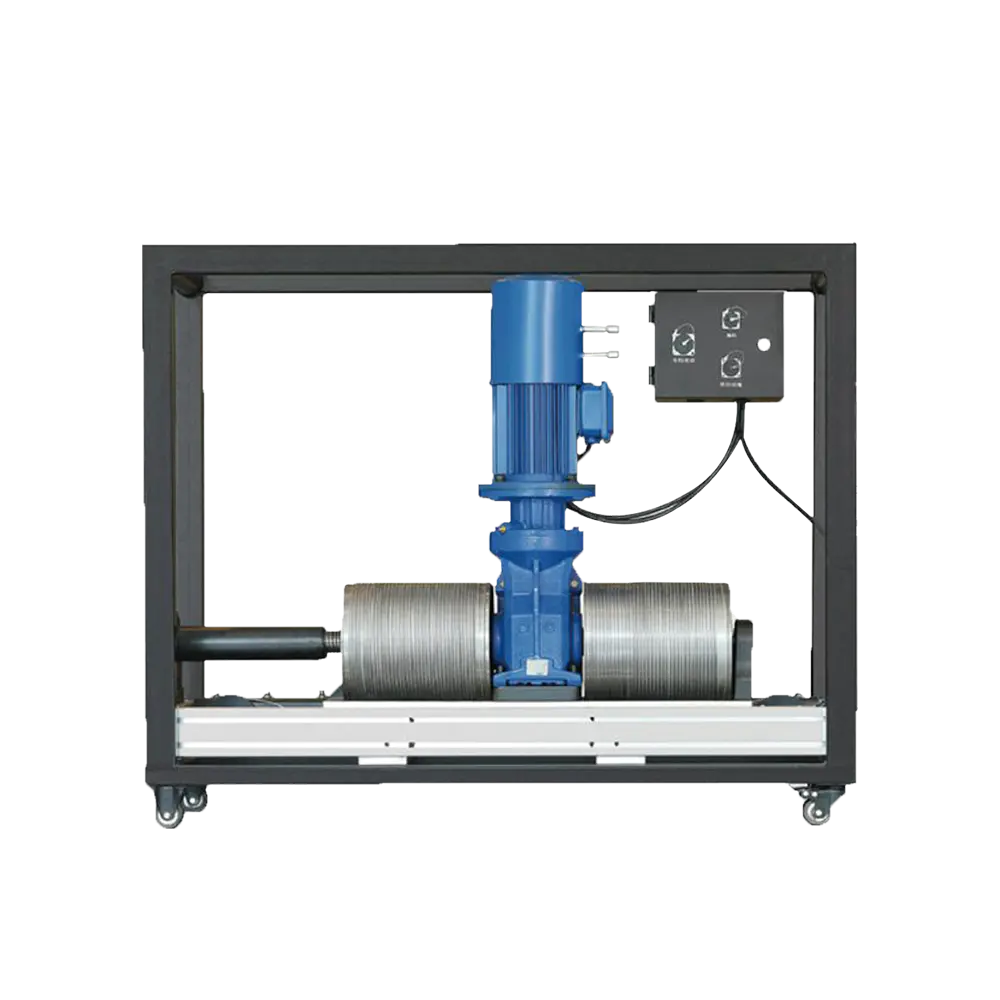
Dual-Point Zero-Fleet Stage Winch
Zero-fleet technology refers to a rope-management approach in which the rope remains aligned with the drum rather than moving laterally across a wide winding angle. In a traditional arrangement, changes in the rope angle can cause the rope to climb, overlap, or wind unevenly. Such conditions may increase wear, create operational noise, and make future winding less predictable.
The adaptive zero-fleet design is intended to maintain an optimized relationship between the rope and the drum. It can accommodate changing operating conditions while supporting controlled rope placement. This is particularly useful in stage environments, where the winch may be installed in different configurations or used with different suspension geometries.
For touring productions, consistent rope arrangement has practical importance. Equipment is frequently transported, installed, operated, dismantled, and installed again. Each change introduces opportunities for incorrect alignment or inconsistent setup. A system that assists rope management can reduce the sensitivity of the installation to minor variations and help operators achieve more reliable results.
Adaptive rope management also contributes to maintenance efficiency. Uneven winding can accelerate wear on the rope, drum surface, guides, and related components. By reducing the likelihood of uncontrolled rope overlap, the zero-fleet arrangement supports a cleaner mechanical interface and can help operators identify abnormal conditions earlier.
Zero-fleet technology does not eliminate the need for correct installation, inspection, and operator training. The suspension geometry, rope specifications, anchor points, load distribution, and operating limits must still be verified by qualified personnel. However, the technology provides an additional engineering advantage by helping the equipment maintain better rope alignment during normal use.
Load stability is one of the most important performance characteristics of a stage winch. A suspended object must not only be lifted; it must be lifted in a controlled manner that protects performers, technicians, equipment, scenery, and the venue itself. Unexpected movement can interfere with a performance and may create serious safety risks.
The dual-point configuration helps maintain horizontal alignment by applying lifting force at two positions. When both points travel at the same rate, the suspended element can rise or descend with less tendency to rotate. When the system is designed for synchronized operation, the control system can compare movement data and support coordinated performance.
This arrangement is useful for lighting trusses, scenery frames, projection screens, banners, acoustic elements, and other suspended structures. It is also suitable for installations where a load requires precise placement relative to the stage floor, audience area, scenic architecture, or other technical equipment.
Two-point support can reduce vibration and unwanted lateral movement, although the final result depends on the load design, rope length, venue conditions, acceleration profile, and surrounding airflow. In practical applications, the winch should be integrated into a complete lifting system that considers the structure, rigging points, controls, emergency procedures, and operating environment.
The combination of two-point lifting and zero-fleet rope control offers advantages over a basic single-point winch. The dual-point arrangement improves load balance, while the zero-fleet function supports consistent rope handling. Together, these features can improve positioning accuracy and reduce the amount of manual intervention required during repeated movement cycles.
Touring companies operate under different conditions from permanent theater installations. A touring system may be used in venues with different ceiling heights, stage dimensions, rigging arrangements, access routes, and available installation time. Equipment must therefore be capable of being moved efficiently and deployed without lengthy preparation.
The Dual-Point Zero-Fleet Stage Winch is designed for this environment. Its lightweight base assembly reduces the physical demands associated with transportation and handling. The compact design can also support more efficient packing, loading, and storage, provided that the equipment is transported according to appropriate handling procedures.
Rapid deployment is another important benefit. Touring crews often have limited time between load-in and rehearsal. A winch that is easier to position, connect, inspect, and test can help reduce schedule pressure. The system still requires qualified installation and commissioning, but its mobile form factor is intended to make those tasks more practical in temporary venues.
The 500 kg payload capacity makes the system suitable for a broad range of stage applications. The actual allowable load must always be determined according to the complete system design, including suspension points, rope selection, pulley arrangement, load distribution, acceleration, duty cycle, and venue requirements. Nevertheless, the stated capacity provides a useful basis for planning touring scenery and technical equipment.
The single-layer tracked drum is especially valuable during frequent strikes and setups. By guiding the rope onto a defined layer, the drum helps reduce the risk of tangling and irregular winding. This feature supports faster preparation between venues and helps maintain consistent operating behavior over repeated installation cycles.
Touring productions also benefit from equipment that does not sacrifice professional safety features for portability. The system retains dual-braking redundancy and a high safety factor while providing a more mobile format. This balance distinguishes it from lightweight lifting equipment designed primarily for general-purpose handling rather than stage automation.
For traveling troupes, the equipment can support repeated relocation without forcing the production to choose between mobility and controlled lifting. For temporary staging contractors, it offers a flexible option for projects that may operate for a limited period but still require reliable and repeatable movement.
Conventional stage winches remain useful in many permanent installations, but they may be less convenient for touring applications. Fixed systems are often designed around a specific building structure, fixed machinery positions, and established cable routes. Their installation can be highly effective in a permanent venue but difficult to transfer to another location.
A traditional single-point winch may also provide less inherent control over the orientation of a wide suspended load. Additional stabilization or secondary rigging may be necessary to limit rotation and maintain alignment. The dual-point design reduces this dependence by supporting the load from two coordinated positions.
Basic winches may not include adaptive rope arrangement monitoring. If the rope enters the drum at a changing angle, the winding pattern can become uneven. This may increase wear and make the equipment more sensitive to installation accuracy. The zero-fleet design addresses this challenge through mechanical alignment and sensor-assisted monitoring.
Another distinction is the relationship between portability and capacity. Some compact lifting devices are easy to move but may not provide the payload, braking redundancy, feedback, or control compatibility expected in professional stage operations. The Dual-Point Zero-Fleet Stage Winch is designed to maintain a 500 kg payload capacity while using a lightweight base assembly.
Permanent systems may offer high capacity but require significant infrastructure. A touring winch must be more flexible without becoming an improvised solution. The product therefore combines portable construction with components normally associated with advanced stage automation, including encoders, travel sensors, rope arrangement sensors, and coordinated control functions.
| Performance Area | Basic Single-Point Winch | Conventional Fixed Stage System | Dual-Point Zero-Fleet Stage Winch |
| Load support | One primary lifting position | Designed for a fixed venue configuration | Two coordinated lifting positions |
| Load stability | More likely to rotate or tilt with wide loads | Stable when permanently engineered | Improved balance for suspended stage structures |
| Rope management | May depend heavily on manual alignment | Usually optimized for one installation | Adaptive zero-fleet control and tracked winding |
| Mobility | Varies by model | Generally limited after installation | Lightweight base assembly for touring use |
| Feedback and monitoring | May be limited | Often integrated into venue automation | Encoders, travel sensors, limits, and rope sensors |
| Typical application | Simple lifting tasks | Permanent theaters and large venues | Touring productions, temporary stages, and professional venues |
The comparison does not mean that one equipment type is suitable for every project. Each venue must be assessed according to its load requirements, structural conditions, control architecture, duty cycle, and applicable safety standards. The advantage of the dual-point zero-fleet design is its ability to combine several professional features in a flexible and relatively mobile platform.
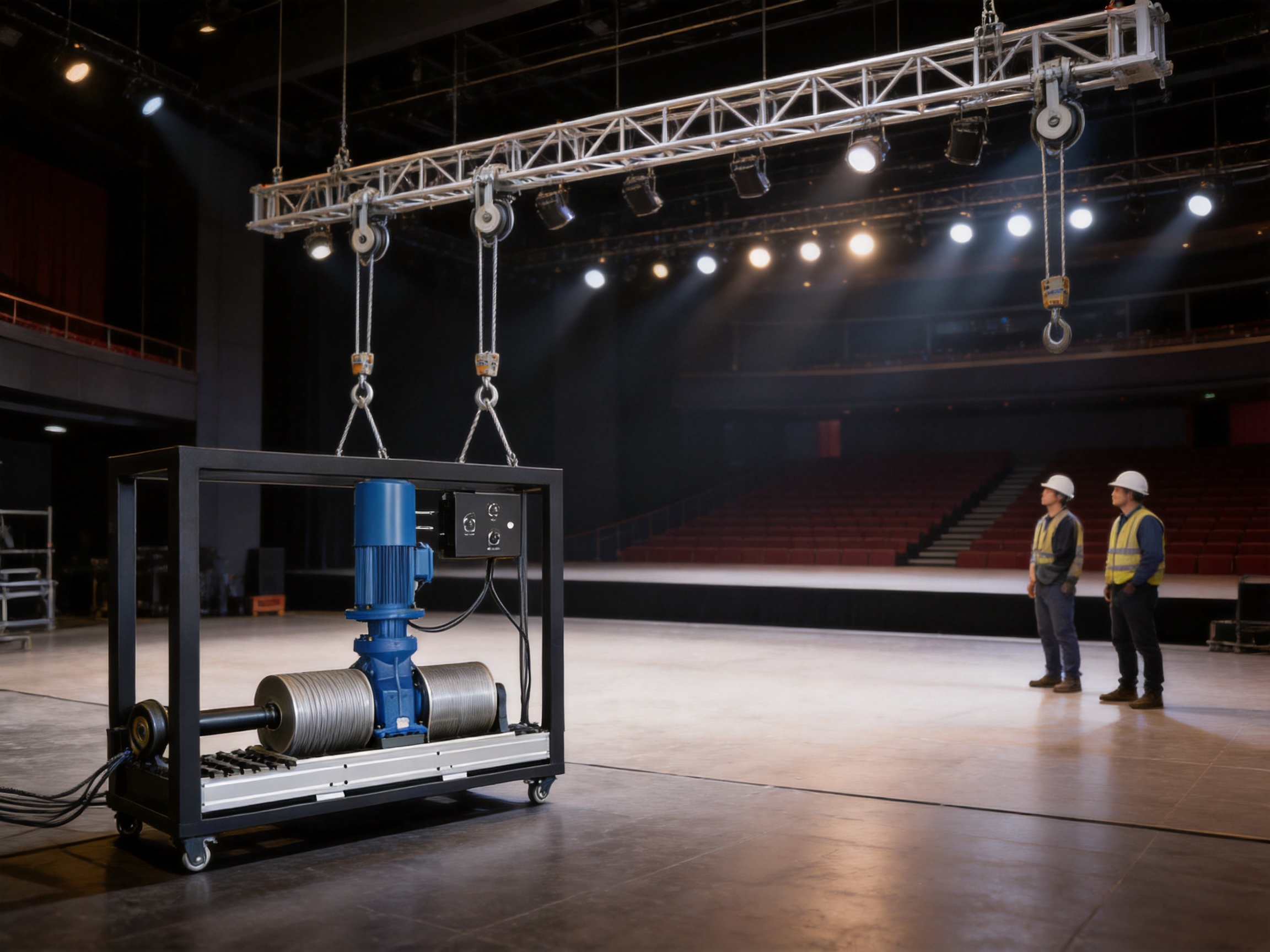
The performance of a stage winch depends on more than its visible housing or rated capacity. Precision manufacturing, material selection, assembly accuracy, electrical integration, testing, and quality control all affect the reliability of the finished system. RenteZhihe (JiangSu) Equipment Technology Co., Ltd. focuses on the research, development, and manufacturing of stage machinery, performance equipment, and intelligent control systems.
The company operates a production system covering approximately 20,000 square meters, including manufacturing workshops and research facilities. More than 30 advanced CNC processing devices support precision production and component manufacturing. This infrastructure provides a foundation for controlling dimensional accuracy, repeatability, and production efficiency.
CNC processing is valuable in stage machinery because components such as brackets, shafts, mounting interfaces, bearing seats, drum parts, and connection structures must work together accurately. Inaccurate machining can introduce vibration, uneven loading, alignment problems, or accelerated wear. Controlled machining processes help reduce these risks and support consistent assembly quality.
A modern production process also makes customization more practical. Stage projects often have different structural conditions, control requirements, travel distances, and installation layouts. The company can use its engineering and manufacturing capabilities to adapt equipment configurations according to project needs rather than relying only on standardized products.
Manufacturing strength also depends on process control beyond machining. Raw material processing, component inspection, welding or structural fabrication, surface treatment, electrical assembly, mechanical assembly, sensor installation, and final testing must be coordinated. A complete production process allows quality checks to be performed at multiple stages rather than only after the final machine is assembled.
For a dual-point winch, assembly accuracy is especially important. The motor, reducer, drum, rope guides, sensors, pulleys, base structure, and control components must operate as a coordinated system. The two lifting points must also be configured consistently so that the system can achieve synchronized movement and accurate load handling.
The company’s engineering team supports the full project cycle, including design, production, installation, commissioning, operation, and maintenance. This integrated capability can simplify communication between the customer, design team, manufacturing department, installation personnel, and service technicians.
Stage equipment must perform reliably under repeated movement cycles. A winch may be used during rehearsals, performances, maintenance, scene changes, and emergency procedures. Quality control should therefore consider both initial performance and long-term operating conditions.
Testing begins with the verification of individual components. Motors, reducers, encoders, limit switches, travel sensors, rope arrangement sensors, braking components, and electrical devices should be checked against their technical specifications. Mechanical components should be inspected for dimensional accuracy, surface condition, fit, and compatibility with the overall assembly.
During assembly, technicians should verify the alignment of the drum, rope guide, pulley system, base assembly, and drive components. Fasteners, guards, covers, cable routes, and connection points should be checked according to the approved design. Proper assembly reduces the possibility of vibration, interference, cable damage, and inconsistent rope movement.
Control-system testing is another essential stage. The encoder feedback should correspond correctly to actual winch movement. Limit switches should activate at the defined positions. Travel sensors should provide accurate information, and rope arrangement sensors should respond appropriately to the rope path. The control system should also be checked for correct start, stop, acceleration, deceleration, emergency stop, and fault response functions.
Dual-point systems require additional synchronization checks. The two winches or lifting positions should be tested together to confirm that they travel consistently and respond correctly to the control commands. Operators should verify that the system does not introduce unacceptable differences in height or movement between the two points.
Load testing and operational verification should be conducted according to the approved engineering procedures and applicable regulations. Testing should reflect the intended operating conditions while remaining within safe limits. Documentation of inspection, testing, calibration, and commissioning provides an important reference for future maintenance and operation.
RenteZhihe’s manufacturing process includes multiple testing procedures and component verification steps. By controlling the process from raw material preparation to final machine assembly, the company aims to ensure that the finished equipment meets demanding operational requirements for professional stage environments.
Safety is a primary consideration whenever equipment is used to lift or suspend a load above people, valuable equipment, or performance areas. The winch must be treated as part of a complete lifting system, and all installations should be designed, inspected, operated, and maintained by qualified professionals.
The Dual-Point Zero-Fleet Stage Winch includes dual-braking redundancy. Redundant braking provides an additional layer of protection by supporting controlled load holding if one braking function becomes unavailable or requires service. The exact braking arrangement and operating procedure must be confirmed in the technical documentation and project design.
Limit switches and travel sensors help monitor movement boundaries. These devices should not be regarded as substitutes for correct operation or structural protection, but they can support the control system in preventing travel beyond defined limits. Regular inspection is necessary because sensors, switches, wiring, and mechanical triggers can be affected by wear, impact, contamination, or incorrect adjustment.
Encoders support position monitoring and synchronization. In a dual-point application, accurate position information helps the control system compare the movement of both lifting positions. If a difference is detected, the system may be configured to stop, alert the operator, or apply a predefined protective response.
Rope arrangement sensors and the single-layer tracked drum contribute to mechanical safety by supporting orderly rope winding. Correct rope arrangement reduces the risk of tangling, crossing, and irregular accumulation on the drum. Operators should still inspect the rope, drum, guides, pulleys, and attachment points before use.
Safety also depends on operating procedures. Before each use, technicians should confirm the load weight, suspension arrangement, rope condition, electrical connections, brake status, emergency stop function, travel limits, and communication between operators. The area below and around the moving load should be controlled to prevent unauthorized access.
Maintenance schedules should reflect the frequency of use, environmental conditions, duty cycle, load patterns, and manufacturer recommendations. Touring equipment may require additional inspection after transportation and reinstallation. Any abnormal noise, vibration, movement, rope behavior, or sensor response should be investigated before the system returns to service.
Installation begins with a review of the venue and the intended load. The structural support points must be capable of carrying the required loads with appropriate safety margins. The position of the winch, pulley arrangement, rope path, and suspended object should be planned before the equipment is moved into place.
The dual-point geometry must be measured carefully. The distance between lifting points should correspond to the dimensions and structural design of the suspended load. The two points should be positioned so that the load remains balanced and the rope paths remain clear of obstructions.
Once the base assemblies are positioned, technicians should verify that the equipment is stable, correctly oriented, and secured according to the installation plan. Pulleys must be installed with suitable alignment and load ratings. Rope connections should be completed using approved methods, and all interfaces should be inspected before operation.
Electrical and control connections should be clearly identified and protected from damage. Touring environments may involve temporary cable routes, changing floor plans, limited access, and high traffic. Cables should be routed to prevent crushing, abrasion, trip hazards, and interference with moving equipment.
After installation, the system should undergo a commissioning sequence. This may include no-load movement, low-speed operation, limit verification, sensor calibration, emergency stop testing, brake checks, synchronized movement, and controlled load testing. The commissioning results should be recorded for future reference.
The lightweight base assembly can reduce handling effort during this process, but portability does not remove the need for professional installation. A mobile stage winch must be treated with the same discipline as permanent machinery, particularly when it is used over performers, technicians, or audiences.
Routine maintenance helps preserve the performance and safety of a stage winch. Maintenance personnel should follow the technical documentation and establish inspection intervals based on actual operating conditions. Equipment used frequently in touring productions may require more frequent inspection than equipment used occasionally in a controlled permanent venue.
Visual inspections should cover the base assembly, fasteners, guards, drum, rope guides, pulleys, rope, cable connections, and structural interfaces. The rope should be checked for broken wires, flattening, corrosion, kinks, crushing, unusual wear, and other signs of damage. Any rope that fails the applicable inspection criteria should be removed from service.
Mechanical inspections should consider the motor, reducer, bearings, drum, brake, and pulley operation. Technicians should listen for abnormal sounds and look for signs of overheating, leakage, looseness, or unusual vibration. Lubrication should be performed only with suitable products and according to the recommended procedure.
Sensor and control inspections should confirm that encoders, limit switches, travel sensors, and rope arrangement sensors provide reliable signals. The emergency stop system, control interface, communication functions, and fault indications should be tested at appropriate intervals.
Touring equipment should be inspected after every relocation. Transportation can expose the equipment to impact, vibration, moisture, dust, and improper handling. Before the next performance, technicians should confirm that the winch, drum, rope path, brackets, connectors, and sensors remain in proper condition.
Good serviceability is supported by clear documentation. Maintenance records should include the date, operating hours or cycles where available, inspection findings, replaced parts, calibration results, load tests, and corrective actions. Such records help identify recurring issues and support responsible equipment management.
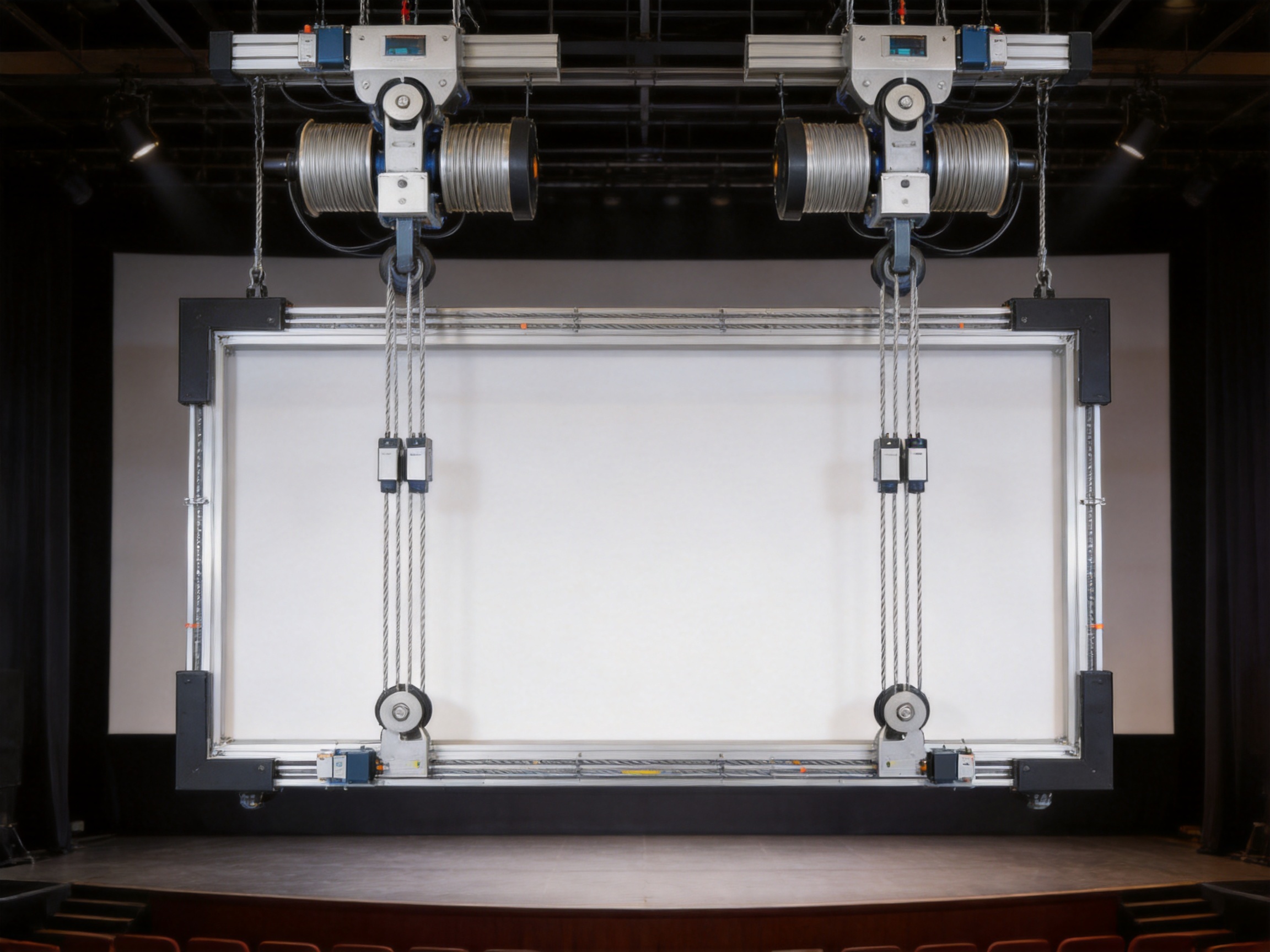
The Dual-Point Zero-Fleet Stage Winch is suited to a broad range of performance and event environments. In theaters, it can support scenery, lighting structures, projection equipment, acoustic elements, and other suspended stage components. Its dual-point arrangement is useful where horizontal alignment and repeatable positioning are important.
Cultural centers often host different types of performances and public events. Their stage systems may need to change between concerts, theatrical productions, exhibitions, ceremonies, and educational programs. A flexible winch can support these changing requirements while helping the venue avoid a separate lifting solution for every event type.
Conference centers and multifunctional halls can also benefit from portable stage machinery. These facilities may need to install banners, screens, lighting equipment, decorative structures, or temporary scenic elements for short-term events. The compact and mobile form factor can support rapid venue conversion.
Stadiums and large event spaces may require specialized lifting arrangements for ceremonies, concerts, broadcast systems, or temporary production structures. The winch must be integrated with the venue’s structural and control requirements, but the dual-point concept can be valuable where stable handling of wide suspended loads is needed.
Touring companies and temporary staging contractors are the primary users likely to benefit from the product’s portability. The system can be transported between venues, installed for a specific production, operated through the event schedule, and removed when the project is complete.
| Venue or Project Type | Possible Uses | Primary Product Benefits |
| Touring theater production | Scenery, lighting structures, projection frames | Portability, rapid deployment, synchronized lifting |
| Concert tour | Lighting trusses, audio equipment, stage elements | 500 kg payload capacity, stable positioning, rope control |
| Cultural center | Flexible stage automation and suspended scenery | Adaptability and repeatable operation |
| Conference center | Temporary screens, banners, lighting, decorative structures | Quick installation and flexible configuration |
| Temporary event stage | Short-term lifting and repeated relocation | Lightweight base assembly and mobile construction |
| Permanent performance venue | Automated suspended loads and technical equipment | Dual-point stability, sensor monitoring, redundant braking |
Stage machinery projects rarely have identical requirements. The load may vary in size and weight, the available suspension points may be different, and the venue control system may use a particular communication architecture. Customization allows the winch to be adapted to the intended application without compromising core safety and performance principles.
Engineering begins with an assessment of the load, travel distance, operating speed, duty cycle, suspension geometry, installation method, available power, control requirements, and environmental conditions. The equipment configuration should be selected only after these factors are understood.
The dual-point system may be configured for different load dimensions and lifting positions. The rope path, pulley arrangement, base layout, sensor placement, and control settings can be considered as part of the project design. This approach supports more practical integration into existing stage structures and temporary event systems.
Control integration is also important. A professional venue may require local controls, centralized stage automation, remote monitoring, emergency stop interfaces, or communication with other equipment. The winch should be tested within the intended control environment to verify that movement commands, position information, warnings, and fault conditions are properly represented.
RenteZhihe provides services covering design, manufacturing, installation, commissioning, operation, and maintenance. This complete service structure allows the company to participate in the project from the initial concept through long-term support. It also helps ensure that the machinery, control system, structural arrangement, and operating procedures are considered together.
Stage equipment may be used in environments with dust, temperature changes, humidity, vibration, frequent transport, and changing power conditions. The intended operating environment should be reviewed before the winch is selected and installed.
Touring equipment may be exposed to repeated loading and unloading, vehicle vibration, temporary storage, and rapid installation. Protective packaging and appropriate transportation procedures are necessary to preserve alignment and prevent damage to sensors, cables, mechanical interfaces, and the base assembly.
Indoor venues generally provide more controlled conditions, but even indoor spaces can contain dust from construction, scenic materials, textiles, and audience activity. Regular cleaning and inspection help prevent contamination from affecting sensors, rope guides, braking components, and electrical connections.
Noise and vibration may also be important considerations. Smooth motor control, proper reducer selection, correct mechanical alignment, and orderly rope winding can contribute to quieter operation. The final sound level depends on the complete installation and the acoustic characteristics of the venue.
Energy use should be evaluated together with the operating cycle. The required motor power, lifting speed, duty cycle, and control strategy should be matched to the application. Correct sizing avoids unnecessary energy consumption and helps ensure that the winch operates within its intended performance range.
RenteZhihe (JiangSu) Equipment Technology Co., Ltd. is a high-tech enterprise specializing in the research and development, production, and integration of stage machinery, performance equipment, and intelligent control systems. Its product and service scope covers theaters, cultural centers, stadiums, conference centers, and multifunctional performance spaces.
The company’s strength lies in combining manufacturing resources with engineering services. Stage equipment must work as part of a larger system, and successful delivery requires more than the production of an individual machine. Design coordination, installation, commissioning, operation, and maintenance all influence the final result.
With a production and research area of approximately 20,000 square meters and more than 30 advanced CNC processing devices, the company has developed a foundation for precision manufacturing and customized production. These resources support the fabrication of mechanical parts and assemblies used in stage automation systems.
The company emphasizes safe, stable, and integrated intelligent solutions. Its service model includes technical support throughout project implementation, helping customers select suitable equipment, coordinate installation, verify operation, and maintain performance over time.
Its market experience covers domestic and international projects. This exposure gives the engineering team an understanding of the different operating conditions, venue types, project schedules, and customer expectations associated with professional stage machinery.
The company also places importance on professional development, collaboration, responsibility, and innovation. These values support the development of a technical team capable of handling complex stage equipment projects and providing long-term assistance to customers and partners.
A Dual-Point Zero-Fleet Stage Winch is a stage lifting system designed to support a suspended load from two coordinated lifting positions while maintaining controlled rope alignment on the drum. The dual-point arrangement improves balance and positioning, while the zero-fleet technology helps reduce irregular rope winding.
The touring-oriented product configuration is described with a payload capacity of up to 500 kg. The actual allowable load must be confirmed for the complete installation, including the suspension structure, ropes, pulleys, attachment points, operating speed, acceleration, and applicable safety requirements.
A dual-point system distributes the lifting force through two positions instead of concentrating it at one suspension point. This helps reduce tilting, rotation, and uneven movement, particularly when the suspended object is wide or has a complex shape.
Zero-fleet rope management keeps the rope aligned with the drum and limits unnecessary lateral movement during winding. The system uses mechanical guidance and sensor-assisted monitoring to support more orderly rope arrangement and consistent operation.
Yes. The product is designed with touring applications in mind. Its lightweight base assembly supports easier transportation and installation, while the tracked single-layer drum, dual-point lifting arrangement, braking redundancy, and sensor monitoring provide features required for professional stage operations.
The system includes electric motors, reducers, encoders, limit switches, travel sensors, rope arrangement sensors, base assemblies, and pulleys. These components work together to provide controlled movement, position feedback, rope management, and operating protection.
Yes. Although portability is a major advantage, the winch can also be integrated into permanent theaters, cultural centers, conference facilities, and other professional venues. The final suitability depends on the venue structure, load requirements, control system, and installation design.
Yes. Any system used to lift or suspend loads above people or valuable equipment should be installed, commissioned, inspected, and operated by qualified personnel. Structural capacity, rope routing, braking, sensors, controls, and emergency procedures must all be verified.
The single-layer tracked drum guides the rope into a controlled winding path. This helps reduce overlap and tangling during repeated strikes, dismantling, transportation, and setup operations. It also supports more consistent rope behavior from one venue to the next.
Maintenance generally includes inspection of the rope, drum, guides, pulleys, motor, reducer, brake, base assembly, fasteners, electrical connections, sensors, and control functions. Inspection frequency should be based on operating conditions and the manufacturer’s technical recommendations.
Stage projects often require customized configurations. Design factors may include load capacity, travel distance, suspension spacing, rope path, control integration, installation method, sensor configuration, and venue requirements. These details should be reviewed with the engineering team before production.
Typical applications may include suspended scenery, lighting structures, audio equipment, projection frames, banners, acoustic elements, and other stage or event equipment. The load must always be evaluated according to its weight, dimensions, center of gravity, structural attachment, and movement requirements.
The manufacturer provides integrated support covering product design, manufacturing, installation, commissioning, operation, and maintenance. Its production resources include approximately 20,000 square meters of facilities and more than 30 advanced CNC processing devices, supporting precision manufacturing and customized stage machinery solutions.
The Dual-Point Zero-Fleet Stage Winch is designed for stage operators who need reliable lifting performance without the limitations of a heavy, permanently fixed system. Its dual-point configuration improves the stability of suspended loads, while adaptive zero-fleet technology supports controlled rope arrangement and repeatable operation.
The product’s 500 kg payload capacity, lightweight base assembly, single-layer tracked drum, dual-braking redundancy, and sensor-based monitoring make it particularly suitable for touring shows, temporary stages, and flexible performance venues. These features also allow the system to serve permanent theaters, cultural centers, conference facilities, and multifunctional event spaces when integrated into an appropriate project design.
Its advantages are supported by the manufacturing and engineering capabilities of RenteZhihe (JiangSu) Equipment Technology Co., Ltd. The company combines research and development, CNC manufacturing, assembly, testing, installation, commissioning, and after-sales service to deliver integrated stage machinery solutions.
For professional stage applications, the best lifting solution is not defined by capacity alone. It must provide stable movement, controlled rope management, reliable feedback, safe braking, practical installation, maintainable components, and long-term technical support. By combining these requirements in a mobile and adaptable format, the Dual-Point Zero-Fleet Stage Winch offers a strong option for modern stage automation and touring production operations.
1. Stage Machinery Design and Engineering Principles, technical reference material for theatrical lifting and automation systems.
2. Professional Practice Guidelines for Suspended Stage Equipment, guidance on load handling, inspection, operation, and maintenance.
3. Wire Rope and Sheave Application Principles, reference material covering rope routing, bending, winding, and inspection.
4. Industrial Motor and Gear Reducer Selection Methods, technical guidance for controlled lifting applications.
5. Safety Management Practices for Theatrical and Event Rigging, reference material concerning suspended loads, operator procedures, and venue safety.
6. Stage Automation and Intelligent Control Systems, technical reference on encoders, travel sensors, limit switches, feedback, and synchronized motion.
We specialize in delivering advanced stage machinery, rigging systems and intelligent control solutions for performance spaces worldwide.

No. 111 Runfeng Road, Hailing District, Taizhou City, Jiangsu Province, China

rtstage@163.com

+86-139 1771 1698

+86-139 1771 1698
rtstage@163.com
 中文简体
 English
 русский
 Français
 Español
 عربى