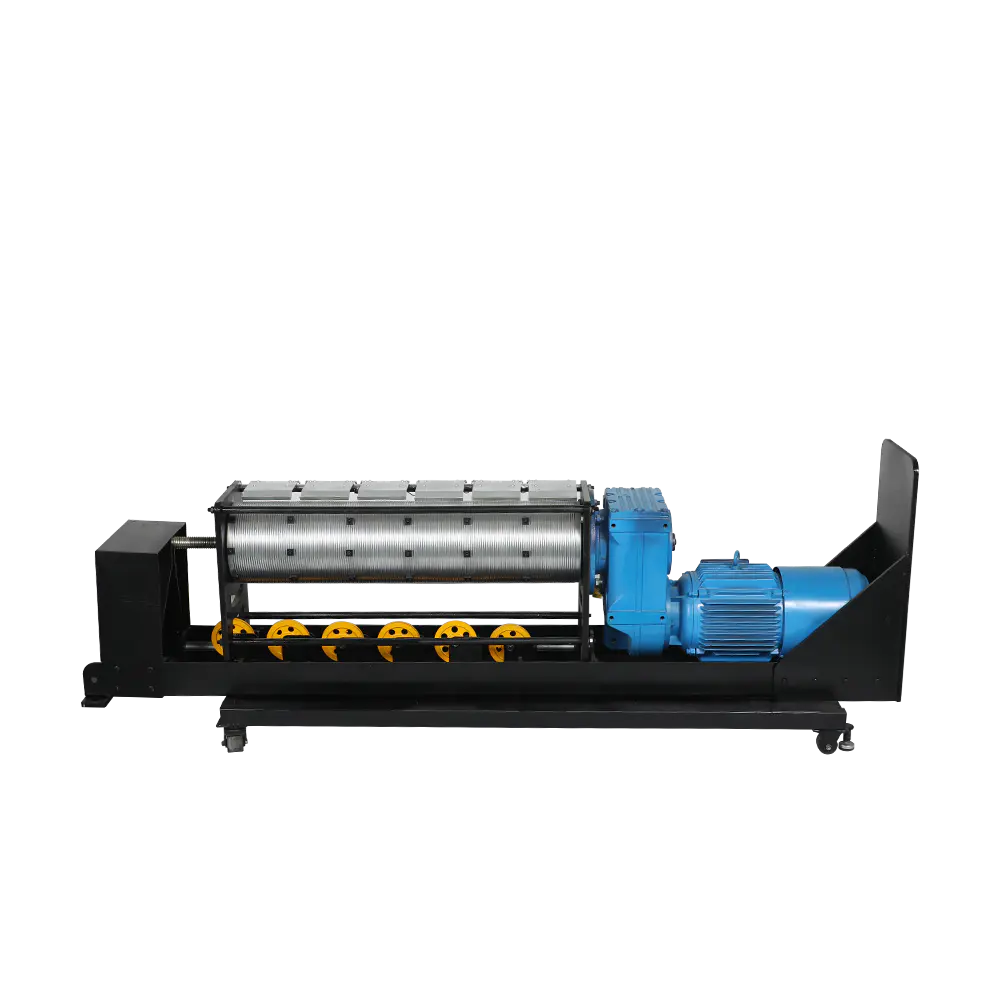
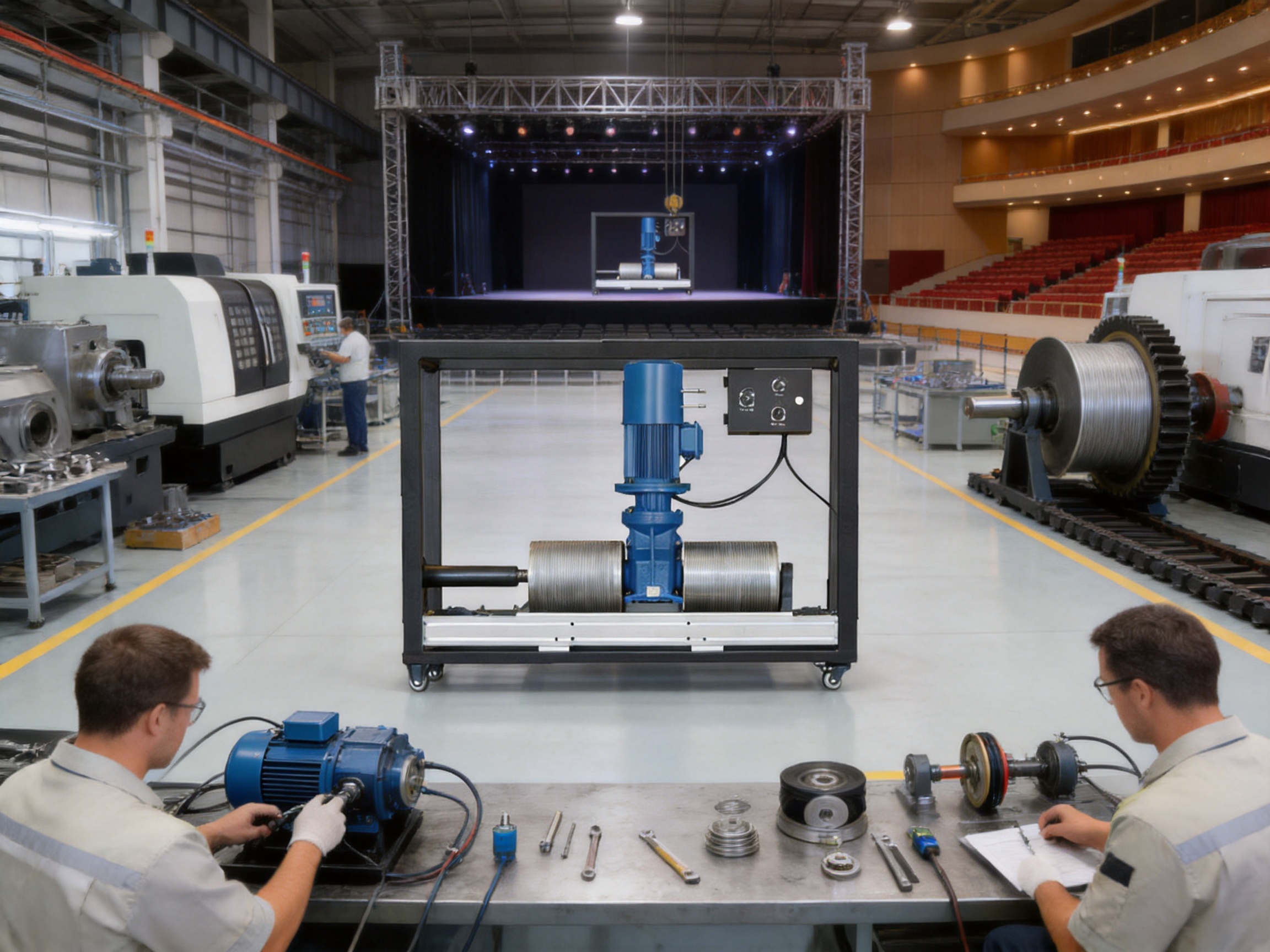
Modern performance venues require stage machinery that can combine lifting capacity, positioning accuracy, operational safety, and rapid deployment. Touring productions create an additional challenge because equipment must be transported between venues, installed under changing conditions, removed quickly, and prepared for repeated operation. A winch designed for a permanent theater may provide excellent performance but still be too heavy, difficult to relocate, or inefficient for temporary staging. The Dual-Point Zero-Fleet Stage Winch addresses these practical requirements by combining a portable mechanical structure with controlled dual-point lifting, adaptive rope management, and redundant safety systems.
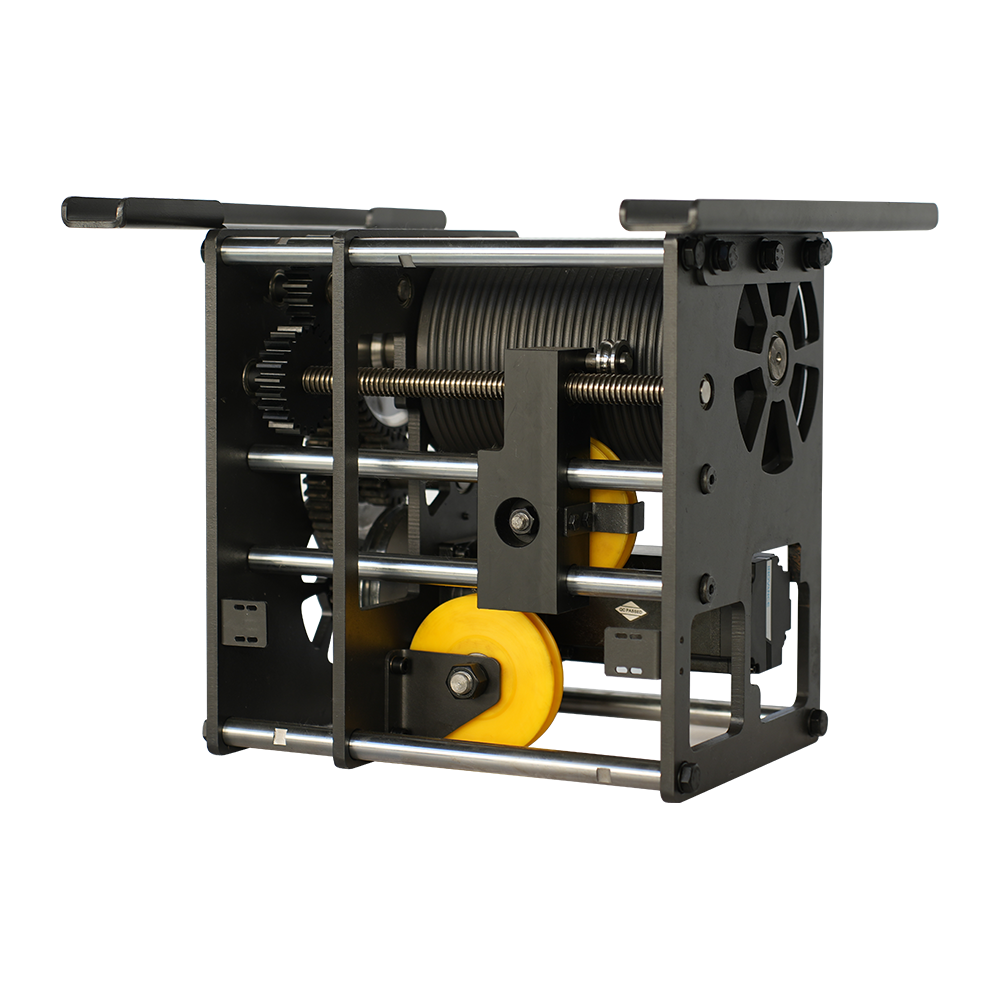
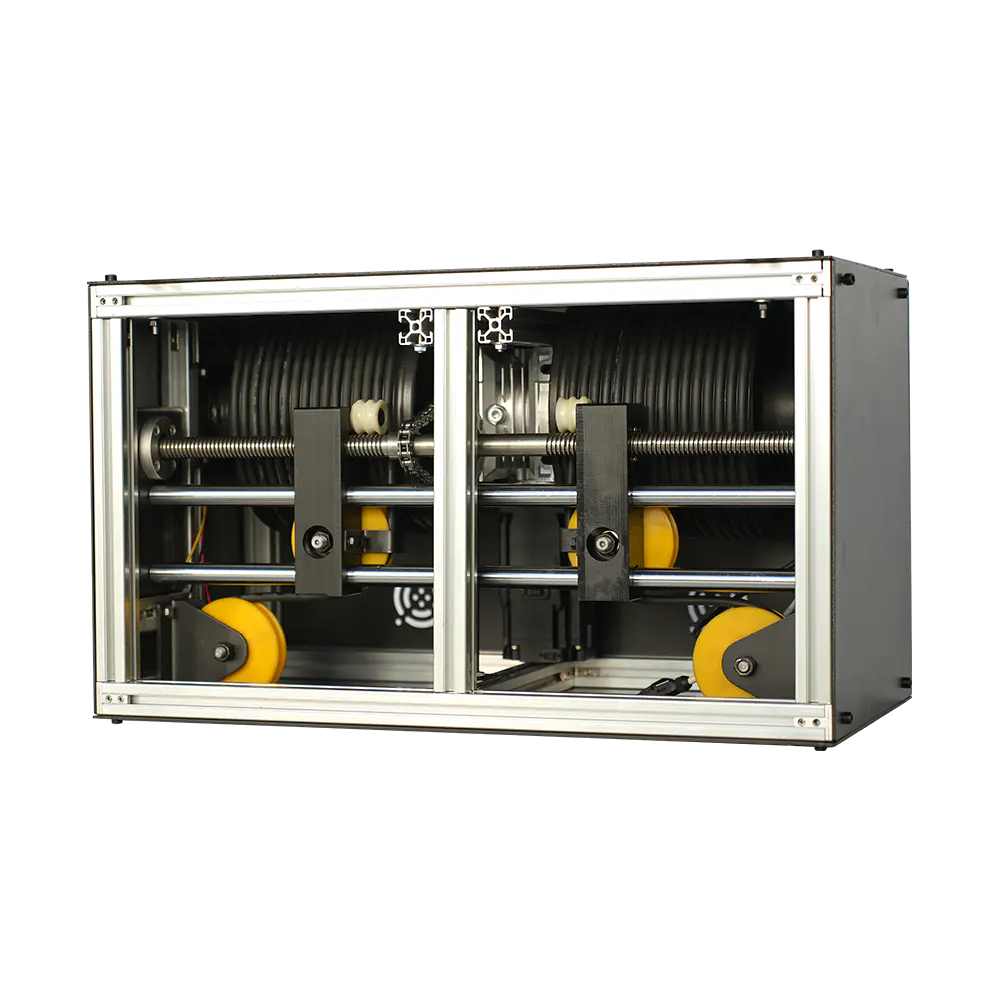
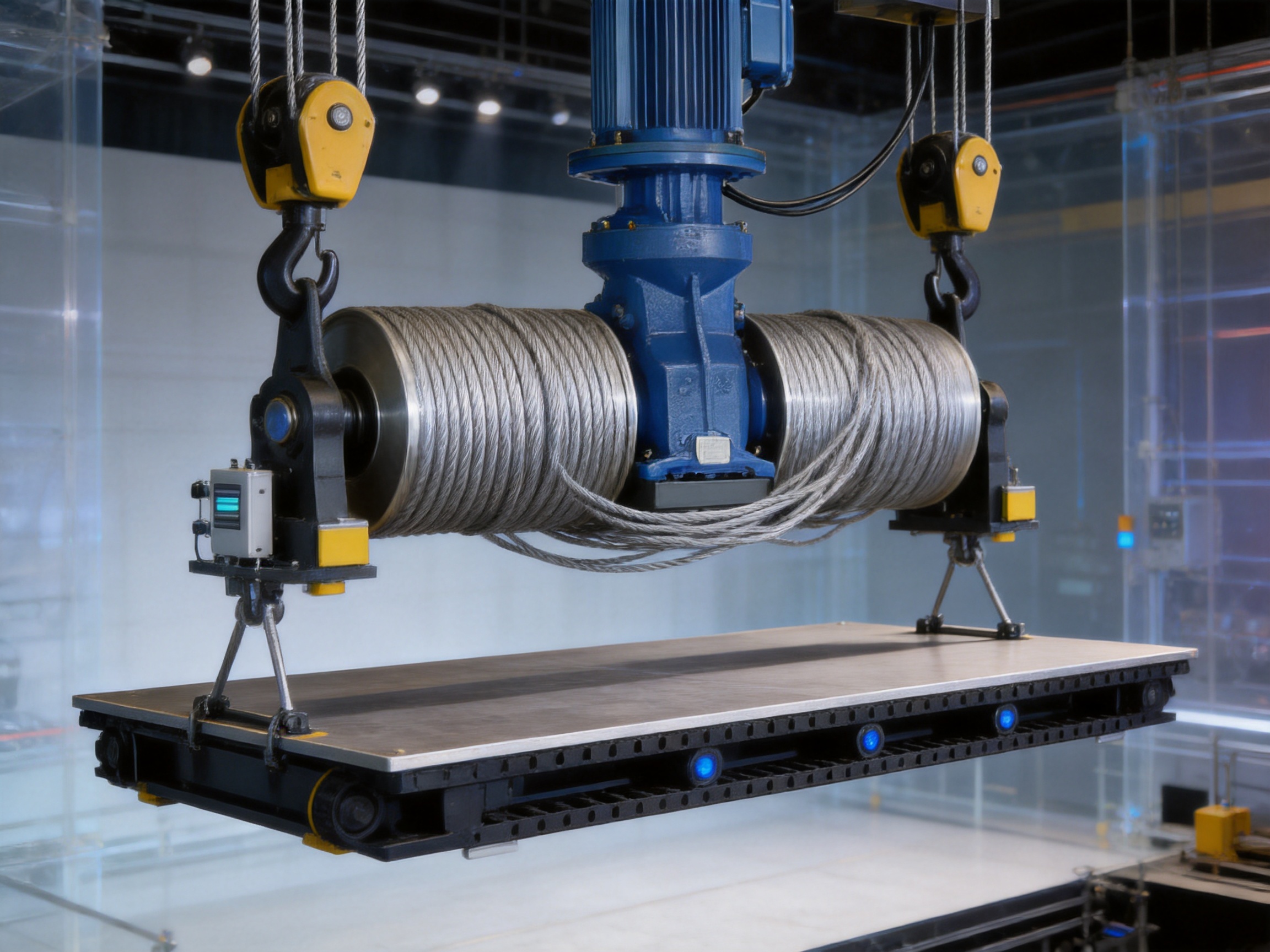
Designed for touring productions, temporary stages, cultural venues, conference centers, and professional performance facilities, this stage winch provides a 500 kg payload capacity while using a lightweight base assembly. Its single-layer tracked drum helps maintain orderly rope arrangement during frequent strikes and setups. The system also incorporates electric motors, reducers, encoders, limit switches, travel sensors, rope arrangement sensors, pulleys, and a robust base assembly to support stable and repeatable lifting operations.
The central value of the product is not simply its lifting capacity. Its advantage lies in the way several functions operate together. The dual-point configuration distributes lifting forces across two suspension positions, helping to reduce tilting and uncontrolled movement. Zero-fleet technology keeps the rope aligned with the drum and reduces the possibility of rope overlap. Sensor-based monitoring provides information about movement and rope position, while dual-braking redundancy adds an additional layer of protection. These features make the system suitable for demanding environments where stage elements must move accurately and consistently.
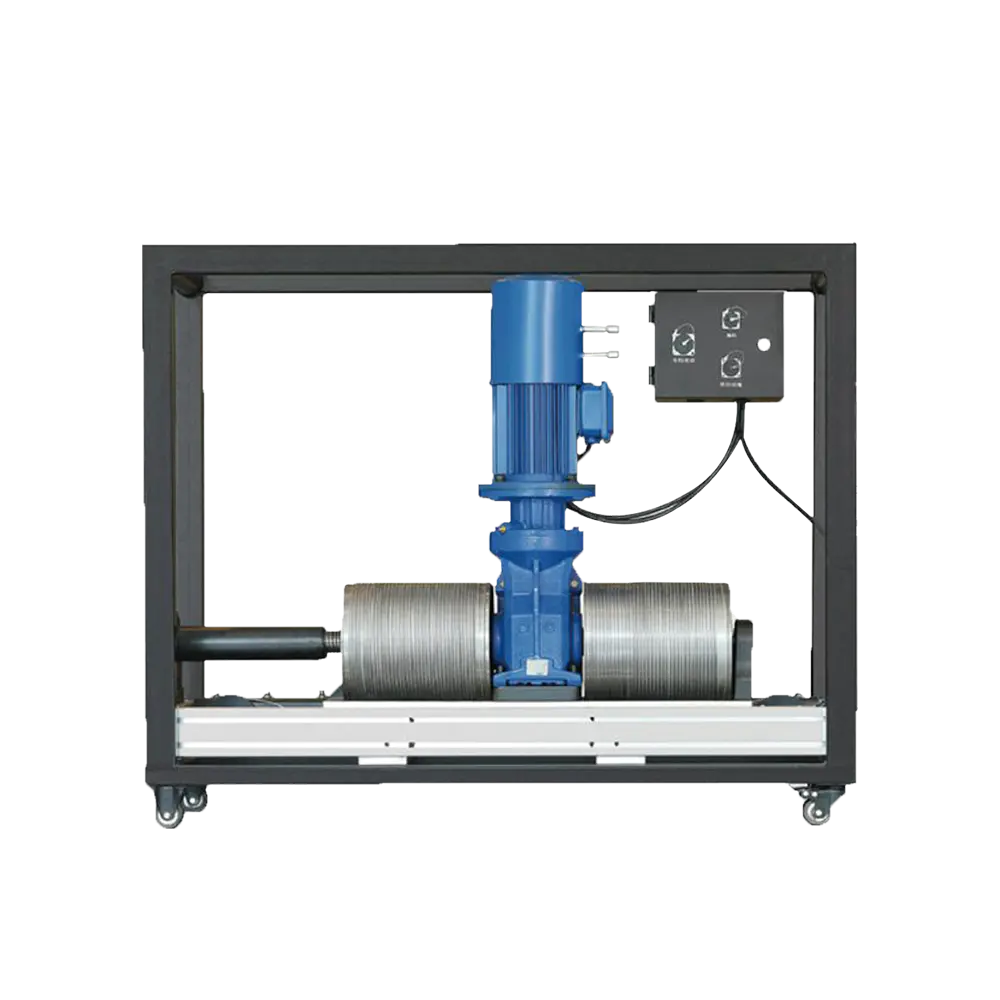
Dual-Point Zero-Fleet Stage Winch
A stage winch is a mechanical lifting unit used to raise, lower, position, or suspend stage equipment. Depending on the project, the suspended load may include scenery, lighting bridges, audio equipment, projection systems, banners, acoustic elements, or other technical structures. The winch must control movement smoothly while responding to operating commands and maintaining a safe relationship between the load, rope, drum, and surrounding stage infrastructure.
Unlike general industrial lifting equipment, stage machinery often operates in environments where movement is visible to audiences, performers, technicians, and venue staff. A slight tilt, vibration, delay, or unexpected movement can affect a performance and create a safety concern. Stage equipment therefore needs more than raw power. It must provide controlled acceleration, reliable stopping, accurate positioning, repeatable performance, and compatibility with the venue’s automation system.
Stage winches also experience frequent operating cycles. A touring production may assemble and remove its equipment repeatedly in different locations. A theater may reposition suspended equipment several times during rehearsals and performances. A multifunctional hall may change between conferences, concerts, exhibitions, and cultural programs. These conditions create high demands on mechanical durability, rope management, braking performance, sensors, and maintenance accessibility.
The Dual-Point Zero-Fleet Stage Winch is developed around these operating realities. Its design focuses on practical installation, reliable lifting, and flexible use rather than on a permanently fixed structure alone. The lighter base assembly helps reduce transport and handling requirements, while the tracked drum and rope arrangement sensors support orderly operation during repeated movement cycles.
The Dual-Point Zero-Fleet Stage Winch is a coordinated lifting system intended to control suspended stage loads from two lifting positions. A dual-point arrangement is particularly useful when the supported structure has a wide span or when maintaining a level orientation is important. By applying lifting force at two locations, the system can reduce the tendency of the load to rotate or tilt around a single suspension point.
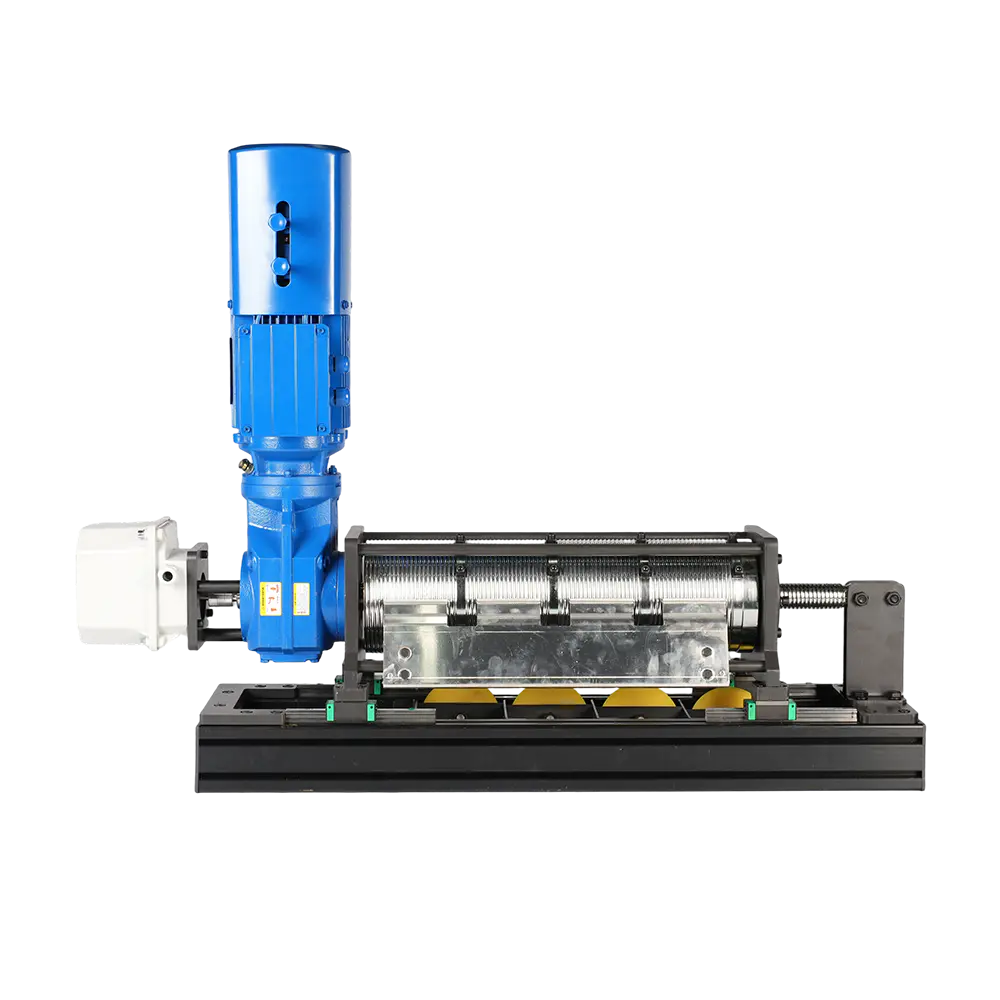
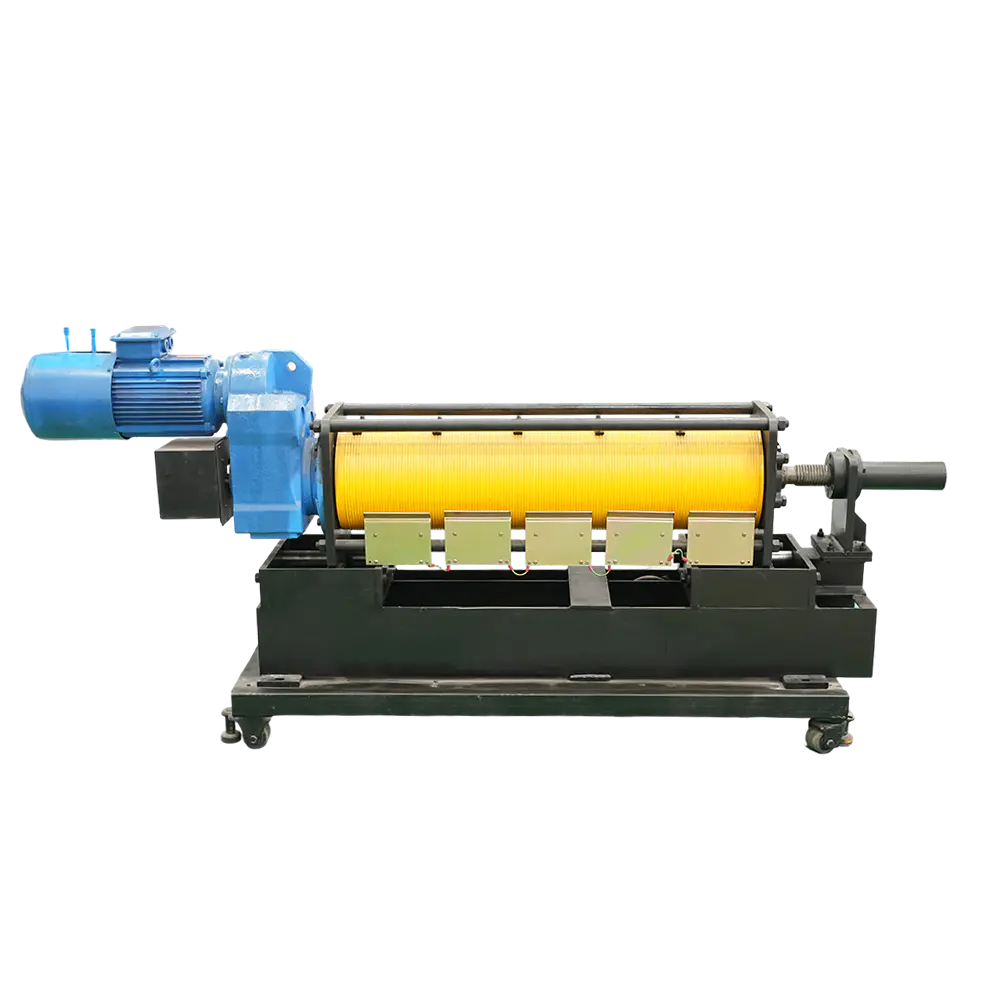
The system can be applied as part of a broader stage automation installation. Its electric motor provides the driving force, while the reducer transfers torque and controls the relationship between motor speed and drum speed. The encoder supplies position-related feedback, and the limit switches establish defined travel boundaries. Travel sensors and rope arrangement sensors provide additional operating information for control and monitoring functions.
The base assembly is engineered to provide a stable foundation while remaining practical for transportation and installation. Pulleys guide the rope path and help maintain the intended lifting geometry. The single-layer tracked drum guides the rope in an organized path, helping reduce tangling and irregular winding during repeated setup and removal operations.
In applications requiring coordinated movement, the lifting positions can be controlled together through a suitable stage automation system. The control approach may be adapted to the project requirements, including operating sequences, travel limits, sensor feedback, emergency procedures, and maintenance access. This makes the product suitable for both standalone lifting applications and integrated theater automation projects.
The electric motor supplies the primary rotational energy required for lifting. A properly selected motor must deliver sufficient torque for the expected load and operating cycle while supporting smooth and controlled movement. The motor is combined with a reducer, which adjusts output speed and torque to suit the winch drum. This arrangement allows the system to balance lifting performance with movement control.
The encoder provides position and movement feedback. In stage automation, accurate information about drum rotation or travel position is important because suspended equipment may need to stop at a repeatable level. Encoder feedback can also support synchronization between coordinated lifting positions when the installation is designed for that function.
Limit switches create defined operating boundaries. They help prevent the lifting mechanism from exceeding its intended travel range and support the control logic used by the stage automation system. Travel sensors provide further information about movement status, while rope arrangement sensors monitor the relationship between the rope and the drum.
The base assembly supports the mechanical components and contributes to the overall portability of the winch. Pulleys guide the rope through the required path and assist with maintaining proper alignment. The tracked drum provides a controlled winding surface, which is especially important when the equipment is operated frequently or transported between venues.
A single suspension point can be effective for compact loads, but it may allow a long or wide stage element to rotate, swing, or tilt. A dual-point configuration places lifting forces at two positions, improving the balance of the suspended structure. When the two positions are properly arranged and controlled, the supported load can maintain a more stable orientation during vertical movement.
The dual-point principle is valuable for lighting structures, suspended scenery, banners, audio systems, projection surfaces, and other technical elements that require level movement. It is also useful when the load has a broad shape or when the design of the stage requires accurate positioning relative to the audience, performers, or fixed architectural elements.
The two lifting positions must operate in a coordinated manner. If one position moves significantly faster than the other, the suspended structure may develop an unwanted angle. For this reason, the winch system incorporates feedback components and can be integrated with control equipment designed to supervise movement, travel limits, and synchronization. Proper installation, calibration, and commissioning remain essential to achieving the intended performance.
Compared with a basic single-point winch, the dual-point arrangement offers better control of load orientation. It can reduce unwanted rocking and improve the repeatability of positioning. This does not eliminate the need for correct rigging, load calculation, inspection, and safe operating procedures, but it provides a stronger mechanical foundation for stable stage lifting.
Rope management is one of the most important considerations in a stage winch. When rope does not wind evenly, it can overlap, form irregular layers, rub against adjacent turns, or create uneven tension. These conditions may increase wear and make operation less predictable. They may also complicate maintenance and shorten the useful life of the rope and drum.
Zero-fleet technology addresses this issue by maintaining an optimized relationship between the rope and the drum. The term refers to a rope path in which the rope approaches and leaves the drum with minimal lateral movement. An adaptive zero-fleet arrangement uses mechanical guidance and sensing to help keep the rope aligned as the drum rotates and the load moves.
The tracked drum supports single-layer winding. Instead of allowing the rope to accumulate in uncontrolled layers, the drum provides a guided path that encourages orderly placement. This is particularly beneficial for touring applications, where the equipment may be repeatedly packed, transported, installed, and operated. Tangle-free rope management helps technicians complete setup and strike procedures more efficiently.
Rope arrangement sensors add a monitoring function to the mechanical system. When connected to the appropriate control architecture, these sensors can provide information about rope position and operating status. This information may be used during commissioning, routine operation, fault detection, or maintenance inspections. The result is a more intelligent lifting system that combines mechanical guidance with feedback-based supervision.
Zero-fleet technology also helps reduce unnecessary lateral forces. When a rope is poorly aligned with a drum, the rope and drum may experience additional friction or side loading. Maintaining a controlled rope path supports smoother operation and can help reduce uneven wear. For venues with frequent movement cycles, this improvement may contribute to more consistent performance over time.
Touring equipment is exposed to conditions that differ from those of a permanent installation. Components may be moved by road, handled by different technical teams, installed in venues with different spatial constraints, and subjected to short preparation schedules. Rope arrangement problems can become especially disruptive when a production must complete installation and rehearsal within a limited period.
The single-layer tracked drum helps simplify these repeated transitions. By supporting orderly winding, it reduces the likelihood that technicians will need to correct rope overlap before operation. The compact structure and lightweight base assembly also make the winch easier to include in a touring equipment package. While the exact handling procedure depends on the project design, the product is intended to reduce the logistical burden associated with mobile stage machinery.
For temporary stages, the same benefits apply. A temporary venue may not have the permanent infrastructure available in a theater. Equipment must often be installed in a short time and removed immediately after an event. A portable winch with controlled rope management provides a flexible solution without abandoning the safety and positioning requirements of professional stage operations.
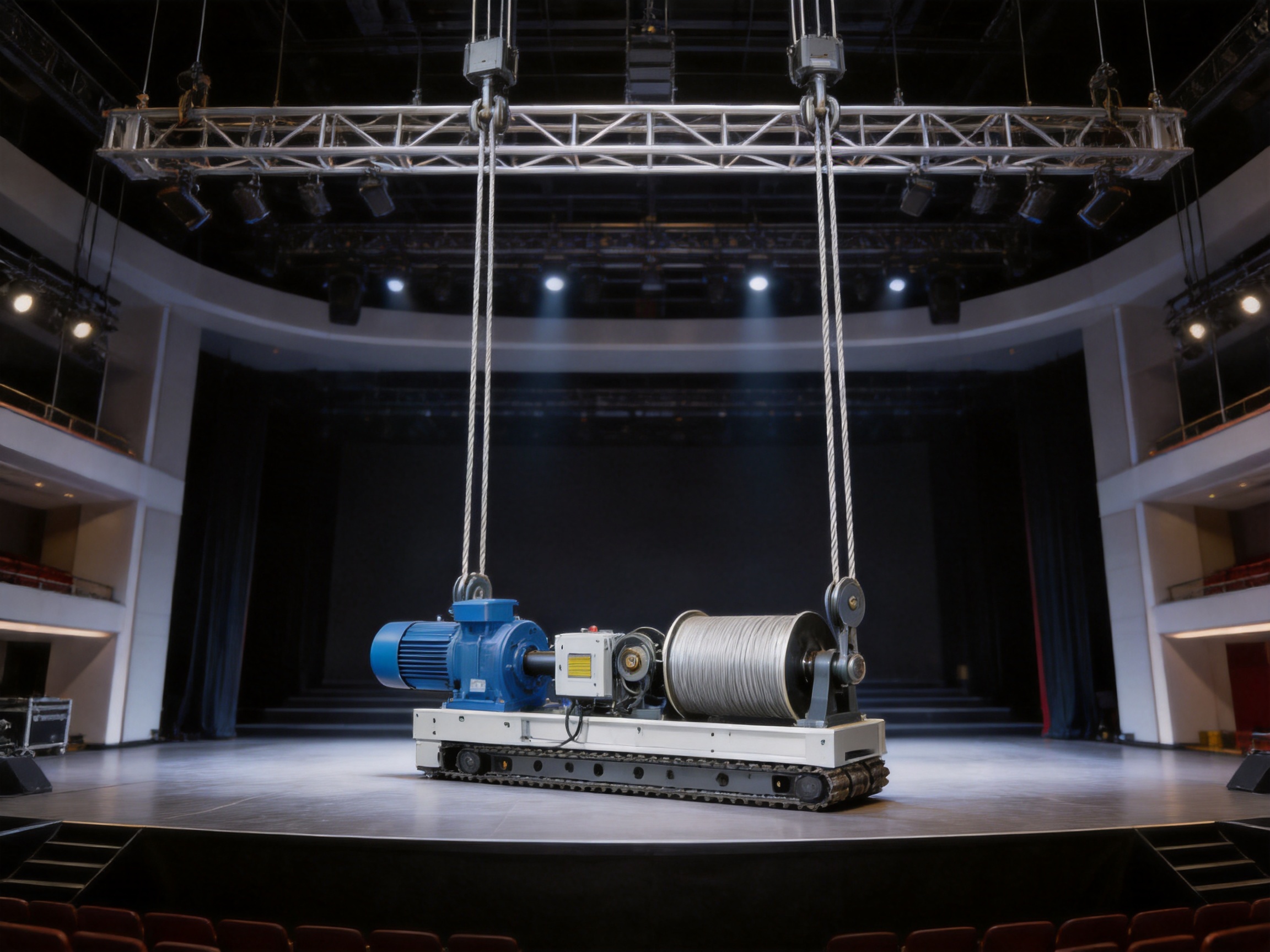
The product is designed to support a payload capacity of up to 500 kg under the specified application conditions. Capacity alone, however, does not determine whether a winch is suitable for a particular installation. The total suspended load, dynamic effects, rigging arrangement, travel distance, duty cycle, environmental conditions, and support structure must all be evaluated before operation.
The 500 kg capacity gives touring companies and venue operators a useful range for common suspended stage equipment. It may support lighting assemblies, compact scenery, audio equipment, projection elements, and other technical loads, provided that the complete system is correctly designed and operated within its approved limits. Project-specific engineering should verify the actual loading arrangement before the equipment is placed into service.
Safety is supported through several layers rather than a single component. The system incorporates dual-braking redundancy, which provides an additional braking function in the lifting mechanism. Braking redundancy is important because stage equipment may remain suspended above people, valuable technical equipment, or finished performance areas. The braking system should be inspected, tested, and maintained according to the operating environment and applicable requirements.
Limit switches and travel sensors help establish and monitor movement boundaries. Encoders provide position-related feedback, while rope arrangement sensors supervise the relationship between the rope and the drum. These elements work together with the control system to support controlled movement and reduce the likelihood of operation outside the intended range.
The safety factor of the complete installation depends on more than the winch itself. Supporting steelwork, anchoring, pulleys, ropes, connection points, control cabinets, emergency stop functions, and operating procedures must all be considered. The equipment manufacturer can provide technical information and engineering support, while the project team remains responsible for selecting and installing a system suitable for the site and load.
Many conventional portable winches are designed primarily for basic lifting. They may provide useful mechanical power but offer limited control over rope arrangement, load orientation, or feedback. In a professional stage environment, these limitations can affect installation efficiency and operating accuracy.
The Dual-Point Zero-Fleet Stage Winch offers several differentiating features:
These characteristics provide a more complete solution than a basic lifting unit. The product is not limited to moving a load from one level to another. It is designed to support the broader requirements of professional stage automation, including repeatability, controlled movement, installation flexibility, and maintenance awareness.
Compared with heavy fixed-installation winches, the product has an advantage in transportation and deployment. Compared with simple mobile winches, it provides more advanced rope management and sensing functions. Compared with single-point lifting equipment, it offers improved control of load orientation. These advantages make it especially suitable for applications where mobility and professional operating performance are equally important.
Touring productions depend on efficient logistics. Equipment must be transported, unloaded, positioned, connected, tested, and removed according to a strict schedule. Every unnecessary kilogram can increase handling requirements, and every complicated installation step can affect rehearsal time. The lightweight base assembly of the Dual-Point Zero-Fleet Stage Winch is intended to improve this process.
Portability does not mean that the product is limited to light-duty applications. Its design retains a 500 kg payload capacity while focusing on a more mobile form factor. The result is a winch that can be included in touring systems where fixed theater machinery would be impractical. The equipment can support productions that move between cultural venues, concert spaces, conference facilities, and temporary performance sites.
Rapid deployment is another important benefit. The combination of a compact mechanical arrangement, integrated sensors, and controlled rope management helps technicians establish a repeatable installation process. Once the winch is mounted and connected according to the project plan, the control system can be tested and the lifting functions verified before the performance begins.
Mobile equipment must also be suitable for repeated removal. The single-layer tracked drum is useful during strike operations because it helps keep the rope organized as the system is lowered and prepared for transport. Orderly winding reduces the chance of technicians encountering a tangled rope during the next installation.
The product can be used by touring troupes, rental companies, event production contractors, and venue operators that require a flexible lifting system. It may also serve as a supplementary unit for permanent theaters when additional lifting positions are needed for special productions, festivals, exhibitions, or temporary technical installations.
Temporary stages often serve events with short operating windows. Concerts, festivals, corporate conferences, ceremonies, exhibitions, and cultural programs may all require suspended technical equipment. The lifting system must therefore be adaptable and efficient while maintaining the safety standards expected of professional event production.
The Dual-Point Zero-Fleet Stage Winch can support temporary stage construction where a stable suspended load must be raised or lowered several times. Its dual-point arrangement can help maintain the alignment of a lighting bar or scenery structure. Its zero-fleet rope management can improve reliability when the system is repeatedly installed and removed.
Conference centers and multifunctional halls can also benefit from portable stage automation. These facilities frequently change from one event format to another. Equipment may need to be positioned for a keynote presentation, moved for a concert, lowered for an exhibition, or removed to create an open floor area. Flexible winches reduce the need to dedicate every lifting position to a single permanent arrangement.
Cultural centers and smaller theaters may use the winch for special productions that require more lifting points than their standard equipment provides. In such cases, a mobile unit can extend the venue’s technical capability while avoiding a major permanent reconstruction.
The performance of a stage winch depends heavily on manufacturing quality. Precision in the drum, reducer, pulley arrangement, sensor mounting, base assembly, and braking components affects the reliability of the complete system. Even a well-designed concept can underperform if component dimensions, machining tolerances, assembly procedures, or inspection controls are inconsistent.
RenteZhihe (JiangSu) Equipment Technology Co., Ltd. specializes in the research, development, and manufacturing of stage machinery, performance equipment, and intelligent control systems. Its capabilities cover the complete project cycle, including design, production, installation, commissioning, operation, and maintenance. This integrated approach allows the company to consider the relationship between mechanical equipment, control systems, venue conditions, and long-term service requirements.
The company operates a modern production system covering approximately 20,000 square meters of workshops and research facilities. More than 30 advanced CNC processing devices support precision manufacturing and customization. CNC equipment is particularly valuable for components that require consistent geometry, repeatable dimensions, and controlled machining quality.
In stage machinery, manufacturing consistency is essential. Drum surfaces must be produced according to the intended rope guidance design. Base assemblies must maintain structural accuracy. Pulley positions must correspond with the planned rope path. Sensor brackets must be installed in locations that provide reliable feedback. CNC processing and controlled assembly procedures help reduce variation across these critical components.
The manufacturing process begins with understanding the requirements of the project. Engineers review the intended load, lifting points, travel range, installation environment, control requirements, operating frequency, and maintenance conditions. This information guides the selection and configuration of the motor, reducer, drum, braking system, sensors, and structural components.
Mechanical design is then coordinated with control design. The encoder, limit switches, travel sensors, and rope arrangement sensors must work with the control system used by the venue or production. The design should also provide practical access for inspection and maintenance. A technically capable product is more valuable when technicians can understand, test, and service it efficiently.
During manufacturing, raw materials and components are processed through controlled procedures. CNC machining supports accurate production of suitable parts, while assembly teams install motors, reducers, drums, sensors, pulleys, and base structures according to engineering documentation. Component verification is performed throughout the process to identify deviations before final assembly.
Final assembly is followed by testing and operational verification. Testing may include movement checks, sensor checks, limit switch verification, braking checks, rope arrangement observation, and control system interaction. The precise test plan depends on the equipment configuration and project requirements, but the objective is to confirm that mechanical and electrical functions work together as intended.
Customization is another important manufacturing strength. Stage venues differ in available space, load type, travel distance, mounting arrangement, control architecture, and operating schedule. A manufacturer with design and production capabilities can adapt the equipment configuration rather than forcing every project to use an identical arrangement.
Quality control in stage machinery should cover both individual components and the assembled system. A motor may meet its specifications, but the complete winch must also deliver coordinated movement. A sensor may function independently, but it must be positioned and calibrated correctly within the system. A drum may be accurately machined, but the rope path must still be checked after assembly.
RenteZhihe’s production approach includes multiple testing procedures and component verification from raw material processing to final machine assembly. This process supports traceability and helps engineering teams identify potential issues at an early stage. The company’s production and research resources also support the development of equipment for different performance environments.
Inspection should include visual checks, dimensional verification, electrical testing, mechanical testing, and operational trials as appropriate. Particular attention should be given to braking performance, travel limits, sensor response, drum rotation, rope alignment, and abnormal noise or vibration. These checks help ensure that the equipment is ready for installation and commissioning.
Manufacturing quality also affects service life. Accurate components reduce unnecessary friction and uneven wear. Proper assembly supports stable operation. Reliable sensors make control functions more predictable. Effective testing reduces the risk that installation teams will discover avoidable problems at the venue.
A modern stage winch is usually part of a larger automation network. The winch provides the mechanical movement, but the complete system may also include control consoles, motor control equipment, safety circuits, emergency stop devices, position feedback, and venue management interfaces. The Dual-Point Zero-Fleet Stage Winch is designed to work within this type of integrated environment.
Encoders provide information about position or rotation, while travel sensors and limit switches help define movement conditions. Rope arrangement sensors provide additional information related to the drum and rope. The control system can use these signals to supervise movement and support a more accurate operating sequence.
For dual-point lifting, coordination is especially important. The two lifting positions should respond in a controlled relationship so that the suspended load remains as level as possible. The exact control strategy depends on the project, but it may include synchronized start and stop commands, position comparison, speed regulation, travel limits, and fault responses.
Commissioning is a critical stage in system integration. Technicians must verify sensor direction, encoder feedback, upper and lower limits, emergency stop functions, brake release and engagement, control commands, and load movement. Calibration should be completed before the equipment is used in a production environment. The commissioning team should also confirm that the operating procedures are understood by venue staff.
The company’s engineering services cover design, production, installation, commissioning, operation, and maintenance. This full-service capability is valuable because the manufacturer can support the equipment beyond factory delivery. It also allows project feedback from installation and operation to inform future product improvements.
A successful installation begins with a clear assessment of the venue. The project team should confirm the available structural support, access route, working area, electrical supply, control system, rope path, pulley arrangement, and maintenance access. The expected load and travel distance should be documented before the equipment is installed.
The winch should be mounted on a suitable base or support structure designed for the application. Pulleys must be aligned with the drum and the intended suspension points. The rope should be installed according to the approved arrangement, with attention to routing, termination, tension, and clearance from surrounding structures.
After mechanical installation, the electrical and control connections should be completed by qualified personnel. Sensors should be checked for correct wiring and position. Limit switches must be verified independently, and encoder feedback should correspond to the actual direction of movement. Emergency stop and braking functions should be tested before a load is introduced.
Commissioning should begin with controlled no-load movement. Technicians can observe drum operation, rope tracking, sensor response, and travel limits before proceeding to a test load. The test load should be appropriate for the project and applied progressively. The system should be checked for smooth movement, correct stopping, stable load orientation, and abnormal vibration.
Regular maintenance should include inspection of the rope, drum, pulleys, motor, reducer, brakes, sensors, structural connections, and control equipment. The frequency of inspection depends on operating cycles, environmental conditions, transportation requirements, and the consequences of equipment failure. Touring equipment may require inspection after each installation, while permanent installations may follow a scheduled maintenance program supplemented by pre-use checks.
Rope arrangement should be monitored throughout the equipment’s service life. Even with zero-fleet technology, incorrect routing, contamination, damage, or misalignment can affect performance. Technicians should keep the drum and rope path clean and report unusual winding, noise, vibration, or sensor behavior immediately.
Operators should never exceed the approved payload or use the winch for loads outside its intended application. The load should be centered and securely connected to the approved suspension arrangement. Personnel should remain clear of hazardous areas during movement, and the stage automation system should be operated only by trained technicians.
Before each operating cycle, the team should verify that the travel path is clear and that no cables, scenery, rigging, or people are positioned within the movement zone. For dual-point lifting, both suspension positions should be checked to confirm that the load is connected correctly and that the system is ready for coordinated movement.
Any unusual behavior should be treated as a reason to stop and investigate. Examples include uneven movement between lifting points, abnormal rope noise, irregular winding, delayed braking, unexpected sensor indications, or movement beyond the anticipated position. A controlled response can prevent a small issue from becoming a larger operational or safety problem.
The same core technology can serve different venue types, but each application has its own priorities. Permanent theaters may emphasize continuous operation, integration with fixed control systems, and long-term serviceability. Touring productions may emphasize low weight, quick deployment, and transportation efficiency. Temporary stages may prioritize adaptability and rapid removal.
| Application Category | Primary Requirement | Relevant Product Feature | Operational Benefit |
| Touring productions | Fast setup, repeated transportation, and reliable operation | Lightweight base assembly and tracked single-layer drum | Efficient deployment and reduced rope management problems |
| Temporary stages | Flexible installation and rapid strike | Portable structure and controlled lifting system | Adaptation to changing event locations |
| Theaters | Accurate positioning and repeated operating cycles | Dual-point lifting, encoders, and sensor feedback | Stable movement and repeatable stage automation |
| Conference centers | Rapid conversion between event formats | Compact winch arrangement and flexible control integration | Efficient repositioning of suspended equipment |
| Cultural and multifunctional venues | Customized lifting capability | Adaptable configuration and engineering support | Broader technical capacity for different productions |
This range of applications demonstrates why a portable dual-point winch can be valuable beyond touring. The product can serve as a primary lifting unit in a mobile production package or as a flexible supplement to existing stage machinery. Its advanced rope management and sensing functions make it appropriate for venues that require more control than a basic portable winch can provide.
Stage machinery is part of a specialized technical environment. Customers often need assistance with load assessment, layout planning, control integration, installation, commissioning, and maintenance. Purchasing a winch without adequate engineering support can create difficulties during project implementation, particularly when the equipment must be adapted to an existing venue.
RenteZhihe provides integrated solutions for theaters, cultural centers, stadiums, conference centers, and multifunctional performance spaces. Its service structure covers design, production, installation, commissioning, operation, and maintenance. This approach allows customers to work with one technical partner across multiple project stages.
Engineering support is particularly important for dual-point systems because the lifting positions, load geometry, pulley paths, control signals, and structural supports must be considered together. The manufacturer can help determine whether the product configuration is suitable for the intended application and can provide technical guidance for customization.
After delivery, training and maintenance support help venue teams operate the equipment properly. Operators should understand the control interface, safety functions, inspection requirements, and emergency procedures. A long-term service relationship can also help customers plan spare parts, periodic inspections, system upgrades, and future expansion.
A dual-point stage winch lifts and positions suspended stage loads through two coordinated suspension positions. This arrangement helps distribute the lifting forces, maintain the orientation of wide or long structures, reduce tilting, and improve positioning accuracy compared with many single-point lifting arrangements.
Zero-fleet technology maintains a controlled relationship between the rope and the drum so that the rope approaches and winds onto the drum with minimal lateral movement. It helps reduce rope overlap, uneven winding, unnecessary side loading, and tangling during repeated operation.
The product is designed for a payload capacity of up to 500 kg under the specified application conditions. The final permissible load must be confirmed through project engineering, including consideration of rigging, structural support, dynamic effects, travel distance, duty cycle, and applicable safety requirements.
The tracked single-layer drum helps guide the rope into an orderly path. Touring productions frequently install and remove equipment, so controlled winding can reduce tangling and make setup and strike procedures more efficient. It also supports more consistent rope management between venues.
The lightweight base assembly is designed to improve portability while maintaining the product’s intended lifting capacity, safety factor, and dual-braking redundancy. The safety of the complete system still depends on correct installation, approved loading, suitable structural support, regular inspection, and trained operation.
The principal components include an electric motor, reducer, encoder, limit switches, travel sensors, rope arrangement sensors, base assembly, drum, and pulleys. The exact configuration may vary according to the project, control architecture, installation arrangement, and customer requirements.
Yes. Although the product is especially suitable for touring and temporary staging, its dual-point lifting, zero-fleet rope management, and sensor-based control can also support permanent theaters, cultural centers, conference facilities, and multifunctional venues.
The two lifting positions distribute support across the suspended structure and help reduce rotation, tilting, and uneven movement. Coordinated control and position feedback further support stable operation. Correct rigging and commissioning are necessary to achieve the intended stability.
The project team should check the structural support, mounting arrangement, rope path, pulley alignment, electrical connections, encoder direction, travel sensors, limit switches, braking functions, emergency stops, and control signals. No-load tests should normally be completed before progressive load testing.
The manufacturer operates production and research facilities covering approximately 20,000 square meters and uses more than 30 advanced CNC processing devices. Its capabilities cover engineering design, precision manufacturing, component verification, final assembly, testing, installation, commissioning, and after-sales maintenance support.
Configuration can be adapted according to project requirements such as load capacity, suspension arrangement, travel range, mounting conditions, control system, sensor configuration, and venue layout. A technical review should be completed before customization is confirmed.
The Dual-Point Zero-Fleet Stage Winch combines the mobility demanded by touring productions with the control and safety features expected from professional stage automation equipment. Its dual-point lifting arrangement supports better balance and load orientation, while adaptive zero-fleet technology helps maintain an orderly rope path. The single-layer tracked drum is especially valuable during repeated strikes and setups, and the lightweight base assembly improves transportation and deployment.
With a 500 kg payload capacity, dual-braking redundancy, encoder feedback, travel monitoring, rope arrangement sensors, and a flexible installation concept, the product offers a practical alternative to both heavy fixed winches and basic portable lifting equipment. It can serve touring companies, temporary stages, theaters, conference centers, cultural venues, and multifunctional performance spaces.
The product’s value is strengthened by the manufacturer’s engineering and production capabilities. Precision CNC processing, controlled assembly, component verification, system testing, installation, commissioning, and maintenance support form a complete supply and service structure. This integrated approach helps customers develop stage machinery solutions that are not only functional at delivery but also suitable for long-term professional operation.
For projects requiring stable dual-point lifting, rapid deployment, controlled rope management, and adaptable stage automation, the Dual-Point Zero-Fleet Stage Winch provides a balanced combination of performance, portability, and engineering support.
1. RenteZhihe (JiangSu) Equipment Technology Co., Ltd. Product Information for Dual-Point Zero-Fleet Stage Winch.
2. RenteZhihe (JiangSu) Equipment Technology Co., Ltd. Technical Information on Stage Machinery and Intelligent Control Systems.
3. General Principles of Stage Machinery Design, Installation, Commissioning, and Maintenance.
4. Engineering Practices for Suspended Loads and Automated Performance Equipment.
5. Manufacturing and Quality-Control Procedures for Precision Mechanical Stage Equipment.
We specialize in delivering advanced stage machinery, rigging systems and intelligent control solutions for performance spaces worldwide.

No. 111 Runfeng Road, Hailing District, Taizhou City, Jiangsu Province, China

rtstage@163.com

+86-139 1771 1698

+86-139 1771 1698
rtstage@163.com
 中文简体
 English
 русский
 Français
 Español
 عربى