Modern stage productions increasingly depend on the precise coordination of scenery, lighting, projection, sound, and moving architectural elements. Curtains are no longer used only to conceal a stage or signal the beginning and end of a performance. With the development of projection mapping, immersive entertainment, virtual-real overlays, and multi-layer scenic design, a curtain can become an active visual surface that changes the audience’s perception of space. To support these applications, the movement system must be accurate, repeatable, quiet, reliable, and easy to integrate with the wider show-control network.
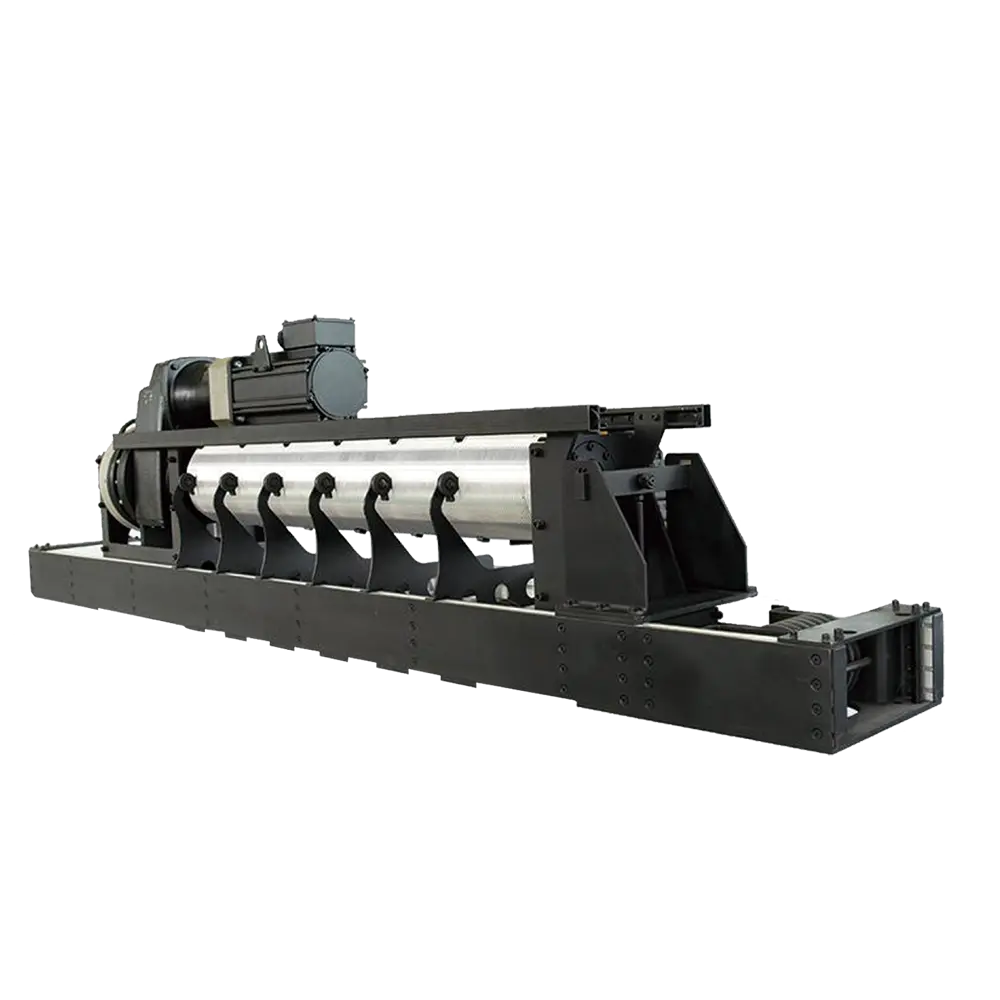
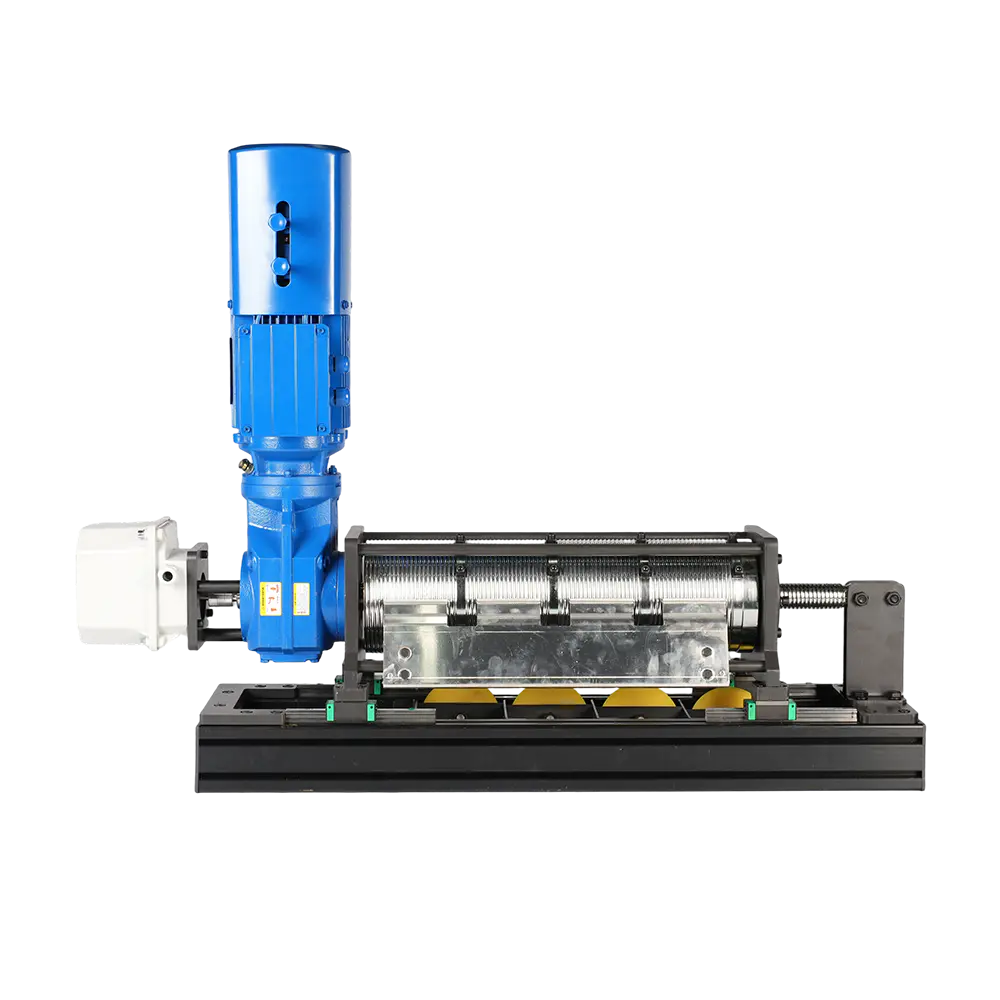
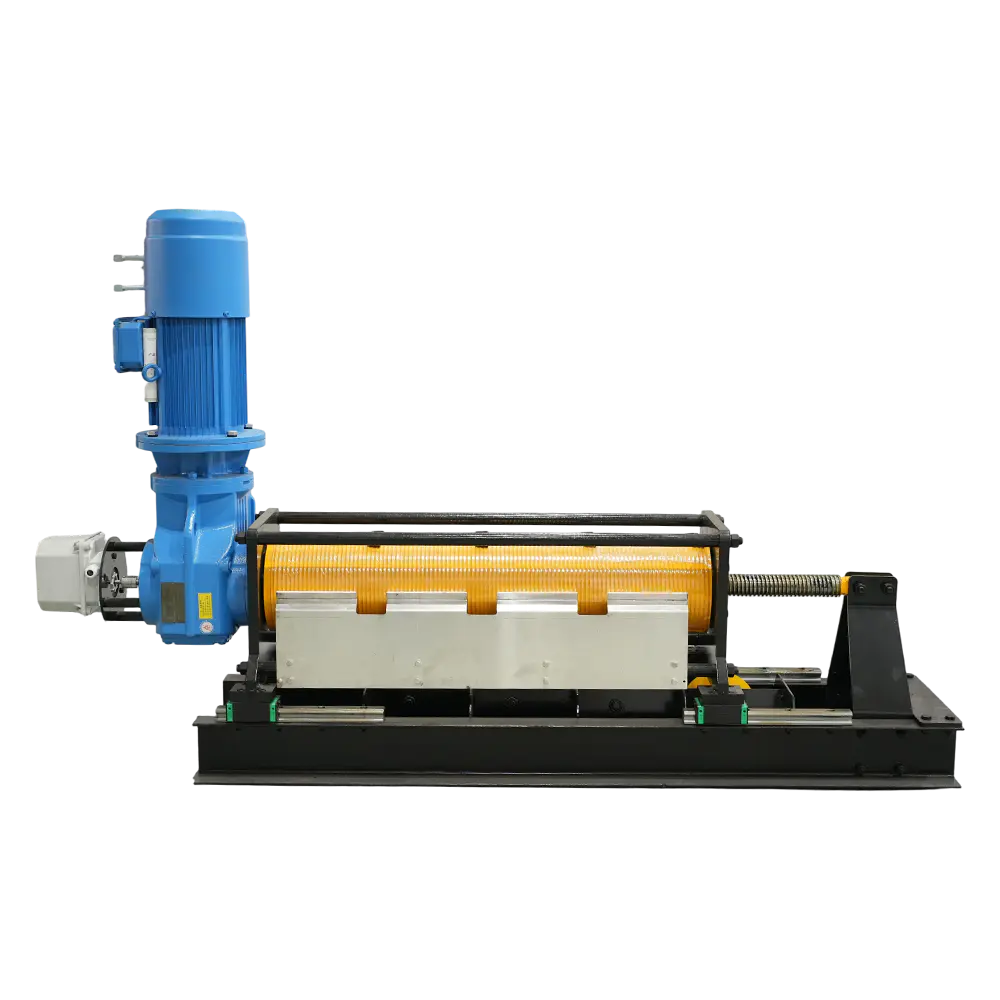
The Servo CNC Curtain Winding Machine is engineered for this demanding environment. It combines servo-driven motion, encoder feedback, DMX512 control, a planetary gearbox, tension sensing, and mechanical limit protection in one integrated stage automation solution. The system is designed to control the winding and unwinding of scrim or other stage fabrics with a lifting range of 0 to 10 meters, a maximum curtain width of 6 meters, a power rating of 200 watts, and a lifting speed adjustable from 0 to 0.3 meters per second.
Its role extends beyond moving a curtain from one position to another. The machine is designed to preserve predictable fabric position, controlled tension, and synchronized motion across repeated performance cycles. These capabilities are particularly important when a scrim is being used as a projection surface, a transparent visual layer, or a transition element between physical scenery and digital content.
Manufactured by RenteZhihe (JiangSu) Equipment Technology Co., Ltd., the machine represents the company’s broader focus on stage machinery, performance equipment, and intelligent control systems. The manufacturer provides integrated support that can include design, production, installation, commissioning, operation guidance, and maintenance. This approach helps venue operators obtain not only a mechanical product, but also a coordinated technical solution for professional performance spaces.
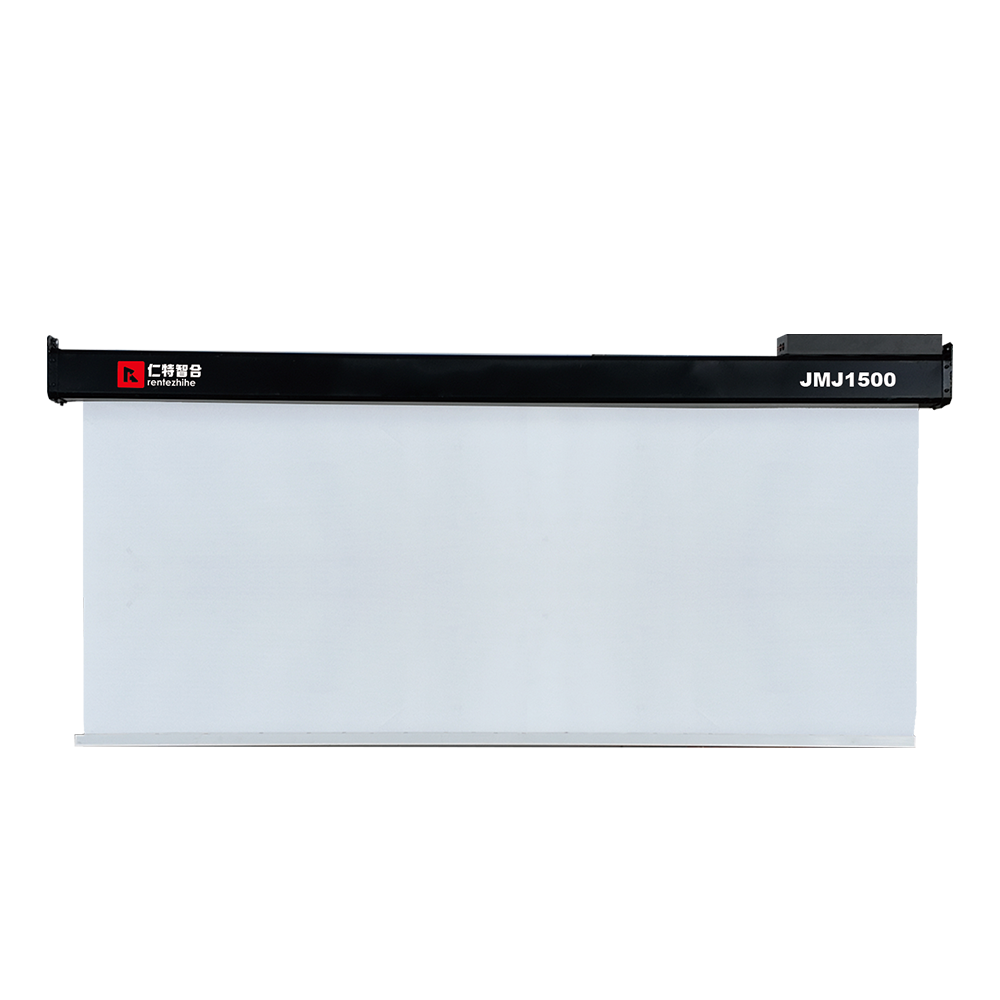
Servo CNC Curtain Winding Machine
A conventional curtain system may appear mechanically simple. A motor rotates a shaft, a fabric moves, and a control signal starts or stops the action. However, professional stage applications often involve more demanding requirements. The curtain may need to stop at a specific height, repeat the same movement many times during a show, coordinate with lighting changes, and remain stable while projection equipment displays content directly onto or behind the fabric.
Small errors that are acceptable in an ordinary room-divider curtain can become highly visible on a performance stage. If a fabric stops at a different position from one rehearsal to the next, projected images may no longer align with the intended visual composition. If the winding force changes during travel, the lower edge of the curtain may move unevenly. If the fabric flutters or develops inconsistent tension, the audience may see distortion in the projected image or notice an unwanted interruption in the illusion.
These challenges are amplified when several curtain units are used together. A production may employ multiple scrim layers, each moving at a different time or speed. The system may also need to coordinate with lighting fixtures, projection servers, stage lifts, scenic automation, and a central console. In such an environment, a dedicated stage curtain machine must be more than a basic motorized winch. It must act as a controlled motion device within a larger automation ecosystem.
The Servo CNC Curtain Winding Machine addresses this need through closed-loop servo control. Instead of estimating the curtain position only from motor running time, the system uses an encoder to monitor movement and correct deviations. The result is more reliable positioning and better repeatability across performance cycles.
The machine is configured for vertical suspension and is suitable for stage environments where the fabric travels upward and downward along a controlled path. Its specifications are designed to support theaters, concerts, bars, banquet halls, convention centers, immersive night tours, product launches, and film production spaces.
| Specification | Parameter | Practical Significance |
|---|---|---|
| Lifting range | 0–10 m | Supports substantial vertical curtain travel for stage reveals and concealment. |
| Power | 200 W | Provides a compact drive solution for controlled curtain movement. |
| Control method | DMX512 | Allows integration with common lighting and stage-control systems. |
| Maximum width | 6 m | Suitable for medium-scale scrim and curtain installations. |
| Lifting speed | 0–0.3 m/s | Enables adjustable movement for slow reveals or faster transitions. |
| Installation method | Vertical suspension | Designed for suspended stage curtain applications. |
| Primary drive technology | Servo drive | Supports precise, repeatable motion control. |
| Position monitoring | Encoder | Provides feedback for position correction and repeatability. |
| Transmission | Planetary gearbox | Supports stable torque transmission and compact mechanical design. |
| Protection and safety components | Tension sensor and limit switch | Helps monitor fabric conditions and define safe travel limits. |
Actual project performance depends on the fabric type, total curtain weight, installation conditions, suspension arrangement, operating frequency, and control-system configuration. For this reason, professional planning and technical confirmation should be completed before production and installation.
Scrim is one of the most effective materials for creating theatrical illusions because its appearance changes according to the relationship between the fabric, the audience, and the lighting. When the front of the scrim is illuminated, the material can appear comparatively solid and can receive projected images. When the front light is reduced and the area behind the scrim is illuminated, the fabric can become visually transparent, allowing performers, scenery, or projected environments to emerge.
This transition between visibility and transparency is the basis of many professional stage effects. A performer may appear behind an apparently solid image. A set can seem to materialize behind a blank surface. A physical product can be revealed through a digital environment. A concert stage can transition from a flat projection plane to an open performance space within seconds.
However, scrim also reveals movement problems more readily than many opaque fabrics. Uneven tension can create ripples. A difference in travel speed between the left and right sides can produce a diagonal edge. Sudden acceleration can cause flutter. An inconsistent stopping position can shift the projected image relative to the fabric. These issues do not merely affect mechanical appearance; they can interrupt the audience’s perception of the visual effect.
For this reason, the curtain winding mechanism must be designed around the fabric’s optical behavior. Controlled speed, repeatable positioning, and stable tension are essential. The Servo CNC Curtain Winding Machine is intended to provide this level of control through its servo drive, encoder, tension sensor, and integrated mechanical transmission.
Basic motorized curtain systems often depend on open-loop operation. In an open-loop system, the controller sends a command to the motor and assumes that the mechanism has completed the expected movement. If the system is told to run for a certain period, it estimates the final position based on the motor’s speed and operating time.
This method can be adequate for simple applications, especially where the curtain only needs to move between broad open and closed positions. However, it becomes less suitable when the curtain must stop at intermediate positions, repeat a projection cue, or maintain coordination with other automated equipment. Mechanical resistance, fabric accumulation, changes in load, and small variations in motor behavior can gradually affect the actual position.
A servo-based system uses feedback to compare the intended position with the actual position. The encoder supplies movement information, and the controller can adjust the drive response when a deviation is detected. This closed-loop approach supports more consistent operation and gives the operator greater control over acceleration, speed, stopping, and positioning.
The distinction becomes especially important for projection-based effects. If a projected image has been designed for a known curtain position, the machine must return to that position accurately during every performance. A system that relies only on elapsed motor time may gradually create alignment errors. A servo-controlled system is better suited to maintaining repeatable positions across rehearsals and shows.
Servo control provides precise positioning over a wide adjustable speed range. The machine can be programmed for slow, theatrical reveals or controlled transitions that are faster but still smooth. This flexibility allows creative teams to match curtain movement to music, lighting, narration, projection content, and performer timing.
Closed-loop control also supports repeatability. When the same cue is triggered repeatedly, the curtain can return to a consistent location rather than relying on an approximate travel time. This reduces the need for frequent manual correction and helps technicians maintain the relationship between physical scenery and programmed content.
Servo control can further improve the quality of acceleration and deceleration. Abrupt starting and stopping can cause fabric swing, noise, or unnecessary mechanical stress. By controlling the motion profile more carefully, the system can support smoother movement that is better suited to quiet venues, close audience viewing, and projection surfaces.
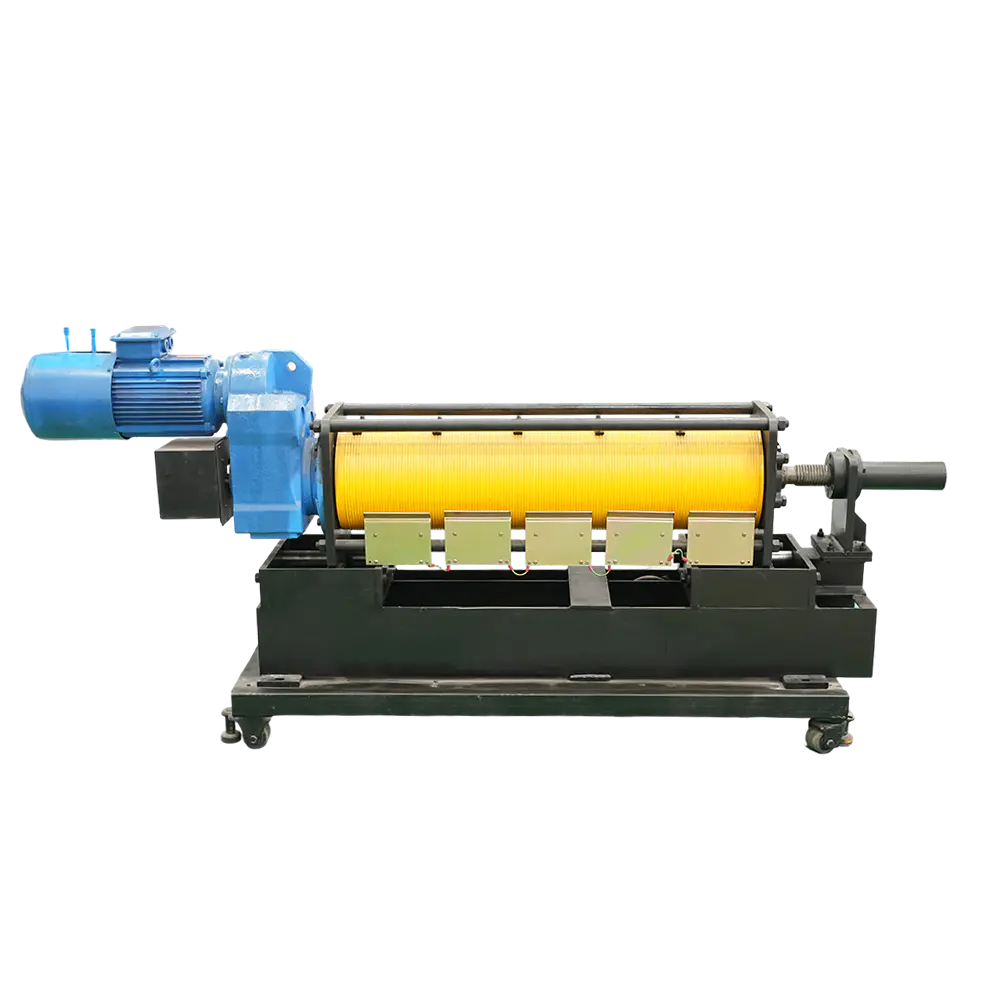
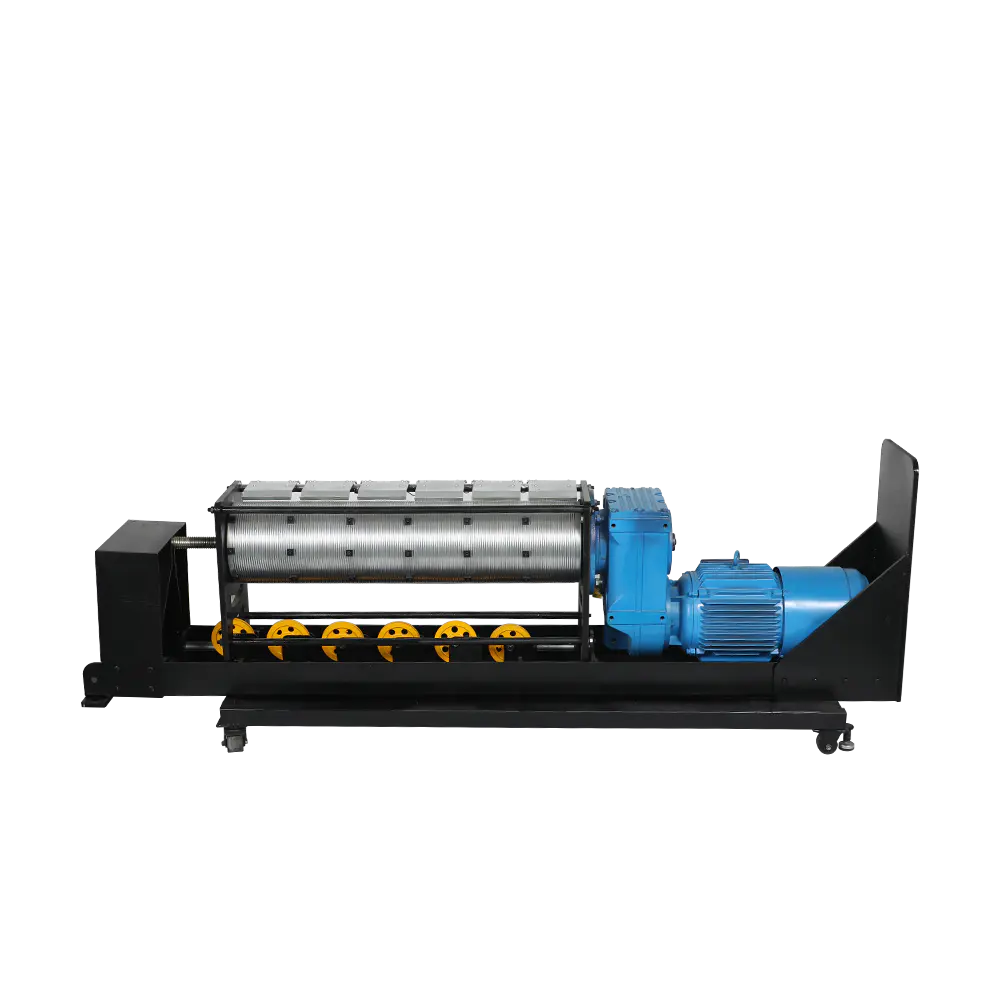
The machine incorporates several mechanical and electronic components that work together as a complete motion system. The servo drive provides controlled power. The encoder monitors movement. The planetary gearbox transfers torque through a compact transmission structure. The roller tube manages the curtain winding action. The tension sensor monitors the condition of the fabric, while the limit switch establishes defined travel boundaries.
The servo drive is the primary motion-control element. It converts commands from the control system into controlled motor behavior. Rather than operating only at a fixed on-or-off condition, it supports adjustable speed and more precise response. This makes it suitable for performances where the character of the movement matters as much as the final position.
The encoder provides feedback about the movement of the winding mechanism. This feedback enables the control system to identify the actual travel condition and compare it with the programmed command. It is particularly valuable when the curtain is required to repeat a position or coordinate with projection and lighting cues.
The planetary gearbox provides a compact transmission arrangement with stable torque transfer. In a stage machine, the gearbox must support controlled movement while fitting within the available installation space. Its role is to help match the motor’s operating characteristics to the torque and speed requirements of the roller tube.
The roller tube is the mechanical element around which the curtain is wound or from which it is released. Its design and alignment influence how evenly the fabric travels. Correct installation, appropriate fabric attachment, and proper tension adjustment remain important to achieving the best results from the complete system.
The tension sensor helps monitor the load condition of the fabric and winding arrangement. Stable tension is important for reducing sag, flutter, and irregular movement. It is also important for protecting the curtain material from unnecessary stress during repeated operation.
The limit switch defines a controlled travel boundary. It provides an additional layer of protection by helping prevent the mechanism from traveling beyond its intended range. Limit protection should be treated as part of the overall safety design, alongside correct installation, inspection, operator training, and venue-specific risk assessment.
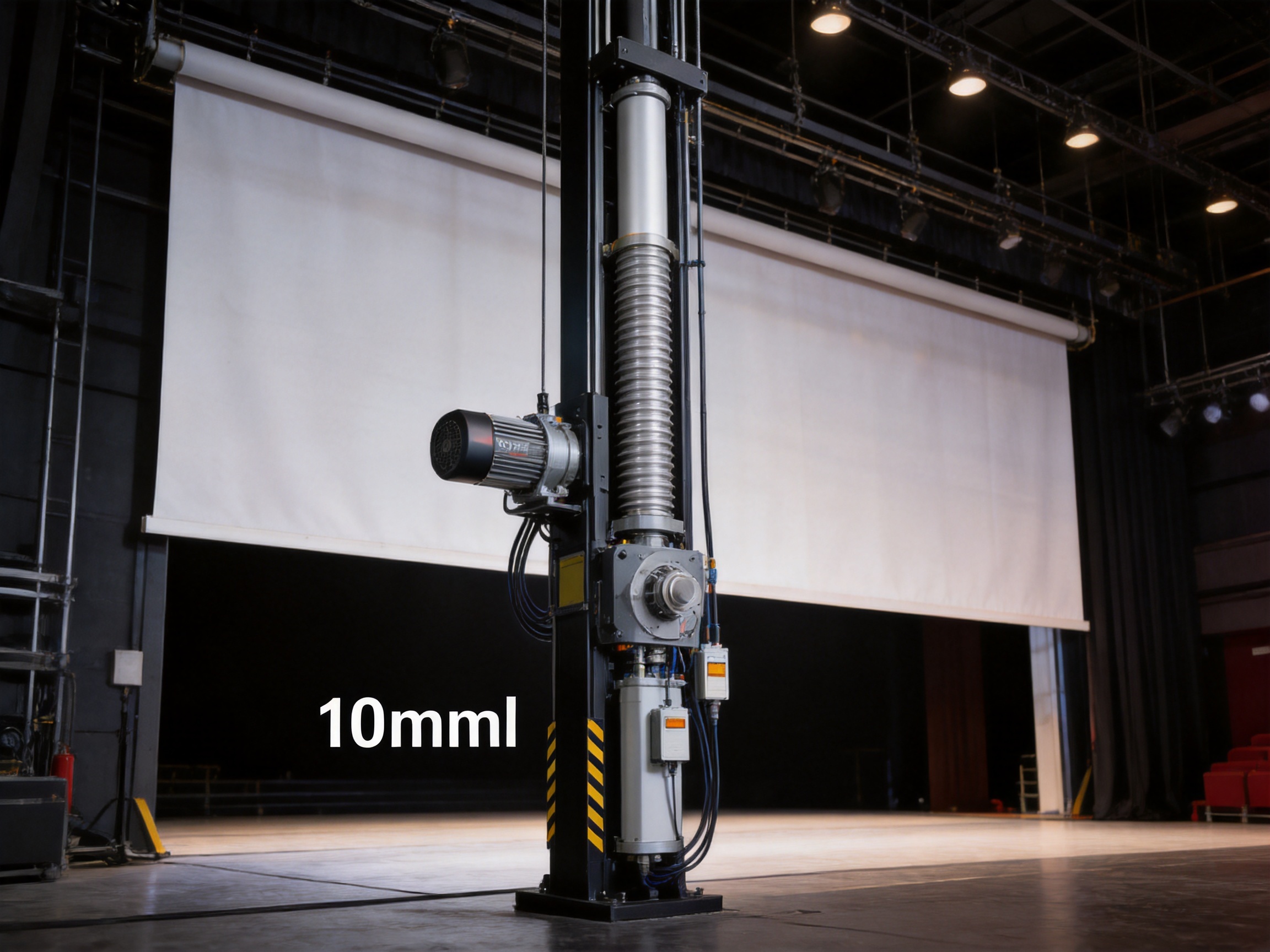
The performance of a stage automation product depends not only on its component list, but also on how the product is designed, assembled, inspected, and commissioned. A curtain machine may include a high-quality servo motor, yet still produce unsatisfactory results if the roller tube is poorly aligned, the tension system is not calibrated, or the control logic is not properly matched to the mechanical structure.
RenteZhihe (JiangSu) Equipment Technology Co., Ltd. approaches stage equipment as an integrated engineering product. The company’s business covers research and development, manufacturing, installation, commissioning, operation support, and maintenance. This broad capability allows mechanical, electrical, and control-system requirements to be considered together rather than treated as unrelated stages.
Manufacturing begins with an understanding of the venue and performance requirements. Engineers need to consider the required lifting height, curtain width, fabric characteristics, available structural support, intended movement speed, frequency of operation, control protocol, and relationship with other stage equipment.
For a scrim installation, the design process should also consider front and rear lighting conditions, projection distance, audience sightlines, access for maintenance, and the transition between visible and transparent states. A machine used in a small theater may have different requirements from a system used in a touring concert, immersive night tour, or film studio.
By evaluating these requirements before production, the manufacturer can determine the appropriate mechanical arrangement, control configuration, and installation method. This reduces the risk of selecting a nominally suitable product that does not perform correctly in the actual venue.
The servo drive, encoder, planetary gearbox, roller tube, tension sensor, and limit switch must operate as a coordinated assembly. Each component affects the behavior of the others. For example, the feedback system must correspond to the mechanical travel. The gearbox ratio must be appropriate for the desired speed and torque. The tension sensor must be installed in a way that reflects actual fabric conditions. The limit switches must be positioned according to the real operating range rather than theoretical dimensions alone.
Careful integration is one of the areas where a specialized stage machinery manufacturer can offer an advantage over general-purpose automation suppliers. Stage systems often operate in environments where quietness, appearance, cue timing, and audience safety are as important as raw mechanical output. A product designed specifically for performance venues can address these combined requirements more effectively.
Mechanical alignment is critical to curtain performance. The roller tube, suspension points, fabric attachment, and guide arrangement must be installed with appropriate accuracy. Misalignment may produce uneven winding, edge drift, fabric wrinkles, or additional load on the drive system.
During assembly, attention should be given to the fit of transmission components, the stability of the mounting structure, the routing of cables, and the accessibility of service points. A clean and organized assembly not only improves reliability, but also simplifies future inspection and maintenance.
After mechanical assembly, the servo system and DMX512 interface must be configured. The control system should be tested across the complete travel range, including low-speed operation, acceleration, deceleration, intermediate stops, upper and lower limits, and repeated cycles.
Testing should also verify communication between the curtain machine and the venue’s lighting or show-control system. A command that appears correct in isolation may behave differently when combined with other DMX512 devices or when several units are triggered simultaneously. Multi-unit testing is therefore important for productions that depend on synchronized movement.
Professional commissioning includes more than confirming that the machine moves. It should establish operating parameters, verify travel limits, check fabric tension, confirm emergency procedures, and provide operators with clear instructions. The commissioning process can also identify venue-specific adjustments that are not visible during factory testing.
Documentation should include installation information, operating guidance, inspection recommendations, control details, and maintenance procedures. These materials help venue technicians operate the equipment consistently and provide a useful reference when production staff change or the system is integrated with new show-control equipment.
The Servo CNC Curtain Winding Machine is differentiated from basic curtain automation by the way its motion control, feedback, and stage integration features are combined. The following advantages are particularly relevant to professional users.
Encoder feedback and servo control help the machine achieve more consistent positions than a simple timed motor system. This is valuable for projection mapping, repeatable reveals, and scenic transitions that must occur at precise locations.
Scrim effects depend on the relationship between light, fabric, and movement. Controlled travel and stable tension help preserve the visual quality of the effect. The machine is therefore suited to productions that use curtains as projection surfaces or transitional visual layers rather than only as standard stage drapes.
The adjustable speed range from 0 to 0.3 meters per second allows the movement to be matched to the artistic intention. A slow rise can build suspense, while a quicker but controlled movement can support a dynamic concert or product reveal. The operator does not need to choose between only two fixed movement states.
DMX512 control allows the curtain system to communicate with a widely used stage-control environment. This reduces the need for a completely separate operating interface and makes it easier to coordinate curtain movement with lighting cues and other compatible equipment.
Smooth operation and low noise are important in theaters, conference centers, film studios, and immersive venues. Excessive mechanical noise can distract an audience, interfere with dialogue, or be captured by microphones. The machine is designed with smooth motion and controlled transmission in mind.
The product features a maintenance-free design orientation for routine operation, supported by integrated electronic control and a carefully arranged mechanical system. Even so, all stage machinery requires periodic inspection. A maintenance-free design should be understood as reducing routine service demand, not eliminating the need for safety checks and professional inspection.
Excellent structural rigidity and a high protection grade support stable operation in demanding venue conditions. Structural stiffness helps maintain alignment, while appropriate protection improves resistance to the environmental conditions normally found in performance spaces. The exact protection level and installation suitability should be confirmed for each project.
DMX512 control and servo-based positioning make the machine suitable for installations involving multiple units. Several curtain systems can be programmed for staggered movement, coordinated reveals, or synchronized transitions, depending on the requirements of the show-control design.
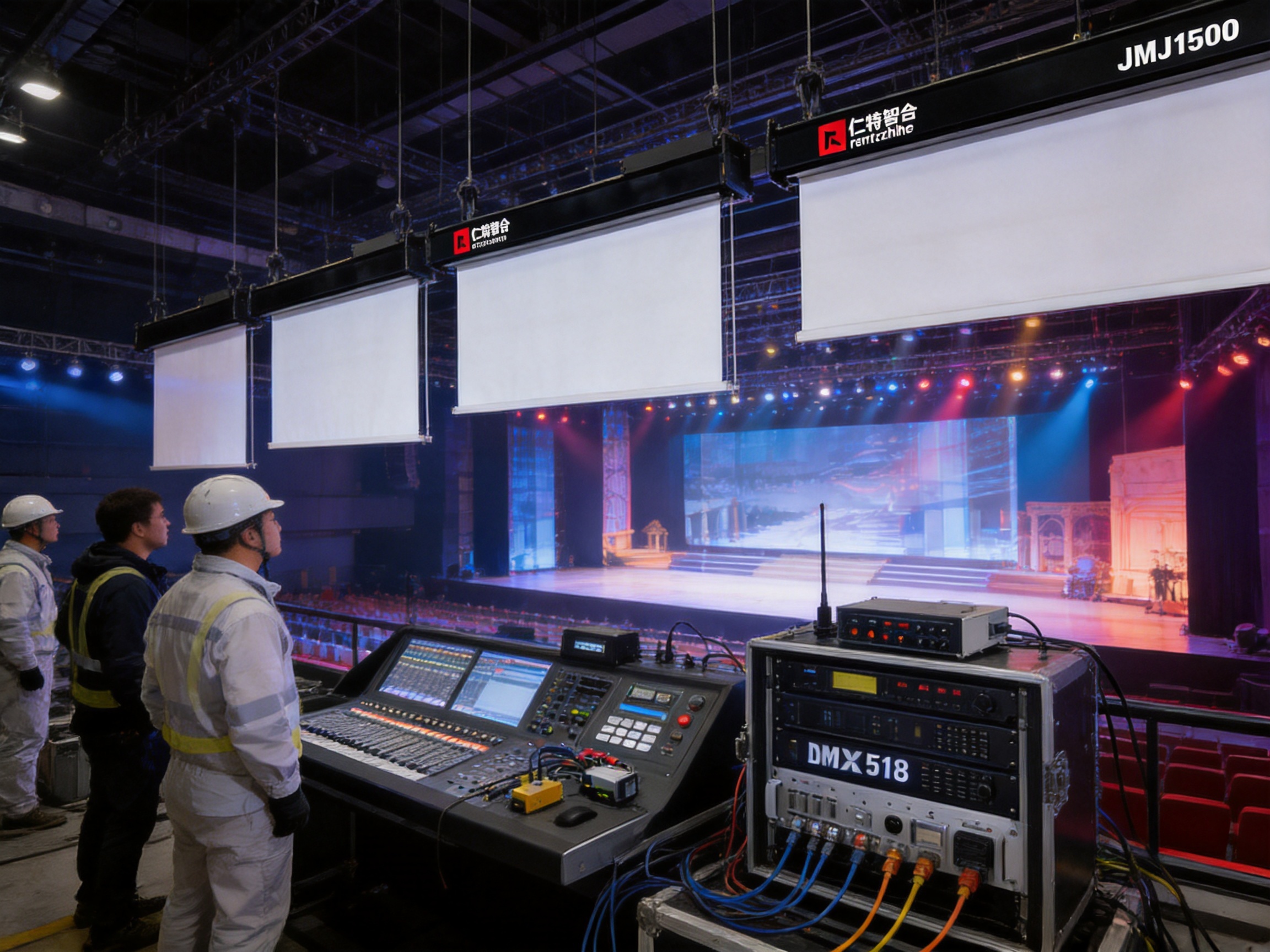
DMX512 is widely used in entertainment technology because it allows control data to be distributed among lighting fixtures, effects equipment, and other stage devices. Integrating the curtain machine into this environment enables operators to include curtain movement in the same cue structure used for the rest of the production.
For example, a production may program the scrim to rise as front lighting fades. A projection may begin when the curtain reaches an intermediate position. A second curtain may move several seconds later to reveal a performer or scenic object. These events can be planned as a coordinated sequence rather than executed as separate manual actions.
| Production Requirement | Role of the Curtain Machine | Potential Artistic Result |
|---|---|---|
| Layered scrim reveal | Moves several curtains according to staggered cues. | Creates depth, progressive reveals, and changing visual planes. |
| Projection-to-physical overlay | Positions the curtain consistently for mapped content. | Links projected imagery with physical fabric and scenery. |
| Front and rear lighting transition | Coordinates movement with changes in lighting direction. | Transitions the scrim between visible and transparent states. |
| Concert stage transformation | Executes timed movement as part of a larger show cue. | Changes the apparent stage scale and visual atmosphere. |
| Product launch reveal | Provides controlled and repeatable opening movement. | Builds anticipation and reveals the product at a programmed moment. |
| Film or broadcast scene transition | Moves a fabric layer at a repeatable speed and position. | Supports in-camera visual transitions and controlled backgrounds. |
Synchronization quality depends on the entire control chain, including the console, DMX512 network, cue programming, projection system, lighting design, and physical installation. The machine provides an important foundation, but successful results also require proper system integration and rehearsal.
In theaters, the machine can support scrim illusions, scenic reveals, transitions between acts, and controlled changes in stage depth. Quiet operation is valuable when movement occurs during dialogue, music, or dramatic pauses. Repeatable positioning also helps maintain the visual consistency of a production over a long performance run.
Concert productions often use large-scale projection, complex lighting, and rapid scene changes. A servo-controlled curtain system can form part of the visual language of the show, moving in synchronization with music, lighting effects, and video content. Adjustable speed allows the same technology to support both dramatic slow reveals and energetic transitions.
Immersive night tours use projection and lighting to transform outdoor or indoor environments. Scrim curtains can conceal structures, create temporary visual surfaces, or introduce apparitions and layered scenery. Precise movement helps the system operate repeatedly along a scheduled visitor route or timed performance sequence.
Product launches often depend on a carefully timed reveal. A curtain may provide a physical layer for branding, animation, or projection before opening to expose the product. The ability to control movement speed and position helps event designers coordinate the reveal with speech, music, video, and lighting.
Film and video studios can use precision curtain systems as part of controlled visual transitions or in-camera effects. A scrim can separate foreground and background elements, support projection, or create a reveal without relying entirely on digital compositing. Repeatability is especially useful when several takes must reproduce the same movement.
Flexible event venues may host different types of programs throughout the year. A compact, programmable curtain system can support conferences, ceremonies, concerts, themed events, and corporate presentations. DMX512 compatibility makes it easier for event technicians to incorporate the machine into existing lighting and show-control workflows.
Reliable operation begins with proper selection and installation. The curtain width, fabric weight, winding arrangement, suspension structure, and operating frequency must be compatible with the machine’s design. Installation should be carried out by qualified personnel who understand both stage machinery and the specific structural conditions of the venue.
Before each production, operators should verify that the curtain path is clear, the fabric is correctly attached, the roller tube is unobstructed, and the travel limits are functioning. They should also confirm that no person or object is within a hazardous movement area. A visual inspection can identify fraying, unusual fabric accumulation, loose hardware, cable damage, or unexpected changes in movement.
Periodic inspection should include the drive assembly, gearbox, mounting points, encoder connection, tension-sensing arrangement, limit switches, control wiring, and communication interface. Unusual noise, vibration, hesitation, uneven winding, or inconsistent stopping should be treated as a reason for investigation rather than ignored.
Operators should be trained in normal operation, emergency stopping, fault response, and recovery procedures. The machine should not be used outside its intended operating range, and project-specific safety measures should be established for public venues, touring systems, and installations where people may work below or near the moving curtain.
Stage automation differs from general industrial automation because the equipment must satisfy artistic, architectural, operational, and safety requirements at the same time. The machine must fit within a performance environment, remain visually discreet, respond predictably to cues, operate quietly, and be accessible for technical teams.
RenteZhihe (JiangSu) Equipment Technology Co., Ltd. specializes in stage machinery, performance equipment, and intelligent control systems. The company’s stated service scope includes design, production, installation, commissioning, operation, and maintenance. This end-to-end capability can be valuable when a customer needs a custom arrangement rather than an isolated off-the-shelf component.
Engineering support is particularly important for installations involving several curtain units or multiple types of stage machinery. The manufacturer can evaluate how the winding machine relates to the venue’s structural conditions, control architecture, and performance schedule. It can also help coordinate the transition from design drawings to on-site commissioning.
The company serves theaters, cultural centers, stadiums, conference centers, and multifunctional performance spaces. Its product development approach emphasizes safe, stable, and integrated intelligent solutions. For customers working on complex venues, this broader experience can reduce the risk of treating each equipment item as a separate technical problem.
Manufacturing quality also depends on communication between design and production teams. Feedback from installation and operation can be used to improve future equipment configurations, service procedures, and control solutions. A manufacturer that remains involved beyond delivery is better positioned to support long-term project performance.
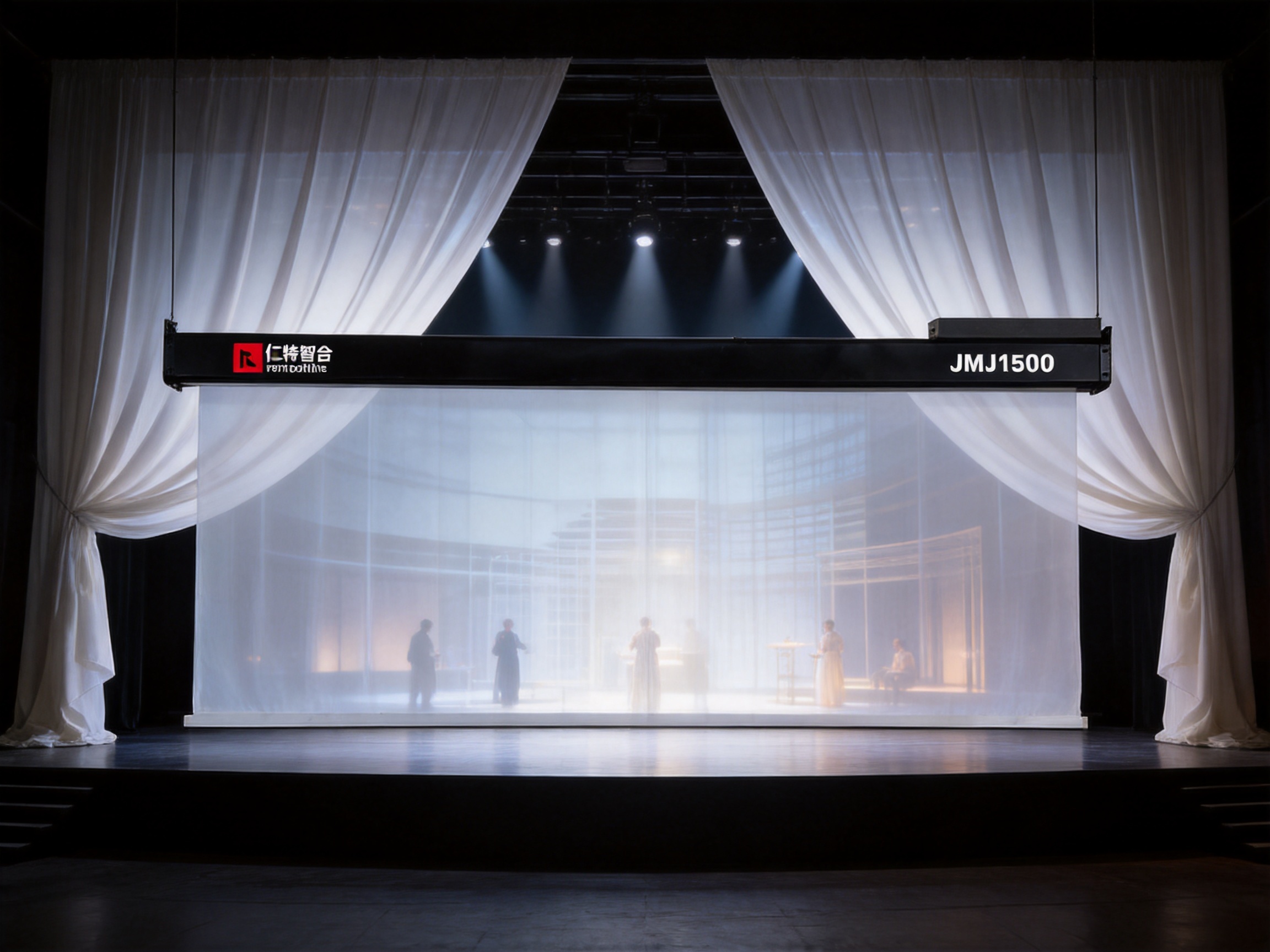
Customers considering a Servo CNC Curtain Winding Machine should define the project requirements at an early stage. Important information includes curtain dimensions, total fabric weight, material type, required travel height, desired movement speed, number of operating cycles, installation orientation, available power, DMX512 network arrangement, and relationship with projection or lighting systems.
The visual objective should also be described clearly. A system intended for simple concealment may not require the same positioning behavior as one designed for projection mapping. A scrim installation used for front-lit and rear-lit transitions may require careful planning of lighting angles and blackout conditions. A multi-layer effect may require several machines with different cue offsets and movement profiles.
Structural coordination is another key consideration. The building or stage structure must support the equipment, fabric, and associated loads. Access for installation and future maintenance should be planned before the final equipment position is fixed. Cable routes, control cabinets, emergency access, and operator sightlines should be included in the venue design.
Finally, the control strategy should be tested using representative cues. Rehearsal should include the actual projection content, lighting transitions, music or timecode references, and all connected curtain units. This helps identify timing differences or visual problems before the public performance.
It is a servo-controlled stage automation device designed to wind and unwind curtains or scrim fabrics with precise, programmable movement. It uses a servo drive, encoder feedback, planetary gearbox, roller tube, tension sensor, and limit switch to support controlled vertical suspension applications.
In this context, CNC refers to computer-controlled, precisely programmed movement. The system is intended to execute defined positions, speeds, and cues rather than operating only as a simple manually switched motor.
Servo control provides feedback and correction during movement. It helps the curtain reach repeatable positions, supports adjustable speed, and improves coordination with projection, lighting, and other stage equipment.
Yes. The machine is particularly suitable for scrim-based visual effects where accurate movement and stable tension are important. The fabric type, width, weight, attachment method, and installation arrangement should be confirmed during project design.
The specified lifting range is 0 to 10 meters. Actual project suitability depends on the curtain configuration, fabric load, structural arrangement, and installation conditions.
The specified maximum width is 6 meters. The final usable width should be confirmed according to the fabric characteristics, total load, winding arrangement, and project requirements.
The machine uses DMX512 control, allowing it to be integrated with compatible lighting consoles and stage-control systems. Multi-unit coordination depends on the overall network and cue-programming design.
Yes. Several units can be coordinated for layered scrim reveals, synchronized movement, staggered cues, and projection-related effects. The control system must be configured and tested for the required timing relationships.
It is designed to support applications where curtain position and projection content must remain coordinated. Servo positioning and encoder feedback help improve repeatability, while proper lighting, projection calibration, fabric selection, and system commissioning remain essential.
The product is designed for smooth, low-noise operation. Perceived sound levels in the venue will also depend on mounting conditions, structural transmission, fabric movement, surrounding equipment, and room acoustics.
The product is designed with a low-maintenance orientation, but all stage machinery requires regular inspection. Operators should check the fabric, mounting points, wiring, drive components, limit switches, and movement behavior according to the project’s maintenance schedule.
Applications include theaters, concerts, immersive night tours, product launches, film production, bars, banquet halls, convention centers, cultural centers, stadiums, and multifunctional performance spaces.
The company provides stage machinery design and manufacturing services and can support project-specific requirements. Customers should provide detailed information about dimensions, load, travel, control integration, venue structure, and artistic objectives for technical evaluation.
The Servo CNC Curtain Winding Machine is designed for a new generation of stage applications in which fabric movement is part of the visual content itself. Its value lies not only in raising and lowering a curtain, but in providing controlled, repeatable, and synchronized movement for professional performance environments.
Servo drive technology, encoder feedback, adjustable speed, DMX512 control, tension monitoring, planetary transmission, and limit protection combine to create a more capable alternative to basic timed motor systems. These features are especially valuable when scrim fabric is used for projection mapping, virtual-real overlays, layered reveals, and transitions between visible and transparent stage states.
The machine’s specified 0 to 10 meter lifting range, 0 to 0.3 meter-per-second speed range, 6 meter maximum width, 200-watt power rating, and vertical suspension arrangement provide a practical foundation for a wide range of venues. Its success in a particular project will depend on correct system selection, structural installation, fabric preparation, control programming, and commissioning.
Supported by RenteZhihe (JiangSu) Equipment Technology Co., Ltd.’s experience in stage machinery and intelligent control systems, the product can be developed as part of an integrated venue solution. From application analysis and mechanical design to manufacturing, installation, commissioning, and maintenance support, the manufacturer’s complete engineering approach helps customers address the technical demands of modern stage automation.
For theaters, concerts, immersive installations, corporate events, and film production environments, precision curtain control can transform a simple fabric surface into an active part of the production. When movement, lighting, projection, and physical scenery are coordinated accurately, the result is a more reliable technical platform for compelling visual storytelling.
1. DMX512-A Digital Communication Standard for Entertainment Technology and Stage Control Systems.
2. General principles of servo motion control, encoder feedback, and closed-loop positioning in automated machinery.
3. Technical studies of scrim fabrics, front lighting, rear lighting, transparency, and theatrical projection effects.
4. Stage machinery planning practices for theaters, concert venues, cultural centers, and multifunctional performance spaces.
5. Principles of projection mapping alignment, repeatable surface positioning, and synchronized scenic automation.
6. RenteZhihe (JiangSu) Equipment Technology Co., Ltd. product specifications and technical information for Servo CNC Curtain Winding Machine.
7. General maintenance and operational safety practices for motorized stage equipment and suspended performance machinery.
We specialize in delivering advanced stage machinery, rigging systems and intelligent control solutions for performance spaces worldwide.

No. 111 Runfeng Road, Hailing District, Taizhou City, Jiangsu Province, China

rtstage@163.com

+86-139 1771 1698

+86-139 1771 1698
rtstage@163.com
 中文简体
 English
 русский
 Français
 Español
 عربى