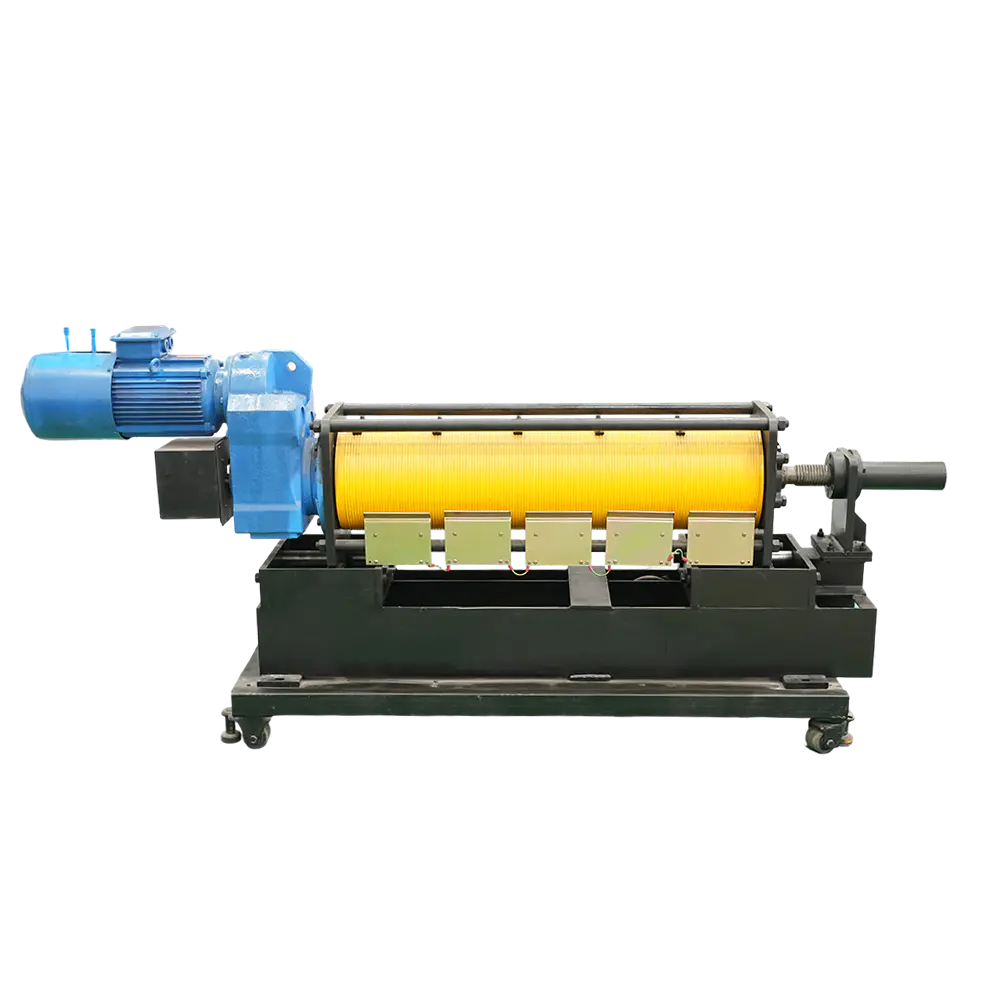
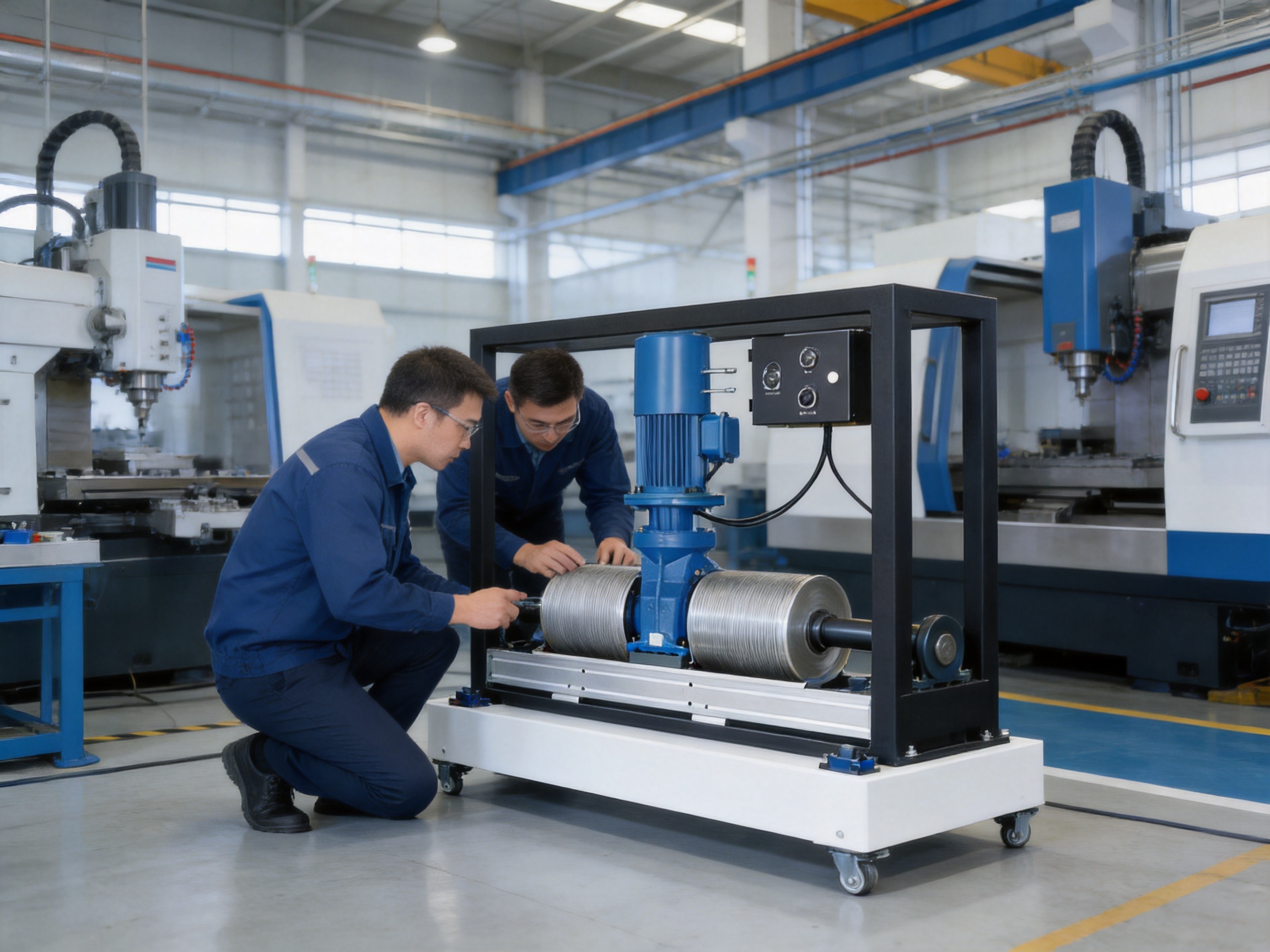
Modern stage productions demand lifting equipment that is safe, accurate, portable, and adaptable. Touring companies, theaters, cultural centers, conference facilities, and temporary performance venues must frequently move scenery, lighting structures, audio equipment, screens, and other suspended loads. These applications require more than basic lifting power. They require controlled movement, reliable rope management, repeatable positioning, efficient installation, and dependable operation under demanding production schedules.
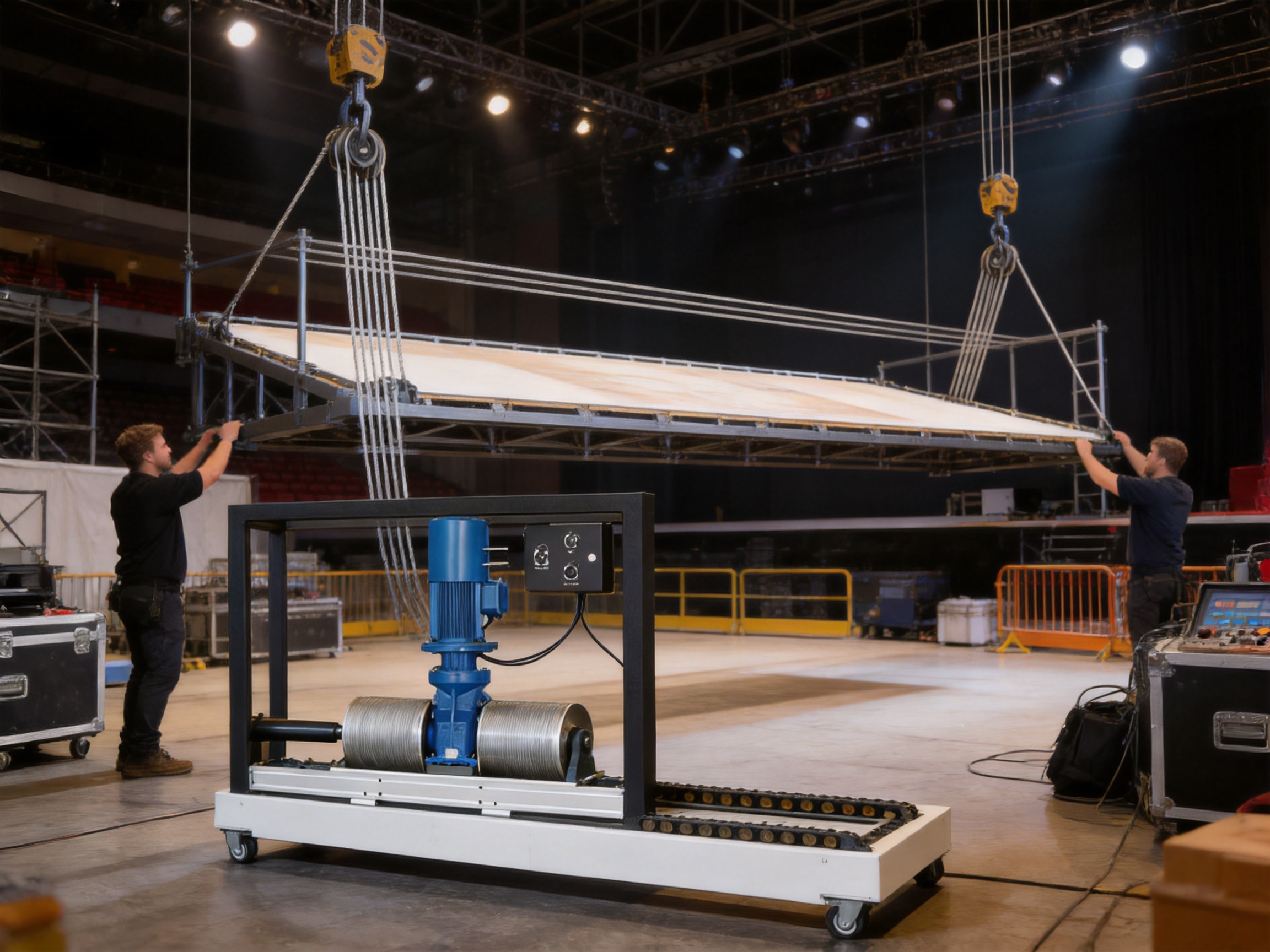
The Dual-Point Zero-Fleet Stage Winch is designed to meet these requirements through a combination of dual-point load control, adaptive zero-fleet rope technology, a compact mechanical structure, and intelligent monitoring components. With a payload capacity of up to 500 kilograms, a lightweight base assembly, a single-layer tracked drum, and dual-braking redundancy, the system provides a practical solution for touring productions and temporary installations without sacrificing the safety principles expected from permanent stage machinery.
Manufactured by RenteZhihe (JiangSu) Equipment Technology Co., Ltd., the winch reflects the company’s broader capabilities in stage machinery, performance equipment, and intelligent control systems. The company supports projects through design, manufacturing, installation, commissioning, operation, and maintenance. This integrated approach allows the product to be developed not only as an individual winch, but also as part of a complete stage automation solution.
A stage winch operates in an environment where accuracy and reliability are as important as lifting capacity. Suspended scenery may need to move quietly and smoothly during a performance. Lighting equipment may require precise positioning above an audience. Audio structures may need to be raised and lowered repeatedly between events. Touring shows may need to install and remove the same equipment in multiple venues within a limited time.
These conditions place several demands on a lifting system. The equipment must distribute loads effectively, maintain rope alignment, respond accurately to control commands, and prevent unintended movement when the system stops. It must also be practical to transport and install. A winch that performs well in a permanent venue may be unsuitable for touring if it is too heavy, difficult to configure, or slow to deploy.
Traditional single-point lifting methods can create challenges when the suspended load is wide, unevenly distributed, or sensitive to tilting. A single lifting position may allow a long structure to rotate or swing unless additional stabilization measures are used. The risk of uneven movement becomes more important when scenery and technical equipment must be positioned close to other stage components.
The Dual-Point Zero-Fleet Stage Winch addresses these challenges by using two lifting positions and coordinated rope management. The dual-point configuration helps distribute lifting forces across the suspended structure, while the zero-fleet design helps keep the wire rope aligned with the drum. Together, these features support better balance, smoother movement, and more consistent operation.
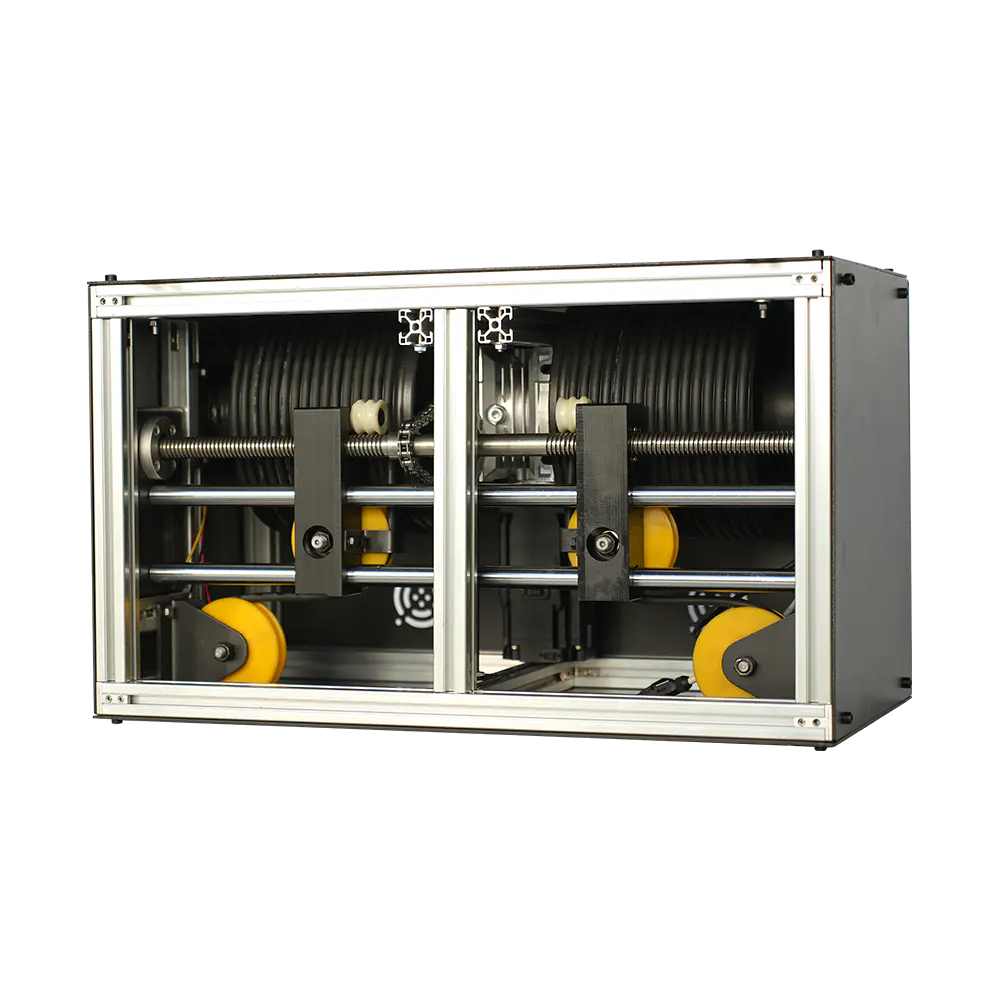
The product is engineered as a dual-point lifting solution for stage automation. Instead of relying on one suspension location, the system uses two coordinated lifting positions. This arrangement is particularly useful for wide scenery frames, lighting trusses, audio equipment, suspended banners, architectural elements, and other stage loads that require improved horizontal stability.
When both lifting positions operate in coordination, the suspended load can be raised or lowered with reduced tilting. The load distribution also helps limit unwanted rotational movement. For stage technicians, this creates a more predictable operating process. For audiences and performers, it supports a safer and more orderly production environment.
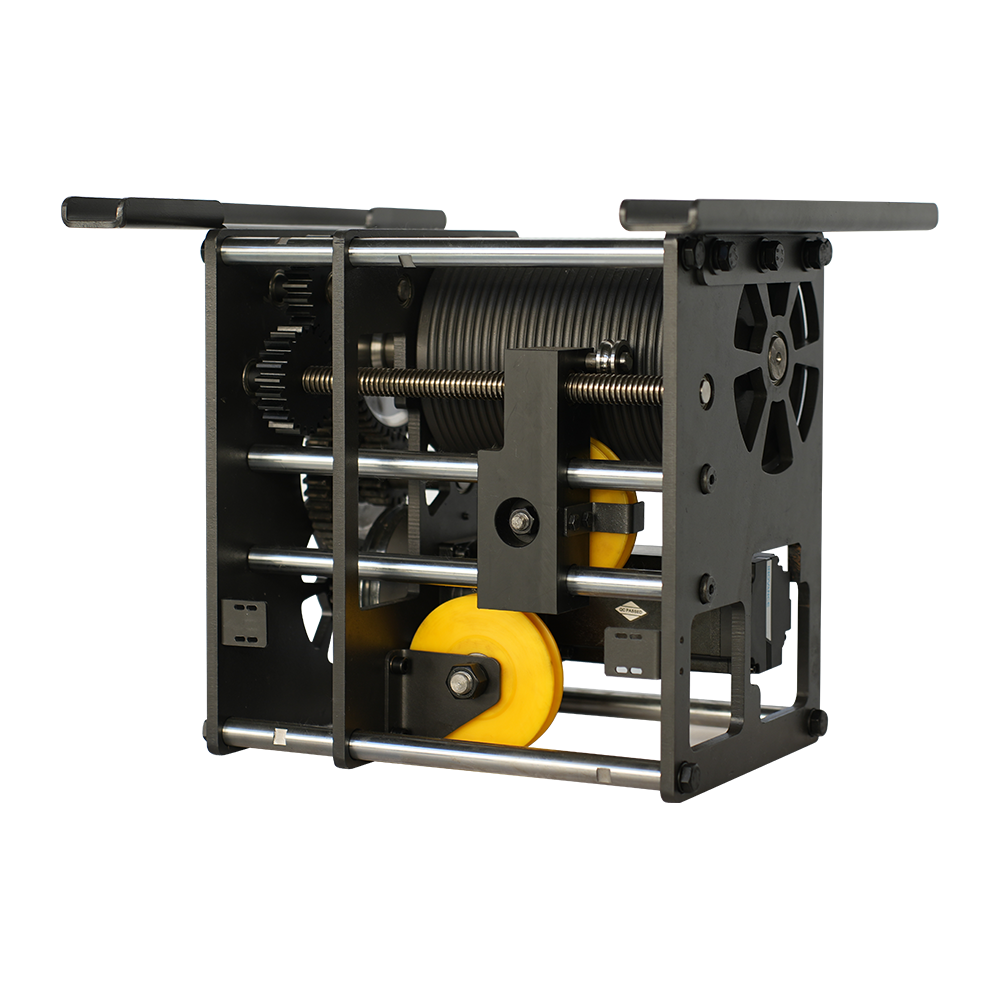
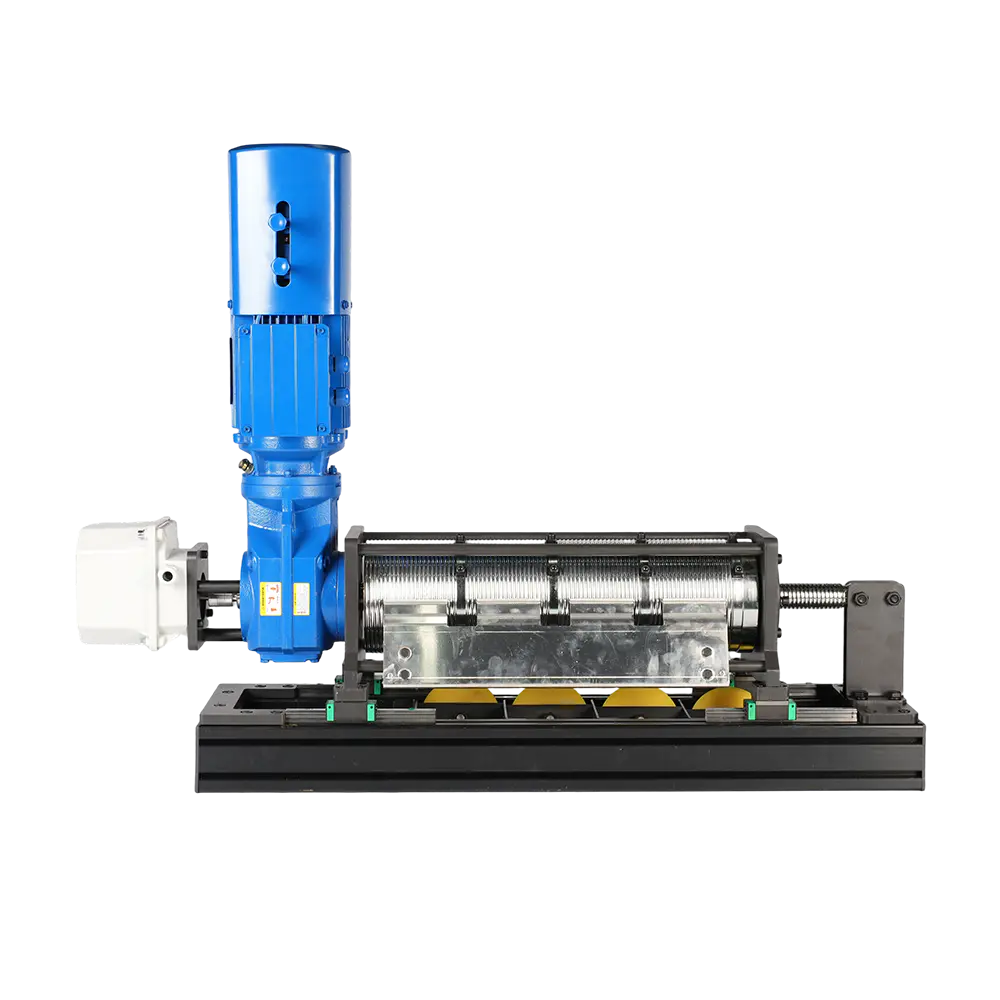
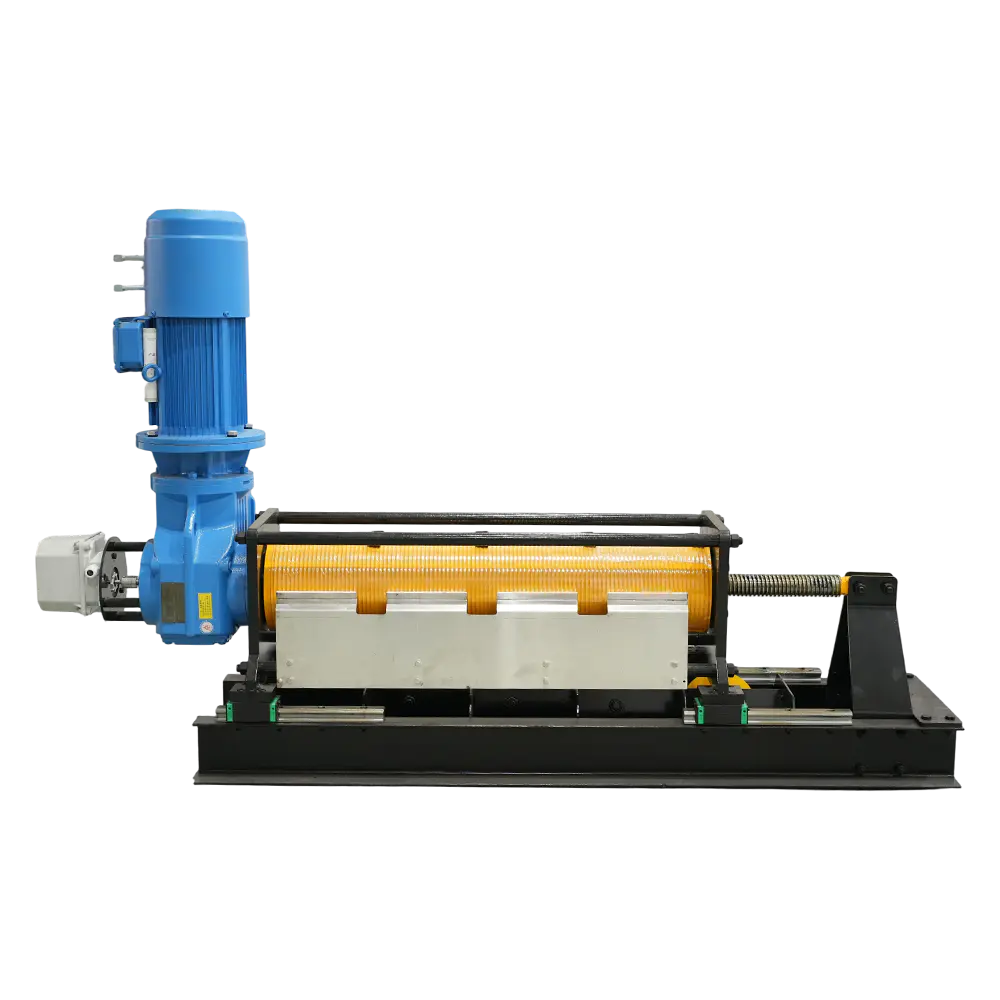
The product incorporates electric motors, reducers, encoders, limit switches, travel sensors, rope arrangement sensors, a base assembly, and pulleys. Each component contributes to a complete lifting and monitoring system. The motor supplies the driving force, while the reducer manages output speed and torque. Encoders provide movement feedback, and limit switches help define safe operating boundaries. Travel sensors monitor the movement path, while rope arrangement sensors support proper positioning of the wire rope on the drum.
The system is not limited to a single type of venue. Its configuration can be adapted for touring shows, temporary stages, theaters, cultural centers, conference facilities, stadiums, and multifunctional halls. Depending on project requirements, the equipment can be integrated into a broader stage machinery system with suitable control, support, and installation arrangements.
The 500-kilogram payload capacity makes the winch suitable for many common stage lifting tasks. Actual application suitability depends on the complete installation design, load characteristics, suspension arrangement, operating environment, and applicable safety requirements. Proper engineering assessment remains essential before the equipment is placed into service.
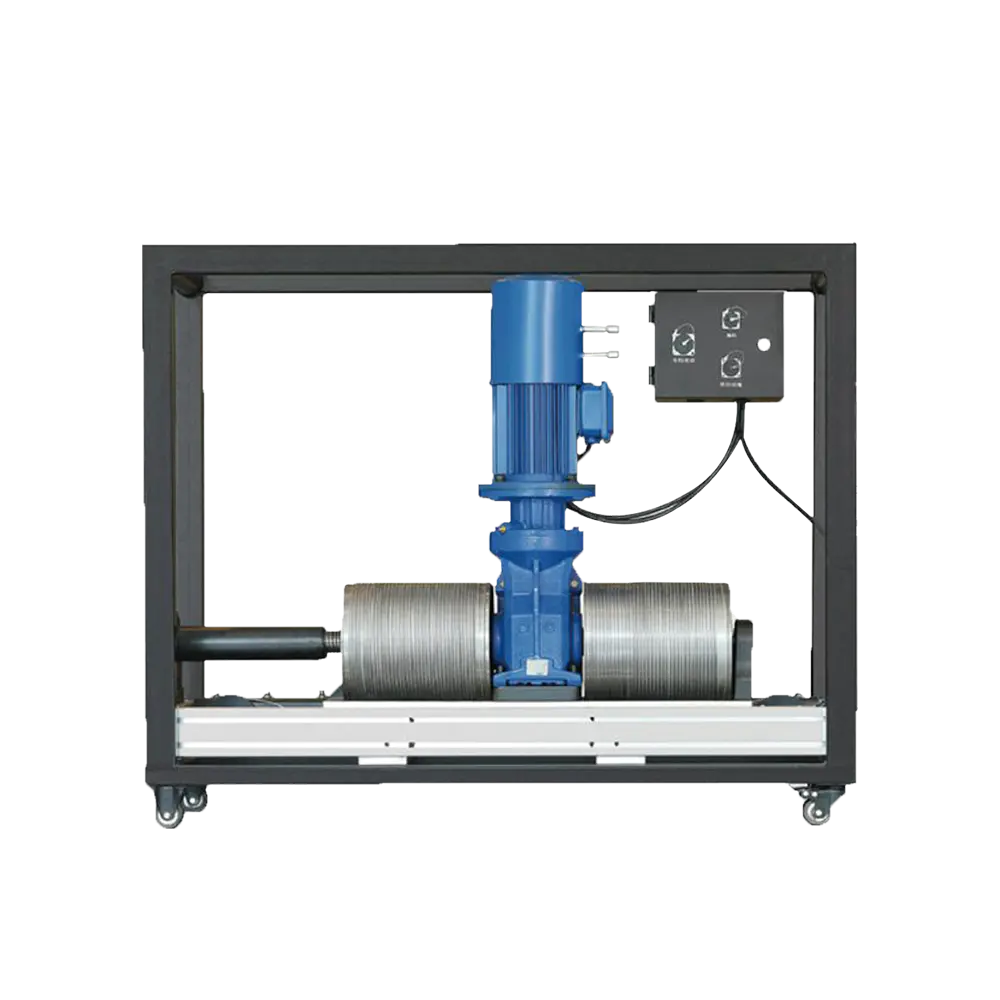
Dual-Point Zero-Fleet Stage Winch
The central advantage of a dual-point stage winch is the ability to support a suspended load through two lifting positions. This arrangement creates a more balanced support structure than a single-point system for many wide or elongated loads. By coordinating the two points, the lifting system can help maintain a more level orientation as the load moves vertically.
A single suspension point may be adequate for compact loads whose center of gravity is directly below the lifting position. However, wider stage structures can experience tilting when the load is not perfectly balanced. A dual-point system reduces reliance on a single central connection and provides additional control over the load’s orientation.
Improved stability is especially important for lighting bars, scenery panels, display structures, and technical bridges. These loads may have different weights at different locations. The two-point arrangement gives the installation designer more flexibility when planning suspension positions and balancing the load.
Dual-point lifting also supports more precise positioning. When the two lifting positions are synchronized, the system can raise or lower a structure while maintaining its intended alignment. This is valuable during scene changes, where a suspended object may need to stop at a repeatable height or align with other stage components.
Although the dual-point configuration improves balance, it must be properly engineered and controlled. The two lifting positions must be coordinated, the wire ropes must be correctly installed, and the suspended load must remain within the rated operating conditions. The winch should always be used as part of a complete stage lifting system rather than as an isolated mechanical device.
Suspended stage equipment can move unexpectedly when it is raised or lowered, particularly if the load is long, asymmetrical, or exposed to air movement. A dual-point arrangement helps reduce the tendency to tilt or rotate because the load is supported at two locations rather than one.
This stability can improve the working conditions for stage operators and technical crews. A load that remains better aligned is easier to position, connect, inspect, and integrate with neighboring equipment. Reduced movement may also lower the possibility of contact with other stage machinery, curtains, scenery, lighting fixtures, or architectural elements.
The product is particularly suitable for loads that have a broad horizontal footprint. Examples include lighting trusses, suspended scenery, projection screens, decorative structures, and technical platforms. The two lifting points can be arranged to support the geometry of the load and reduce uneven force distribution.
This makes the winch more versatile than a basic single-point lifting unit for applications where horizontal orientation matters. It also gives stage designers greater freedom when planning the movement of complex scenic and technical elements.
Zero-fleet technology is designed to keep the wire rope aligned with the drum during operation. In a conventional drum arrangement, the rope may move laterally as it is wound or unwound. If the rope does not remain properly organized, overlapping, uneven layers, or localized wear may occur. These conditions can affect reliability and create additional maintenance requirements.
The Dual-Point Zero-Fleet Stage Winch uses an adaptive rope management approach. Its tracked drum, pulleys, and rope arrangement sensors work together to guide the wire rope and maintain a controlled winding path. The single-layer drum structure supports orderly rope placement and helps prevent tangling during repeated lifting cycles.
Maintaining a single layer offers several operational benefits. The rope can be positioned more consistently on the drum, and the winding geometry remains easier to monitor. The system is also better suited to frequent strikes and setups, which are common in touring productions and temporary installations.
Adaptive zero-fleet operation is valuable because stage loads do not always operate under identical conditions. The load may vary, the lifting cycle may change, and the equipment may be installed in different venues. Sensor feedback and mechanical coordination help the system respond to operating conditions while maintaining controlled rope movement.
Proper rope management can contribute to longer service life by reducing unnecessary rubbing, crossing, and uneven loading. It can also support smoother operation and more consistent positioning. However, regular inspection remains necessary because rope condition, drum condition, pulleys, and installation alignment all affect safe performance.
The single-layer tracked drum is an important feature for touring and temporary stage applications. Because the rope is guided along a defined track, the system is designed to reduce the possibility of disorganized winding. This is especially useful when equipment is frequently transported, installed, operated, removed, and reinstalled.
Frequent setup cycles can place additional demands on stage equipment. A drum that is difficult to inspect or prone to rope overlap may increase preparation time. The tracked structure provides a more organized operating path and can make routine checks more straightforward for qualified technicians.
The single-layer arrangement also supports predictable rope geometry. Stable rope placement helps maintain consistent lifting behavior and makes it easier to identify irregularities during inspection. Any unusual noise, rope movement, wear, or winding pattern should be investigated before continued operation.
Touring productions operate under conditions that differ from permanent theaters. Equipment may need to be moved between cities, transported in limited vehicle space, and installed in venues with different structural layouts. Setup schedules may be short, and technical crews may need to complete several tasks simultaneously.
The Dual-Point Zero-Fleet Stage Winch is designed with these requirements in mind. Its lightweight base assembly reduces transportation and handling demands compared with heavier conventional winch arrangements. The compact and mobile form factor supports faster deployment while retaining a professional lifting capacity.
Portability does not mean that the system is intended to compromise on safety. The product incorporates dual-braking redundancy and a high safety factor associated with professional stage installations. The braking arrangement is designed to provide dependable stopping and holding performance when the winch is not actively moving. Detailed braking performance must always be evaluated as part of the complete system design and commissioning process.
A portable stage winch also needs to be practical for repeated installation. The base assembly, pulleys, sensors, and control connections should be organized so that technicians can configure the equipment consistently at different venues. Clear installation procedures, inspection routines, and commissioning checks are essential to achieving reliable performance during a tour.
For traveling troupes, the combination of low weight, 500-kilogram payload capacity, dual-point support, and zero-fleet rope control creates a balanced solution. The equipment can help reduce logistical burdens while still supporting demanding stage automation tasks.
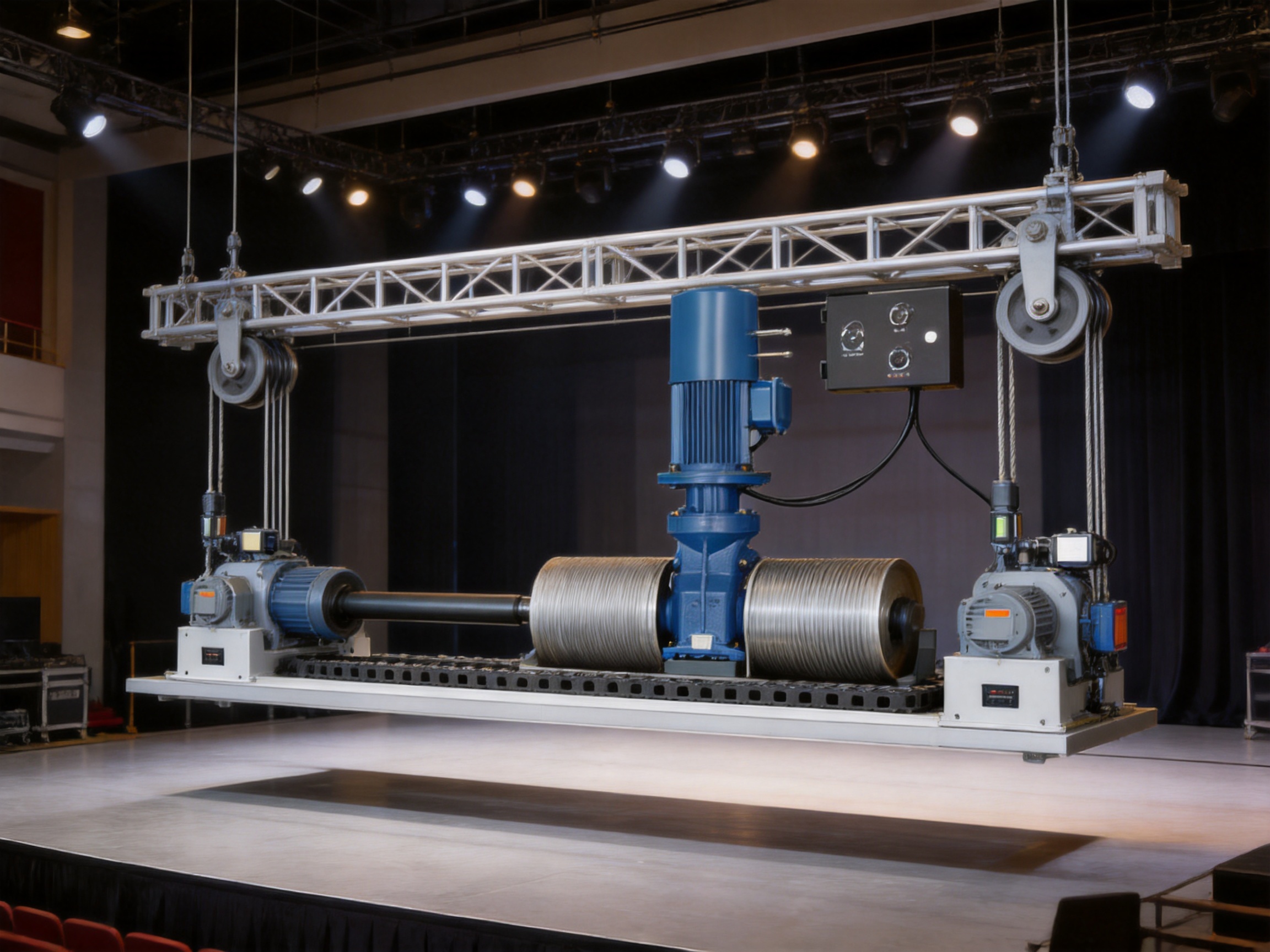
Stage winches are available in many configurations, and the most appropriate design depends on the application. Conventional single-point winches may offer a simple structure, but they may be less suitable for wide suspended loads that require improved horizontal stability. Heavy permanent-installation winches may provide strong lifting capability, but they can be less convenient for touring companies that must repeatedly transport and reinstall equipment.
The Dual-Point Zero-Fleet Stage Winch differentiates itself by combining several features in one product. Its dual-point configuration addresses load balance, its zero-fleet technology addresses rope alignment, its tracked drum supports orderly winding, and its lightweight base assembly supports mobility. This integrated design gives the winch an advantage in applications where stability, portability, and repeated deployment are all important.
| Comparison Factor | Traditional Single-Point Winch | Heavy Permanent Winch | Dual-Point Zero-Fleet Stage Winch |
| Load support structure | One primary lifting point | Often designed for fixed installation | Two coordinated lifting points |
| Suitability for wide loads | May require additional stabilization | Generally suitable when permanently installed | Designed to improve balance and horizontal alignment |
| Rope management | Depends on basic drum and guide arrangement | May use fixed rope management systems | Adaptive zero-fleet control with rope arrangement sensing |
| Deployment characteristics | Varies by model | Usually less mobile | Lightweight base assembly for touring and temporary use |
| Drum structure | May allow overlapping rope layers | Depends on installation design | Single-layer tracked drum for organized winding |
| Safety control | Depends on equipment configuration | Often includes permanent safety systems | Dual-braking redundancy and sensor-based monitoring |
| Typical applications | Basic lifting tasks | Permanent theaters and large installations | Touring shows, temporary stages, theaters, and flexible venues |
The product’s competitive advantage is therefore based on application balance rather than a single specification. It combines stability and mobility in a way that is valuable for production companies that cannot rely on a fixed venue infrastructure. It also provides a more controlled rope path than many basic winch arrangements.
Some portable equipment is designed primarily for convenience and may not provide the redundancy expected in professional stage machinery. This product takes a different approach. It reduces the weight of the base assembly while retaining dual-braking redundancy and a professional safety factor.
This balance is important for touring applications. Reducing weight can simplify transport, but the equipment must still provide controlled stopping and holding. The product’s design aims to reduce unnecessary bulk without removing features required for dependable stage operation.
Single-point lifting can be effective for certain compact loads, but it may not provide sufficient control for broad suspended structures. The dual-point arrangement improves the distribution of support and can reduce tilting and swinging. This makes the product more appropriate for complex scenery, technical equipment, and structures that need to remain level during movement.
Basic drum systems may allow the wire rope to overlap or shift laterally if the rope guide and winding path are not carefully controlled. The tracked single-layer drum and adaptive zero-fleet technology are intended to improve winding consistency. This can reduce the potential for rope disorder and support easier inspection and maintenance.
The performance of a stage winch depends on the coordination of mechanical and electrical components. The product includes a complete group of elements intended to support lifting, movement detection, rope management, and safe operational limits.
The electric motor provides the driving force for lifting and lowering. The reducer adjusts the motor’s output to achieve suitable torque and operating speed. The relationship between motor power, reduction ratio, drum geometry, payload, and operating speed must be evaluated during system design.
A properly selected motor and reducer combination supports smooth movement and reduces unnecessary mechanical stress. The equipment can then operate with greater consistency during repeated stage cycles. Regular inspection should include attention to unusual vibration, abnormal noise, temperature, lubrication condition, and signs of mechanical wear.
Encoders provide movement feedback for the control system. This feedback can support accurate positioning and synchronized operation between the two lifting points. Travel sensors provide additional information about the movement path and help the system recognize operating conditions.
Accurate feedback is particularly important when several lifting points need to work together. If the movement of one point differs from the movement of the other, the load may become uneven. Sensor monitoring and control logic help maintain coordinated operation, although commissioning and calibration remain essential.
Limit switches help define the permitted operating range of the winch. They can be used to identify upper or lower travel positions and support controlled stopping at predetermined limits. Correct adjustment and periodic testing are necessary because limit devices are directly related to safe travel control.
Rope arrangement sensors monitor the winding condition and provide feedback related to rope placement. This feature supports the adaptive zero-fleet function and helps the system respond to changes in rope positioning during operation.
Sensor-based rope monitoring is a significant advantage over purely mechanical arrangements that provide limited feedback. It can help operators identify abnormal winding behavior earlier and support preventive maintenance planning.
The lightweight base assembly provides the structural foundation for the winch. Its design is intended to support portability and flexible installation. Pulleys guide the wire rope and contribute to the geometry of the lifting path. Correct pulley alignment, anchoring, and inspection are necessary to maintain reliable operation.
The performance of a stage winch begins with product design but depends heavily on manufacturing quality. Precision parts, accurate assembly, reliable sensor integration, and controlled testing are all necessary for a stage automation product. RenteZhihe (JiangSu) Equipment Technology Co., Ltd. operates a manufacturing and research system covering approximately 20,000 square meters.
The company’s production facilities include workshops and research areas that support product development, component processing, assembly, testing, and technical improvement. More than 30 advanced CNC processing devices support precision manufacturing and customization. This equipment helps produce mechanical components with controlled dimensions and repeatable quality.
CNC processing is important for stage machinery because the fit and alignment of mechanical components affect operation. Drum components, mounting structures, shafts, brackets, and other parts must be produced according to controlled specifications. Accurate processing supports stable assembly, improved repeatability, and more reliable performance during extended use.
The company’s manufacturing process covers the stages from raw material processing to final machine assembly. Process control at each stage helps reduce variation and makes it easier to verify that the finished product meets project requirements. Component inspection, assembly checks, sensor verification, and operational testing form part of a complete quality approach.
Customization is another important manufacturing strength. Stage venues do not all have identical dimensions, loads, control systems, or installation conditions. A manufacturer with design and production capabilities can adapt equipment configurations to suit different projects. Customization may involve the mechanical layout, lifting arrangement, control interface, sensor configuration, base assembly, or integration with other stage machinery.
Manufacturing flexibility is particularly valuable for touring companies and temporary installations. A project may require equipment that fits into limited transportation space, connects with existing control infrastructure, or supports a specific suspension arrangement. Engineering coordination before production helps ensure that the final equipment is practical for the intended application.
A stage winch cannot deliver its intended value unless it is correctly selected, installed, commissioned, and maintained. RenteZhihe provides an integrated service structure covering design, production, installation, commissioning, operation, and maintenance. This complete project approach helps customers address both equipment requirements and application requirements.
During the design stage, engineers can assess the lifting task, payload characteristics, suspension points, operating frequency, venue structure, travel distance, control requirements, and maintenance conditions. This information helps determine whether a dual-point winch is suitable and how it should be integrated into the broader stage system.
During production, the company can coordinate mechanical manufacturing, component sourcing, assembly, sensor installation, and control integration. Factory testing provides an opportunity to identify problems before the equipment reaches the project site.
Installation requires careful attention to mounting, rope routing, pulley alignment, electrical connections, control configuration, and safety devices. A properly installed system supports smoother operation and reduces the possibility of alignment-related problems.
Commissioning includes sensor calibration, travel limit verification, brake testing, control testing, and operational checks. For a dual-point system, commissioning should also verify that the two lifting positions move in a coordinated manner and that the suspended load remains stable throughout the operating range.
After delivery, technical support and maintenance planning help preserve equipment performance. Regular inspections should consider the motor, reducer, drum, rope, pulleys, sensors, brakes, structural connections, electrical components, and control system. Maintenance intervals should reflect operating frequency, load conditions, environmental factors, and the manufacturer’s technical recommendations.
Touring productions are one of the most suitable application areas for the Dual-Point Zero-Fleet Stage Winch. A touring production may use the same scenery or technical equipment in theaters with different stage dimensions and infrastructure. The equipment must be transported efficiently and configured with a high degree of repeatability.
The lightweight base assembly helps reduce the effort required for handling and transportation. The tracked single-layer drum supports rapid setup and removal by keeping the wire rope organized during repeated operating cycles. The dual-point arrangement helps maintain stability when lifting wide scenery or technical structures.
Touring shows may also require frequent scene changes. A winch used in this environment must tolerate repeated starts, stops, raising cycles, lowering cycles, and equipment inspections. The product’s encoder, travel sensor, and rope arrangement sensor provide information that supports controlled operation and monitoring.
The winch can also be considered for temporary staging projects. Temporary installations are often assembled for festivals, conferences, exhibitions, cultural events, and special performances. In these situations, installation speed and flexibility are important, but the lifting system must still be treated as professional stage machinery and operated under appropriate safety procedures.
Although the product is designed with mobility in mind, its features can also benefit permanent venues. Theaters, cultural centers, stadiums, conference centers, and multifunctional halls may need equipment that can support changing event formats. A venue may host a theater production one day, a conference the next day, and a concert or public event afterward.
Flexible lifting equipment helps these venues convert their spaces more efficiently. Lighting structures, projection screens, banners, acoustic elements, and scenic components can be moved according to the requirements of each event. The dual-point configuration supports stable positioning, while the zero-fleet system contributes to orderly operation.
In a permanent installation, the lightweight structure may also simplify maintenance access or future system modification. When a venue updates its technical equipment, a mobile and adaptable winch can provide more options than an oversized fixed system.
Conference centers often require rapid room conversion. Suspended displays, screens, lighting equipment, and decorative structures may need to be repositioned between events. A controllable dual-point lifting system can support these transitions while helping maintain alignment and reduce unnecessary manual handling.
Cultural venues frequently combine performances, exhibitions, public programs, and educational events. The stage machinery used in these spaces must support different payloads and operating schedules. The product’s adaptable configuration and sensor-based monitoring make it suitable for projects that require dependable repeated movement.
Large performance spaces may use suspended technical structures that require stable lifting and accurate positioning. The specific suitability of a winch depends on the load, travel distance, structure, control system, and installation design. When these conditions are compatible with the product’s rated capabilities, the dual-point configuration can help support stable movement of wide suspended equipment.
Successful installation begins with a detailed evaluation of the venue and the suspended load. Engineers should verify the load mass, center of gravity, suspension geometry, required lifting speed, operating height, travel distance, environmental conditions, and available structural supports.
The two lifting positions should be placed according to the load’s geometry and the intended movement path. Incorrect positioning can create uneven forces or reduce the stability benefits of the dual-point design. The connection between the winch, pulleys, wire rope, and suspended load must be designed and installed by qualified personnel.
Rope routing deserves special attention. The wire rope should pass through the intended pulleys and guides without unnecessary bends, interference, or misalignment. The tracked drum should be inspected to confirm that the rope can remain within its single-layer path during operation.
Electrical and control connections should be checked before energizing the system. Encoders, travel sensors, rope arrangement sensors, limit switches, and brake controls must be correctly connected and calibrated. The control system should be tested in a controlled condition before the full load is operated.
Commissioning should begin with low-risk functional checks and progress to complete operating verification. Technicians should confirm direction of travel, stopping behavior, upper and lower limits, emergency functions, sensor feedback, synchronization between lifting points, and brake performance.
Documentation is also important. Installation drawings, operating procedures, inspection records, maintenance schedules, load information, and commissioning results should be retained for future reference. Clear documentation helps operators and maintenance teams use the system consistently across different venues.
Stage winches operate in demanding environments where frequent movement and strict production schedules can accelerate wear. Preventive maintenance helps identify problems before they affect a performance or create unsafe conditions.
Routine inspections should include the wire rope, drum, pulleys, base assembly, mounting points, motor, reducer, brakes, limit switches, sensors, wiring, and control interface. The wire rope should be checked for visible wear, deformation, corrosion, broken wires, or other conditions that may affect serviceability. The drum should be checked for correct winding and signs of damage.
Sensor performance should be verified periodically. A sensor that provides inaccurate feedback can affect positioning, synchronization, or rope management. Limit switches should be tested to confirm that they respond at the intended positions. Brake systems should be examined and tested according to the applicable maintenance procedure.
Maintenance requirements may vary depending on the number of operating cycles, payload, environment, transportation frequency, and installation conditions. Touring equipment may require additional inspection after transportation and reinstallation. Temporary installations should be checked whenever the equipment is moved to a new venue.
Operators should be trained to recognize abnormal conditions. Unusual sounds, irregular movement, rope overlap, inconsistent stopping, unexpected sensor readings, or differences between the two lifting points should be treated as warning signs. The equipment should be stopped and inspected by qualified personnel before operation resumes.
RenteZhihe (JiangSu) Equipment Technology Co., Ltd. is a high-tech enterprise specializing in the research, development, and manufacturing of stage machinery, performance equipment, and intelligent control systems. Its product and engineering capabilities cover a wide range of performance venue requirements.
The company’s service system extends from early design through long-term maintenance. This enables it to support customers that need more than a standalone product purchase. Projects can be developed around complete stage automation requirements, including mechanical equipment, intelligent control, installation, commissioning, and technical support.
The company serves theaters, cultural centers, stadiums, conference centers, and multifunctional performance spaces in domestic and international markets. Its experience across different venue types supports a practical understanding of how stage machinery must perform under different conditions.
Its approximately 20,000-square-meter production and research system, together with more than 30 advanced CNC processing devices, provides a foundation for controlled manufacturing and customized equipment development. The combination of engineering, manufacturing, assembly, and service capabilities helps the company respond to project-specific requirements.
The company emphasizes craftsmanship, integrity, innovation, and long-term development in the stage equipment industry. It also promotes collaboration, responsibility, and technical growth among its employees. These values support a manufacturing culture focused on reliable products and sustained customer relationships.
Before selecting a Dual-Point Zero-Fleet Stage Winch, buyers and system integrators should define the complete operating requirement. Important questions include the total suspended load, the dimensions of the load, the center of gravity, the desired lifting height, the required movement speed, the number of operating cycles, and whether the system will be permanently installed or transported frequently.
The venue structure must also be evaluated. The supporting structure, attachment points, available space, power supply, control infrastructure, and access routes all influence the final configuration. Touring applications may require additional planning for transport cases, installation tools, connection procedures, and venue-to-venue adaptation.
Buyers should also consider the level of technical support required. A supplier capable of design, manufacturing, installation, commissioning, and maintenance can provide greater continuity than a supplier that only delivers a mechanical product. This is especially important for customized stage automation projects.
Product documentation should identify rated payload, operating limitations, installation requirements, inspection procedures, maintenance instructions, and control interfaces. The equipment should be selected and operated according to the manufacturer’s technical documentation and the applicable local requirements.
A Dual-Point Zero-Fleet Stage Winch is a stage lifting system that supports suspended loads through two coordinated lifting positions while using adaptive technology to maintain controlled wire rope alignment on the drum. It is designed for stable positioning, organized rope management, and flexible deployment.
The dual-point configuration distributes lifting support through two positions rather than relying on one central point. This can improve the balance of wide or elongated suspended loads, reduce tilting and unwanted movement, and support more accurate positioning during lifting operations.
Zero-fleet technology helps maintain the alignment of the wire rope with the drum as the rope is wound or unwound. By controlling lateral rope movement, it can reduce overlapping, disorganized winding, and unnecessary mechanical stress.
The single-layer tracked drum guides the wire rope along an organized path. This helps reduce tangling and makes the winding condition easier to inspect during frequent strikes, transportation, setup, and removal operations.
The product is described as having a payload capacity of up to 500 kilograms. The final application must still be assessed according to the complete suspension arrangement, load characteristics, operating conditions, and applicable safety requirements.
Yes. Although it is particularly suitable for touring productions and temporary stages, the winch can also be considered for theaters, cultural centers, conference centers, stadiums, and multifunctional performance spaces when its technical specifications match the project requirements.
The listed components include an electric motor, reducer, encoder, limit switches, travel sensor, rope arrangement sensors, base assembly, and pulleys. These elements work together to provide lifting power, movement feedback, travel control, rope management, and structural support.
The lightweight base assembly can reduce transportation and handling demands. This is valuable for touring companies and temporary staging projects that need to move, install, remove, and reinstall equipment at different venues.
The product is designed to maintain professional safety features while offering a more mobile structure. It includes dual-braking redundancy and a high safety factor. Proper installation, commissioning, inspection, and operation remain necessary for safe performance.
RenteZhihe operates a production and research system of approximately 20,000 square meters and uses more than 30 advanced CNC processing devices. Its capabilities cover raw material processing, precision manufacturing, assembly, testing, customization, installation, commissioning, and maintenance support.
Customization can be considered according to the lifting requirements, venue conditions, control system, suspension structure, and project objectives. The manufacturer provides stage machinery design and production capabilities that support customized project solutions.
Maintenance should include inspection of the wire rope, drum, pulleys, motor, reducer, brakes, base assembly, limit switches, sensors, wiring, and control functions. Inspection frequency should reflect operating cycles, load conditions, transportation, environmental exposure, and the manufacturer’s recommendations.
Commissioning should include installation verification, rope routing checks, sensor calibration, limit switch testing, brake testing, control verification, movement testing, and synchronization checks between the two lifting positions. Qualified technical personnel should perform these activities.
The Dual-Point Zero-Fleet Stage Winch combines several features that are important for modern stage automation. Its dual-point configuration supports better load balance, its adaptive zero-fleet technology improves rope alignment, and its single-layer tracked drum helps prevent tangling during repeated setup and operating cycles.
The lightweight base assembly and 500-kilogram payload capacity make the winch particularly suitable for touring productions, temporary stages, and flexible performance venues. At the same time, dual-braking redundancy and sensor-based monitoring help maintain the professional operating characteristics expected from stage machinery.
Compared with basic single-point winches, the product offers improved support for wide suspended loads. Compared with heavy permanent-installation equipment, it provides greater portability and deployment flexibility. Its value comes from combining stability, rope control, mobility, and intelligent monitoring within one coordinated system.
Behind the product is a manufacturer with capabilities covering research and development, precision processing, assembly, testing, installation, commissioning, operation, and maintenance. The company’s production facilities, CNC equipment, engineering resources, and integrated service structure support both standard and customized stage machinery projects.
For touring companies, theaters, cultural centers, conference venues, stadiums, and multifunctional performance spaces, the Dual-Point Zero-Fleet Stage Winch offers a practical approach to reliable suspended load handling. When properly selected, installed, commissioned, and maintained, it can contribute to safer, more accurate, and more efficient stage operations.
RenteZhihe (JiangSu) Equipment Technology Co., Ltd. Product Information: Dual-Point Zero-Fleet Stage Winch.
RenteZhihe (JiangSu) Equipment Technology Co., Ltd. Company Profile and Stage Machinery Manufacturing Capabilities.
Stage Machinery Engineering Principles: Suspended Load Control, Winch Configuration, and Rope Management.
Performance Venue Automation Practices: Installation, Commissioning, Inspection, and Maintenance of Stage Lifting Systems.
Industrial Winch Design Guidelines: Motor, Reducer, Drum, Brake, Sensor, and Control System Integration.
We specialize in delivering advanced stage machinery, rigging systems and intelligent control solutions for performance spaces worldwide.

No. 111 Runfeng Road, Hailing District, Taizhou City, Jiangsu Province, China

rtstage@163.com

+86-139 1771 1698

+86-139 1771 1698
rtstage@163.com
 中文简体
 English
 русский
 Français
 Español
 عربى