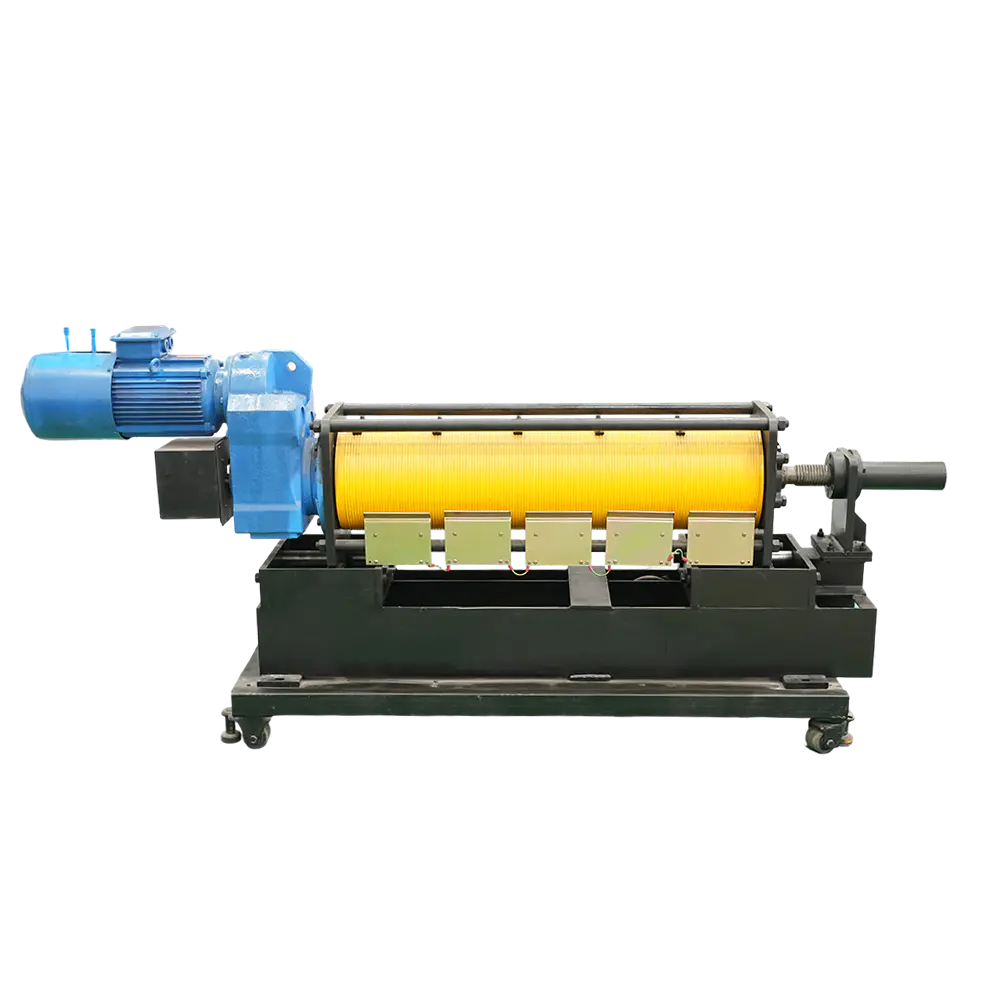
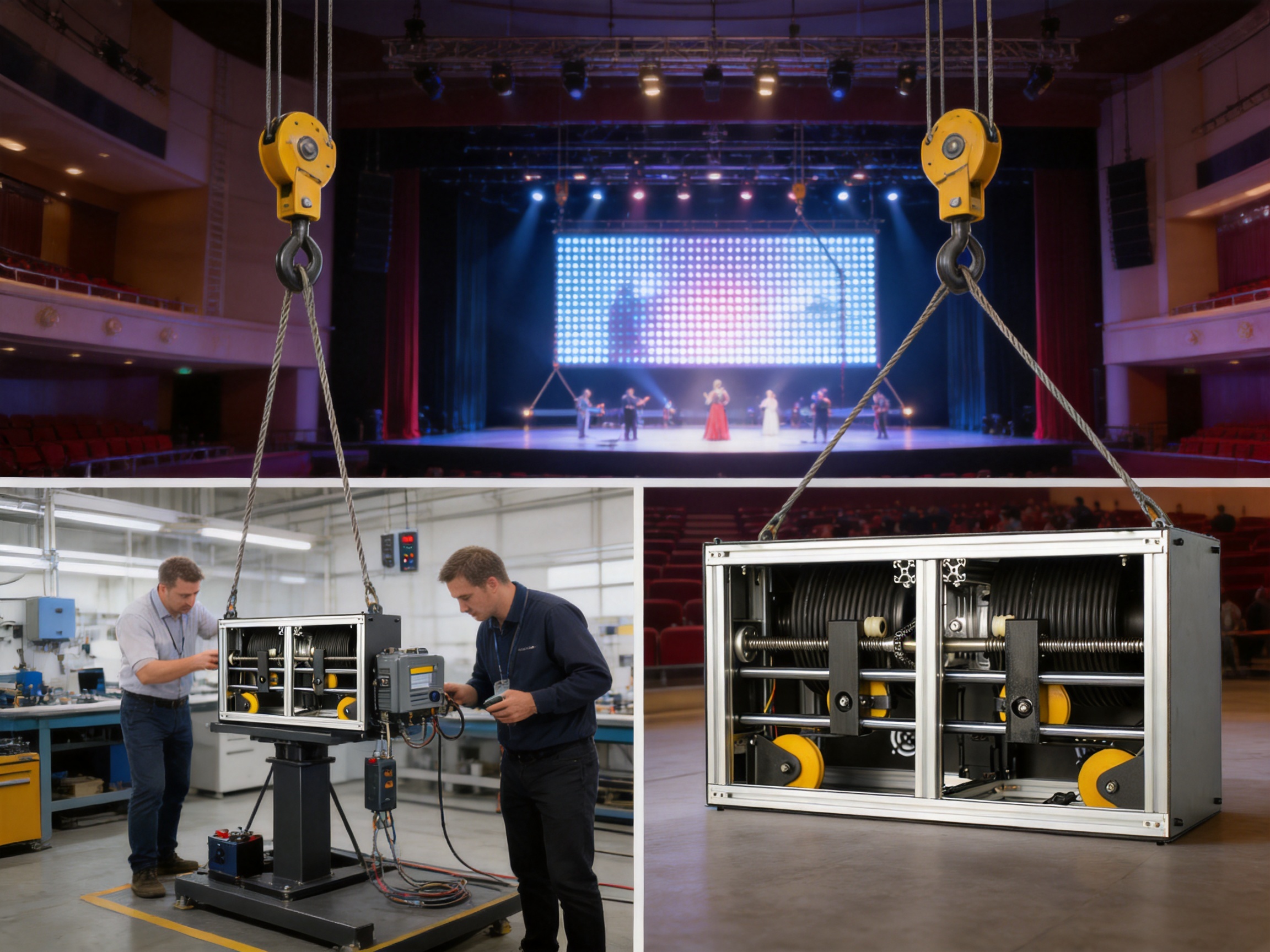
Modern performance venues require stage machinery that can do much more than lift a load. A professional lifting system must position equipment accurately, maintain stability during movement, communicate reliably with control networks, and continue to perform through repeated production cycles. When the suspended object is a large LED screen, a lighting array, or another piece of integrated performance equipment, the lifting system becomes part of the show-control environment. Its mechanical performance directly influences visual quality, operational efficiency, and venue safety.
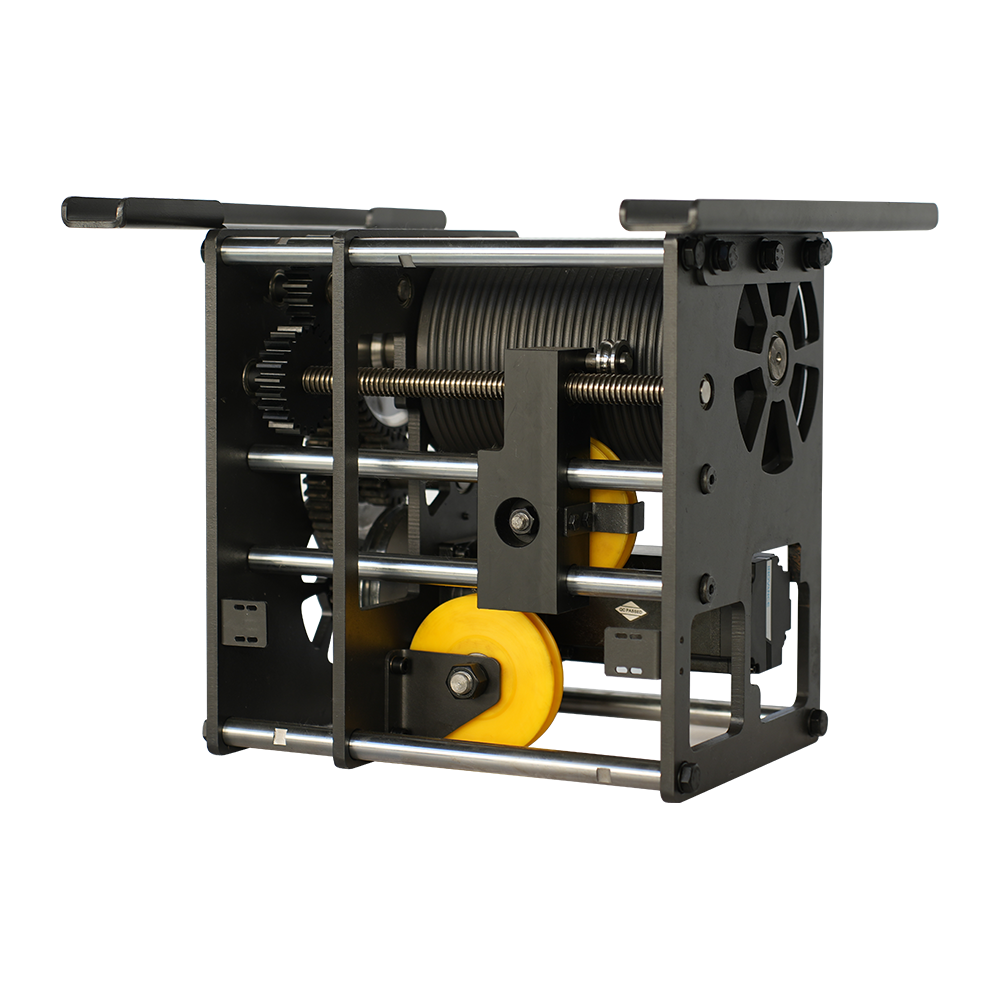
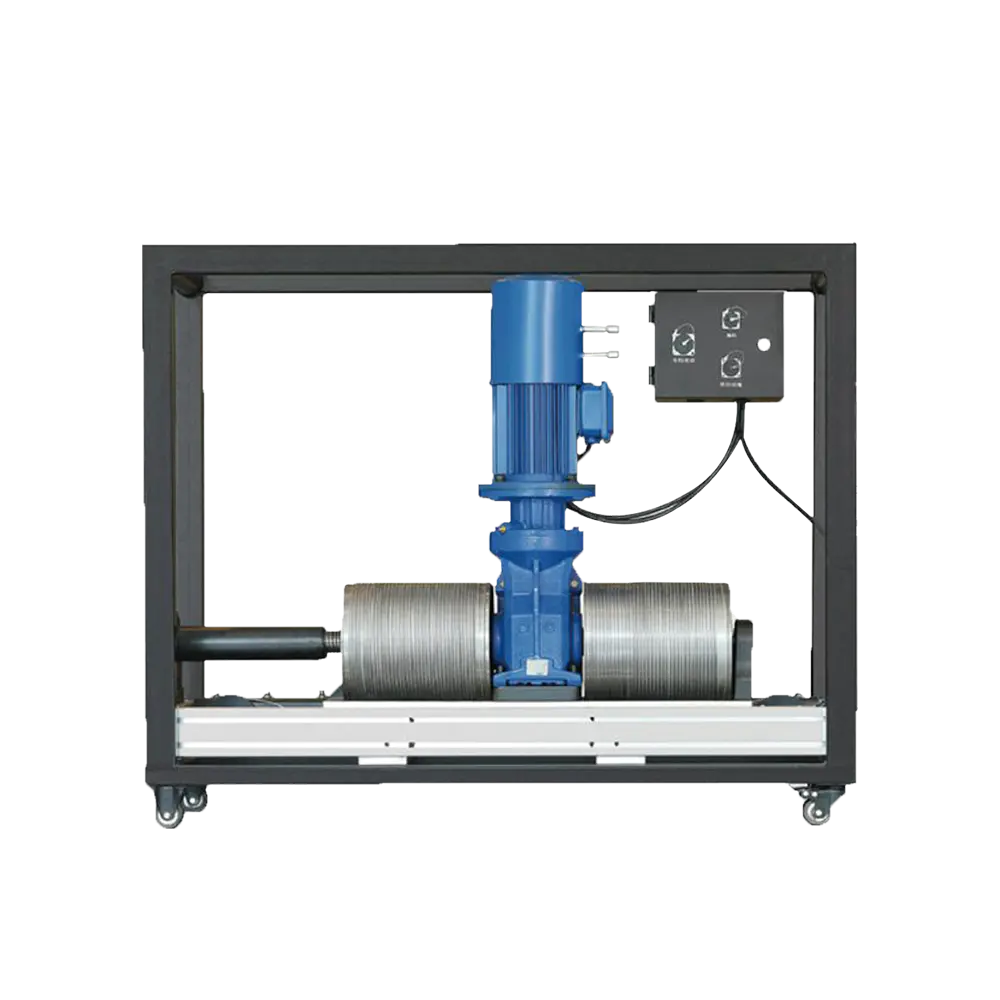
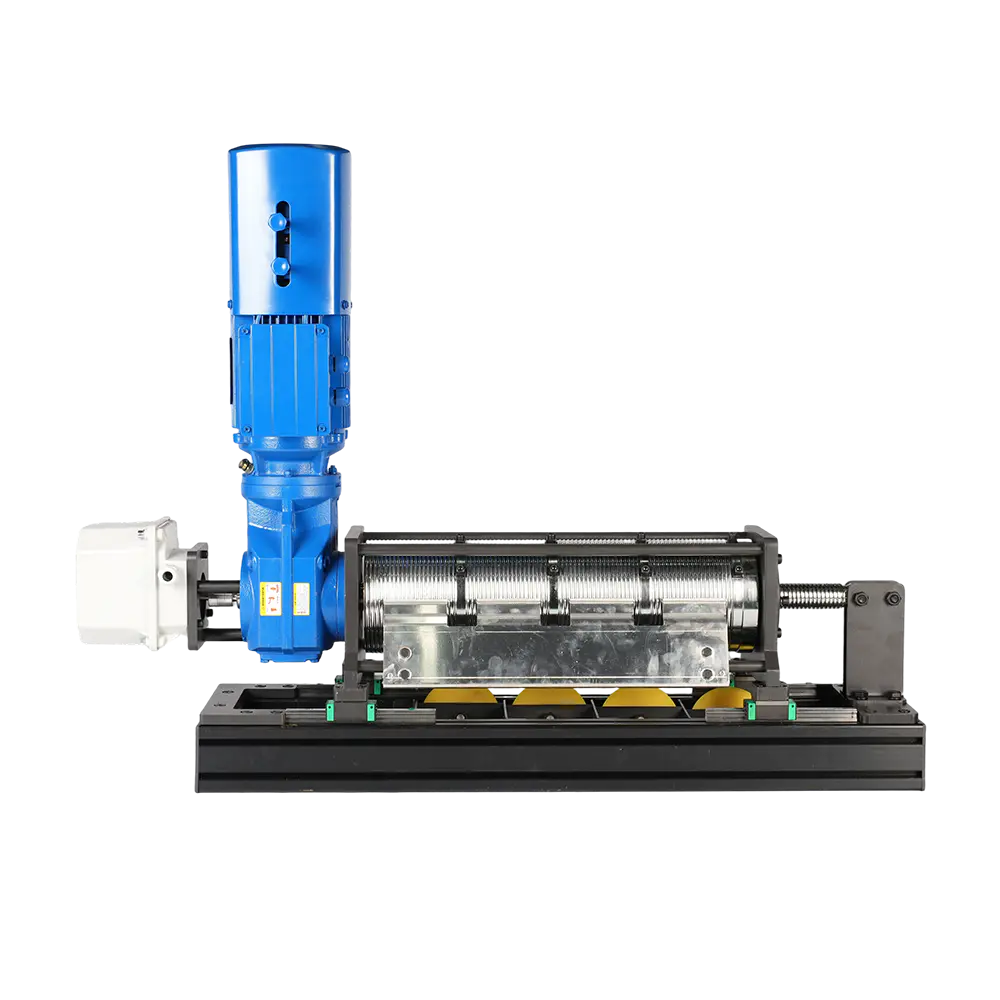
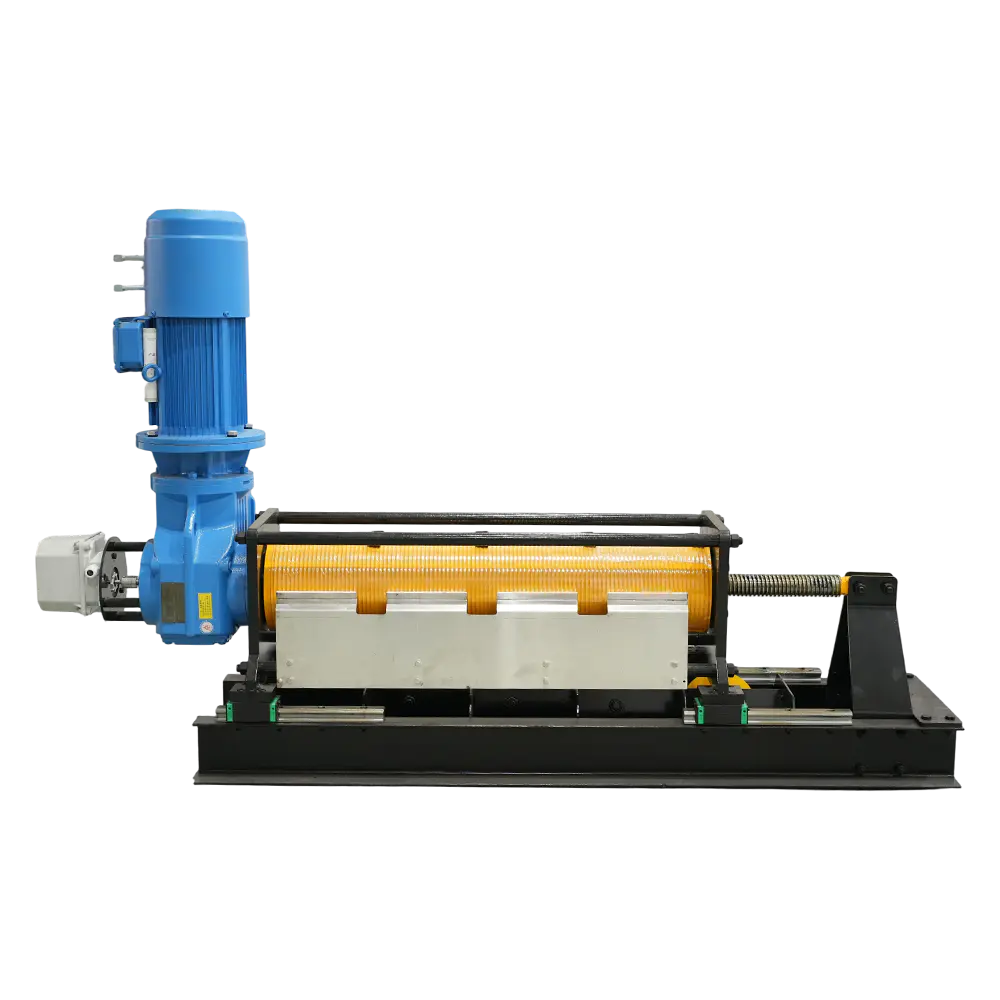
The Double Point Zero-Fleet Stage Winch is designed for this demanding environment. It combines a high-performance servo motor, a dual-point winch configuration, dual encoders, and DMX512 signal control in one coordinated lifting solution. With two lifting points, a rated lifting load of 0.5 kN, a lifting speed range of 0.005 to 0.5 meters per second, and a maximum travel distance of 15 meters, the system is suited to applications where synchronized motion and precise positioning are more important than simple lifting power alone.
Unlike a conventional single-point hoist, this system is engineered to control two suspension points as a coordinated mechanical axis. That capability helps production teams keep wide loads level, reduce unwanted movement, and adjust equipment during installation or changeover. It is particularly suitable for professional theaters, bars, live-show venues, cultural spaces, and other performance environments where equipment must be moved repeatedly and integrated into a wider automation system.
This article examines the product’s operating principles, technical advantages, safety functions, manufacturing strengths, practical applications, and selection considerations. It also explains why a dual-point stage winch can provide a more flexible and professional solution than separate lifting units operated without coordinated control.
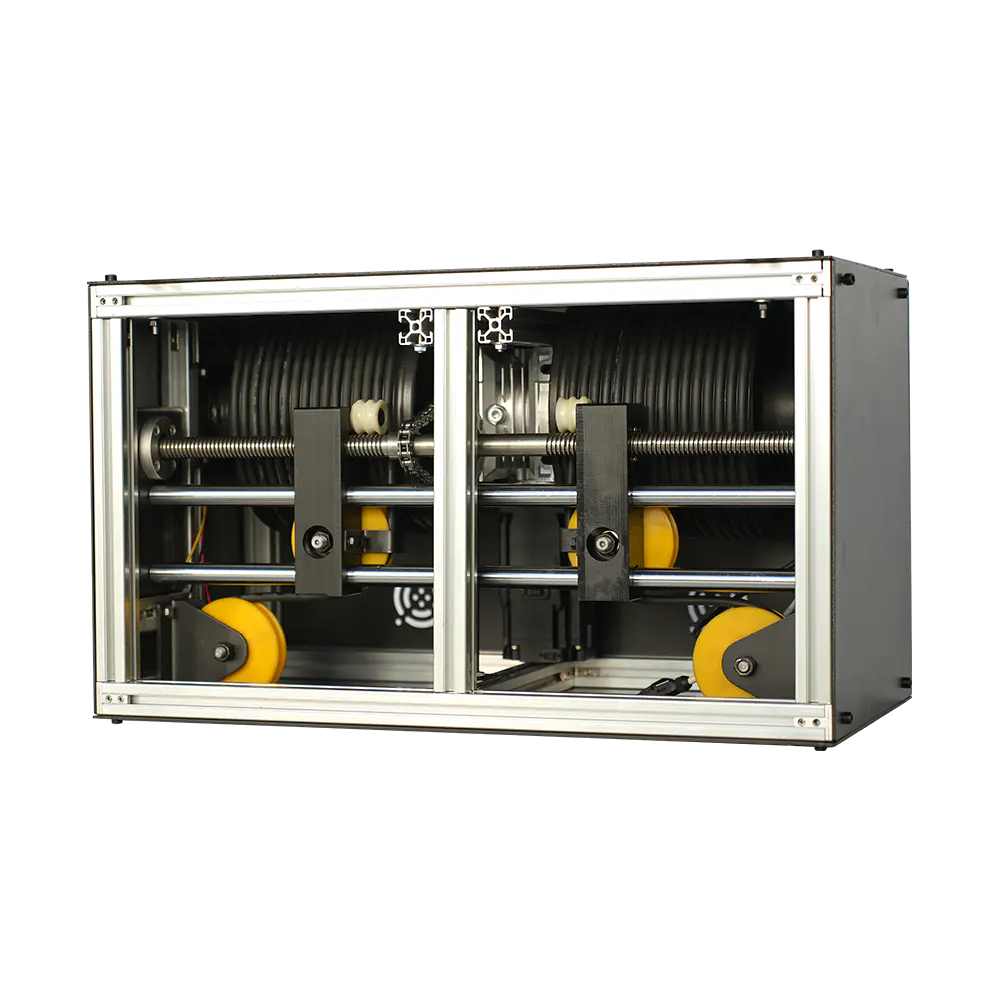
Double Point Zero-Fleet Stage Winch
Stage automation has evolved from manually operated scenery and isolated lifting equipment into a connected system of motors, controllers, sensors, signal networks, and production software. As venues adopt larger LED displays, heavier lighting assemblies, and more complex scenic elements, the lifting equipment must support both mechanical and digital requirements.
A single-point winch is often sufficient for a compact fixture or a narrow scenic element. However, a wide LED screen or long lighting truss can become unstable when suspended from one central point. The load may rotate, tilt, or swing, especially during acceleration and deceleration. Even when the load remains within the nominal lifting capacity, poor distribution of weight can affect the appearance of the production and place unnecessary stress on the suspension system.
A dual-point arrangement distributes the suspended equipment across two lifting locations. This creates a broader support base and allows the load to be leveled more effectively. The two points can be adjusted during installation and then operated in synchronized mode. This is valuable when the equipment must remain horizontal, when the visual surface is wide, or when cables and signal connections must be managed along the moving structure.
The Double Point Zero-Fleet Stage Winch is intended for exactly this type of application. Its design combines the flexibility of two independently addressable lifting units with the coordinated movement expected from a unified system. Operators can use the control system for setup, calibration, and individual adjustment, then switch to synchronized operation for normal production movement.
This arrangement offers several practical benefits:
The result is a lifting solution designed not merely to raise an object, but to manage its position as part of a coordinated performance environment.
The Double Point Zero-Fleet Stage Winch uses a servo-driven lifting architecture. Servo motors are well suited to applications requiring controlled acceleration, repeatable positioning, and responsive feedback. Instead of relying only on basic motor rotation, a servo system works with encoder information to monitor movement and help the controller determine whether the commanded position and actual position remain aligned.
The two lifting points are operated as a coordinated pair. Each point can be addressed during commissioning and adjustment, while synchronized movement allows the two sides to work together during production. This configuration is particularly useful for equipment whose alignment is visible to the audience, such as LED walls, suspended lighting fixtures, and decorative performance structures.
| Specification | Product Capability | Practical Meaning |
|---|---|---|
| Lifting points | 2 | Supports dual-point suspension and coordinated leveling. |
| Lifting load | 0.5 kN, approximately 50 kg | Suitable for designated lightweight performance equipment within the rated limit. |
| Lifting speed | 0.005–0.5 m/s | Supports slow precision adjustment as well as faster repositioning. |
| Maximum travel | 15 m | Provides useful vertical movement for many stage and venue installations. |
| Control method | DMX512 signal control | Allows integration with common entertainment control workflows. |
| Drive system | High-performance servo motor | Supports responsive motion control and repeatable positioning. |
| Position feedback | Dual encoder system | Provides feedback for accurate control of travel and synchronization. |
The rated load and travel specifications must always be evaluated together with the complete rigging arrangement. The weight of the suspended equipment, cables, brackets, connectors, and any additional accessories must be included when calculating the working load. Installation should be performed by qualified personnel who understand the venue structure, suspension method, control system, and applicable safety procedures.
The wide speed range is one of the system’s useful characteristics. At the lower end, a speed of 0.005 meters per second allows the operator to make careful positioning adjustments. This is valuable when leveling a screen, aligning a fixture, or approaching a final show position. At the higher end, a speed of up to 0.5 meters per second supports practical load-in and load-out operations when rapid repositioning is needed.
A controlled speed range is more useful than a single fixed speed because production environments involve different operating phases. Installation, calibration, rehearsal, and live performance may each require different movement characteristics. A system that can respond smoothly at both low and higher speeds gives operators more control over the entire workflow.
Servo drive technology provides a major advantage over basic open-loop motor systems. In a simple open-loop arrangement, the controller sends a command and assumes the motor has completed the expected movement. If the load changes, if the mechanism experiences resistance, or if the system is affected by an abnormal condition, the controller may not immediately know that the actual movement differs from the command.
A servo-driven system uses feedback to monitor the relationship between commanded and actual motion. The encoder provides position information that can be evaluated by the control system. This supports more accurate movement, especially when the lifting equipment must stop at a specific height or maintain synchronization between two points.
For a dual-point stage winch, feedback is particularly important. If two lifting units are intended to move together, a small difference in movement can gradually create a tilt. A wide LED screen may reveal even a minor height difference. A suspended lighting bar can become visually misaligned or place uneven loading on its support structure. Encoder feedback helps the control system identify movement conditions and support more precise coordination.
The use of dual encoders strengthens this capability. Each lifting point can provide its own movement information rather than relying on a single assumed position. This provides a more detailed picture of the two-point system and supports fine control across different operating conditions.
Servo operation also supports controlled acceleration and deceleration. Sudden starts and stops can create shock loads, cable movement, and unwanted swinging. Smooth motion reduces these effects and helps protect the suspended equipment. It can also improve the audience experience by preventing visibly abrupt movements during scene transitions or live-show repositioning.
Compared with low-cost lifting solutions that focus only on nominal load capacity, a servo-based dual-point system offers a more complete approach. It considers how the load moves, how the two suspension points relate to one another, and how the equipment behaves throughout a production cycle.
DMX512 is widely recognized in the entertainment industry as a control protocol for lighting equipment. Its use in stage machinery extends the same control philosophy beyond lighting fixtures. When integrated into a dual-point winch, DMX512 can provide a practical communication link between the winch system and the wider venue control environment.
The value of DMX512 in this application is not simply that it is familiar to lighting technicians. The more important advantage is that it allows the lifting system to become part of a coordinated show-control network. Operators can plan the position of suspended equipment alongside lighting cues, scenic transitions, and other programmed effects.
In a dual-point system, communication must support both individual adjustment and synchronized operation. During setup, technicians may need to move one lifting point independently to correct a difference in height or compensate for the shape of the suspended load. During a performance, the same two units may need to respond as one coordinated axis. DMX512 addressing can support these operating modes when the control architecture is configured correctly.
The protocol also helps simplify the relationship between venue control equipment and the winch system. Production teams that already work with DMX512-based controllers may be able to integrate the lifting system into familiar operating procedures, subject to the requirements of the complete installation.
However, DMX512 should not be viewed as a replacement for mechanical safety systems, qualified supervision, or proper installation. A signal protocol transmits commands; it does not eliminate the need for physical inspection, load calculation, emergency procedures, or safe operating rules. The best result is achieved when communication control, mechanical design, feedback, and operator procedures work together.
When properly integrated, DMX512 brings several benefits to stage winch operation:
The central performance advantage of the product is synchronization. Two independent lifting units are not automatically a synchronized system. If they start at slightly different times, move at different speeds, or stop at different positions, the suspended load can tilt or twist. The engineering challenge is to make the two points behave consistently while still allowing independent adjustment when required.
The Double Point Zero-Fleet Stage Winch addresses this challenge through servo drive control, dual encoder feedback, and coordinated signal management. The two points can be treated as separate units for calibration and as a unified motion system for normal operation.
This approach is useful during several stages of production:
At the beginning of an installation, the two lifting points may not be perfectly level. The suspended equipment may also have an uneven center of gravity. Independent adjustment allows technicians to bring the equipment into the correct position without physically rebuilding the complete rigging arrangement.
During rehearsal, operators can establish repeatable positions for screens, lights, and other equipment. The system can be evaluated at low speeds, intermediate heights, and final show positions. Any differences between the two points can be corrected before the equipment is used in front of an audience.
During a performance, synchronized operation helps the suspended load remain level and visually stable. Smooth movement also reduces the risk of distracting motion during transitions. The exact operating procedure depends on the venue’s control system and safety plan, but the underlying benefit is the same: both points are intended to respond as one coordinated system.
Venues that host different productions may frequently change screens, lighting packages, or suspended scenic elements. A dual-point system provides more flexibility than a single fixed suspension point because the two sides can be adjusted to suit different equipment configurations.
Synchronization is especially important for wide LED screens. A small height difference between the two ends can make the screen appear visibly tilted. It may also influence cable routing and the mechanical loading of brackets. Coordinated movement helps preserve the intended alignment throughout the lifting cycle.
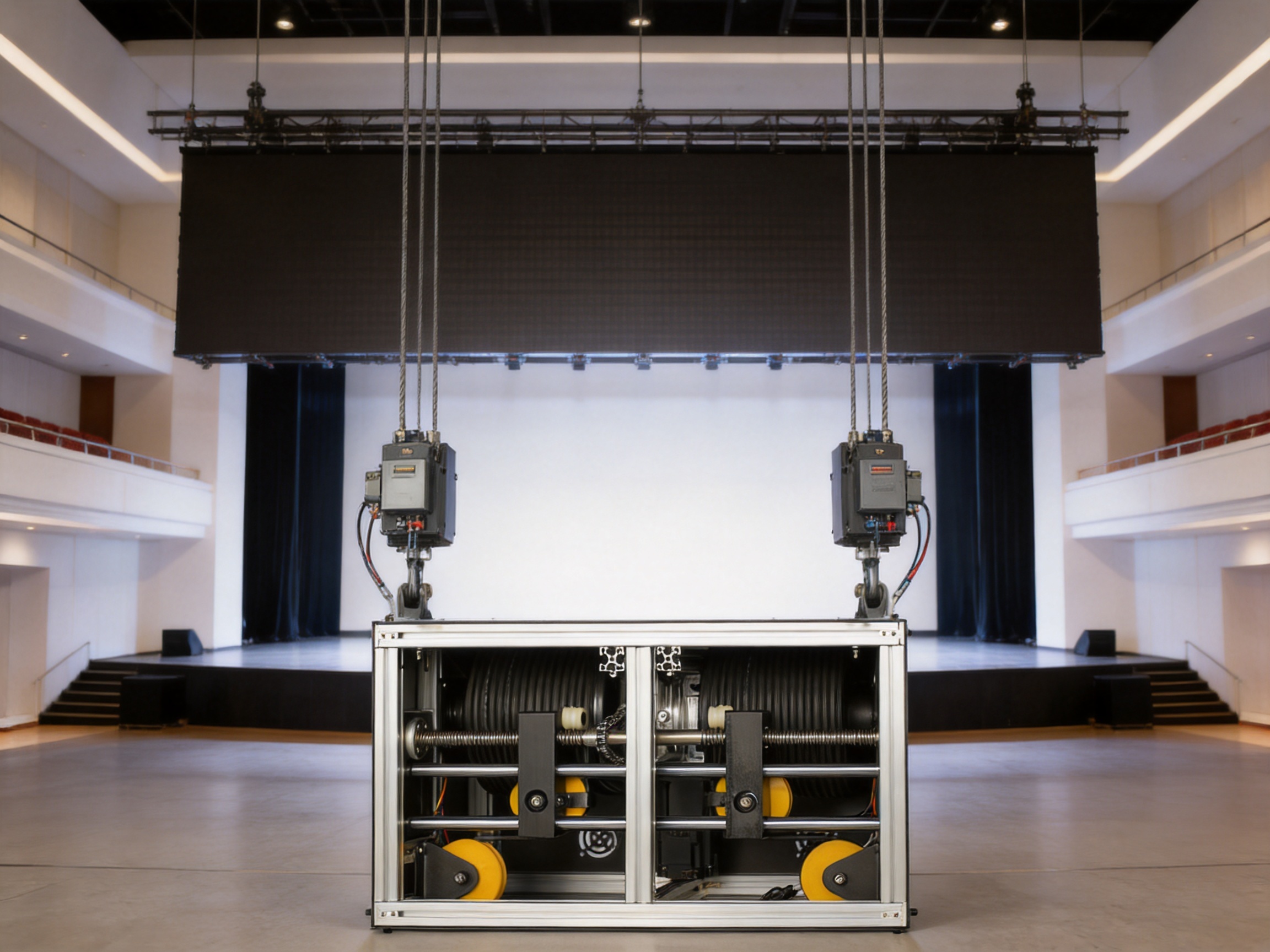
Two-point suspension introduces an important engineering consideration: the load may not be divided evenly between the two lifting units. Even when the equipment appears symmetrical, its actual center of gravity can change because of internal components, cable bundles, mounting brackets, or production modifications.
For example, an LED display may receive additional panels, processors, framing members, or protective structures during a production. A lighting assembly may carry fixtures of different weights on each side. A scenic element may have an irregular shape that makes its center of gravity difficult to estimate. In these situations, one lifting point may carry more of the load than the other.
Continuous feedback is more useful than relying only on a one-time installation measurement. Servo-driven systems can use torque and movement information to help identify how each unit is responding. This supports a more balanced operating condition and can help reduce the long-term effects of unequal loading.
Balanced loading matters for several reasons. First, it helps the suspended equipment remain level. Second, it reduces unnecessary stress on the more heavily loaded unit. Third, it supports more consistent wear across the pair of lifting mechanisms. Finally, it makes the system easier to maintain because abnormal differences may be identified before they become serious problems.
Load sharing should not be interpreted as permission to exceed the product’s rated capacity. Feedback and control functions cannot compensate for an overloaded system or an unsuitable support structure. The total working load must remain within the specified limit, and the installation must be evaluated as a complete mechanical system.
For responsible operation, technicians should consider:
These considerations demonstrate why a professional dual-point hoist must be evaluated on more than lifting force alone. Its feedback system, mechanical construction, control response, and maintenance design all influence the practical quality of the installation.
Suspended performance equipment often requires continuous power and communication while it is being moved. This makes cable management a central part of the installation rather than an afterthought. A lifting system may move correctly mechanically, but the overall application can still fail if cables become tangled, overstressed, disconnected, or exposed to interference.
LED screens commonly require both electrical power and data transmission. Moving lights require power and a reliable control signal. Other equipment may require network connections, video links, or specialized control wiring. The cable arrangement must allow the equipment to travel through the full operating range while avoiding excessive bending, contact with moving components, or interference with the rigging system.
| Suspended Equipment | Typical Connection Requirement | Important Installation Consideration |
|---|---|---|
| LED screens | Continuous power and data feed | Coordinate cable length, support, bend radius, and movement with the lifting travel. |
| Moving lights | Power and uninterrupted DMX or control signal | Use suitable signal-rated cabling and route it to reduce mechanical stress and interference. |
| Lightweight scenic elements | May require only mechanical suspension | Keep the arrangement simple while preserving safe attachment and clearance. |
| Integrated display systems | Power, data, and sometimes network connections | Plan the cable path together with the screen frame and dual-point suspension geometry. |
The product is specifically intended for applications where equipment may need integrated power and communication signals while suspended. This makes it more relevant to modern production systems than a basic lifting device designed only for static scenic loads.
Cable management should be planned during the design stage. The location of the winch, the travel path, the equipment frame, the control cabinet, and the cable support points should all be reviewed together. A cable that is acceptable in a fixed installation may not be suitable for repeated vertical movement.
Signal quality is also important. Data cables should be selected and routed in a way that supports reliable communication. Power cables and signal cables may need to be separated or arranged carefully to reduce interference. The specific method depends on the equipment, venue, cable type, and installation standards.
Safety is a fundamental requirement for any stage lifting system. The Double Point Zero-Fleet Stage Winch incorporates several design features intended to support safe, reliable operation, including over-designed components, precision feedback, and a long service-life philosophy.
The product uses over-designed components intended to withstand more than the routine operating demand. A generous design margin can help improve reliability when the system experiences repeated cycles, minor variations in load distribution, or the normal stresses associated with production use.
A high safety factor does not replace correct load calculation or regular inspection. Instead, it forms part of a broader safety approach that includes suitable material selection, sound manufacturing, accurate installation, responsible operation, and planned maintenance.
Dual encoder feedback supports fine control of travel in different operating conditions. Accurate feedback helps the system respond more predictably when moving at low speed, approaching a final position, or coordinating two points. It also gives technical personnel better control during setup and calibration.
A long service life can reduce the frequency of replacement and help lower the total cost of ownership. Reliable components, controlled motion, and feedback-based operation may reduce the wear associated with abrupt starts, stops, and unequal load sharing.
Maintenance cost is influenced by more than the price of replacement parts. It also includes technician time, production interruptions, emergency service, and the risk of equipment being unavailable during a show. A durable and serviceable winch can therefore provide value over the complete operating life of a venue.
Even a well-engineered winch requires inspection. Operators should establish a maintenance schedule that reflects the frequency of use, operating environment, load characteristics, and venue procedures. Inspections may include the lifting mechanism, attachment points, cables, control connections, encoder operation, mounting hardware, and signs of abnormal noise or vibration.
Any unusual movement, inconsistent synchronization, unexpected stopping, or visible mechanical damage should be investigated before continued operation. Corrective action should be carried out by competent personnel using procedures appropriate to the equipment and installation.
The performance of a stage winch depends heavily on the quality of its manufacturing process. A product may have an attractive specification sheet, but professional users also need confidence in its mechanical assembly, electrical integration, testing, documentation, and after-sales support.
RenteZhihe (JiangSu) Equipment Technology Co., Ltd. is a high-tech enterprise specializing in the research and development and manufacture of stage machinery, performance equipment, and intelligent control systems. Its product development approach combines mechanical equipment with automation and control technology, which is especially relevant to a servo-driven, DMX512-controlled dual-point winch.
The company’s manufacturing strengths can be understood through several connected areas:
Stage machinery involves multiple disciplines. Mechanical design determines how the load is supported and moved. Electrical engineering determines how motors, encoders, and control components interact. Automation engineering determines how the equipment responds to commands and feedback. A company that develops these elements together can better coordinate the complete product rather than treating each part as an isolated component.
This integrated approach is important for a dual-point winch because the mechanical and control systems must work as one. The motor, gearbox or lifting mechanism, encoder, controller, signal interface, and mounting structure all influence final performance.
Reliable stage machinery begins with suitable component selection. Motors, feedback devices, structural parts, lifting elements, control components, and connectors must be matched to the expected load and operating cycle. The product’s high safety factor and long-service-life objectives depend on choosing components that can withstand repeated use.
Component selection should also consider serviceability. Stage equipment must often be maintained in busy venues where downtime is costly. Parts that can be inspected, adjusted, or replaced through a clear maintenance procedure contribute to better long-term operation.
Dual-point lifting equipment requires accurate assembly. Differences in alignment, encoder installation, mechanical tension, or mounting geometry can influence synchronization. Precision assembly helps ensure that the two lifting units operate consistently and that the feedback system reflects actual movement.
Assembly quality is particularly important for equipment intended to move visible loads. A system that is mechanically sound but poorly aligned may require excessive adjustment during installation. A carefully assembled product gives technicians a stronger foundation for commissioning and calibration.
The product is not simply a motorized drum or lifting mechanism. It is an automation product that uses servo control, dual encoders, and DMX512 communication. Manufacturing must therefore include the integration of mechanical, electrical, and software-related functions.
Control integration should address signal reception, individual unit addressing, synchronized commands, position feedback, fault response, and operator interaction. These functions are essential for converting two lifting points into a usable coordinated system.
Testing is an important part of professional manufacturing. A stage winch should be assessed for movement, response, feedback, communication, and load behavior before being delivered for installation. Testing helps identify problems that may not be visible from a static inspection.
After delivery, commissioning support is equally valuable. The company provides services covering design, production, installation, commissioning, operation, and maintenance. This complete service approach allows the product to be considered within the context of the venue rather than as a standalone item.
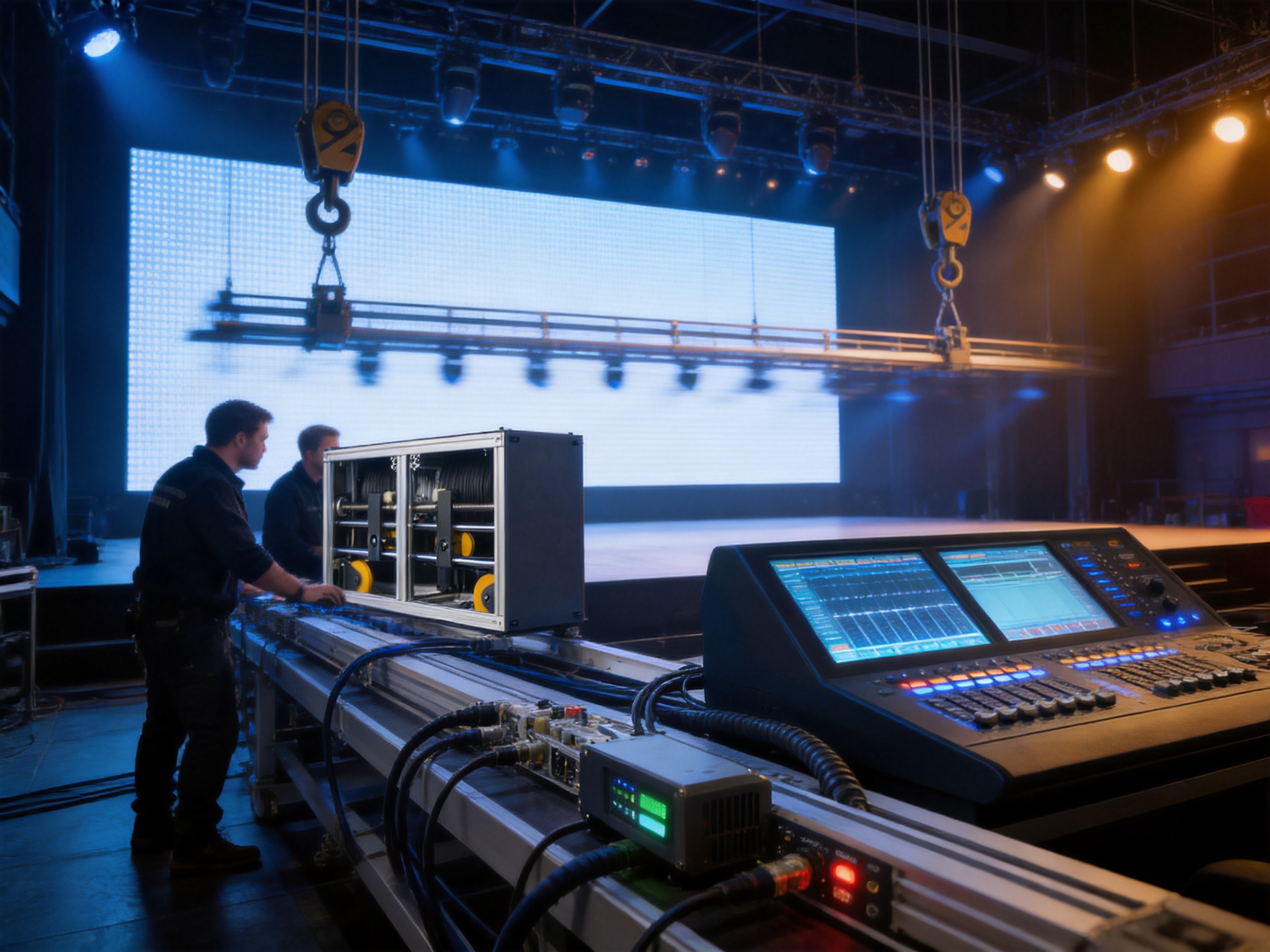
When evaluating stage winches, buyers often compare a dual-point servo system with simpler single-point or independently controlled alternatives. The appropriate choice depends on the load, venue, control requirements, and budget, but the Double Point Zero-Fleet Stage Winch offers several clear advantages for synchronized applications.
A single-point system can allow a wide load to rotate or tilt. The dual-point arrangement provides broader support and improves the ability to maintain a level orientation. This is especially valuable for LED screens and long lighting assemblies where visual alignment matters.
Two separate hoists may be able to lift the same object, but without coordinated feedback and control they may not move together accurately. The product is designed for synchronized operation, reducing the risk of visible height differences and uneven movement.
Some systems treat multiple lifting points as permanently linked. That can make installation difficult when the load is uneven or when the equipment configuration changes. The Double Point Zero-Fleet Stage Winch allows the two points to be addressed for setup and calibration before synchronized show operation.
Many basic winches are optimized for lifting rather than fine positioning. The product’s low minimum lifting speed supports careful adjustment near a final position. This is useful during screen leveling, fixture alignment, rehearsal, and technical setup.
DMX512 control allows the winch to fit into workflows familiar to lighting and show-control technicians. This can reduce the need for a completely separate operating method and make it easier to coordinate suspended equipment with the wider production.
Dual encoders provide position information for each lifting point. This is a more advanced approach than assuming that both motors have moved identically. Feedback helps support consistent operation and can assist with identifying differences between the two sides.
A simple scenic hoist may be suitable for a static backdrop or occasional lifting task. The Double Point Zero-Fleet Stage Winch is better suited to equipment that combines mechanical movement with continuous power and communication requirements. Its target applications include lighting fixtures, LED screens, and other automated performance equipment.
These advantages do not mean that the product is suitable for every lifting requirement. A heavy-duty stage application may require a different capacity or configuration. The correct comparison should always consider load rating, travel distance, motion accuracy, control method, installation environment, service support, and total operating cost rather than purchase price alone.
Theaters often require precise transitions between scenes, lighting states, and visual elements. A suspended lighting fixture or LED display may need to move from a storage height to a performance position repeatedly. Smooth and synchronized movement helps preserve the professional appearance of the production.
In a theater, the winch may also be used during rehearsal to establish exact positions. Once a cue has been programmed, repeatable movement becomes important. The dual-point design is useful when a wide object must remain level as it travels.
Bars and clubs may use suspended screens, lighting fixtures, and decorative structures to create changing visual environments. These venues often need flexible equipment that can support different events, music programs, and promotional installations.
The compact operating concept of a dual-point winch can help venue operators reposition equipment without extensive manual handling. DMX512 integration may also fit naturally into lighting-heavy control systems commonly found in entertainment venues.
Live productions frequently involve fast load-in, repeated changeovers, and large visual elements. An LED screen or lighting array must be installed efficiently, aligned accurately, and moved safely during production. The ability to adjust two lifting points independently during setup can save time compared with rebuilding a fixed suspension arrangement.
During the show, synchronized movement helps maintain the visual quality expected by audiences. It also supports the integration of lighting, video, and stage automation into a coordinated production environment.
Cultural centers, conference venues, stadiums, and multifunctional performance spaces may host many different types of events. Their equipment must be adaptable because the same hall may be used for concerts, ceremonies, exhibitions, conferences, and theatrical productions.
A dual-point winch with DMX512 control can contribute to this flexibility by supporting different suspended loads and movement requirements within its rated capacity and approved installation configuration.
Successful operation begins before the winch is mounted. Installation planning should consider the structural support, lifting points, load path, control location, cable routes, travel clearance, maintenance access, and emergency procedures.
The supporting structure must be capable of carrying the complete working load with the required safety margin. The product’s rated capacity applies to the winch and its intended operating conditions; it does not automatically confirm that the building structure, truss, brackets, or attachment hardware are suitable.
During commissioning, technicians should verify the following areas:
Commissioning should be performed gradually. Initial testing may use unloaded or minimally loaded movement where appropriate, followed by controlled tests with the intended equipment. The complete travel path should be observed for interference, cable tension, unexpected noise, or changes in alignment.
Documentation should record the installed load, operating limits, control configuration, maintenance schedule, and responsible personnel. Clear records make it easier to manage future productions and identify whether a change in equipment has affected the original setup.
The product is designed with a long service-life objective, but long-term reliability depends on proper maintenance. Stage machinery often works in demanding conditions. Dust, heat, vibration, frequent movement, temporary installations, and repeated production cycles can all affect performance.
Preventive maintenance is generally more cost-effective than waiting for a failure during a live event. A maintenance program should be based on operating frequency and venue conditions. Regular checks can identify wear, loose fasteners, cable damage, abnormal vibration, signal problems, and encoder inconsistencies before they interrupt production.
Maintenance records should distinguish between routine inspection and corrective repair. Operators should note the date, operating hours where available, observed condition, action taken, and responsible technician. This information can help identify patterns, such as one lifting point consistently carrying more load or one cable route experiencing repeated stress.
The use of servo control and feedback may also support more efficient maintenance. If movement becomes inconsistent or the two points begin to show a difference in response, technicians can investigate the issue before it develops into a larger mechanical problem. Early diagnosis can reduce downtime and protect the suspended equipment.
Long-term cost should include:
A system that costs slightly more at the beginning may provide better value if it offers more accurate operation, easier changeover, longer component life, and lower maintenance risk.
The Double Point Zero-Fleet Stage Winch is most appropriate when a project requires two-point support, controlled movement, and integration with performance equipment. Before selection, the venue operator or system designer should confirm that the application fits the product’s technical limits.
Important selection questions include:
Projects that involve heavier equipment, greater travel, unusual environmental conditions, or specialized safety requirements may need a customized engineering review. The manufacturer’s experience in design, production, installation, commissioning, operation, and maintenance can be valuable in determining the correct arrangement.
Customization should be approached as an engineering process rather than a simple change to one component. A modified winch may require an updated motor, control configuration, mounting method, cable arrangement, or testing procedure. The full system should be evaluated whenever the application differs from the standard specification.
RenteZhihe (JiangSu) Equipment Technology Co., Ltd. focuses on stage machinery, performance equipment, and intelligent control systems. Its business scope includes the development and manufacture of equipment for theaters, cultural centers, stadiums, conference centers, and multifunctional performance spaces.
The company’s service system covers design, production, installation, commissioning, operation, and maintenance. This full-cycle approach is important in stage automation because the product’s real performance depends on how it is applied. A reliable manufacturer should be able to understand the venue, assist with system configuration, support commissioning, and provide guidance for continued operation.
The company also emphasizes professional engineering capabilities and long-term customer relationships. Its approach is based on craftsmanship, integrity, innovation, and stable development within the stage equipment industry. These values are relevant to buyers who need more than a standard catalog product and want a partner capable of supporting a complete project.
Manufacturing strength is not limited to the workshop. It includes technical communication, documentation, installation coordination, troubleshooting, replacement support, and the ability to learn from field applications. A stage machinery supplier that combines these elements can provide greater confidence to venue owners, system integrators, contractors, and production companies.
The company’s experience serving domestic and international markets also supports the need for communication across different project environments. International performance venues may have different structural conditions, control preferences, documentation requirements, and service expectations. A flexible engineering and support system helps address these differences more effectively.
Its primary purpose is to lift and position performance equipment from two coordinated suspension points. It is designed for equipment such as lighting fixtures and large LED screens that require stable, synchronized movement and may also need continuous power and communication connections.
The stated lifting load is 0.5 kN, approximately 50 kilograms. The complete working load must include the suspended equipment, frame, cables, connectors, and accessories. The product should not be used beyond its specified rating.
Two lifting points provide broader support and allow the screen to be leveled more accurately. They reduce the tendency of a wide load to rotate or tilt around a central suspension point. The two points can also be adjusted independently during setup.
The system is designed to support individual addressing for setup and calibration, followed by synchronized operation. The exact control procedure depends on the installation and DMX512 configuration.
The lifting speed range is 0.005 to 0.5 meters per second. The low speed supports precise adjustment, while the higher speed supports practical repositioning during load-in and production preparation.
The maximum stated travel is 15 meters. The actual installation must also consider venue clearance, cable routing, equipment dimensions, structural conditions, and operational safety requirements.
DMX512 allows the winch to integrate with control methods commonly used in entertainment environments. It can support individual addressing, synchronized movement, and coordination with lighting and show-control operations.
No. DMX512 is a communication and control method. It does not replace correct load calculation, structural evaluation, inspection, qualified installation, maintenance, or safe operating procedures.
Dual encoders provide movement information for both lifting points. This supports more accurate positioning and helps the control system coordinate the two units. It is especially useful when a wide suspended load must remain level.
It is suitable only when the complete load and operating conditions remain within the stated specifications. Heavier scenic equipment may require a different winch capacity or a customized engineering solution.
It provides dual-point lifting and synchronized positioning, while the installation can be designed to accommodate continuous power and data connections. Cable management must be planned carefully so that the connections remain secure throughout movement.
Typical applications include theaters, bars, clubs, live-show venues, cultural centers, conference facilities, stadiums, and multifunctional performance spaces. The suitability of a particular venue depends on the load, structure, control system, and installation conditions.
The supplier specializes in stage machinery, performance equipment, and intelligent control systems. Its service coverage includes design, manufacturing, installation, commissioning, operation, and maintenance, allowing it to support the complete project lifecycle.
Preventive inspection, correct load management, suitable cable routing, accurate commissioning, and timely troubleshooting can help reduce maintenance costs. Feedback-based operation can also help identify abnormal movement before it causes more extensive damage.
Custom requirements should be reviewed by the manufacturer’s engineering team. Changes to load, travel, mounting, control, or cable integration may require a complete system assessment rather than a simple component substitution.
The Double Point Zero-Fleet Stage Winch is designed for a class of stage automation applications in which precision, synchronization, and integration are essential. Its dual-point configuration helps support wide suspended loads, while servo motor technology and dual encoder feedback provide the control needed for accurate movement. DMX512 connectivity allows the winch to participate in established entertainment control workflows rather than operating as an isolated mechanical device.
With a rated lifting load of 0.5 kN, a speed range of 0.005 to 0.5 meters per second, and a maximum travel of 15 meters, the product is suited to designated lighting, LED screen, and performance equipment applications. Its advantages are most apparent when a single-point solution would create leveling problems, when two independent hoists would be difficult to synchronize, or when the suspended equipment must remain connected to power and communication systems while moving.
The product’s value also comes from the manufacturing and service capabilities behind it. RenteZhihe (JiangSu) Equipment Technology Co., Ltd. combines stage machinery development with intelligent control expertise and provides support across design, production, installation, commissioning, operation, and maintenance. This integrated approach can help venue owners and system integrators manage the complete lifecycle of an automated lifting project.
For theaters, bars, live shows, cultural facilities, and multifunctional performance spaces, the right stage winch is not defined by lifting capacity alone. It must deliver controlled movement, predictable synchronization, reliable communication, practical maintenance, and a clear path from installation to daily operation. A carefully engineered dual-point servo winch can provide these capabilities while giving production teams greater flexibility and control over modern suspended performance equipment.
1. Product technical specification sheet for the Double Point Zero-Fleet Stage Winch.
2. Manufacturer information for RenteZhihe (JiangSu) Equipment Technology Co., Ltd.
3. General DMX512 control principles for entertainment lighting and stage automation.
4. General stage machinery practices for load calculation, installation, commissioning, inspection, and maintenance.
5. General servo motor and encoder feedback principles for synchronized motion control.
We specialize in delivering advanced stage machinery, rigging systems and intelligent control solutions for performance spaces worldwide.

No. 111 Runfeng Road, Hailing District, Taizhou City, Jiangsu Province, China

rtstage@163.com

+86-139 1771 1698

+86-139 1771 1698
rtstage@163.com
 中文简体
 English
 русский
 Français
 Español
 عربى