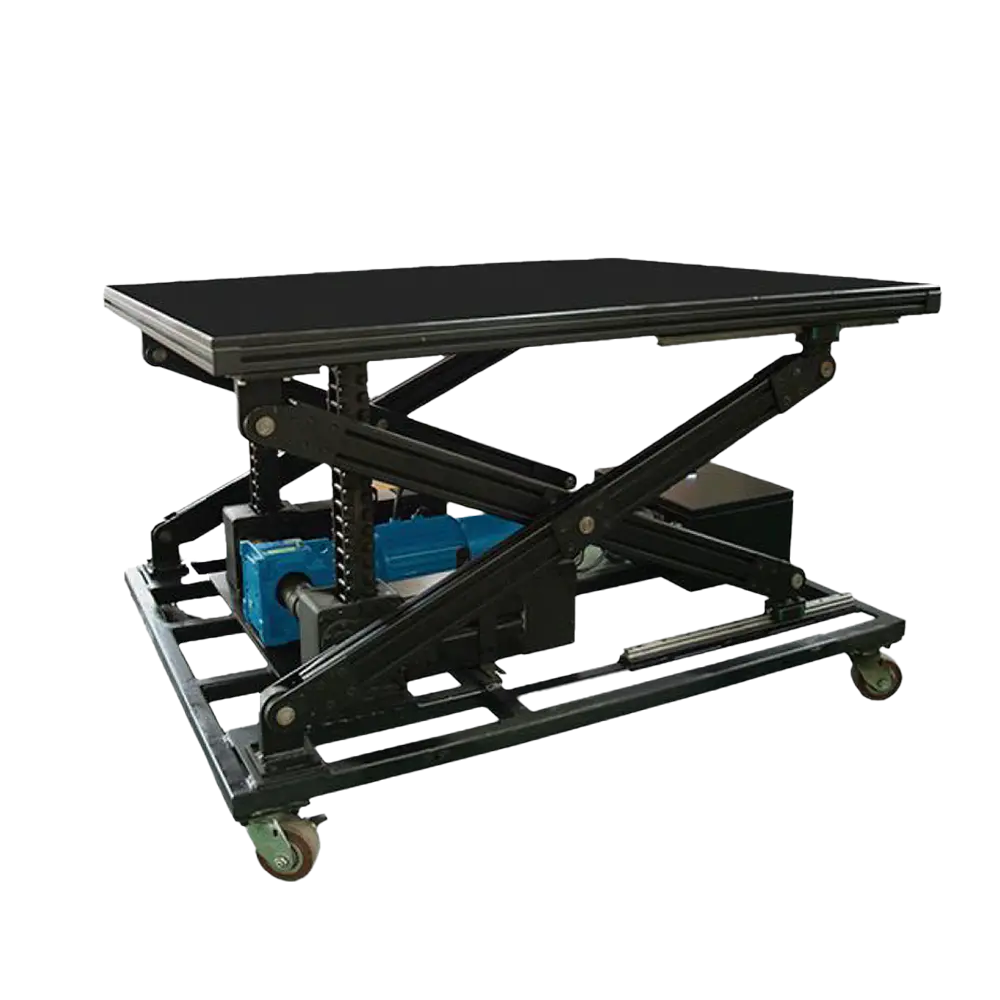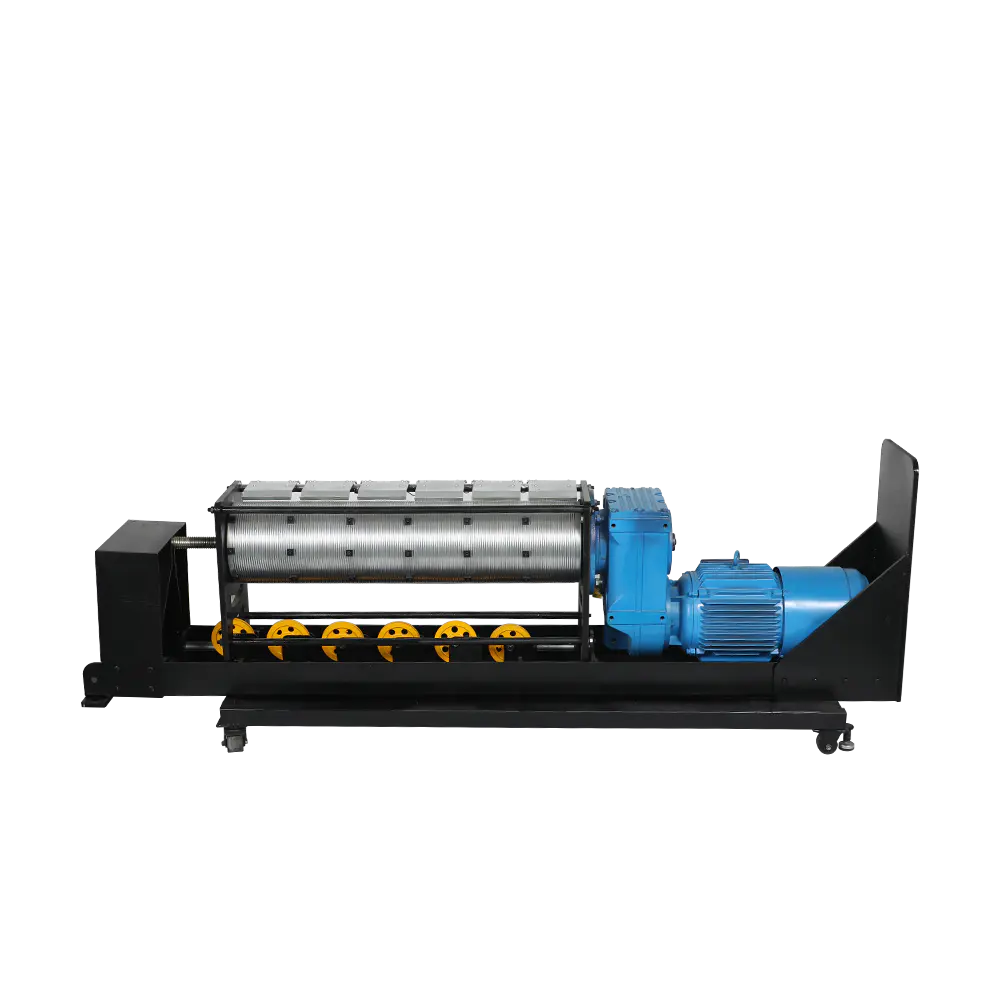
Modern performance venues require stage machinery that can move scenery, platforms, lighting equipment, LED screens, performers, and technical installations with exceptional accuracy. As theatrical productions become more dynamic and technically complex, lifting equipment must provide more than basic vertical movement. It must deliver stable operation, accurate positioning, quiet performance, efficient installation, reliable safety functions, and dependable service over many years.
The Rigid Lift Chain Stage System is designed to meet these requirements. It is a mechanical lifting solution that converts rotary motor power into controlled linear thrust through a specialized rigid chain and sprocket mechanism. During operation, the chain links engage and lock together to form a strong vertical support column. This structure allows the system to push and lift a load rather than relying only on the tensile strength of a suspended cable or the hydraulic pressure of a cylinder.
This operating principle gives the system a distinctive position in modern stage automation. It combines the compact installation advantages of a mechanical drive with the precision required for automated performance environments. Depending on the configuration, the system can support lifting speeds of up to 300 millimeters per second for selected models, travel distances from approximately 1.2 meters to 10 meters, and load capacities ranging from light technical equipment to more than 200 kilograms.
Manufactured by RenteZhihe (JiangSu) Equipment Technology Co., Ltd., the system is intended for theaters, concert halls, television studios, cultural centers, conference venues, exhibition spaces, and other facilities that require reliable vertical movement. Its modular architecture also allows professional engineers to adapt the lifting arrangement to different stage dimensions, load conditions, travel requirements, and control systems.
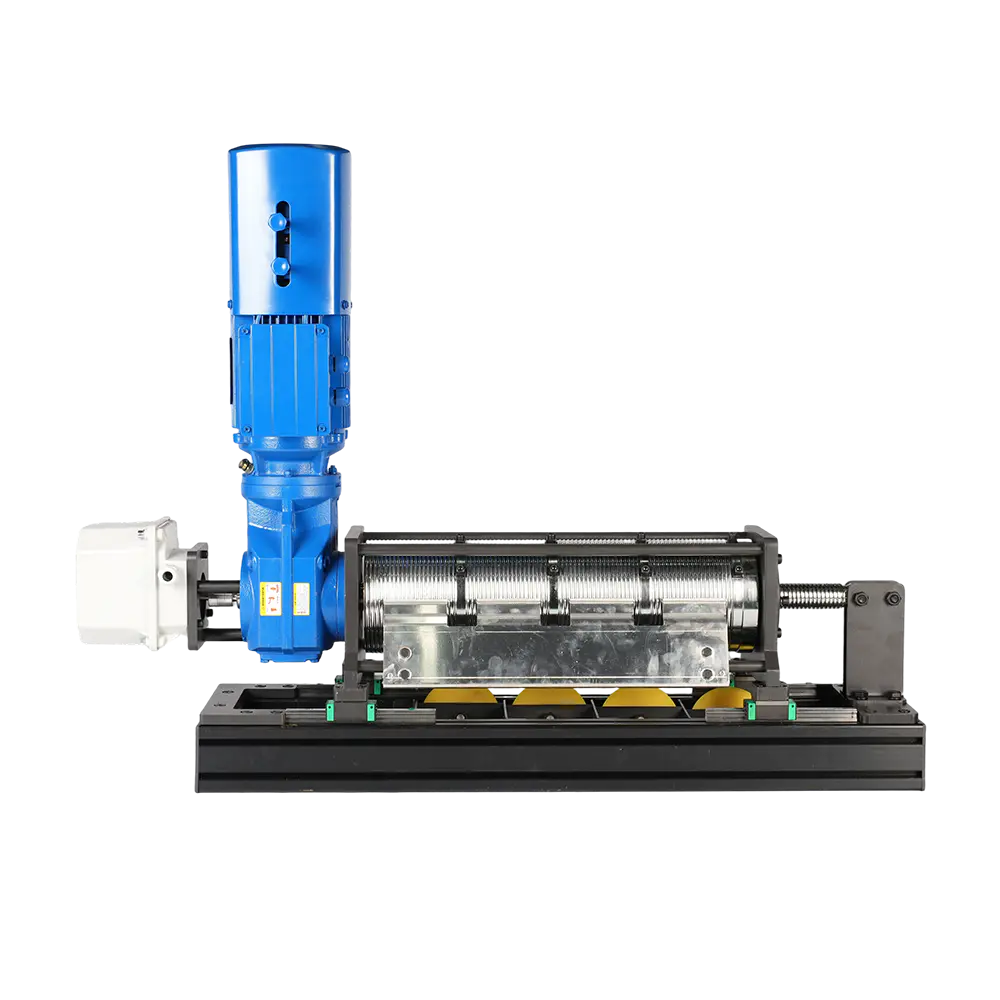
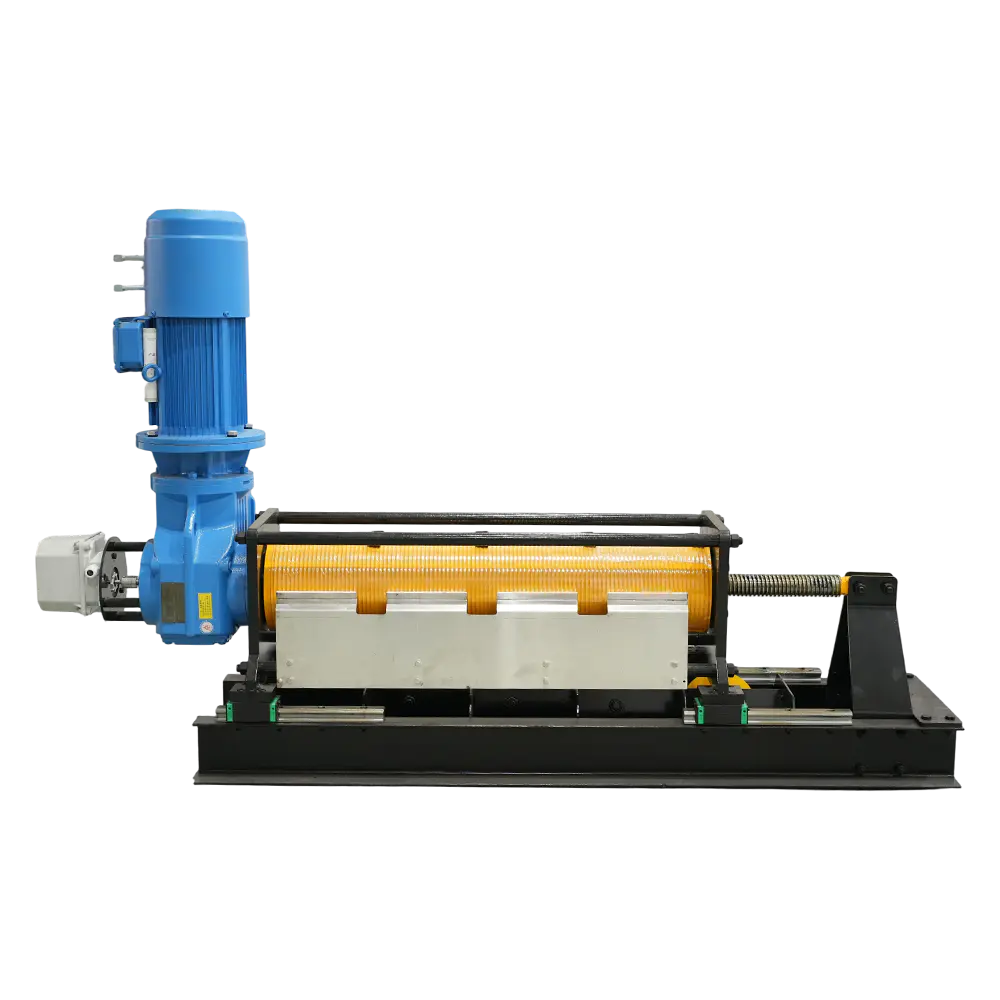
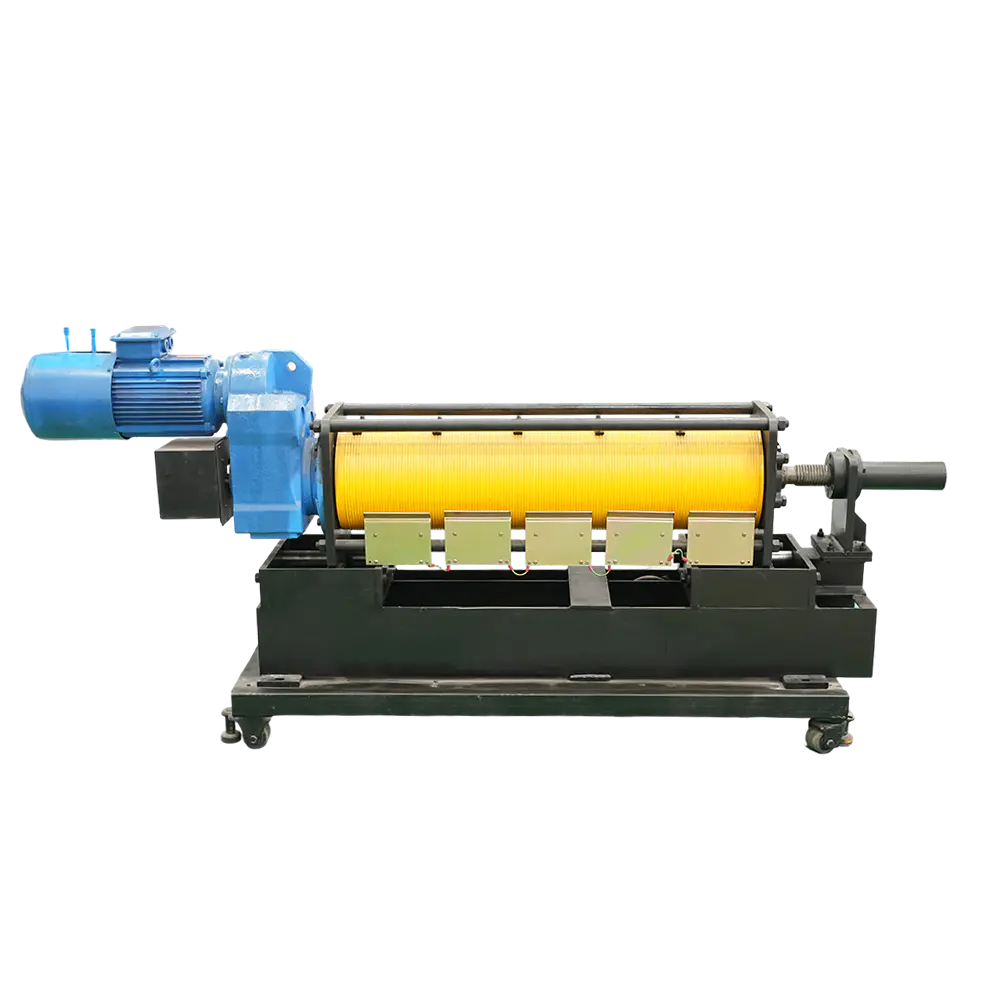
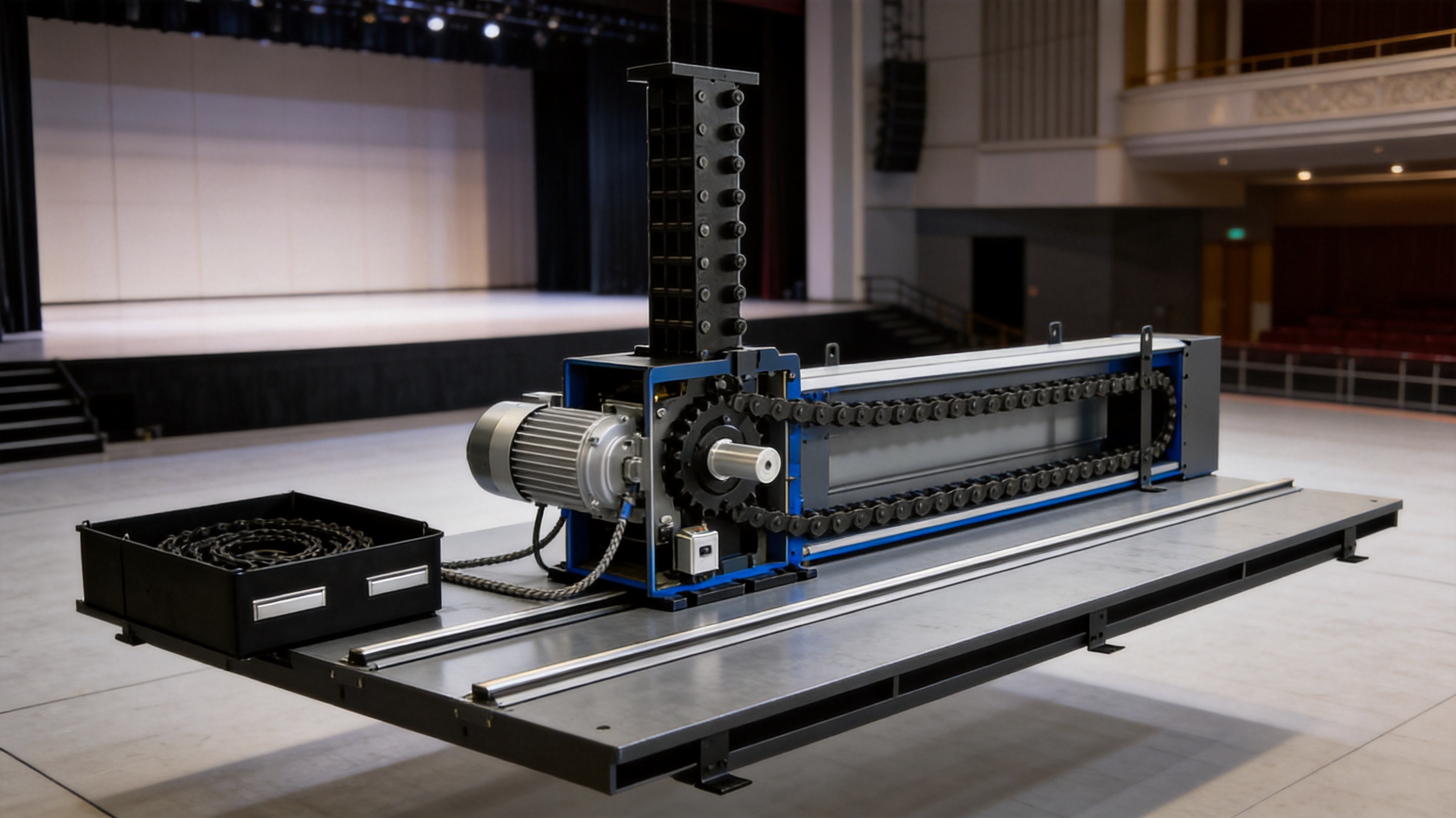
A Rigid Lift Chain Stage System is an automated vertical lifting mechanism based on a thrust chain, drive sprocket, gearbox, motor, guide structure, and chain storage housing. The chain is designed to remain flexible when it is stored or retracted, but to become rigid when its links are engaged in the lifting path. Once formed into a rigid column, the chain can transmit compressive force and support a vertically moving load.
The chain is driven by a precision sprocket. As the sprocket rotates, it feeds the chain upward or downward through a guided path. The chain storage box receives the retracted chain and helps keep the installation compact. Silent guide rails or related guiding components control the movement of the lifting assembly, reducing lateral movement, friction, and unwanted noise.
Unlike a conventional wire-rope hoist, the rigid chain does not need to hang freely from a tall overhead structure. Unlike a hydraulic cylinder, it does not require a separate hydraulic power station, fluid circuits, or a large cylinder body extending beneath the platform. These characteristics make it particularly useful where vertical space, equipment-room space, acoustic performance, or maintenance access is limited.
The system can be installed as a single lifting unit or as part of a synchronized multi-point lifting arrangement. Multiple units may be coordinated through a control platform so that a stage platform, scenic element, or technical installation moves evenly. The final design depends on the load distribution, center of gravity, structural support, required speed, travel distance, safety category, and venue operating conditions.
The lifting process begins when the control system sends a movement command to the drive motor. The motor transfers torque through a gearbox to the sprocket. The sprocket engages the specially shaped chain links and moves them through the guide path. As the links enter the working section, they interlock to create a rigid thrust column.
The rigid column then applies upward or downward force to the connected lifting platform or equipment carrier. Guide rails maintain the intended path and help resist lateral forces. Position sensors, limit switches, encoders, and control software can be used to monitor travel, speed, position, and operating status.
When the lifting command stops, the drive system holds the mechanism in position according to the selected mechanical and control configuration. Depending on the project, braking devices, mechanical locking arrangements, overload monitoring, emergency stop functions, and upper and lower travel limits can be incorporated into the complete system.
During lowering, the sprocket reverses its direction and disengages the chain links from the rigid column. The chain returns to the storage box in a controlled manner. This allows the system to complete a long travel movement without requiring a proportionally long overhead suspension arrangement.
The result is a compact conversion of rotary power into linear movement. The principle is mechanically straightforward, but producing a reliable stage system requires careful attention to chain geometry, sprocket accuracy, guide alignment, drive torque, structural rigidity, control logic, and commissioning procedures.
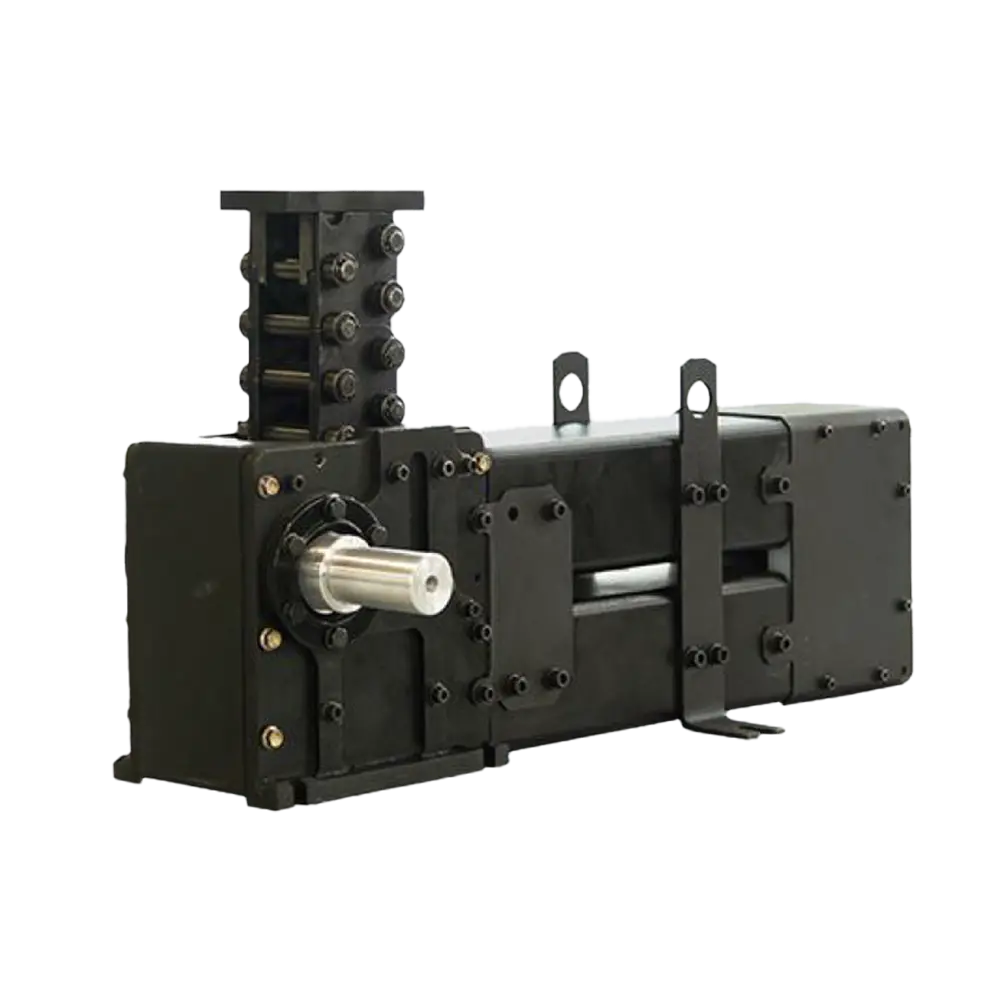
Rigid Lift Chain Stage System
Stage machinery operates in an environment where movement must often be coordinated with lighting, audio, video, scenery, performers, and special effects. A lifting device may be required to move repeatedly during rehearsals and performances, sometimes with only a short interval between cycles. Sudden vibration, inconsistent positioning, excessive noise, or unexpected drift can affect both the production and the safety of personnel.
Rigid chain technology addresses these demands through a direct mechanical lifting structure. Because the chain forms a rigid column during operation, it can provide stable vertical support. This reduces the tendency of the load to swing in the way a freely suspended cable may swing under certain conditions. It also helps create a more controlled movement profile when combined with a suitable motor, gearbox, and programmable controller.
The compact configuration is another important advantage. Traditional lifting equipment may require deep pits, tall overhead frames, counterweights, hydraulic stations, or substantial cable routes. A rigid chain system can often be arranged within a smaller equipment envelope, although the final space requirement must always be verified through project-specific engineering.
For venues with strict acoustic requirements, the combination of a controlled mechanical drive, guide rails, appropriate lubrication, and optimized transmission components can support quieter operation. This is especially valuable in theaters, broadcast studios, conference halls, and cultural venues where mechanical noise may interfere with the audience experience or recorded sound.
The system is also suitable for integration with digital control platforms. It can receive programmed movement commands, operate according to position settings, coordinate with other lifting units, and provide status information for monitoring. This makes it easier to incorporate the lifting equipment into a broader stage automation network.
A rigid lift chain creates a compressive support column in the working direction. This provides a stable mechanical connection between the drive unit and the lifted object. When the lifting frame, guide structure, and load are correctly engineered, the system can minimize unwanted swaying and movement during vertical travel.
Wire-rope systems are highly useful across the entertainment industry, but their suspended nature can allow oscillation when the load starts, stops, or encounters uneven loading. Hydraulic systems can also provide strong lifting force, but their performance depends on fluid pressure, cylinder condition, valve behavior, and hydraulic circuit maintenance. Rigid chain systems offer a different mechanical approach, with the drive force transmitted directly through the chain and sprocket assembly.
Stage automation frequently requires a platform or scenic element to stop at a repeatable position. Positioning accuracy depends on the motor, gearbox, feedback devices, control software, mechanical stiffness, load distribution, and installation quality. The rigid chain mechanism provides a predictable mechanical path that can work effectively with encoders and programmable motion control.
Precise positioning is useful for orchestra pits, stage elevators, camera platforms, LED screens, lighting equipment, and modular scenic structures. It also allows multiple lifting units to be synchronized when the control system and mechanical installation are designed for that purpose.
The chain storage box allows the retracted chain to occupy a controlled and compact space. Since the system does not depend on a long hanging cable or a hydraulic cylinder with equivalent travel, it can be considered for projects where the available installation envelope is restricted.
Compactness can simplify architectural coordination. Designers may have more flexibility when planning stage pits, technical rooms, access routes, platforms, and maintenance areas. Nevertheless, compact equipment must not be installed without sufficient inspection and service access. A professional layout should balance space efficiency with safe maintenance requirements.
Hydraulic lifting systems can be powerful and suitable for many heavy-duty applications. However, they normally require pumps, reservoirs, valves, fluid lines, filtration, and additional measures to control leakage and temperature. A mechanical rigid chain system avoids the need for a hydraulic power station and hydraulic fluid circuit.
This can reduce the number of auxiliary components in the installation. It may also simplify routine inspection and help reduce the possibility of fluid contamination in sensitive venue areas. The appropriate technology still depends on load, speed, duty cycle, environmental conditions, and local regulations, but rigid chain lifting offers a practical alternative where mechanical drive technology is preferred.
The system range includes different chain specifications, including models identified from 30A to 100A. These configurations allow engineers to select a suitable combination of chain size, drive unit, lifting capacity, travel length, and installation arrangement.
A modular approach is valuable because stage projects rarely have identical requirements. One venue may need a small camera lift with short travel, while another may require a larger scenic platform with multiple synchronized drive points. A modular product family helps the manufacturer adapt the design without treating every project as an entirely new mechanical system.
The use of wear-resistant materials, robust gear-chain transmission components, and guided mechanical movement supports long service life. Regular maintenance remains essential, especially in systems used frequently or in dusty environments, but the design can help reduce unnecessary maintenance complexity.
Maintenance planning may include chain inspection, sprocket inspection, guide alignment checks, fastener verification, lubrication according to the manufacturer's instructions, brake inspection, sensor testing, and control-system diagnostics. A preventive maintenance program is more effective than waiting for performance deterioration or abnormal noise to appear.
Selected models can support rated speeds of up to 300 millimeters per second. This makes the system suitable for stage changes and technical movements that need to be completed within a limited time. Actual operating speed should be selected according to load, travel distance, acceleration, deceleration, stability requirements, noise limits, and safety assessment.
High speed alone does not define a successful stage lift. Smooth acceleration and controlled stopping are equally important. The drive and control system should be configured so that movement remains stable and predictable throughout the operating cycle.
The thrust chain is the central load-transmitting component. Its links are shaped to engage with one another and form a rigid lifting structure. The chain must withstand repeated loading, movement, alignment changes, and environmental exposure. Material selection, heat treatment, surface finish, link geometry, and dimensional consistency all influence service performance.
Chain quality is especially important because small dimensional variations can affect engagement, noise, wear, and load distribution. A professional production process therefore requires controlled machining, inspection, assembly verification, and functional testing.
The sprocket transfers rotary motion to the chain. Its tooth profile must match the chain accurately to ensure smooth engagement and minimize impact. The gearbox controls speed and increases available torque according to the lifting requirement.
The drive unit should be selected based on static load, dynamic load, acceleration, duty cycle, starting frequency, travel distance, and safety factor. Incorrect drive selection can lead to overheating, premature wear, insufficient braking performance, or unstable movement. Engineering calculations and practical testing are therefore central to the design process.
The motor supplies the power required for lifting and lowering. A brake assembly can help hold the load when the motor is not actively rotating. Depending on the application, the drive may be paired with a variable-frequency drive or another motion-control solution to manage acceleration, deceleration, speed, and stopping behavior.
The electrical and mechanical braking strategy must be coordinated with the project safety design. Emergency stopping, power-loss behavior, manual recovery, and access protection should be reviewed during system design rather than added as an afterthought.
The chain storage box receives the retracted chain and helps protect it from accidental contact, contamination, and uncontrolled movement. It also contributes to the compact layout of the complete lifting unit.
The storage arrangement should remain accessible for inspection and cleaning. The enclosure must be positioned so that the chain can enter and leave without excessive bending, rubbing, or interference with other equipment. Good installation practice is important because even a high-quality chain can suffer premature wear if storage alignment is poor.
Guide rails stabilize the lifting assembly and help maintain a straight travel path. They are particularly important where the lifted equipment has a large surface area or where the center of gravity changes during movement.
Guide components should be aligned accurately during installation. Uneven or poorly aligned rails can increase friction, produce noise, and place additional loads on the chain and drive unit. The use of suitable low-noise materials and carefully adjusted clearances can support the acoustic expectations of theaters and broadcast facilities.
The control system provides the interface between the operator and the mechanical lifting equipment. It may include local controls, centralized stage automation, programmable logic controllers, touchscreen interfaces, motion presets, encoder feedback, limit switches, emergency stops, and fault monitoring.
A well-designed control system can coordinate several lifting units and help prevent unsafe commands. For example, it may verify that a platform is clear before movement, prevent travel beyond programmed limits, monitor synchronization, and report faults to the operator. The exact functions depend on the project safety assessment and applicable standards.
Reliable stage machinery is the result of controlled design and manufacturing rather than a single component. RenteZhihe (JiangSu) Equipment Technology Co., Ltd. combines product research and development, mechanical manufacturing, stage engineering, intelligent control, installation, commissioning, and technical service. This integrated capability allows the manufacturer to consider the full life cycle of a lifting system.
The manufacturing process begins with technical analysis. Engineers review the required load, travel distance, speed, operating frequency, platform dimensions, support conditions, environmental factors, control requirements, and access limitations. They then develop a suitable mechanical configuration and identify the appropriate chain specification, drive unit, guides, structural frame, sensors, and control architecture.
Engineering drawings and three-dimensional models help verify component relationships before production. Interference checks can identify conflicts with platforms, frames, electrical routes, access panels, and other stage equipment. Load calculations and drive selection are used to confirm that the proposed system is appropriate for the intended duty.
Precision machining is important for sprockets, shafts, mounting plates, guide components, and other transmission parts. Consistent dimensions support smooth engagement and reduce uneven loading. Where heat treatment or surface treatment is used, process control helps achieve the required hardness, wear resistance, and durability.
Welding and structural fabrication must also be controlled carefully. The lifting frame and support brackets should have sufficient rigidity and accurate mounting surfaces. Welding deformation, dimensional errors, and poor alignment can affect the performance of the entire system, so fabrication inspection and assembly verification are essential.
During assembly, the chain, sprocket, gearbox, guide rails, storage box, motor, brake, sensors, and control components are fitted according to engineering documentation. Technicians check fasteners, alignment, clearances, lubrication points, cable routes, and protective covers. The objective is to ensure that the mechanical system operates as an integrated unit rather than as a collection of unrelated parts.
Factory testing may include no-load operation, load testing, repeated cycling, limit-switch verification, emergency-stop testing, brake testing, noise observation, speed checks, and control-signal verification. Testing conditions should be established according to the project requirements. Any abnormal vibration, noise, temperature rise, chain behavior, or position error should be investigated before delivery.
RenteZhihe's strength also comes from its ability to support installation and commissioning. Stage machinery performance depends significantly on site conditions. A technically sound product can underperform if the support structure is inaccurate, guide rails are misaligned, wiring is incorrect, or control parameters are not adjusted. Professional installation and commissioning help ensure that the equipment works as intended in the actual venue.
After commissioning, operators and maintenance personnel can receive guidance on routine inspection, operating procedures, emergency response, lubrication, fault reporting, and preventive maintenance. This service-oriented approach helps preserve system performance throughout its working life.
The following table provides a general overview of the product range described for rigid lift chain stage applications. Final values must be confirmed through project-specific engineering, testing, and safety review.
| Item | General Range or Feature | Engineering Consideration |
|---|---|---|
| Chain specifications | Approximately 30A to 100A models | Selection depends on load, thrust, travel, and installation conditions |
| Rated speed | Up to approximately 300 mm/s for selected models | Actual speed depends on load, acceleration, stopping distance, and control settings |
| Travel distance | Approximately 1.2 m to 10 m | Travel must be coordinated with guides, chain storage, structure, and access requirements |
| Load capacity | From approximately 10 kg to more than 200 kg | Capacity depends on the complete lifting arrangement and safety factor |
| Drive method | Motor, gearbox, and sprocket transmission | Drive selection should consider duty cycle, torque, braking, and environmental conditions |
| Guidance | Silent guide rails or equivalent guided structures | Alignment and stiffness are essential for smooth operation |
| Control integration | Local, centralized, or intelligent stage automation control | Interface and safety logic should be designed for the venue control architecture |
| Applications | Platforms, scenery, lighting, LED screens, cameras, and technical equipment | Each load type requires a suitable support frame and risk assessment |
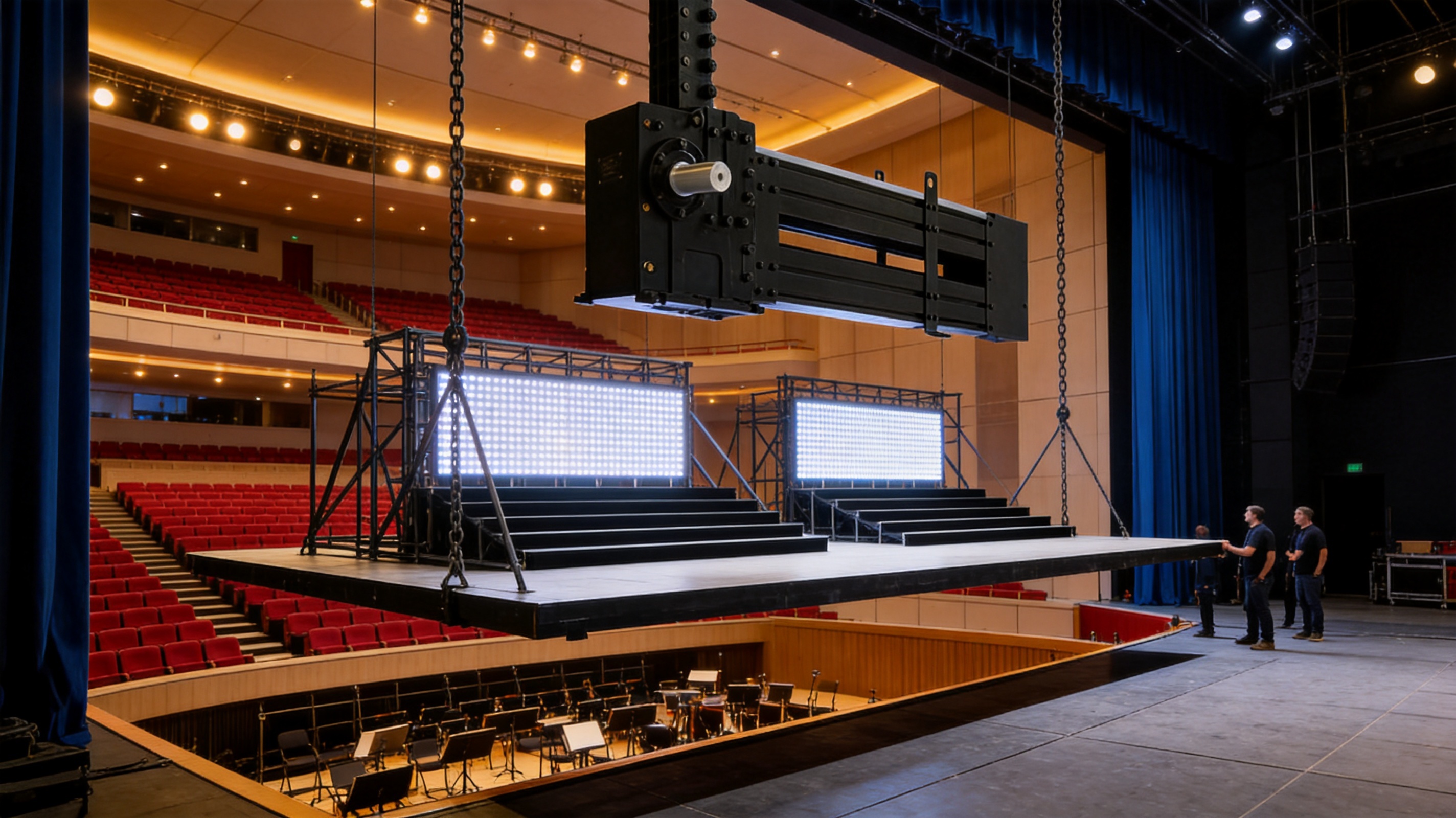
In professional theaters, rigid chain lifts can be used for orchestra pits, performer platforms, choral risers, scenery sections, stage extensions, and movable flooring. These applications often require accurate stops because the lifted element must align with adjacent stage surfaces.
An orchestra pit lift may move between several programmed positions. At one level, it can provide a continuous stage surface. At another, it can create a lowered orchestra area. At a higher position, it may become an extension of the stage or a platform for performers. A rigid chain system can support this type of flexible operation when the platform, guides, controls, and safety systems are properly engineered.
Scenery lifts can also assist rapid scene changes. A scenic wall, architectural element, or display panel may be lowered below the stage and raised when required. The compact design of the chain storage arrangement can be valuable where backstage and under-stage space is limited.
For choral risers or performer lifts, smooth movement and accurate synchronization are especially important. The system must be designed to prevent hazardous gaps, unexpected motion, or excessive vibration. Operator visibility, access control, warning signals, and emergency stopping procedures should be incorporated into the complete installation.
Television studios require adaptable technical spaces. Camera platforms, lighting units, LED screens, scenic backgrounds, display structures, and presentation platforms may need to move during a production or between different programs.
A rigid chain lift can provide repeatable positioning for a camera platform or studio installation. When integrated with the studio control system, movement presets may allow operators to recall commonly used positions. This can reduce setup time and improve consistency between recordings.
Broadcast facilities also place strong demands on noise control. Mechanical movement should not interfere with microphones or recorded audio. The use of guided motion, suitable drive settings, silent rail components, and proper maintenance can support quieter operation.
Because studio layouts can change frequently, modular equipment is valuable. A manufacturer that can provide customized frames, mounting arrangements, controls, and commissioning support can help the equipment fit the specific production environment rather than forcing the studio to adapt to a standard configuration.
Cultural tourism productions often combine theater, architecture, lighting, water effects, projection, music, and mechanical movement. Scenic platforms may rise from the floor, reveal performers, change the shape of an audience area, or coordinate with large visual effects.
In these projects, the lifting system may operate outdoors or in semi-outdoor environments, where humidity, dust, temperature variation, and maintenance access must be considered. Mechanical protection, electrical enclosures, drainage, corrosion control, and inspection planning should be addressed during design.
Rigid chain technology can support compact lifting arrangements for scenic objects and interactive installations. Its ability to connect with intelligent control systems makes it suitable for programmed sequences in which multiple mechanical elements move in coordination with lighting and video effects.
The design must always prioritize safety over visual impact. Movement areas should be protected, accessible zones should be controlled, and emergency procedures should be clear to operators. A reliable performance system is one that can create dramatic effects while remaining predictable and maintainable.
Exhibition halls, conference centers, banquet venues, and multifunctional performance spaces often need equipment that can adapt to different layouts. A platform may serve as a display stage during one event and become part of a presentation or performance area during another.
Rigid chain lifts can be used for display platforms, interactive exhibits, presentation stages, equipment cabinets, and retractable installations. Their compact architecture may help venue designers preserve floor space and maintain a clean appearance when the equipment is not in use.
In multipurpose venues, operational simplicity is particularly important. Staff may need to operate the system for different events, so controls should be clearly labeled and supported by appropriate training. Preset positions, status indicators, fault messages, and access authorization can help reduce operating errors.
A modern stage lift should not be viewed as an isolated motorized device. It is part of a larger automation system that may include lighting control, audio systems, video processors, show-control software, building management systems, and safety monitoring.
The rigid lift chain system can be configured to accept commands from a centralized controller. Movement profiles may include speed, direction, acceleration, deceleration, target position, and stopping behavior. Feedback devices can confirm whether the equipment has reached the intended position.
Multiple lift units can be synchronized through coordinated control logic. This is useful for platforms supported at several points, where uneven movement could place stress on the structure or create a hazard. Synchronization may use encoders, position sensors, torque monitoring, or other project-specific feedback methods.
Remote monitoring can help maintenance teams review operating status and identify abnormal conditions. A control system may record faults, travel cycles, overload events, sensor conditions, and emergency stops. These records can support preventive maintenance and troubleshooting.
Automation does not eliminate the need for trained operators. Instead, it should support them by making system status clearer, reducing repetitive manual tasks, and preventing commands that conflict with configured safety conditions. Human supervision, physical protection, inspection, and emergency procedures remain essential.
Stage lifting equipment must be treated as safety-related machinery. The design should consider the load, movement path, access zones, foreseeable misuse, power failure, sensor failure, mechanical wear, control faults, and emergency recovery procedures.
Typical safety functions may include overload protection, upper and lower travel limits, emergency braking, emergency stop circuits, synchronization monitoring, fault alarms, protective guarding, access interlocks, and mechanical retention measures. The appropriate combination depends on the application and the applicable technical requirements.
Overload protection helps prevent operation when the load exceeds the design capacity. Limit protection prevents the mechanism from traveling beyond its permitted range. Emergency stopping allows the operator to halt movement when an unsafe condition is detected. Synchronization monitoring can identify differences between multiple lifting points.
Safety features should be tested during factory inspection and site commissioning. Operators should understand the difference between a normal stop, an emergency stop, a power-loss condition, and a mechanical fault. Written procedures should explain how to secure the area, report the problem, and restore the system after inspection.
Reliability also depends on routine maintenance. The chain should be inspected for wear, deformation, contamination, corrosion, and unusual movement. Sprocket engagement should be checked for smoothness. Guide rails should be inspected for alignment and damage. Gearboxes, brakes, fasteners, sensors, cables, and protective covers should be included in the maintenance plan.
Maintenance intervals should be established according to operating frequency, load, environmental conditions, and manufacturer recommendations. A system used several times every day may require more frequent inspection than one used only occasionally. Maintenance records should identify the date, operating cycles where available, work performed, parts replaced, and any abnormal observations.
The design load should include the platform, frame, scenery, equipment, cabling, accessories, and any people or objects that may be permitted on the moving structure. Dynamic effects caused by acceleration, stopping, uneven distribution, or impact must also be considered.
The travel distance determines the chain configuration, guide length, storage arrangement, frame design, and control limits. The project team should identify the upper and lower positions, intermediate stops, required clearance, maintenance access, and emergency recovery space.
A system used for occasional scenic movement may have different requirements from one used continuously during performances. The number of cycles per hour, operating duration, acceleration profile, and required movement time all influence motor and gearbox selection.
Humidity, dust, temperature, acoustic requirements, available power, floor strength, overhead clearance, access routes, and nearby equipment can affect the final design. Outdoor or semi-outdoor installations require additional consideration for environmental protection and corrosion control.
The lifting system should be compatible with the venue's control architecture. The project team should determine whether the equipment will use local controls, a central stage-management system, show-control software, or a combination of methods. Emergency stop circuits and authorization levels should be defined early.
Product quality is important, but the manufacturer's engineering and service capabilities are equally significant. The supplier should be able to support technical design, production, delivery, installation, commissioning, operator training, maintenance, spare parts, and technical response.
RenteZhihe (JiangSu) Equipment Technology Co., Ltd. is a high-tech enterprise focused on the research, development, and manufacture of stage machinery, performance equipment, industrial machinery, and intelligent control systems. Since its establishment in 2012, the company has developed experience in providing equipment and integrated solutions for performance venues.
The company combines product development with engineering implementation. This is important because stage machinery is rarely a simple catalog purchase. Every venue has its own architectural limitations, operating procedures, performance requirements, and safety conditions. A supplier with engineering capability can adapt the product to the actual application.
RenteZhihe provides standardized rigid lift chain products as well as customized solutions. Customization may involve chain selection, lifting capacity, travel distance, support frames, platform interfaces, guide arrangements, storage configuration, sensors, control systems, and installation details.
The company's manufacturing strength is supported by a professional research and development team, production facilities, quality management procedures, and project implementation experience. These capabilities help connect design intent with manufactured performance.
Another important strength is the company's service coverage. Its support can extend from concept development and mechanical design to manufacturing, installation, commissioning, operation guidance, and maintenance support. A complete service process can reduce communication gaps between the equipment supplier, theater consultant, contractor, and venue operator.
For international customers, technical communication and project coordination are also important. Clear specifications, drawings, inspection procedures, installation instructions, and operating documentation help ensure that the equipment can be integrated into the wider project successfully.
Before installation, the project team should verify the foundation, support structure, embedded parts, electrical supply, access route, lifting equipment, and environmental conditions. The installation area should be cleared of unrelated work and protected from contamination.
The mechanical frame should be positioned according to approved drawings. Guide rails should be aligned carefully, and mounting points should be checked for level, plumb, and structural stability. The chain storage box should have sufficient clearance and should not be obstructed by cables, pipes, or neighboring mechanisms.
Electrical wiring should be installed according to the control design. Sensors and limit switches should be identified clearly, and cables should be protected from moving components. The motor, brake, control cabinet, emergency stop, and feedback devices should be tested individually before full-load operation.
Commissioning should begin with low-risk checks and no-load movement. Technicians can then verify direction, limit positions, sensor response, stopping behavior, noise, and alignment. Load testing should be performed progressively and recorded. Multi-point systems should be evaluated for synchronization throughout the travel range.
After successful commissioning, the operator should receive training. Training should cover normal operation, preset positions, emergency stop use, inspection requirements, fault reporting, access restrictions, and basic recovery procedures. The venue should retain technical documentation and maintenance records for future reference.
A preventive maintenance strategy protects both equipment value and venue availability. Regular inspections can identify chain wear, sprocket damage, loose fasteners, guide friction, sensor misalignment, brake deterioration, abnormal temperature, and control faults before they cause an operational interruption.
Visual inspections should be supplemented by functional tests. The system should be observed during starting, acceleration, travel, stopping, and holding. Changes in noise, vibration, speed, or position accuracy may indicate a developing problem.
Lubrication should follow the manufacturer's instructions. Excessive lubricant can attract dust, while insufficient lubrication can increase friction and wear. Cleaning procedures should avoid forcing contaminants into bearings, sensors, electrical cabinets, or chain engagement areas.
Spare parts planning can reduce downtime. Critical components may include chains, sprockets, sensors, switches, brake parts, fasteners, control components, and guide accessories. The appropriate spare-parts list depends on the number of systems, venue usage, equipment age, and access to technical support.
Maintenance personnel should document every intervention. A clear record helps identify recurring problems and supports decisions about adjustment, component replacement, redesign, or operating procedure changes.
The value of a rigid lift chain system should be measured over its entire service life rather than only by initial purchase cost. Compact installation may reduce structural modifications or equipment-room requirements. Mechanical transmission may simplify auxiliary infrastructure compared with hydraulic systems. Modular design may reduce the need for completely unique components in different projects.
Reliable positioning can improve production efficiency. Scenic elements can be moved to repeatable locations, setup time can be reduced, and technical crews can coordinate equipment more effectively. A programmable control system can also support faster changeovers between productions and event layouts.
Low-maintenance design can reduce interruptions, but only when supported by a proper maintenance program. Preventive inspection helps avoid unexpected failures during performances or high-value events. The combination of robust construction, professional commissioning, and service support contributes to long-term operational stability.
Energy consumption, acoustic behavior, safety requirements, and staff training should also be considered in the total operating evaluation. A system that is easy to understand, maintain, and integrate may provide greater practical value than a solution selected solely for maximum lifting force.
Stage machinery is moving toward greater connectivity, automation, and data-based maintenance. Future rigid chain systems are likely to place increased emphasis on condition monitoring, digital commissioning, remote diagnostics, intelligent synchronization, and integration with venue management platforms.
Sensor technology can provide more information about chain movement, motor current, brake condition, position accuracy, vibration, and operating cycles. This information may help maintenance teams identify trends before a failure occurs.
Control platforms may also support more advanced movement coordination. A stage manager could operate multiple platforms, screens, lifts, and scenic elements through programmed sequences while the system checks position, clearance, and safety status in real time.
Despite these developments, the fundamental requirements will remain unchanged: sound mechanical design, accurate manufacturing, appropriate safety systems, careful installation, qualified commissioning, and responsible operation. Digital intelligence can improve supervision, but it cannot replace engineering discipline.
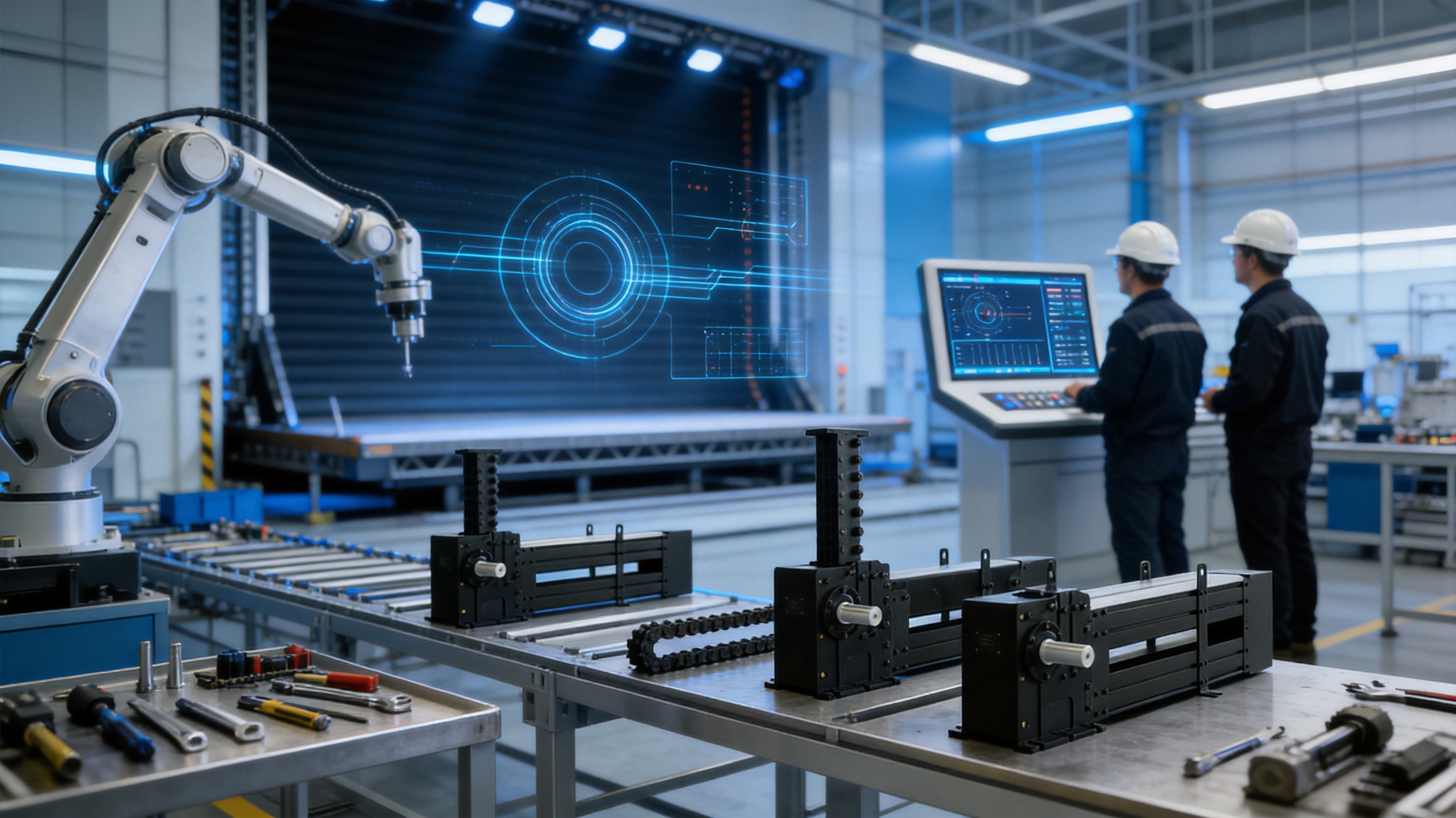
A rigid lift chain forms a mechanically supported column during operation, which can provide stable vertical movement and reduce swinging. It may also require less overhead space than a suspended wire-rope arrangement. The best choice depends on the load, travel, structure, speed, safety design, and venue requirements.
A rigid chain system uses a motor, gearbox, sprocket, and mechanical chain to create linear thrust. A hydraulic system uses pumps, fluid, valves, and cylinders. Rigid chain technology can reduce the need for hydraulic power stations and fluid circuits, while hydraulic equipment may be preferred for certain very heavy or specialized applications.
It can be designed for performer platforms when the complete structure, capacity, guidance, controls, guarding, emergency systems, and applicable safety requirements are properly engineered. A project-specific safety assessment is essential before people are permitted on a moving platform.
Yes. Multiple units can be configured for synchronized operation. The control system may use position feedback, synchronization logic, limit protection, and fault monitoring. The platform structure must also be designed to distribute loads correctly and prevent excessive stress caused by uneven movement.
The described product range supports travel distances from approximately 1.2 meters to 10 meters. The final travel depends on the model, chain specification, storage arrangement, guide structure, load, and site conditions.
The range includes configurations from approximately 10 kilograms to more than 200 kilograms. Capacity is not determined by the chain alone. The motor, gearbox, sprocket, frame, guide rails, platform, mounting structure, control system, and safety factor must all be considered.
Selected models support rated speeds of up to approximately 300 millimeters per second. Actual operating speed should be determined according to the load, acceleration, deceleration, required positioning accuracy, acoustic limits, and safety assessment.
The system is designed with guided movement and can incorporate silent guide rails and controlled drive settings. Proper alignment, lubrication, installation, and maintenance are also necessary to achieve low-noise operation. Acoustic performance should be verified under the actual project conditions.
Yes. Customization can address load capacity, travel distance, chain model, support frame, mounting arrangement, storage box, guide rails, sensors, control methods, platform interface, and site-specific installation requirements.
RenteZhihe can support concept development, engineering design, product manufacturing, installation, commissioning, operator guidance, maintenance planning, and technical support. The exact service scope should be defined according to the project contract and site requirements.
Maintenance generally includes chain and sprocket inspection, guide alignment checks, lubrication, fastener verification, brake testing, limit-switch testing, sensor inspection, control-system diagnostics, and functional movement tests. The recommended frequency depends on duty cycle, environment, and manufacturer instructions.
A project inquiry should include the intended application, load, travel distance, speed, platform size, number of lifting points, operating frequency, available installation space, power supply, environmental conditions, control requirements, safety expectations, and delivery or installation location. Complete information helps the manufacturer propose a suitable configuration.
The Rigid Lift Chain Stage System offers a practical and adaptable approach to modern stage automation. By converting rotary motor power into linear thrust through a rigidly interlocking chain, it provides stable vertical movement in a compact mechanical arrangement.
Its advantages include precise positioning, modular configuration, high-speed capability for selected models, reduced dependence on hydraulic infrastructure, low-maintenance potential, and compatibility with intelligent control systems. These characteristics make it suitable for theater platforms, orchestra pits, scenery, lighting, LED screens, camera systems, cultural tourism productions, exhibitions, and multipurpose venues.
Performance depends on more than the lifting mechanism itself. Accurate design, quality materials, precision machining, controlled assembly, factory testing, professional installation, commissioning, operator training, and preventive maintenance are all essential. RenteZhihe's integrated capabilities in research and development, manufacturing, stage engineering, intelligent control, and technical service provide a foundation for customized solutions.
For venues seeking safer, more efficient, and more intelligent movement systems, rigid chain technology offers a strong alternative to conventional lifting methods. When matched correctly to the project and supported throughout its service life, it can contribute to reliable stage operation, faster scene changes, improved production flexibility, and long-term value.
1. RenteZhihe (JiangSu) Equipment Technology Co., Ltd., Rigid Lift Chain Stage System Product Information and Technical Materials.
2. RenteZhihe (JiangSu) Equipment Technology Co., Ltd., Stage Machinery and Intelligent Control System Company Information.
3. General principles of mechanical power transmission, chain drives, sprocket engagement, and gearbox selection for industrial lifting equipment.
4. General engineering practices for theater machinery design, stage automation, lifting-platform safety, and preventive maintenance.
5. General principles of programmable motion control, position feedback, emergency stopping, synchronization, and fault monitoring in automated machinery.
We specialize in delivering advanced stage machinery, rigging systems and intelligent control solutions for performance spaces worldwide.

No. 111 Runfeng Road, Hailing District, Taizhou City, Jiangsu Province, China

rtstage@163.com

+86-139 1771 1698

+86-139 1771 1698
rtstage@163.com
 中文简体
 English
 русский
 Français
 Español
 عربى