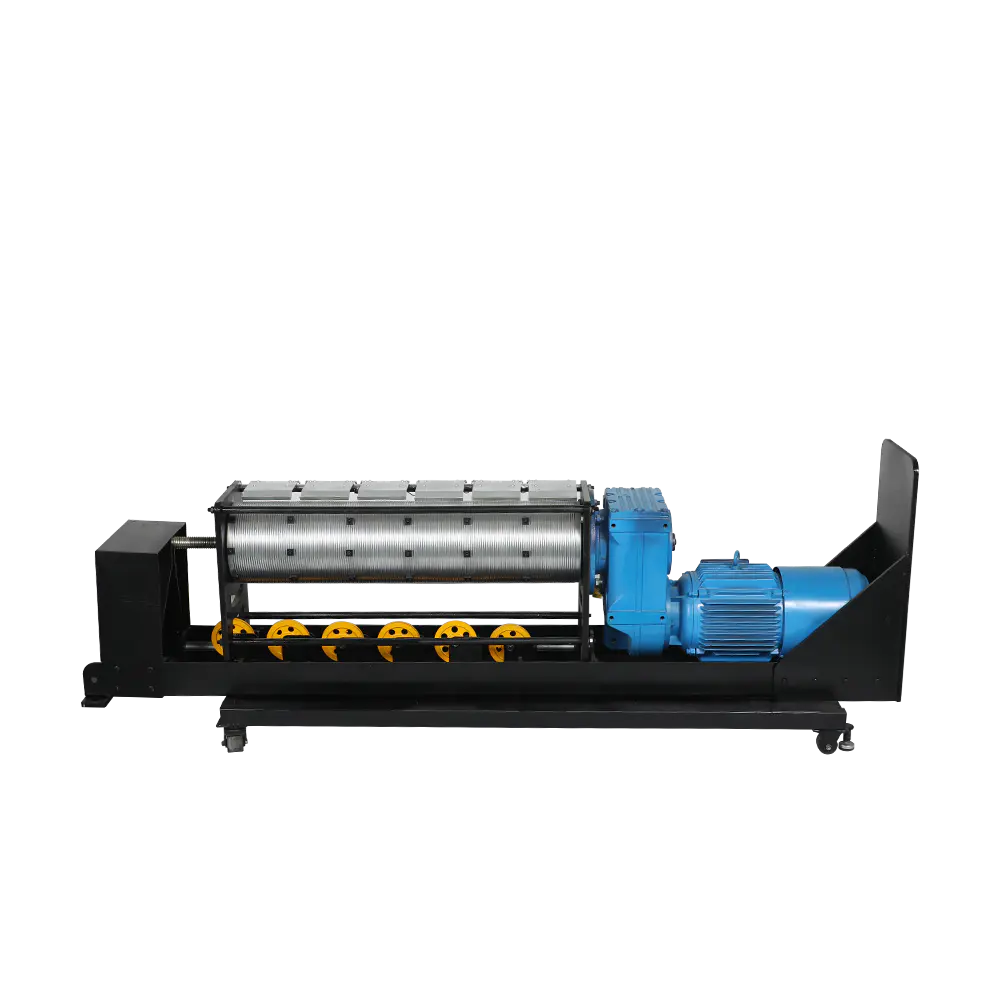
Modern performance venues require lifting equipment that combines accuracy, reliability, compact construction, and dependable safety protection. Stage scenery, lighting systems, acoustic panels, projection equipment, banners, curtains, and other suspended loads may need to move repeatedly during rehearsals and performances. In these demanding conditions, the winch is not merely a motorized lifting device. It is a central part of the venue’s mechanical, electrical, and operational safety system.
The PI-Series Self-Aligning Pilewind Stage Winch is designed for stage lifting applications in theaters, concert halls, cultural centers, conference venues, television studios, stadiums, and multipurpose event spaces. Its patented pilewind assembly addresses a persistent weakness in conventional drum winches: disorganized wire-rope winding. By guiding the rope into a consistent winding pattern, the system helps reduce crossover, uneven loading, abrasion, and unnecessary bending stress.
In addition to its cable-management technology, the winch incorporates a compact frame-mounted structure, a lightweight configuration, dual external brakes, motor self-locking technology, limit switching, and payload inspection sensors. These features create a product platform suitable for both permanent installations and touring or temporary productions.
This article explains the operating principles, engineering benefits, manufacturing strengths, safety features, installation considerations, maintenance requirements, and application advantages of a self-aligning pilewind stage winch. It also examines why this type of equipment can provide a practical alternative to traditional winding systems when project designers and venue operators prioritize compactness, orderly rope handling, and long-term operating stability.
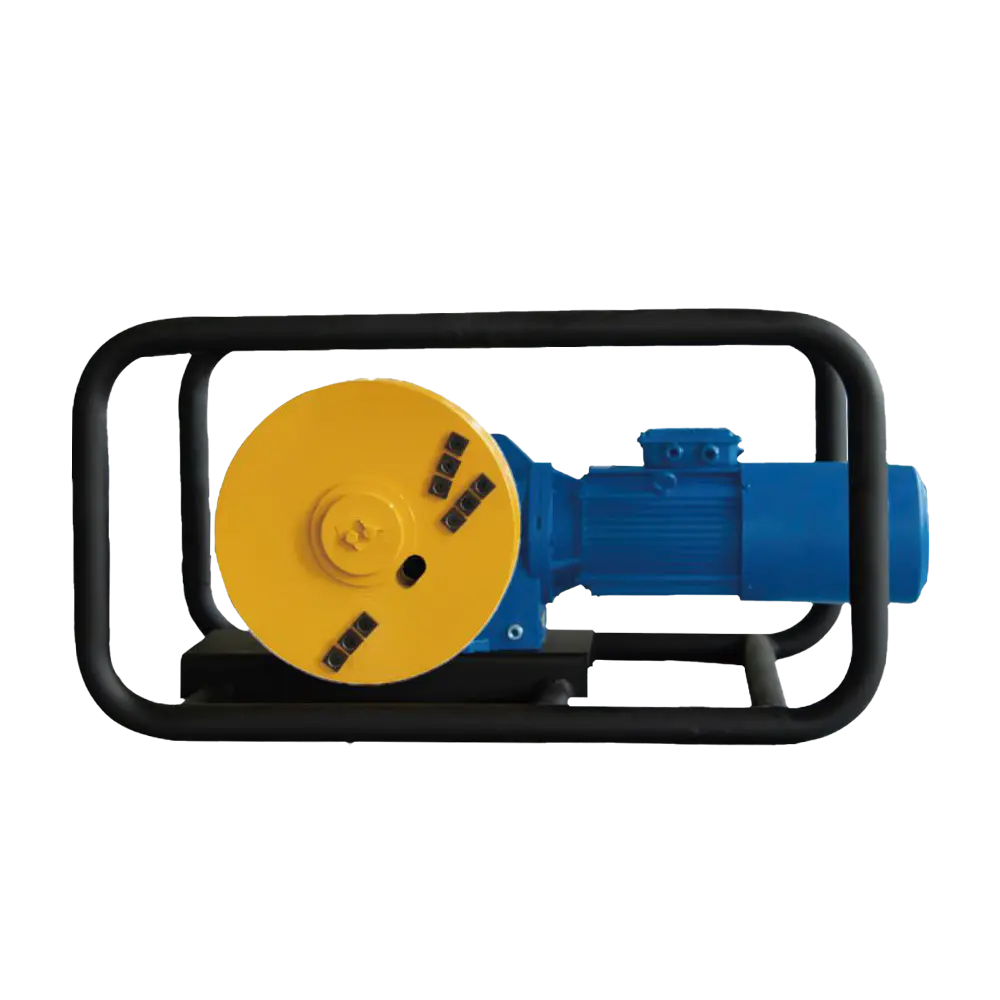
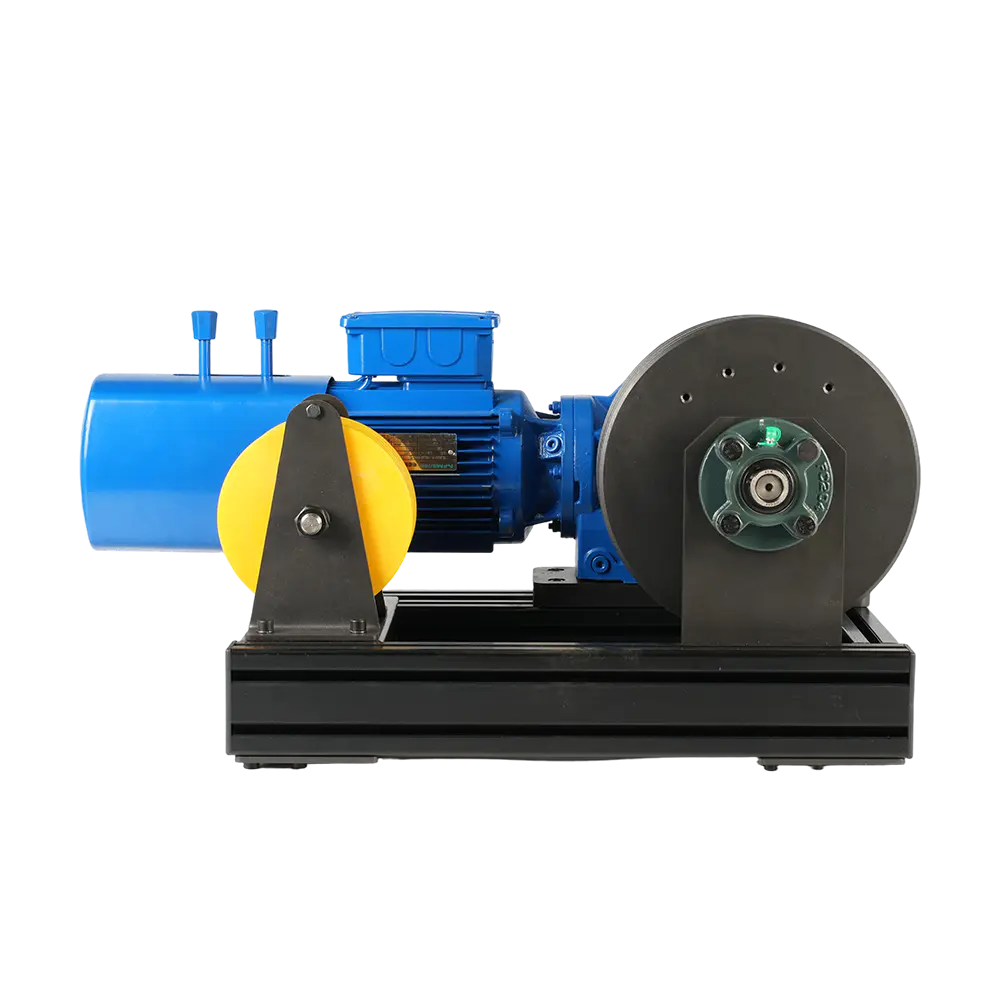
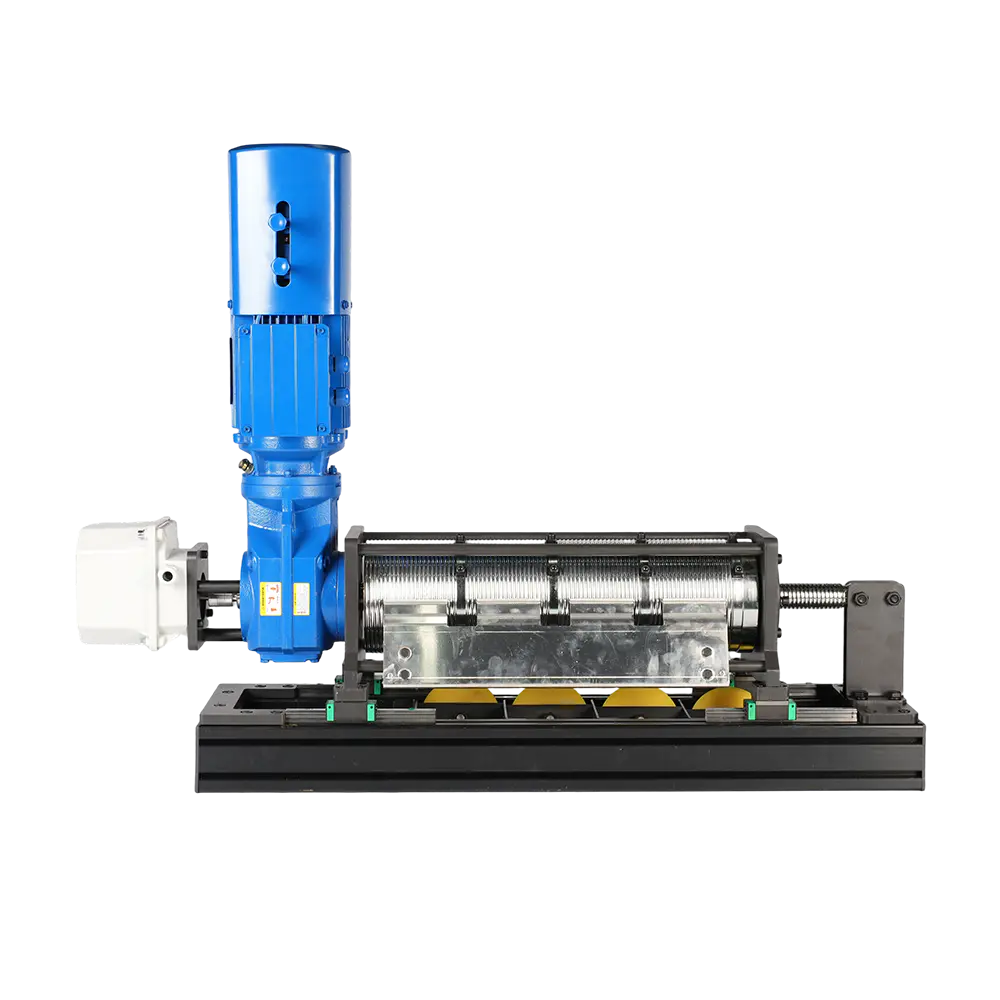
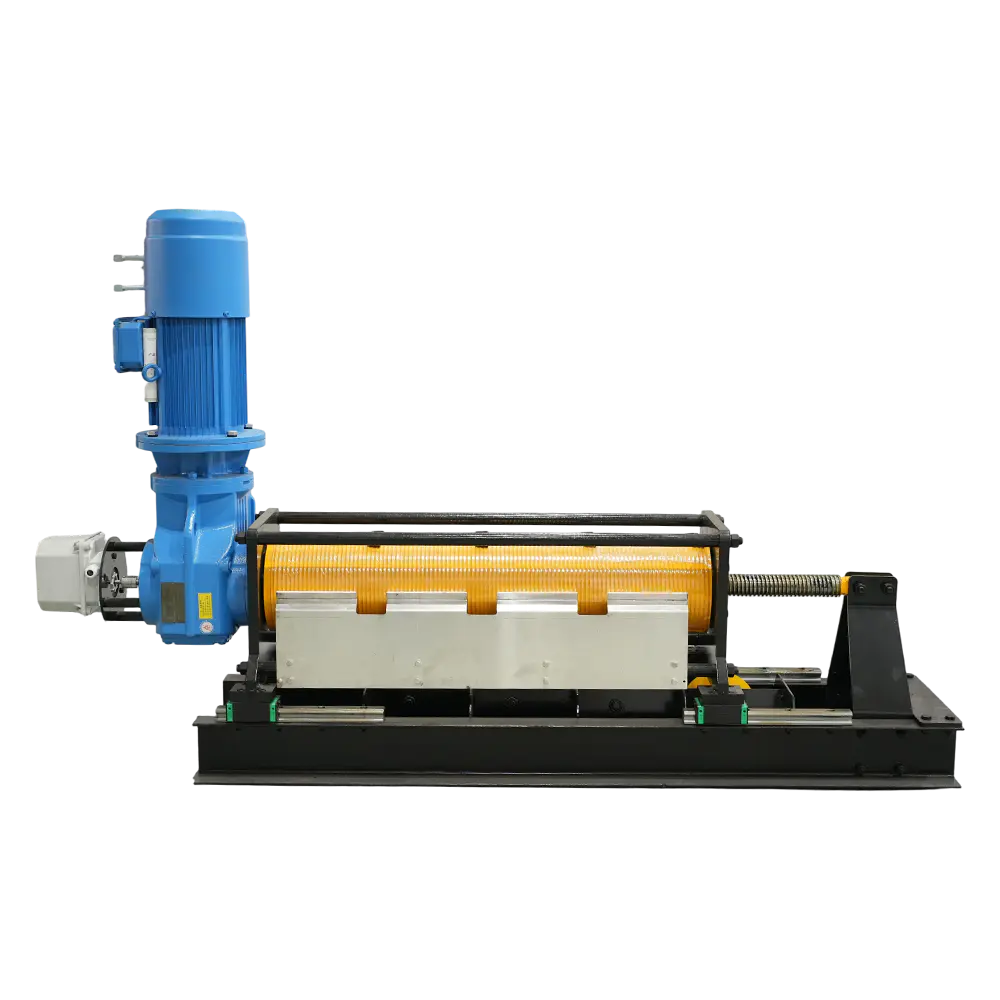
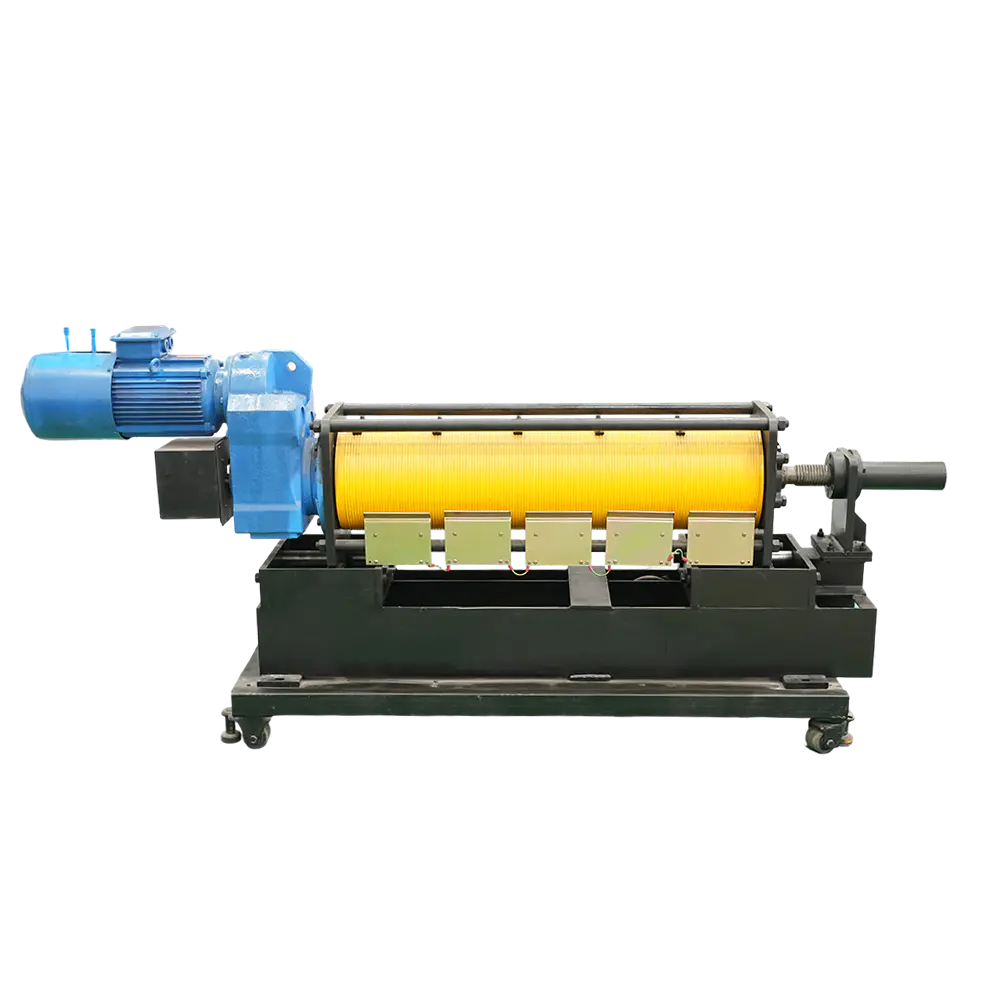
PI-Series Self-Aligning Pilewind Stage Winch
A stage winch provides controlled movement for suspended or guided equipment. Depending on the design of the venue, a winch may raise or lower scenic elements, lighting bars, curtains, projection surfaces, acoustic equipment, banners, or other production components. The equipment must deliver predictable movement while operating within the requirements of the stage control system and the venue’s safety procedures.
Unlike occasional lifting equipment used in general industrial environments, stage machinery often operates in a highly coordinated environment. Several lifting points may work together, and the movement of one load may need to be synchronized with lighting cues, scenic changes, audio transitions, or automated performance sequences. Even a small deviation in cable winding, speed, or stopping position can affect the quality and safety of a production.
The operating environment also creates special constraints. Machinery may need to fit within limited backstage, overhead, or side-stage spaces. Noise must be controlled where possible. Access for maintenance may be restricted. Equipment may be transported between venues for touring productions. These factors make compact dimensions, low structural weight, clear installation procedures, and stable control performance important selection criteria.
A well-designed stage winch therefore needs to address several requirements at the same time:
The PI-Series addresses these requirements through the combined use of a self-aligning pilewind assembly, a frame-mounted mechanical layout, external braking, motor self-locking, limit protection, and payload inspection functions.
A self-aligning pilewind stage winch is a motorized lifting unit that stores a steel wire rope in an orderly pilewind pattern while the drum rotates. The pilewind assembly guides the rope laterally and maintains an organized relationship between the rope and the winding surface. Instead of allowing the rope to accumulate unpredictably, the mechanism supports consistent layer formation across the drum.
The term “self-aligning” refers to the way the cable-guiding mechanism automatically maintains the rope’s position during winding and unwinding. The guide system is designed to respond to the drum’s rotation and the rope’s position so that the cable enters the winding area at a controlled location. This is particularly valuable in stage applications, where the equipment may complete many lifting cycles over a long operating life.
Traditional drum systems can experience disorganized winding when the rope is exposed to changing entry angles, inconsistent tension, lateral forces, or imperfect alignment. The resulting crossover may create concentrated pressure points. It can also increase friction between neighboring rope sections and produce local deformation. A self-aligning pilewind design helps address these conditions at the source by managing the cable path during operation.
The basic product structure includes a mounting frame, electric motor, reducer, pilewind assembly, and limit switch. These components are arranged as an integrated unit rather than as a collection of unrelated mechanisms. The result is a compact lifting module that can be incorporated into permanent stage machinery or deployed in temporary production systems.
The mounting frame supports the main components and provides the interface for installation. A rigid frame helps maintain the relative alignment of the motor, reducer, pilewind assembly, and rope path. Stable mounting is important because unwanted movement or distortion can influence cable behavior and overall lifting performance.
The electric motor supplies the driving force for lifting and lowering. The reducer transfers motor speed and torque into a suitable output condition for stage operation. Reduction allows the winch to achieve controlled movement while generating the torque required for the intended load and duty cycle.
The pilewind assembly manages the rope’s position on the winding surface. It is the defining component of the PI-Series and is responsible for maintaining a more orderly cable arrangement than a basic drum configuration.
The limit switch provides travel monitoring. When integrated with the control and safety system, it helps prevent operation beyond the intended upper or lower travel positions. Limit functions should always be installed, commissioned, and tested in accordance with the project’s control strategy and safety procedures.
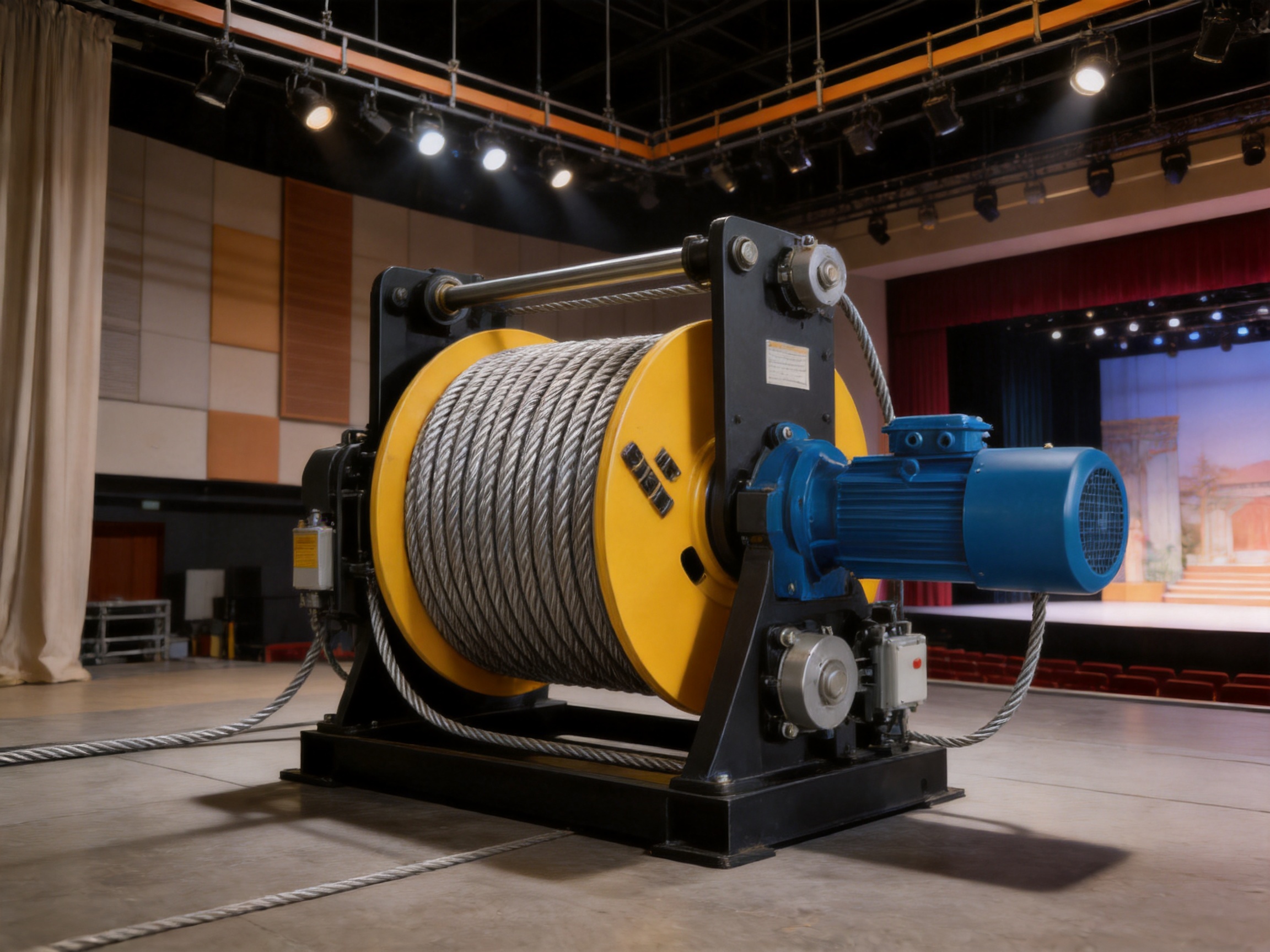
Wire-rope management is one of the most important factors affecting the practical performance of a stage winch. A rope does not simply move up and down. During every cycle, it bends, contacts the winding surface, experiences changing tension, and interacts with adjacent layers. If the cable path is poorly controlled, these repeated mechanical actions can accelerate wear.
The patented pilewind assembly is designed to guide the rope into an orderly pattern. As the drum rotates, the guiding mechanism continuously supports the correct lateral position. The rope can therefore form more consistent layers instead of crossing randomly or accumulating at isolated points.
Several practical benefits result from this arrangement:
These benefits do not eliminate the need for proper installation, inspection, lubrication, load control, and scheduled maintenance. However, they reduce the mechanical stresses created by poor winding geometry. In this way, the self-aligning design supports a more favorable operating environment for the wire rope and related components.
Cable crossover occurs when one section of rope passes over or presses against another section in an unintended pattern. Crossover can create localized abrasion and increase pressure on the rope surface. It may also produce an uneven drum profile, which can influence the effective winding diameter and cause inconsistent movement.
The pilewind assembly helps keep successive rope sections parallel and orderly. By controlling the lateral movement of the rope, it reduces the opportunity for random crossover. More consistent winding also makes the cable condition easier to inspect because damaged, flattened, or irregular sections are less likely to be hidden within a disorganized pile.
When a rope winds unevenly, some contact areas may carry more pressure than others. This uneven loading can contribute to localized deformation and fatigue. A self-aligning system distributes the rope more consistently across the winding surface. The resulting pattern supports more balanced force transmission and can help reduce concentrated wear.
Balanced winding is especially useful in systems that operate frequently. Daily rehearsals, performances, venue conversions, and repeated scenic changes can place a high number of cycles on the lifting equipment. Over time, small improvements in rope handling may contribute to lower maintenance frequency and more predictable service intervals.
The angle at which the rope enters the winding area influences bending and contact stress. An unstable or excessive entry angle can force the cable to bend unnecessarily during each cycle. The self-aligning mechanism helps maintain a more consistent entry position, supporting smoother transition between the free cable section and the winding area.
Stable cable entry can help preserve rope flexibility and reduce repeated bending stress. It also supports smoother movement, which may improve the behavior of the suspended load when the control system commands acceleration, deceleration, or stopping.
Conventional drum winches remain useful in many lifting applications, but basic drum designs may require additional attention to cable alignment. Their performance can depend strongly on installation geometry, cable tension, operator control, and the accuracy of the rope path. If the cable does not enter the drum in a suitable position, irregular winding may occur over time.
The PI-Series provides a more controlled approach through its integrated rope-aligning technology. Rather than depending only on external alignment conditions, the winch incorporates an internal pilewind assembly specifically intended to organize cable accumulation.
| Comparison Area | Conventional Drum Configuration | Self-Aligning Pilewind Configuration |
|---|---|---|
| Rope positioning | May depend heavily on external alignment and tension | Supported by an integrated aligning mechanism |
| Winding pattern | Can become irregular during repeated cycles | Designed to maintain orderly pile winding |
| Cable crossover risk | May increase when alignment conditions change | Reduced through guided cable movement |
| Installation flexibility | May require more attention to cable-path geometry | Compact frame-mounted layout supports practical installation |
| Maintenance visibility | Irregular winding may conceal wear areas | More organized winding supports easier visual inspection |
| Application suitability | General lifting applications | Stage automation and repeated performance lifting |
The comparison does not mean that every conventional winch is unsuitable for stage machinery. Selection should always be based on load, speed, duty cycle, rope specification, control architecture, installation environment, and applicable safety requirements. The advantage of the PI-Series is that its design directly addresses cable management, which is a major operating concern in stage lifting systems.
The product also offers a compact and lightweight structure. This can simplify transportation, handling, and installation, particularly for touring shows, temporary stages, and productions that require equipment to be moved between locations. A smaller and lighter unit may also help designers use available space more efficiently, subject to structural and technical approval.
Stage equipment is often installed in locations where space is limited. Machinery may need to share overhead areas with lighting infrastructure, ventilation, electrical systems, scenery storage, and access walkways. A compact winch can provide greater flexibility when the available installation envelope is restricted.
The PI-Series uses a frame-mounted configuration that integrates the principal mechanical components into a practical assembly. This arrangement can reduce the complexity of positioning separate components and may make the equipment easier to handle during installation or replacement.
Its lightweight and portable design is particularly relevant to touring productions. Touring equipment may be loaded, unloaded, transported, assembled, adjusted, and tested repeatedly. Reducing unnecessary weight can help improve handling efficiency and reduce the physical burden on installation teams, while the compact form can help production crews adapt to different venue conditions.
For permanent venues, the same characteristics can simplify access during maintenance or future system changes. A compact machine may be easier to position within a service area and may leave more space for inspection, cable routing, and adjacent equipment. These benefits depend on the project layout and should be confirmed through engineering drawings before installation.
Before installation, engineers should confirm the rated load, rope specification, lifting speed, travel distance, duty cycle, mounting orientation, power requirements, control interface, emergency-stop arrangement, and available inspection access. The support structure must be capable of carrying the static and dynamic loads associated with the equipment and the suspended payload.
The cable path should be checked carefully. Even with self-aligning technology, the rope must not be forced around unsuitable bends, exposed to sharp edges, or routed through unauthorized contact points. The alignment system performs best when the complete lifting arrangement is designed as a compatible mechanical system.
Electrical installation should be completed by qualified personnel. Motor wiring, brake circuits, limit switches, payload inspection sensors, control communication, grounding, and emergency functions must be tested before the system is placed into service.
Stage lifting equipment must be designed with multiple layers of protection. No single safety feature should be treated as a substitute for correct installation, load assessment, inspection, operator training, or a properly engineered control system.
The PI-Series incorporates dual external brakes, motor self-locking technology, limit switching, and payload inspection sensors. Together, these features support a layered safety approach.
Dual external brakes provide two independent braking elements outside the motor assembly. Their purpose is to help hold and stop the load when the winch is commanded to stop or when an abnormal condition occurs. Using two brakes can provide an additional safety factor compared with relying on a single braking element, provided that the brakes are correctly sized, adjusted, inspected, and maintained.
Brake performance can be affected by wear, contamination, incorrect adjustment, electrical faults, and excessive operating temperature. For that reason, brake inspection should be included in the equipment’s maintenance schedule. Functional testing should be performed under controlled conditions and according to the system’s commissioning and service procedures.
The motor self-locking function is intended to provide an additional barrier against unintended payload movement. The supplied product information states that this technology engages even if the brakes fail, helping prevent payload dropping. This function is particularly important in stage environments where suspended objects may be located above performers, technicians, instruments, scenery, or audiences.
Self-locking technology should be regarded as part of a coordinated protection system rather than as permission to exceed rated conditions. Correct load selection, brake maintenance, rope inspection, mechanical alignment, and emergency procedures remain essential.
Payload inspection sensors are designed to monitor relevant payload or operating conditions. When an emergency or abnormal condition is detected, the sensors can command the system to halt operation immediately. This rapid response can help limit the development of a dangerous condition and support safer troubleshooting.
Sensor functionality should be checked during commissioning and at scheduled intervals. The sensor type, detection threshold, wiring arrangement, and control response should be documented for operators and maintenance personnel. Any modification to the payload or lifting arrangement should trigger a review of sensor compatibility.
Limit switches define or monitor the permitted travel range. They help prevent the equipment from continuing beyond its intended upper or lower position. Limit devices should be treated as safety-related components and should not be bypassed during normal operation.
After installation, the upper and lower limits should be tested at low speed or under an approved commissioning procedure. The response of the control system, brake system, and emergency stop should be verified together. Records of these tests can help support future inspection and maintenance work.
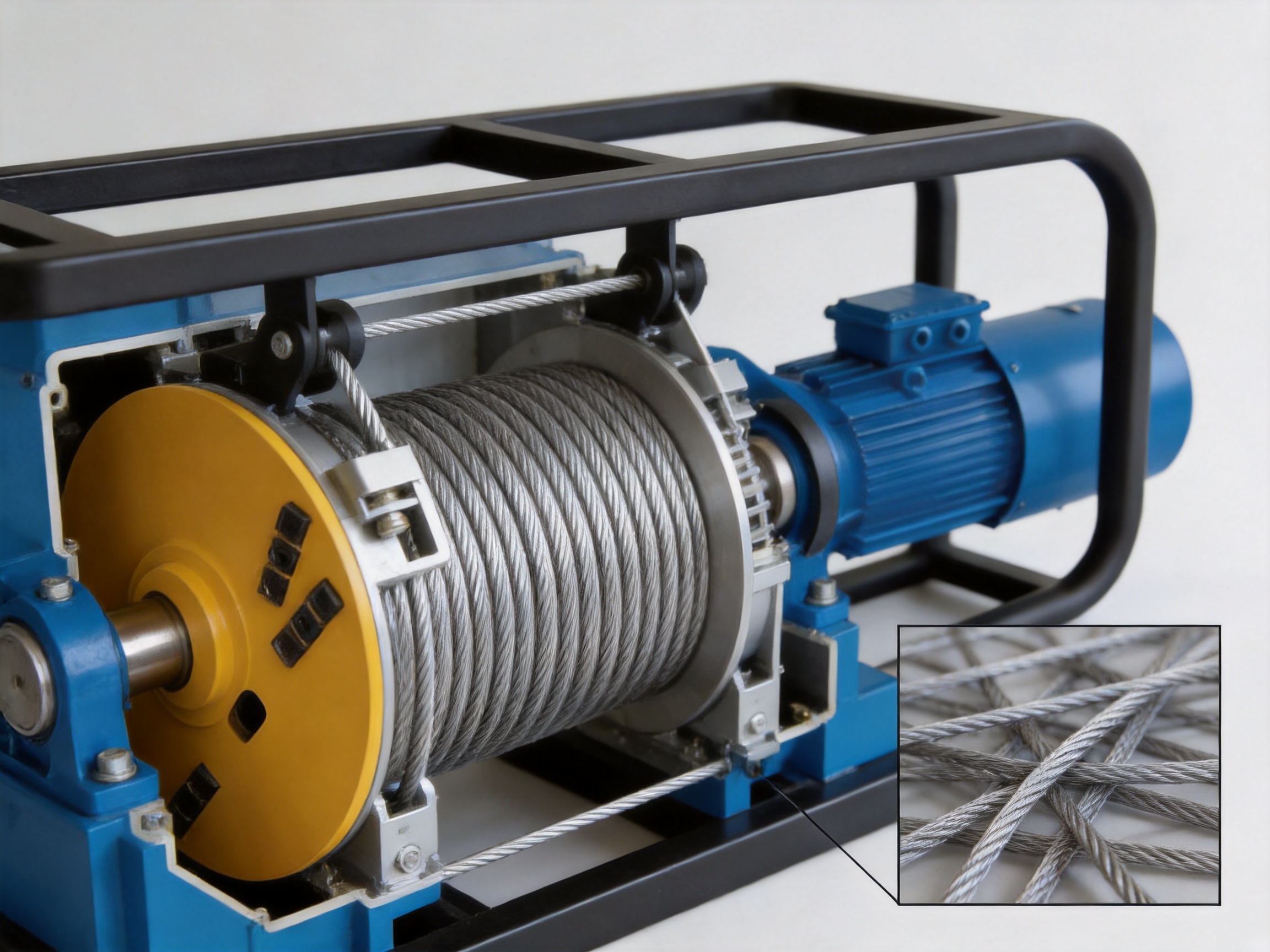
The long-term value of a stage winch depends not only on its design concept but also on how consistently the product is manufactured. A self-aligning mechanism must be assembled with suitable dimensional accuracy, alignment, material control, and functional testing. Small deviations in the rope guide, frame, bearing arrangement, or reducer interface can influence operating behavior.
The manufacturer behind the PI-Series operates as a high-tech enterprise specializing in stage machinery, performance equipment, and intelligent control systems. Its production base covers approximately 20,000 square meters, including an approximately 11,000-square-meter manufacturing workshop and a 7,500-square-meter research and development and office facility. This production environment supports work ranging from raw material processing and component fabrication to complete machine assembly.
A complete manufacturing system provides several potential advantages. It can improve communication between engineering and production teams, reduce dependence on disconnected suppliers, support more consistent assembly procedures, and make it easier to implement design improvements. For custom stage machinery, the ability to coordinate engineering, manufacturing, installation, commissioning, and maintenance is particularly valuable.
Stage machinery must respond to the specific requirements of performance venues. Research and development work may involve mechanical structure, rope guidance, motor and reducer selection, braking, sensing, control integration, and installation optimization. Product development should also consider service access, noise behavior, inspection requirements, and compatibility with venue automation.
The PI-Series reflects this integrated development approach by combining mechanical cable alignment with safety and installation features. The patented pilewind assembly is not an isolated component. It works together with the mounting frame, drive system, reducer, limits, and safety functions to create a stage lifting module.
Material selection affects structural stability, wear resistance, fatigue performance, and service life. Typical key materials include high-strength steel for the drum or load-bearing structure, structural steel for the frame, precision alloy steel for bearing-related components, wear-resistant materials for cable guides, and galvanized or stainless steel wire rope where appropriate for the application.
Material selection must be matched to the intended duty cycle and environment. For example, a venue with high humidity or special atmospheric conditions may require additional corrosion-control measures. A system exposed to frequent operation may require more rigorous inspection of wear components than a system used only occasionally.
Reliable manufacturing begins with controlled incoming materials and continues through machining, welding, surface treatment, assembly, electrical integration, and functional testing. Production records and inspection procedures can help identify deviations before equipment reaches the installation site.
The frame provides the foundation for the complete winch. Welding quality, dimensional accuracy, mounting-hole position, surface treatment, and structural rigidity all influence installation and operating performance. A frame that is difficult to align may introduce unnecessary stress into the mechanical system.
Controlled fabrication procedures help maintain repeatability from one unit to the next. Inspection of critical dimensions can support smoother installation and reduce the need for field modifications. Proper surface protection also helps the frame resist corrosion during storage, transport, and long-term service.
Mechanical assembly requires correct installation of the motor, reducer, pilewind assembly, bearings, rope-guiding elements, brake components, and limit mechanisms. Alignment should be verified during assembly rather than assumed from the appearance of the completed unit.
Fasteners, lubrication points, rotating interfaces, and adjustment mechanisms should be checked according to defined procedures. The assembly team should also verify that the rope path is free from interference and that moving components have the required clearance.
Stage winches operate as part of a larger automation system. Electrical integration may include motor control, brake release, travel limits, emergency stop, payload inspection, overload or abnormal-condition monitoring, and communication with a central stage-control system.
Factory integration and testing can reduce the risk of mismatched components. Each control function should be identified, wired, tested, and documented. Clear labeling and service documentation are important because stage machinery may be maintained by different technical teams over its operating life.
Before delivery, the assembled winch should undergo appropriate visual, mechanical, electrical, and functional inspections. Depending on the project specification, testing may include motor operation, brake response, limit-switch action, rope winding, sensor response, abnormal-stop behavior, and control-system communication.
Factory testing cannot replace site commissioning. The final installation introduces variables such as support structure, cable route, suspended load, control network, travel distance, and venue-specific emergency procedures. Nevertheless, thorough factory testing provides a strong starting point and can help identify manufacturing or assembly issues before shipment.
Buyers of stage machinery are purchasing more than a standalone mechanical unit. They are selecting a technical partner capable of supporting design review, customization, documentation, delivery, installation, commissioning, training, and after-sales service.
A manufacturer with integrated production and engineering capability can respond more effectively when a project requires special mounting, a different control interface, a customized rope arrangement, or coordination with other stage equipment. This does not mean that every configuration can be changed without technical review. Rather, it means that the manufacturer has the organizational and engineering foundation to evaluate project-specific requirements.
The company’s service system covers equipment design, production, installation, commissioning, operation, and maintenance. This full-project perspective is useful for theaters and venues that need consistent support from the initial concept through long-term operation.
Professional engineering capability is also important when a venue operates multiple types of lifting equipment. Standardized documentation, common inspection practices, and coordinated control philosophy can make the overall system easier to operate and maintain.
Professional theaters often use lifting machinery for scenery, lighting equipment, curtains, acoustic elements, and production accessories. The self-aligning pilewind design can support frequent movement while helping keep rope winding consistent. Its compact structure may also be useful where backstage and overhead space is limited.
Concert halls may use lifting equipment for lighting bars, banners, acoustic reflectors, projection systems, and temporary production equipment. Smooth movement and reliable stopping are important because equipment may be positioned over seating areas or near performers. Safety functions such as braking, self-locking, limits, and emergency sensing are therefore important elements of the complete system.
Cultural centers often host varied programs, including theater, dance, concerts, exhibitions, ceremonies, and public events. Their equipment may need to support different loads and operating patterns. A compact, versatile winch can help venues adapt their stage systems while maintaining orderly cable management.
Conference centers may use lifting systems for screens, banners, lighting, projection equipment, and event branding. Fast room conversion and reliable positioning can improve operational efficiency. The winch’s compact frame-mounted design may be suitable for systems that need to remain unobtrusive between events.
Television studios often require precise movement, repeatable positioning, and frequent changes between productions. A self-aligning cable system can support operational consistency during repeated cycles. Control integration should be coordinated with studio automation, production scheduling, and safety procedures.
Stadium performance systems and multipurpose event spaces may experience changing environmental conditions and intensive event schedules. Equipment must be selected with consideration for exposure, corrosion protection, inspection access, and duty cycle. The PI-Series provides a mechanical platform that can be evaluated for these applications through project-specific engineering.
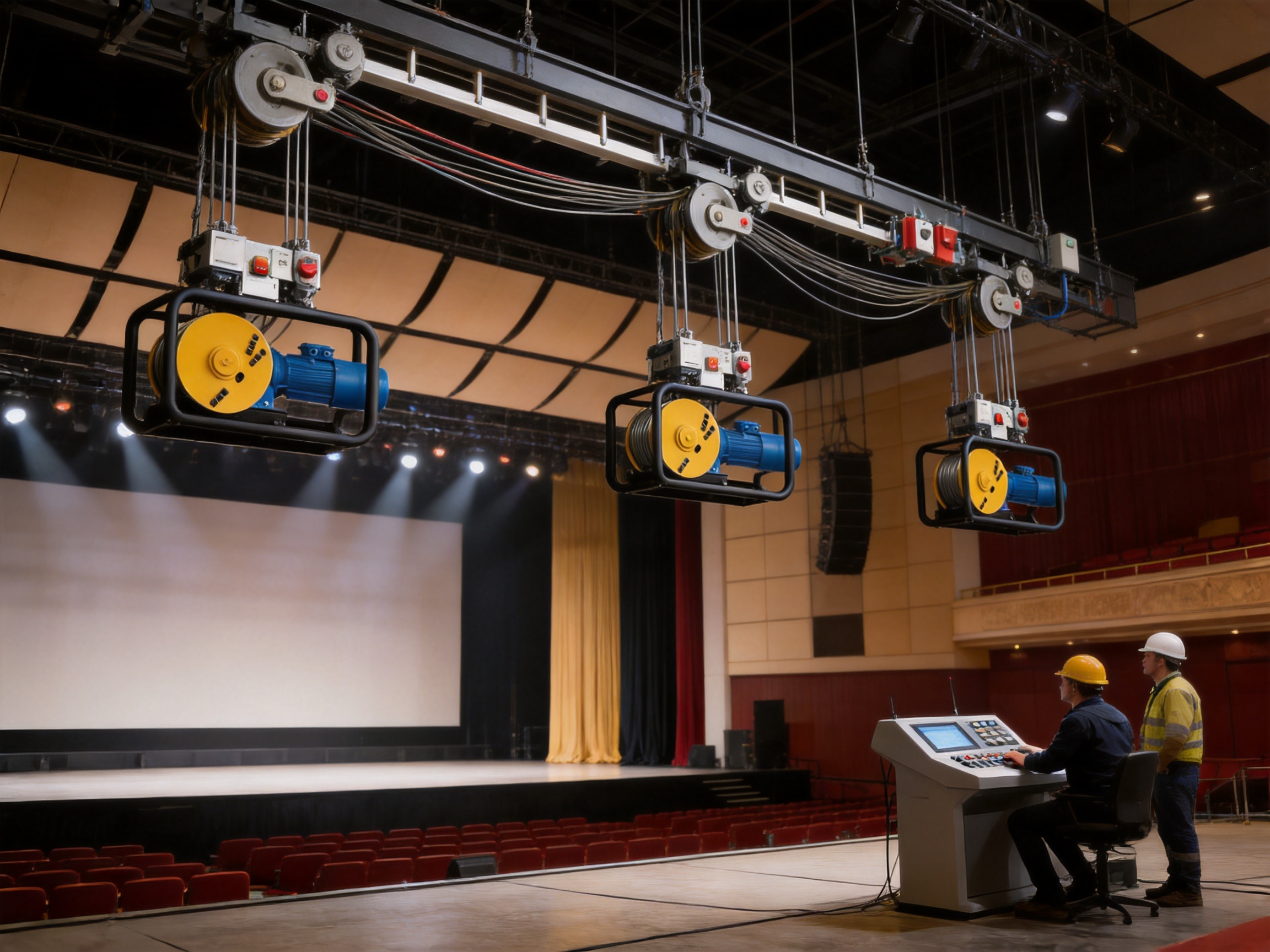
Wire rope is a consumable mechanical element. Even when it is correctly installed and operated, it will eventually require inspection and replacement. The goal of good winch design is not to claim that wear can be eliminated, but to reduce avoidable damage and make the condition of the rope easier to manage.
The self-aligning pilewind assembly contributes to this goal in several ways. It reduces the chance of crossover, supports even layer formation, lowers unnecessary contact friction, and helps stabilize the entry angle. These effects can reduce the accumulation of localized stress during normal operation.
More orderly winding may also make inspection more practical. Technicians can observe the rope’s condition as it is exposed during operation or maintenance. Signs such as broken wires, corrosion, flattened sections, kinks, birdcaging, diameter reduction, or abnormal surface wear should be recorded and evaluated according to the applicable inspection standard and the manufacturer’s instructions.
Maintenance intervals should be based on operating frequency, load, environment, duty cycle, manufacturer guidance, and the venue’s risk assessment. Equipment that operates daily in a demanding production schedule may require more frequent inspection than equipment used occasionally.
Modern stage systems increasingly rely on digital control, programmable movement, coordinated cues, and centralized monitoring. A stage winch must therefore function as part of a larger automation architecture rather than as an isolated machine.
The PI-Series can be incorporated into intelligent stage machinery systems in which movement commands, limit information, emergency states, and payload-related signals are exchanged with a control platform. The exact interface depends on the project design and should be confirmed during technical planning.
Self-aligning cable management supports automation because predictable mechanical behavior helps the control system achieve repeatable movement. Stable winding can contribute to consistent travel characteristics, while properly maintained brakes and limits help the system stop at intended positions.
Automation does not remove the need for human oversight. Operators should understand the equipment’s rated conditions, emergency procedures, inspection indicators, and manual intervention limits. Training should cover normal operation, abnormal events, emergency stopping, reporting, and restart authorization.
When selecting a self-aligning pilewind stage winch, project designers should begin with the payload and movement requirements. The following questions help establish a suitable specification:
Answering these questions allows the manufacturer and project engineer to determine whether the product configuration is appropriate. It also helps identify whether additional guidance, protection, control equipment, or structural reinforcement is necessary.
For custom projects, buyers should request dimensional drawings, electrical information, installation instructions, maintenance documentation, operating limitations, and testing procedures. Clear documentation improves communication between the venue owner, system integrator, installer, operator, and maintenance team.
The PI-Series Self-Aligning Pilewind Stage Winch offers a combination of mechanical, operational, and safety-related advantages:
| Product Characteristic | Operational Advantage |
|---|---|
| Patented pilewind assembly | Supports orderly and consistent wire-rope winding |
| Self-aligning cable guidance | Reduces crossover, uneven loading, and unnecessary abrasion |
| Compact frame-mounted construction | Uses installation space efficiently |
| Lightweight and portable structure | Supports touring productions and temporary setups |
| Dual external brakes | Provides an additional braking safety factor |
| Motor self-locking technology | Helps resist unintended payload dropping if braking performance is compromised |
| Payload inspection sensors | Can stop operation when an emergency or abnormal condition is detected |
| Limit switch | Monitors and protects the permitted travel range |
| Integrated manufacturing support | Connects design, production, installation, commissioning, and service |
These advantages are most valuable when the product is selected, installed, and maintained as part of a complete stage machinery system. Correct engineering remains essential for achieving the expected performance.
Installation should be performed by qualified technicians using approved drawings and procedures. The mounting frame must be securely attached to a suitable support structure, and the complete rope route must be inspected for interference, sharp edges, excessive bending, or incompatible sheave arrangements.
During commissioning, technicians should confirm the direction of motor rotation, reducer operation, brake release and holding, pilewind alignment, upper and lower limits, sensor response, emergency stop, and control-system communication. The equipment should be tested initially without the full production load and then under controlled conditions appropriate to the project.
The commissioning process should include a review of the actual winding pattern. The rope should form an orderly pile without unusual crossover, excessive lateral movement, or abnormal noise. If irregular winding is observed, operation should stop until the cause is identified.
Operators should receive practical training in normal movement, load limitations, emergency stopping, visual inspection, abnormal noise recognition, sensor alarms, and reporting procedures. They should know when equipment must be removed from service and who is authorized to reset or restart it.
Rentezhihe (Jiangsu) Equipment Technology Co., Ltd. specializes in the research, development, and manufacturing of stage machinery, performance equipment, and intelligent control systems. Its product and service scope covers equipment design, production, installation, commissioning, operation, and maintenance.
The company serves theaters, cultural centers, stadiums, conference centers, and multifunctional performance spaces in domestic and international markets. Its engineering approach is based on providing safe, stable, and integrated solutions rather than treating each product as an isolated catalog item.
The manufacturing base includes a modern production workshop and dedicated research and development and office facilities. This combination supports product engineering, fabrication, assembly, technical communication, and project coordination. It also provides a foundation for responding to custom stage machinery requirements.
A further strength is the company’s emphasis on long-term relationships. Stage equipment often remains in service for many years, and the success of a project depends on continued technical support after delivery. Documentation, replacement parts, maintenance guidance, troubleshooting, and engineering communication all contribute to the total value of the equipment.
For buyers, the company’s integrated capabilities can be particularly useful when the project includes several types of stage automation equipment or when the venue requires coordination between mechanical systems and intelligent controls.
The PI-Series Self-Aligning Pilewind Stage Winch is designed to address one of the most persistent challenges in stage lifting: maintaining orderly and reliable wire-rope winding during repeated operation. Its patented pilewind assembly helps guide the rope into a consistent pattern, reducing crossover, uneven contact, excessive lateral pressure, and unnecessary friction.
Compared with basic conventional drum arrangements, the self-aligning structure provides a more controlled approach to cable management. Its compact frame-mounted construction and lightweight configuration make it suitable for permanent venues, touring productions, and temporary installations. Dual external brakes, motor self-locking technology, payload inspection sensors, and limit switching add multiple layers of protection for demanding stage environments.
The product’s value is strengthened by the manufacturer’s capabilities in research and development, mechanical fabrication, system assembly, intelligent control integration, installation, commissioning, and maintenance support. A complete manufacturing and service process helps ensure that the winch can be considered as part of a coordinated stage automation solution.
When correctly specified, installed, tested, and maintained, a self-aligning pilewind stage winch can support smoother lifting, improved cable durability, more predictable maintenance, efficient use of installation space, and safer operation. For venues seeking dependable stage machinery with advanced rope-guiding technology, the PI-Series represents a practical and technically focused solution.
The main purpose is to lift and lower stage equipment while automatically guiding the wire rope into an orderly winding pattern. This helps reduce crossover, uneven loading, friction, and unnecessary cable wear during repeated operating cycles.
The PI-Series incorporates a patented pilewind assembly that actively supports cable alignment. A traditional drum winch may rely more heavily on external rope-path geometry, tension, and installation accuracy to maintain orderly winding. The self-aligning mechanism provides an integrated approach to cable management.
Yes. Its compact and lightweight frame-mounted design is intended to support portable applications, touring shows, temporary stages, and installations where equipment must be transported and assembled efficiently. The final suitability depends on the project’s load, speed, duty cycle, and structural conditions.
The product information identifies dual external brakes, motor self-locking technology, payload inspection sensors, and limit switches. These features are intended to help hold the payload, prevent unintended dropping, detect abnormal conditions, stop operation during emergencies, and control the travel range.
No. It helps reduce avoidable mechanical stresses, but wire rope remains a wear component that requires regular inspection, correct lubrication where applicable, proper loading, and replacement when its condition no longer meets the approved criteria.
Typical applications include theaters, performing arts centers, concert halls, cultural venues, conference centers, television studios, stadium performance systems, and multipurpose event spaces.
Correct alignment helps prevent crossover, reduces localized pressure, limits abrasion, supports stable cable tension, improves winding consistency, and contributes to more predictable lifting performance.
Buyers should confirm the working load, lifting speed, travel distance, duty cycle, rope specification, installation dimensions, support structure, power supply, control interface, safety functions, environmental conditions, and whether the equipment will be permanent or portable.
Manufacturing quality affects frame rigidity, component alignment, rope-guide accuracy, brake operation, reducer performance, sensor reliability, and overall service life. Controlled fabrication, assembly, inspection, and testing help ensure consistent equipment performance.
No. Factory testing verifies the assembled unit before delivery, while site commissioning confirms performance within the actual venue. Site conditions include the support structure, cable route, suspended load, control system, travel limits, and emergency procedures.
Payload inspection sensors monitor relevant operating or payload conditions. When an emergency or abnormal situation is detected, they can command the winch to stop, helping limit further movement while technicians investigate the cause.
Dual external brakes provide two braking elements and can offer an additional safety factor compared with a single brake arrangement. They must still be correctly maintained, tested, and used within the rated conditions of the lifting system.
Yes. The winch can be evaluated for integration with intelligent stage automation involving motor control, limits, emergency functions, payload signals, and centralized operation. The specific interface and control architecture should be confirmed during project design.
Records should include inspection dates, rope condition, brake tests, limit-switch tests, sensor tests, abnormal events, repairs, replacements, lubrication, commissioning results, and the identity of authorized technicians or inspectors.
Installation, electrical connection, commissioning, and maintenance should be completed by qualified personnel who understand stage machinery, lifting equipment, control systems, and the applicable safety procedures.
1. Product information for the PI-Series Self-Aligning Pilewind Stage Winch, including product features, mechanical components, safety functions, and application scope.
2. Rentezhihe (Jiangsu) Equipment Technology Co., Ltd. company information, manufacturing capabilities, research and development facilities, and integrated stage machinery services.
3. General principles of wire-rope inspection, maintenance, handling, and replacement for lifting equipment.
4. General engineering practices for stage machinery design, installation, commissioning, control integration, and operational safety.
5. General technical guidance concerning braking systems, limit devices, emergency stops, payload monitoring, and automated lifting equipment.
We specialize in delivering advanced stage machinery, rigging systems and intelligent control solutions for performance spaces worldwide.

No. 111 Runfeng Road, Hailing District, Taizhou City, Jiangsu Province, China

rtstage@163.com

+86-139 1771 1698

+86-139 1771 1698
rtstage@163.com
 中文简体
 English
 русский
 Français
 Español
 عربى