Modern stage productions demand lifting equipment that can be transported efficiently, installed quickly, operated accurately, and relied upon throughout demanding live events. Touring shows, temporary performance spaces, cultural festivals, conference venues, and multifunctional theaters often need to reposition technical equipment between productions. In these environments, large fixed lifting systems may provide substantial capacity, but they can also require extensive preparation, permanent structural arrangements, complex rope alignment, and significant installation labor. A compact mobile stage winch offers a different approach by combining portability with controlled lifting performance.
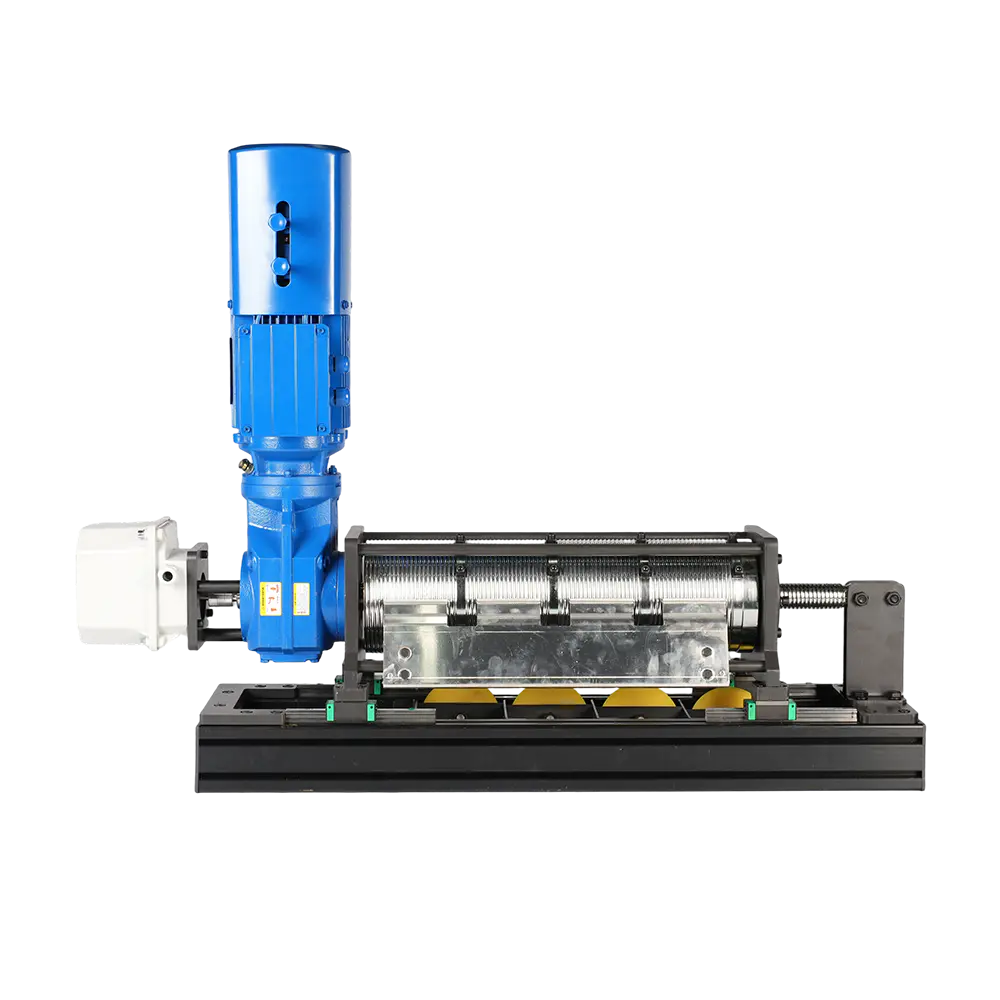
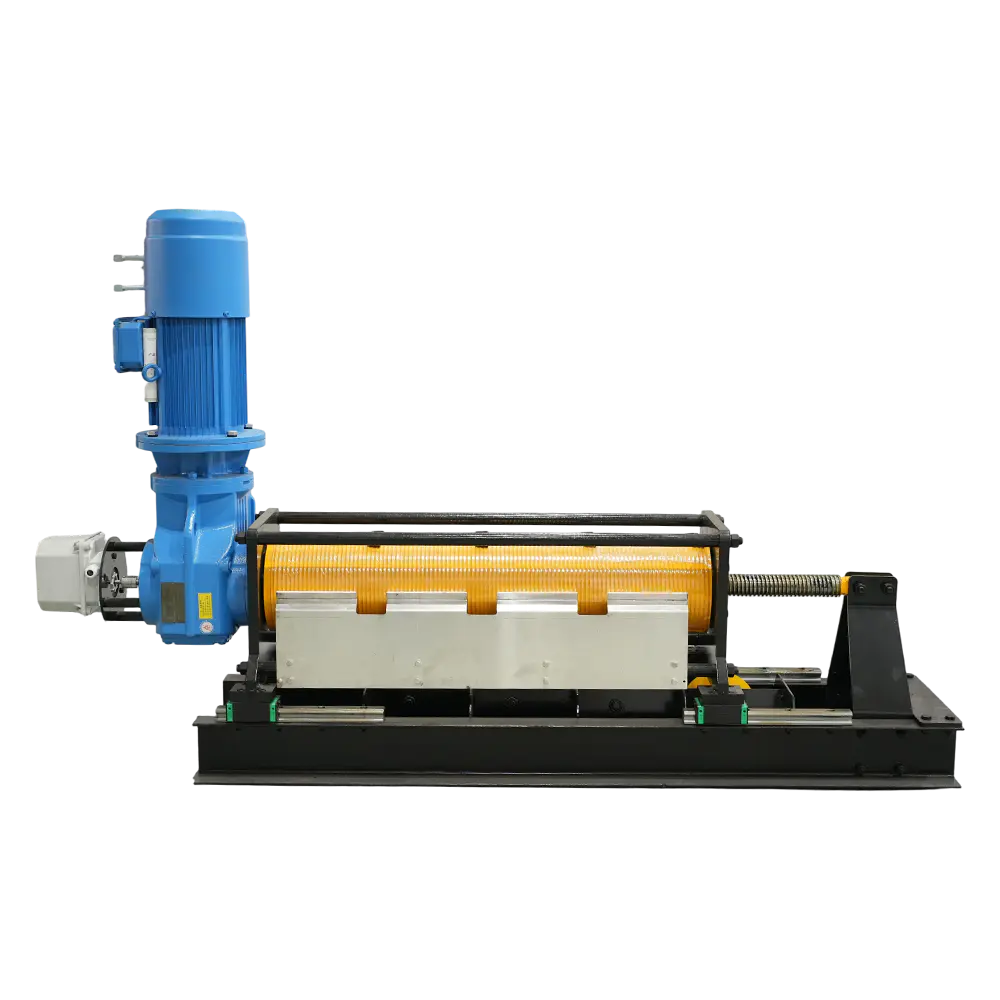
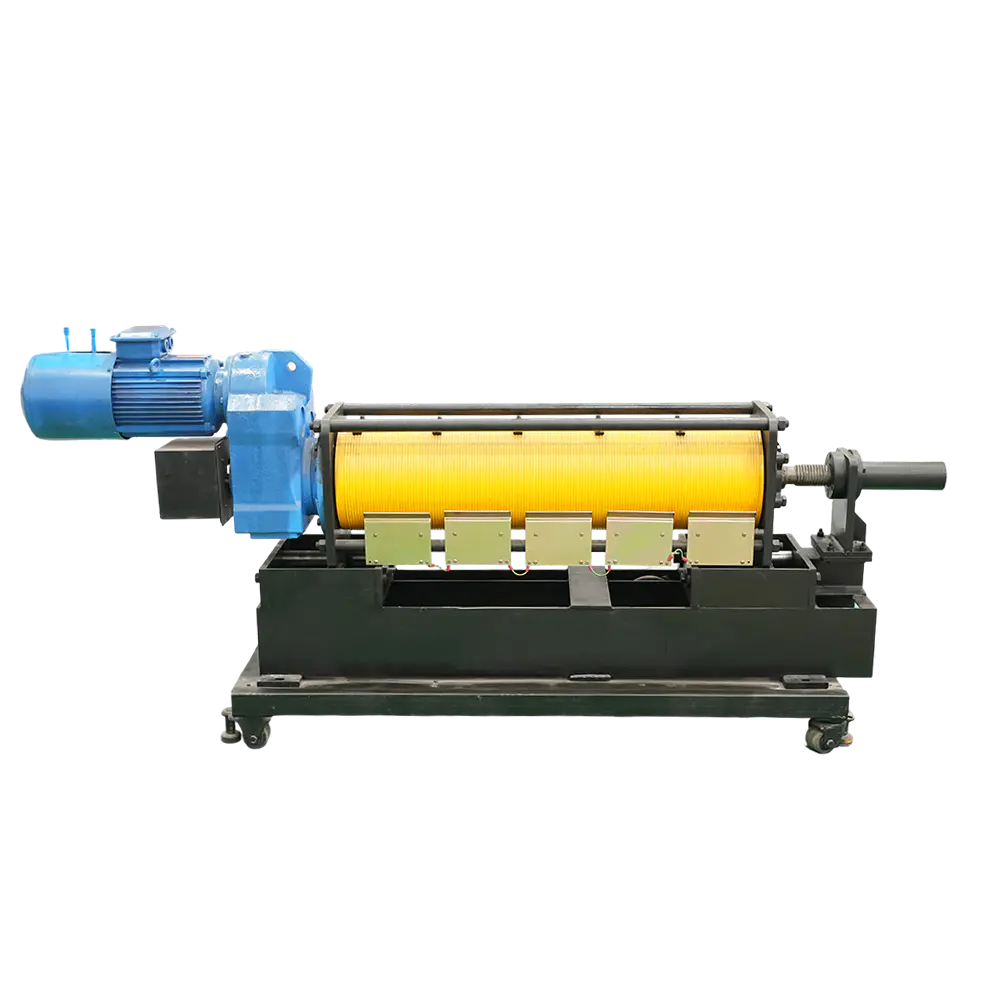
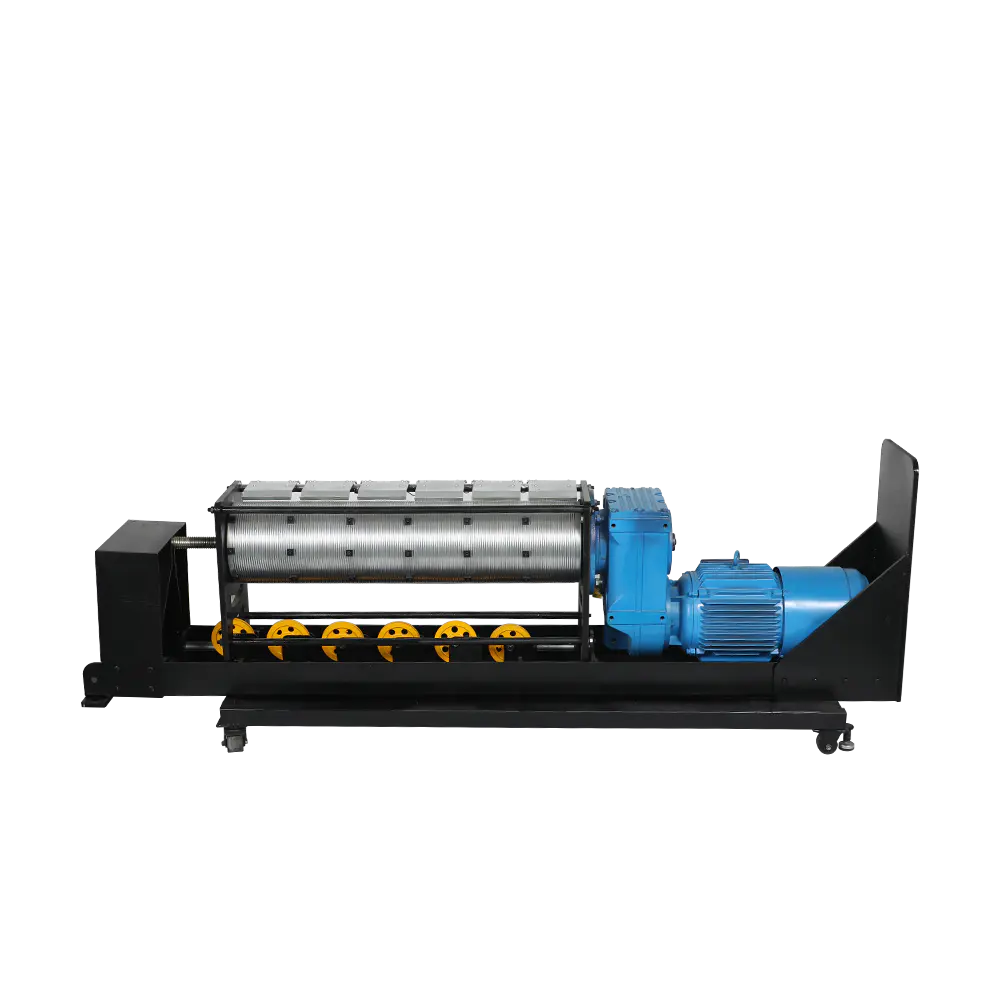
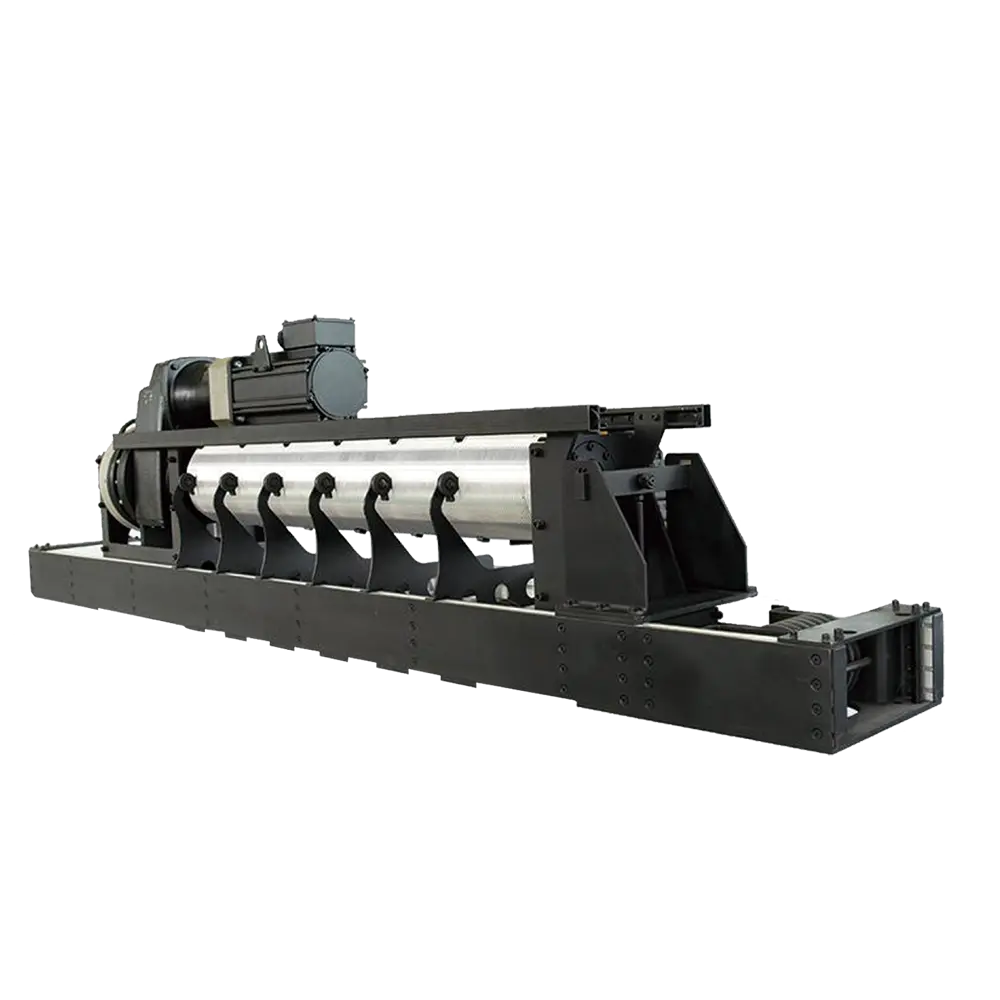
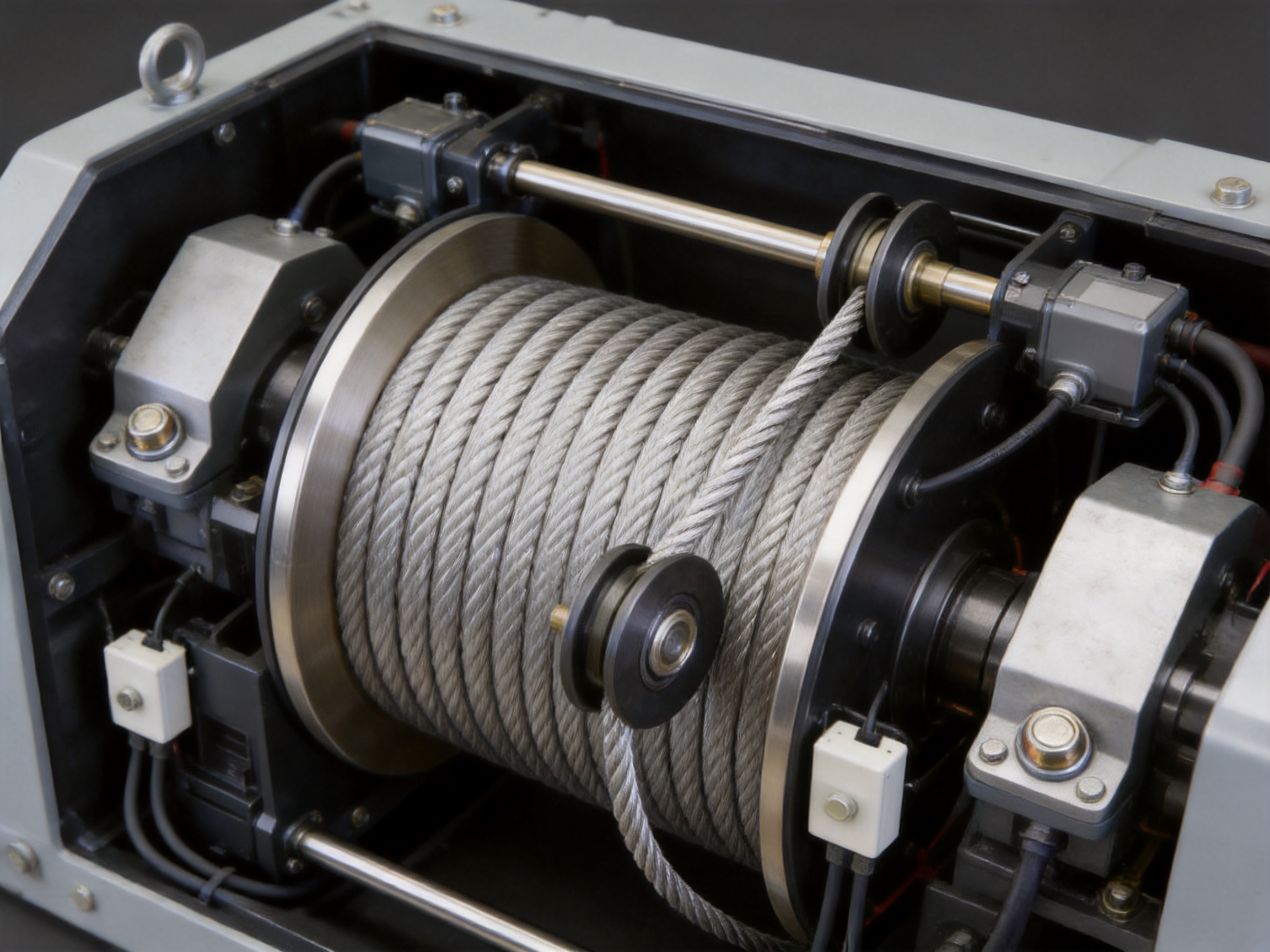
The Mobile Zero-Fleet Stage Winch is designed for applications in which a single lifting point must be moved, installed, and operated with a high degree of flexibility. Its compact mechanical layout integrates an electric servomotor, roller drum, limit switches, rope pressing rod, pulleys, and dual external brakes. These elements work together to support stable rope management, precise movement, and secure load holding. The product is particularly suited to temporary stage setups and touring productions where the rigging team must achieve reliable results without transporting a large and complicated machinery package.
At the center of the design is an adaptive zero-fleet rope management concept. Traditional winches may require careful external alignment because the rope can move laterally as it is wound onto or released from the drum. The Mobile Zero-Fleet Stage Winch uses a single-layer drum and specialized rope pressing rod to maintain a controlled rope path. This arrangement helps reduce rope deviation and limits the amount of manual correction needed during operation. When combined with servo control, the result is a lifting system that supports repeatable movement and a cleaner rigging process.
The product also reflects a broader change in stage machinery. Equipment is no longer evaluated only by its lifting function. Production teams also consider installation time, transportation efficiency, control response, appearance, serviceability, safety systems, and compatibility with changing venue conditions. The Mobile Zero-Fleet Stage Winch addresses these concerns through a streamlined structure and a practical combination of mechanical and electrical technologies.
Mobile Zero-Fleet Stage Winch
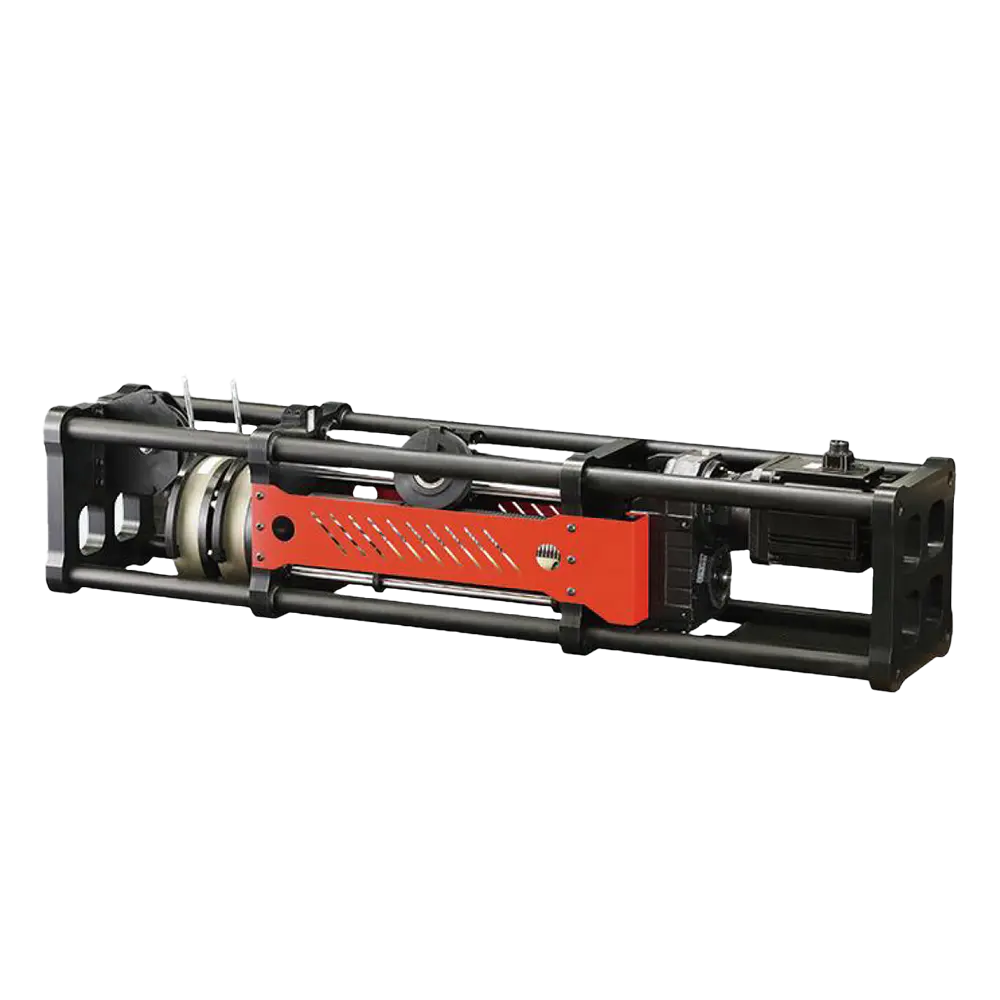
The Mobile Zero-Fleet Stage Winch is a portable lifting device developed for a solo lifting point. Its purpose is to raise, lower, or position suspended stage equipment while maintaining controlled rope movement and dependable load security. The product is not based on a heavily built fixed machinery frame. Instead, it uses a compact configuration that places the essential drive and rope-management components into a smaller, more transportable package.
The main mechanical components include an electric servomotor, roller drum, limit switches, rope pressing rod, and pulleys. The electric servomotor supplies controlled rotational movement. The roller drum manages the working rope through a single-layer winding arrangement. The rope pressing rod helps keep the rope seated and aligned. Pulleys guide the rope route and support the overall lifting geometry, while limit switches help define operating boundaries and prevent movement beyond established travel positions.
Two external brakes provide an additional safety layer. Their role is especially important in live performance conditions, where an unexpected movement or loss of holding force could interrupt a production and place people or equipment at risk. The dual-brake arrangement provides independent braking support and helps maintain the suspended payload when the drive is stopped or when a controlled holding condition is required. The exact installation and operating procedures should always follow the approved technical documentation and the requirements of the venue.
The product’s zero-fleet concept focuses on rope alignment. In a conventional arrangement, rope positioning can become more difficult when the rope approaches the drum at an angle or when winding behavior changes during operation. A single-layer drum provides a defined winding path, while the rope pressing rod supports consistent contact between the rope and the drum. This allows the winch to maintain a more predictable rope route and reduces the need for repeated manual adjustment.
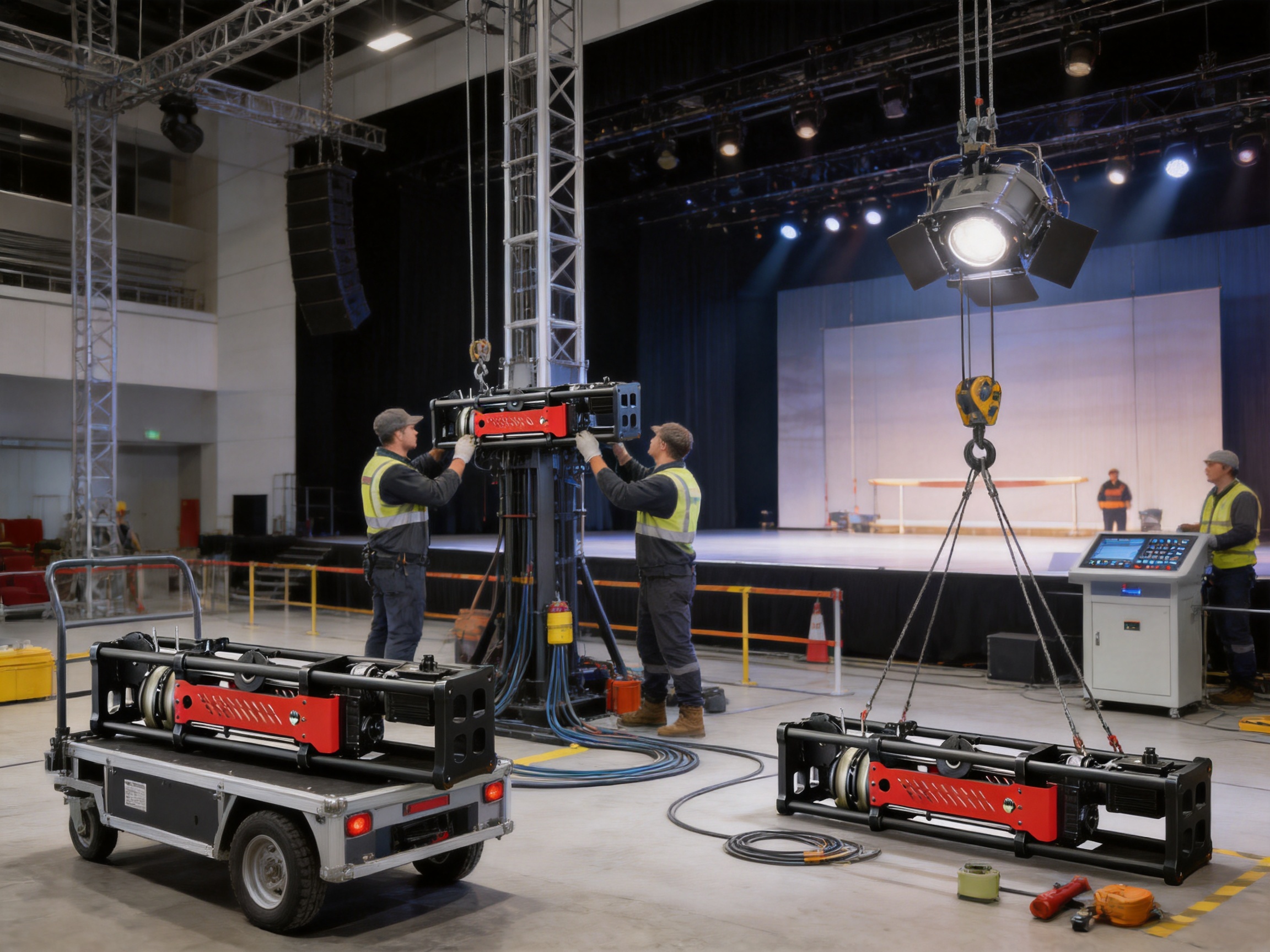
The mobile structure also makes the unit suitable for productions that move between locations. A touring company may need to prepare equipment in a warehouse, transport it to a venue, install it for a performance, dismantle it after the event, and repeat the same process at another location. A winch designed for this workflow can reduce logistical effort and help technicians work more efficiently under tight schedules.
Stage production has become increasingly mobile. Concert tours, traveling theater productions, temporary cultural events, exhibitions, corporate presentations, and festival stages frequently use equipment that must be moved from one site to another. In a permanent theater, machinery can often be integrated into the building structure and left in place. A temporary or touring production has different priorities. Equipment must be compact enough to transport, robust enough to withstand repeated handling, and simple enough to install without lengthy mechanical preparation.
Portability does not simply mean reducing the physical size of a product. A portable stage winch must also be practical throughout its entire working cycle. It should be easy to move from storage to the loading area, from the vehicle to the stage, and from the stage floor to the required installation position. Its controls and adjustment points should remain accessible. Its rope path should not require an excessive number of alignment operations. Its inspection procedures should be understandable to trained technicians.
The Mobile Zero-Fleet Stage Winch addresses these requirements through a compact and modern design. The reduced mechanical footprint can be useful in venues where installation space is limited or where the visual presence of technical equipment must be controlled. Its lightweight and portable characteristics support touring operations, while the integrated mechanical arrangement avoids the need to assemble a large number of separate components for every installation.
Portability also improves production flexibility. A technical director may need to adapt the position of lighting equipment, scenic pieces, banners, acoustic elements, or suspended decorative structures for different venues. A mobile winch can support these changes when used within an appropriately engineered system. Instead of treating the lifting arrangement as a permanent part of one building, the production team can configure equipment around the specific needs of each event.
Another advantage is the potential reduction in preparation time. When essential functions are integrated into a single compact device, technicians can spend less time arranging separate drive, guide, braking, and limit components. This does not eliminate the need for professional rigging, load assessment, inspection, or commissioning. It does, however, provide a more efficient foundation for those activities.
Touring shows often operate under strict schedules. A production may arrive at a venue in the morning, complete unloading and installation during the day, perform in the evening, and begin dismantling shortly after the audience leaves. Every unnecessary adjustment increases labor requirements and creates pressure on the installation team. Portable stage equipment must therefore support a clear and repeatable workflow.
The Mobile Zero-Fleet Stage Winch is suitable for this type of environment because its compact design supports transportation and its adaptive rope management technology helps simplify installation. The servomotor can provide controlled movement for setup and operation, while the single-layer drum and rope pressing rod support a stable rope path. The external brakes provide an additional holding measure during working conditions in which the payload must remain secure.
Touring applications may include lighting trusses, scenic elements, projection surfaces, banners, decorative structures, and other suspended equipment. The appropriate use of the winch depends on the specific load, travel distance, speed, duty cycle, support structure, control arrangement, and local safety requirements. Professional engineers and qualified technicians should confirm that the complete system is suitable before operation.
Temporary stages are commonly installed for outdoor performances, municipal celebrations, exhibitions, product launches, and cultural programs. These venues may not have the permanent infrastructure of a theater. Equipment may need to be installed on a temporary support frame or integrated into a modular staging system. A compact winch can help event organizers and technical contractors create a more adaptable lifting arrangement.
The product’s mobile design is valuable when staging equipment must be removed after a short event. Rather than dedicating permanent space to fixed machinery, the production team can use equipment that is brought to the site for the duration of the project. This approach can reduce storage requirements at the venue and make it easier to configure the stage for different event formats.
Temporary use also places high demands on inspection and setup discipline. A portable product may be handled by different teams at different sites, so the equipment must be checked before each installation. The rope, drum, pressing rod, pulleys, brakes, limit switches, fasteners, electrical connections, and support arrangements should be inspected in accordance with approved procedures. Portability improves flexibility, but safe results still depend on qualified planning and careful execution.
Rope management is one of the most important factors in a lifting system. A rope that does not follow a stable route can create uneven winding, unnecessary wear, lateral force, noise, and unpredictable movement. In a stage environment, these problems may affect the accuracy of positioning and place additional stress on mechanical components. The zero-fleet approach aims to keep the rope path controlled so that the rope enters and leaves the drum in a predictable manner.
The Mobile Zero-Fleet Stage Winch uses a specialized rope pressing rod together with a single-layer roller drum. The rope pressing rod applies controlled guidance and helps maintain contact between the rope and the winding surface. The single-layer configuration reduces the possibility of overlapping layers that could change the effective drum diameter or create irregular winding behavior. Together, these features support a more consistent lifting process.
Adaptive rope management is particularly useful when the equipment is installed in different environments. Venue conditions can vary, and small differences in positioning may otherwise require repeated alignment work. By incorporating rope-guidance functions directly into the winch, the product can reduce adjustment requirements and provide a cleaner installation process. This is one of the principal differences between a compact zero-fleet design and a basic winch that depends heavily on external rope alignment.
Controlled rope movement also supports accurate positioning. Stage equipment may need to stop at a particular height for lighting focus, scenic changes, rehearsal, or performance cues. The servomotor provides controlled drive behavior, while the rope management system helps ensure that mechanical movement remains consistent. A stable rope route is not a replacement for an appropriate control system or commissioning process, but it is an important mechanical foundation for repeatable operation.
| Design Element | Primary Function | Operational Benefit | Typical Production Value |
| Electric servomotor | Provides controlled rotational drive | Supports accurate and repeatable movement | Useful for programmed or carefully coordinated stage transitions |
| Single-layer roller drum | Maintains a defined rope winding arrangement | Reduces irregular winding and rope overlap | Helps simplify rope management during mobile installations |
| Rope pressing rod | Supports rope contact and alignment | Limits unnecessary rope deviation | Reduces manual correction during setup and operation |
| Limit switches | Defines travel boundaries | Supports controlled operating limits | Improves protection during lifting and lowering cycles |
| Dual external brakes | Provide independent holding support | Adds redundancy to the stopping and holding function | Improves confidence during live event operation |
| Pulleys | Guide the rope route | Supports a coordinated lifting path | Assists installation flexibility in different stage layouts |
Fixed stage winches remain valuable for permanent venues with established machinery spaces, dedicated support structures, and predictable production requirements. However, their strengths are not always aligned with the needs of touring or temporary events. A fixed system may require more building integration, more installation space, and more extensive preparation. It may also be less convenient when equipment has to be transported between venues.
The Mobile Zero-Fleet Stage Winch provides a different value proposition. Its first advantage is mobility. The compact structure is intended to make transportation and relocation easier. Its second advantage is installation efficiency. The integrated mechanical components can reduce the number of separate alignment and assembly tasks. Its third advantage is rope control. The zero-fleet configuration helps maintain a stable path and reduces the need for frequent manual correction.
Another difference is the balance between size and safety. Some compact products reduce their mechanical structure by eliminating useful safety features. The Mobile Zero-Fleet Stage Winch instead includes dual external brakes and limit switches within its streamlined arrangement. These features show that portability does not have to mean sacrificing the safety functions expected from professional stage machinery.
The product also offers an unobtrusive appearance. Modern venues may place a strong emphasis on architectural design and audience experience. Technical equipment should perform effectively without creating unnecessary visual distraction. A compact and modern winch can be easier to integrate into a neat stage environment, especially when compared with larger equipment assemblies that occupy more visible space.
Compared with a basic single-purpose lifting device, the Mobile Zero-Fleet Stage Winch also provides a more complete mechanical solution. The servomotor, roller drum, rope pressing rod, pulleys, brakes, and limit switches are designed to work together rather than being treated as unrelated components. This integrated approach can help the production team plan installation, operation, inspection, and maintenance around one coordinated unit.
| Evaluation Area | Traditional Fixed Winch | Basic Portable Winch | Mobile Zero-Fleet Stage Winch |
| Transportation | Usually intended to remain at one venue | Generally easy to move | Designed around mobile and touring requirements |
| Installation space | May require a dedicated machinery area | Requires limited space but may need external alignment | Compact arrangement for restricted or temporary spaces |
| Rope management | Often depends on fixed venue geometry | May require manual adjustment | Uses a single-layer drum and rope pressing rod |
| Drive control | Can be integrated into permanent automation systems | Varies by product | Servo-driven operation for controlled movement |
| Safety arrangement | Depends on the complete fixed system | Varies significantly between models | Includes dual external brakes and limit switches |
| Best suited applications | Permanent theaters and established venues | Simple temporary lifting tasks | Touring shows, temporary stages, and flexible venues |
This comparison does not mean that one product category replaces every other type of lifting machinery. The correct selection depends on the venue, load, operating frequency, required speed, suspension method, control system, and applicable standards. The main advantage of the Mobile Zero-Fleet Stage Winch is that it combines the practical mobility of a portable unit with the rope-control and safety features expected in a professional stage application.
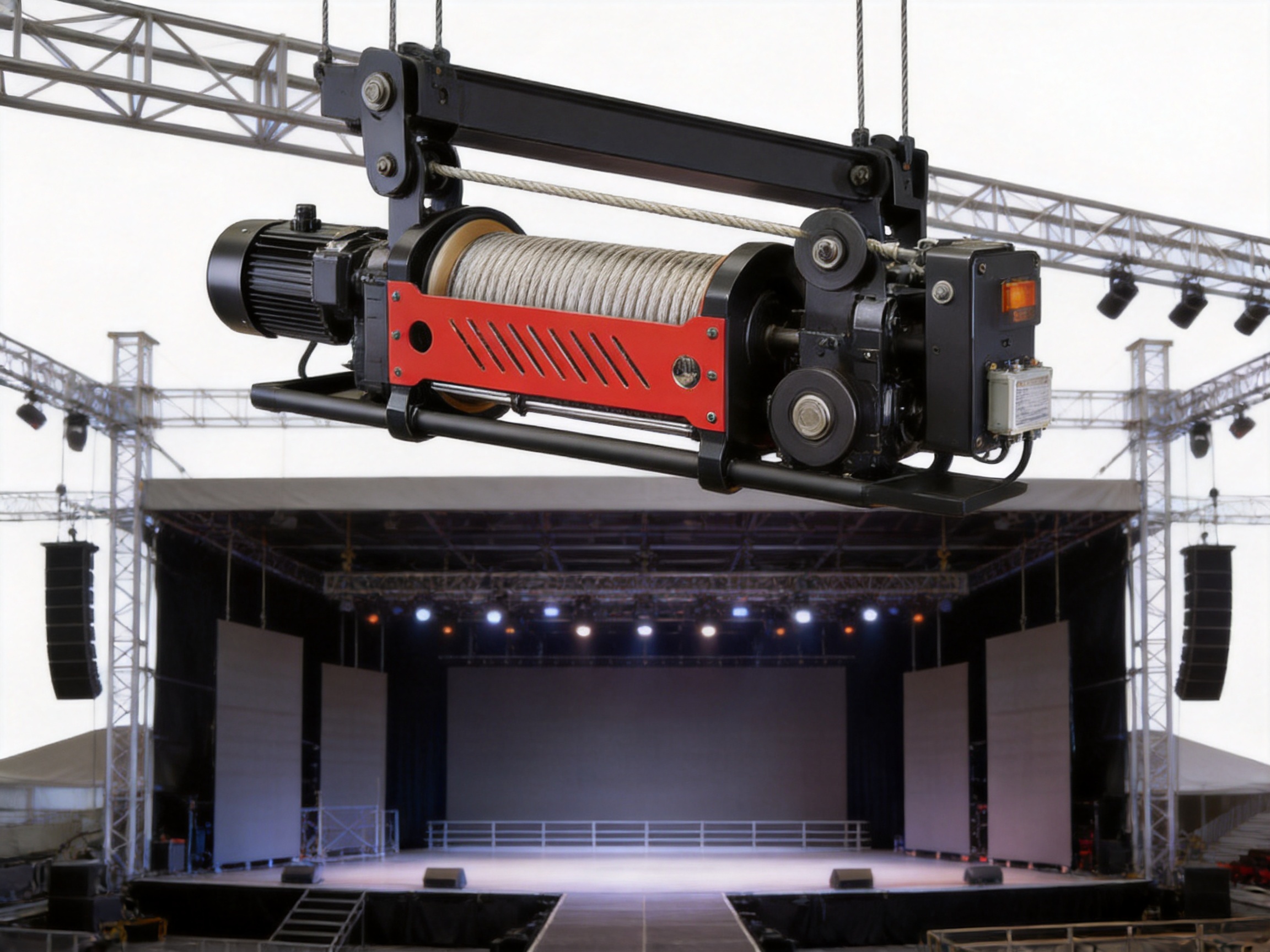
The servomotor is an important part of the product’s performance. Servo technology is commonly selected when a system requires controlled movement, repeatable positioning, and responsive operation. In stage machinery, these characteristics can support the coordinated movement of lighting equipment, scenery, display elements, acoustic devices, or other suspended components.
A servo-driven winch can respond to commands in a controlled manner and can be integrated into a broader stage automation system when the project requires centralized operation. The exact control architecture will depend on the venue and the customer’s technical requirements. Some installations may use local controls, while others may connect multiple lifting points to a stage management or automation platform. In either case, the mechanical stability of the winch remains essential.
The roller drum and rope pressing rod complement the servo system. Electronic control alone cannot correct every mechanical irregularity. If the rope path is unstable, the control system may be forced to compensate for conditions that should be addressed mechanically. By maintaining a defined rope route, the zero-fleet arrangement creates a more predictable basis for the drive and control functions.
Limit switches provide another important control layer. They help establish the permitted travel range and reduce the risk of movement beyond the intended upper or lower position. Limit devices must be correctly installed, tested, and maintained. They should be treated as part of a complete safety and control strategy rather than as a substitute for proper operation, supervision, or inspection.
In fast-paced productions, controlled movement can contribute to smoother scene transitions. Stage technicians may need to position suspended equipment repeatedly during rehearsals and performances. A product that combines servo drive, stable rope management, and defined travel limits can make these repeated operations more consistent and easier to manage.
Safety is a central consideration in stage lifting equipment because suspended loads may be located above performers, technicians, or audiences. The Mobile Zero-Fleet Stage Winch incorporates dual external brakes to provide additional holding security. The use of two external braking units creates a degree of redundancy and reinforces the product’s suitability for demanding live-event conditions.
External brakes can also provide practical inspection benefits. Because the braking components are positioned externally, trained technicians may have improved access for visual examination and maintenance activities, subject to the product’s service procedures. Clear access to critical components can support more efficient inspection routines and help maintenance teams identify wear or irregularities before they affect operation.
The brakes work together with the servo drive, limit switches, mechanical structure, and operating procedures. Safe lifting is achieved through the complete system, not through one component in isolation. The support structure must be capable of carrying the applied loads. The rope and pulleys must be suitable for the application. The electrical and control systems must be correctly configured. The equipment must be inspected before use, and operators must be appropriately trained.
For live events, safety also includes operational predictability. A winch that stops and holds consistently can reduce uncertainty during scene changes and technical rehearsals. The product’s dual-brake design is therefore valuable not only as a protective function but also as a confidence-building feature for production managers, rigging teams, and venue operators.
Customers should provide complete project information during the selection process. Important factors include the type and mass of the suspended load, required travel distance, movement speed, operating frequency, installation orientation, environmental conditions, support structure, control requirements, and applicable local regulations. This information allows the manufacturer and engineering team to confirm the appropriate configuration and avoid unsuitable applications.
The performance of a stage winch depends not only on its design concept but also on how accurately and consistently it is manufactured. Components such as drums, shafts, brake interfaces, pulley supports, motor mounts, and limit-switch assemblies must be produced to suitable dimensions and assembled with care. Small deviations can affect rope alignment, vibration, noise, braking behavior, and long-term reliability.
Rentezhihe (Jiangsu) Equipment Technology Co., Ltd. specializes in the research, development, and manufacturing of stage machinery, performance equipment, and intelligent control systems. Its business covers equipment design, production, installation, commissioning, operation guidance, and maintenance support. This integrated capability is important because stage machinery projects often require more than the supply of a single product. Customers may need assistance with system planning, equipment selection, site coordination, testing, and long-term service.
The company operates a manufacturing facility of approximately 20,000 square meters. The facility includes production workshops, research areas, and office functions that support the development and delivery of stage equipment. A dedicated manufacturing environment allows the company to coordinate machining, assembly, inspection, engineering management, and technical support within one broader organizational structure.
More than 30 advanced CNC processing devices are used in the production system. CNC machining can support repeatable processing of metal components and help maintain dimensional consistency across production batches. For a zero-fleet winch, this is particularly relevant to the production of roller drums, shafts, brackets, mounting plates, and other components that influence alignment and mechanical performance.
Manufacturing precision is valuable at several stages. The drum must provide an appropriate surface and geometry for single-layer rope winding. Mounting points must align the motor, drum, pulleys, and rope pressing rod. Brake components must be installed securely and positioned correctly. Limit switches must be mounted so that their operating points correspond to the intended travel range. Consistent machining and careful assembly help the completed product perform as designed.
The company’s production process covers raw material preparation, component processing, subassembly, complete machine assembly, inspection, testing, and delivery commissioning. Each stage contributes to product quality. Raw materials must be suitable for the intended mechanical function. Processed parts must meet design requirements. Assemblies must be checked for correct fit and movement. Electrical and control components must be verified. The finished winch must undergo operational checks before shipment.
Stage equipment must evolve with changing production requirements. Venues increasingly seek machinery that is more compact, more intelligent, easier to maintain, and more adaptable to different event formats. Research and development therefore plays an important role in product improvement. A manufacturer with experience in stage machinery can evaluate mechanical arrangements, control concepts, safety features, and installation methods together rather than treating each area separately.
The Mobile Zero-Fleet Stage Winch reflects this combined development approach. Its design brings together mechanical simplicity and automation-related control. The single-layer drum and rope pressing rod address rope management. The servomotor addresses controlled movement. The dual external brakes and limit switches address operational security. The compact structure addresses transportation and installation. These elements demonstrate how product development can be guided by actual stage-production requirements.
Engineering experience is also important when adapting equipment to customer projects. A theater renovation, touring production, temporary festival, and multifunctional conference center may all require different configurations. The manufacturer can review the application, identify the operating conditions, and recommend a suitable arrangement. This project-based approach helps ensure that the product is evaluated as part of a complete lifting system.
Quality control should begin before final assembly. Incoming components can be checked for conformity, dimensions, materials, and visible defects. During processing, critical dimensions and machining quality can be monitored. During assembly, technicians can verify fastening, alignment, wiring, lubrication, rope positioning, brake installation, and limit-switch operation.
Testing is especially important for stage machinery because the final product must perform under both static and dynamic conditions. Operational testing can confirm that the drum rotates correctly, the rope follows the intended path, the pressing rod functions properly, the brakes engage as expected, and the limit switches respond at the correct positions. Inspection procedures should be adapted to the product configuration and customer requirements.
Delivery commissioning provides another opportunity to verify the equipment before it enters service. The manufacturer can support the customer with installation guidance, functional testing, operating instruction, and maintenance recommendations. For projects involving multiple winches or integrated control systems, commissioning also helps confirm that the units work together as intended.
A well-planned installation process improves both efficiency and safety. Before equipment arrives at the venue, the project team should review the stage layout, support points, power supply, control arrangement, access route, lifting method, and required working area. The load path must be understood clearly, and the support structure must be verified for the forces that will be applied.
The first practical step is to inspect the winch after transport. The housing, drum, rope pressing rod, pulleys, brakes, motor, limit switches, cables, connectors, and fasteners should be checked for damage or displacement. Transportation protection should be removed in accordance with the manufacturer’s instructions. Any irregularity should be recorded and resolved before installation continues.
The next step is to position the winch and confirm the mechanical arrangement. The unit should be mounted or supported in the approved orientation, with sufficient access for inspection and maintenance. The roller drum, rope pressing rod, and pulley path must be aligned with the intended lifting point. The rope should be installed according to the specified route and should not be twisted, pinched, or exposed to unapproved contact surfaces.
Electrical connections and control interfaces should then be completed by qualified personnel. The servomotor, braking system, limit switches, and control equipment must be connected according to the approved drawings and technical documentation. Grounding, cable protection, emergency stop functions, and control interlocks should be checked as part of the commissioning process.
Before a payload is attached, the winch should be operated without load through its permitted travel range. This test can confirm motor direction, drum rotation, rope movement, limit-switch response, brake release, brake engagement, and control behavior. Any unusual sound, vibration, hesitation, or irregular rope movement should be investigated before further testing.
Load testing should be performed under an approved procedure and within the equipment’s specified operating limits. Technicians should monitor the rope path, drum winding, brake behavior, motor temperature, structural movement, and control response. Once commissioning is complete, the project team should record the test results and provide operating information to the venue or production staff.
Portable equipment may experience more frequent handling than fixed machinery. It is transported, installed, dismantled, stored, and transported again. This repeated movement makes inspection and maintenance especially important. A structured maintenance plan helps preserve performance and allows developing issues to be identified early.
Before each use, operators or technicians should perform a visual inspection of the winch and its surrounding installation. The rope should be checked for visible wear, deformation, contamination, corrosion, or damage. The drum should be examined for irregular winding or surface defects. The rope pressing rod should move or remain positioned as designed. Pulleys should rotate properly and should not show signs of excessive wear.
The dual external brakes should be inspected and tested according to the manufacturer’s procedures. Brake performance should not be assumed solely because the winch operated correctly during the previous event. Limit switches should also be checked because a displaced or damaged switch can affect the permitted travel range. Electrical cables, connectors, and control panels should be inspected for loose connections or signs of damage.
Maintenance intervals should be based on operating frequency, environmental conditions, load cycles, storage arrangements, and manufacturer recommendations. Equipment used outdoors may be exposed to moisture, dust, temperature changes, and contamination. Equipment used in theaters may be exposed to theatrical haze, dust, paint particles, or frequent rapid movements. These conditions should be considered when establishing an inspection and cleaning routine.
Service records can improve long-term reliability. A record may include installation dates, operating hours, load-test results, brake inspections, rope replacements, limit-switch adjustments, repairs, and commissioning observations. Clear records help venue managers and production companies make informed decisions about continued use, maintenance, and replacement of wear components.
Because the Mobile Zero-Fleet Stage Winch is designed for professional applications, maintenance should be carried out by trained personnel. Unauthorized modifications can affect rope alignment, braking performance, structural integrity, or control behavior. Any replacement component should be compatible with the approved product configuration.
Intelligent stage machinery combines mechanical equipment, electrical control, safety monitoring, and project engineering. A winch becomes part of an intelligent stage solution when it can operate reliably within a coordinated system and provide predictable movement to the venue’s control structure. The Mobile Zero-Fleet Stage Winch is suitable for this approach because it combines servo drive with mechanical rope control and defined operating limits.
In a larger venue, multiple winches may be used for lighting, scenery, curtains, projection surfaces, acoustic elements, or architectural features. Coordinated operation requires accurate information about each lifting point, including its position, travel range, load, speed, and status. The use of limit switches and controlled servo movement can support this type of system integration when the overall control architecture is designed appropriately.
Intelligent equipment is not defined only by software. Mechanical reliability remains fundamental. If the rope is poorly controlled or the braking function is inconsistent, a sophisticated control interface cannot create a safe and stable system. The zero-fleet design demonstrates the importance of combining digital control with practical mechanical engineering.
Rentezhihe provides services covering design, manufacturing, installation, commissioning, operation, and maintenance. This complete service model can be valuable for customers who want one engineering partner to support the project from concept to operation. It also allows feedback from installation and maintenance activities to inform future product development.
The company serves theaters, cultural centers, stadiums, conference centers, and multifunctional performance spaces. These different venue types require different approaches to equipment selection and control. A theater may prioritize quiet operation and repeatable scenic movement. A conference center may need flexible layouts and fast conversion between events. A stadium or large cultural project may require a coordinated network of lifting equipment. The manufacturer’s broad stage-machinery experience supports these varied requirements.
Although the Mobile Zero-Fleet Stage Winch has a compact standard concept, every installation should be evaluated according to its specific application. Customers should identify the load category, load mass, suspension arrangement, lifting height, desired speed, operating frequency, and environmental conditions. They should also define whether the equipment will be used indoors, outdoors, temporarily, or as part of a semi-permanent installation.
The support structure is equally important. The winch must be installed on a structure capable of supporting the equipment, the payload, dynamic forces, and applicable safety factors. The rope route must be compatible with the geometry of the stage. Pulleys must be positioned correctly, and the lifting point must not create harmful side loading or uncontrolled movement.
Control requirements should be discussed at the beginning of the project. Some customers may require a standalone control arrangement, while others may need integration with a larger automation system. The number of lifting points, synchronization requirements, emergency stop strategy, status monitoring, and operator interface should be reviewed by qualified engineers.
Customization may involve mounting arrangements, control interfaces, rope lengths, pulley configurations, protective elements, operating accessories, or project-specific documentation. The purpose of customization is not simply to alter the appearance of the product. It is to ensure that the winch fits the mechanical, electrical, and operational needs of the venue.
The company’s engineering team can assist customers in reviewing these requirements. A project may begin with a venue assessment or technical consultation, followed by equipment selection, drawing preparation, manufacturing, factory testing, installation, and commissioning. This structured process helps reduce uncertainty and improves coordination between the manufacturer, contractor, venue, and production team.
Production managers are responsible for delivering performances on time while maintaining technical quality and safety. They benefit from equipment that can be installed quickly, operated consistently, and adapted to different production requirements. The Mobile Zero-Fleet Stage Winch supports these objectives through its portable structure, controlled drive, and simplified rope management.
Venue owners are often concerned with utilization. A venue may host theatrical performances, concerts, conferences, exhibitions, ceremonies, and community events. Equipment that can be moved or reconfigured allows the space to support more types of programs. A compact winch can therefore contribute to operational flexibility without requiring every lifting point to be permanently dedicated to one function.
Technical directors may also value the product’s compact appearance and accessible layout. A well-organized mechanical system can make inspection and troubleshooting more straightforward. The external brakes and visible mechanical arrangement may help technicians identify important components during routine checks, subject to the manufacturer’s maintenance procedures.
Touring contractors can benefit from reduced transportation demands. A smaller and lighter equipment package may simplify vehicle loading and unloading, particularly when many units are used across a tour. The reduction in installation complexity can also support more predictable labor planning, although the actual savings depend on the venue and the complete rigging arrangement.
For international customers, supplier capability is another important consideration. A manufacturer that can provide design support, production, commissioning, and maintenance assistance offers greater continuity than a supplier that only ships individual components. Rentezhihe’s integrated service system is intended to support customers through the full life cycle of a stage machinery project.
A Mobile Zero-Fleet Stage Winch is a compact, portable lifting device designed for a single stage lifting point. It uses an electric servomotor, roller drum, single-layer rope arrangement, rope pressing rod, pulleys, limit switches, and dual external brakes to support controlled and secure lifting operations.
Zero-fleet refers to a rope-management approach that helps maintain a controlled rope path as the rope enters and leaves the drum. In this product, the single-layer drum and specialized rope pressing rod work together to reduce lateral rope movement and minimize manual alignment requirements.
The main advantages include compact construction, lightweight portability, suitability for touring shows, adaptive zero-fleet rope management, servo-driven movement, dual external brakes, and limit switches. These features combine to support flexible installation, controlled operation, and improved confidence during live events.
The winch can be used for touring performances, temporary stages, theaters, cultural centers, conference venues, exhibition spaces, stadium events, and other performance environments that require flexible lifting equipment. The actual suitability depends on the load, support structure, control system, operating conditions, and applicable safety requirements.
The compact structure reduces the amount of space needed for installation and transportation. Because the servomotor, roller drum, rope pressing rod, pulleys, limit switches, and brakes are arranged as an integrated product, technicians may complete preparation with fewer separate mechanical components and fewer alignment procedures than a more complex fixed arrangement.
A single-layer drum maintains a defined winding arrangement for the rope. It helps reduce overlapping layers and supports more predictable rope movement. When combined with the rope pressing rod, it contributes to stable rope management and consistent lifting behavior.
The dual external brakes provide an additional holding and stopping function. Their independent arrangement adds redundancy to the braking system and helps secure the payload during live-event operation. The brakes must be inspected, tested, and maintained according to approved technical procedures.
The servo-driven design can support integration into an intelligent stage machinery system when the control architecture is properly planned. Integration requirements may include control interfaces, emergency stop functions, limit monitoring, synchronization, operator controls, and status feedback. These details should be confirmed during project engineering.
The project team should check the payload, support structure, rope route, pulley positions, power supply, control system, installation orientation, travel distance, environmental conditions, and local regulations. The winch should also be inspected after transport for damage or displacement before it is mounted and commissioned.
Maintenance includes inspection of the rope, roller drum, rope pressing rod, pulleys, brakes, limit switches, motor, cables, connectors, fasteners, and support structure. Inspection frequency depends on operating conditions and usage. Trained personnel should perform maintenance and record the results for future reference.
Rentezhihe (Jiangsu) Equipment Technology Co., Ltd. provides research and development, manufacturing, system design, installation, commissioning, operation guidance, and maintenance support. Its approximately 20,000-square-meter facility uses more than 30 advanced CNC processing devices and supports production from component machining through complete machine assembly and delivery testing.
Project-specific options may include mounting arrangements, rope and pulley configurations, control interfaces, protective components, documentation, and other engineering details. Customization should be based on the venue layout, load requirements, operating conditions, and complete system design.
The Mobile Zero-Fleet Stage Winch represents a practical direction for modern stage lifting equipment. It combines the mobility required by touring and temporary productions with the rope control expected from professional stage machinery. Its compact mechanical structure supports transportation and installation, while the servomotor provides controlled movement for flexible stage operations.
The product’s single-layer roller drum and specialized rope pressing rod address one of the most important challenges in compact winch design: maintaining a stable rope path. Its dual external brakes and limit switches add safety-oriented functions without compromising the streamlined arrangement. These features make the winch suitable for venues and production teams that need reliable lifting equipment but cannot depend exclusively on large permanent machinery systems.
Its competitive advantage is based on the combination of features rather than one isolated component. A basic portable winch may be easy to move but require more manual rope alignment. A fixed winch may offer strong permanent integration but lack touring flexibility. The Mobile Zero-Fleet Stage Winch brings together portability, adaptive rope management, servo control, braking redundancy, and compact installation in one coordinated product.
The manufacturing capability behind the product is equally important. Rentezhihe combines research and development with CNC-supported production, assembly, testing, installation, commissioning, and maintenance services. Its approximately 20,000-square-meter facility and more than 30 CNC processing devices support the accurate manufacture of mechanical components and the controlled assembly of complete stage machinery.
For production companies, venue owners, stage contractors, and system integrators, the product offers a flexible foundation for temporary and intelligent stage applications. When selected according to the correct load, support, control, and safety requirements, it can help simplify rigging, shorten preparation time, improve operational consistency, and support the changing demands of modern performance environments.
1. Rentezhihe (Jiangsu) Equipment Technology Co., Ltd. Product information for the Mobile Zero-Fleet Stage Winch.
2. Rentezhihe (Jiangsu) Equipment Technology Co., Ltd. Company information and manufacturing capability statement.
3. General principles of stage machinery design, installation, commissioning, inspection, and maintenance.
4. General engineering practices for servo-driven lifting equipment and controlled rope management systems.
5. General safety practices for suspended loads, stage rigging, braking systems, and limit-switch protection.
We specialize in delivering advanced stage machinery, rigging systems and intelligent control solutions for performance spaces worldwide.

No. 111 Runfeng Road, Hailing District, Taizhou City, Jiangsu Province, China

rtstage@163.com

+86-139 1771 1698

+86-139 1771 1698
rtstage@163.com
 中文简体
 English
 русский
 Français
 Español
 عربى