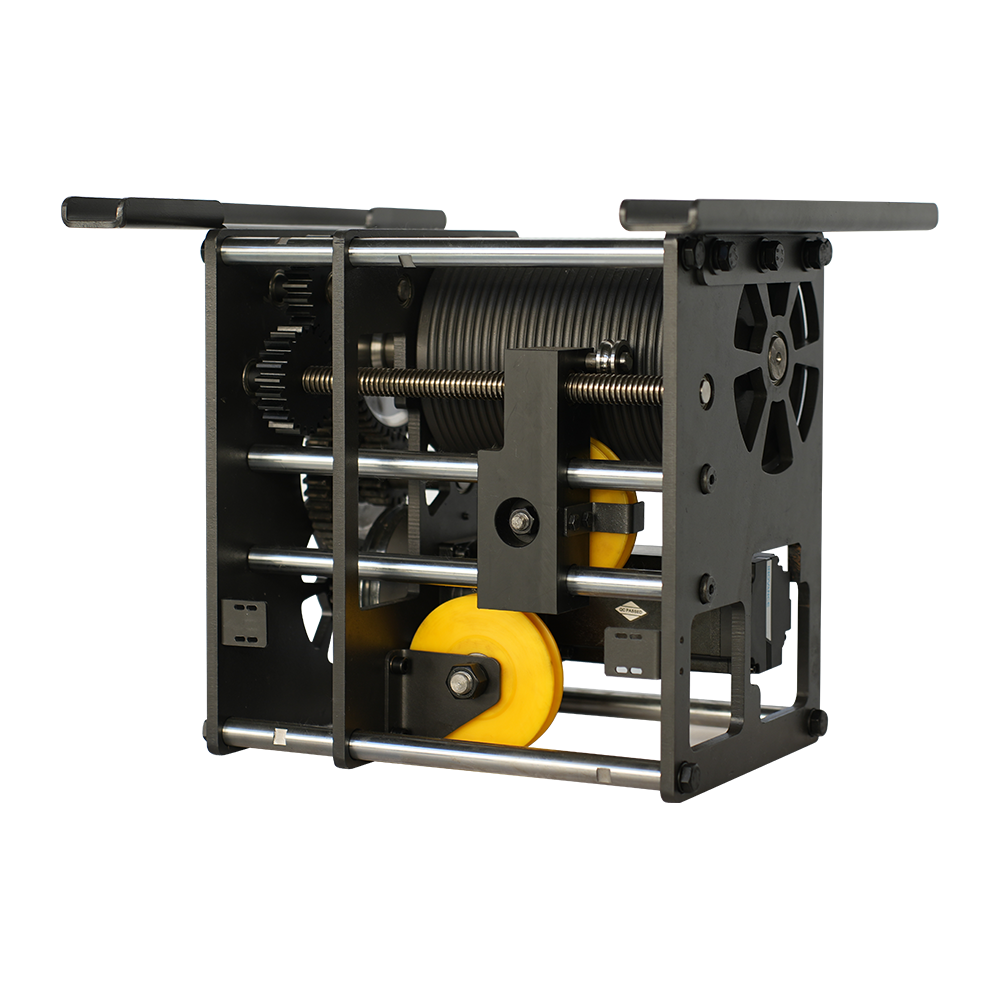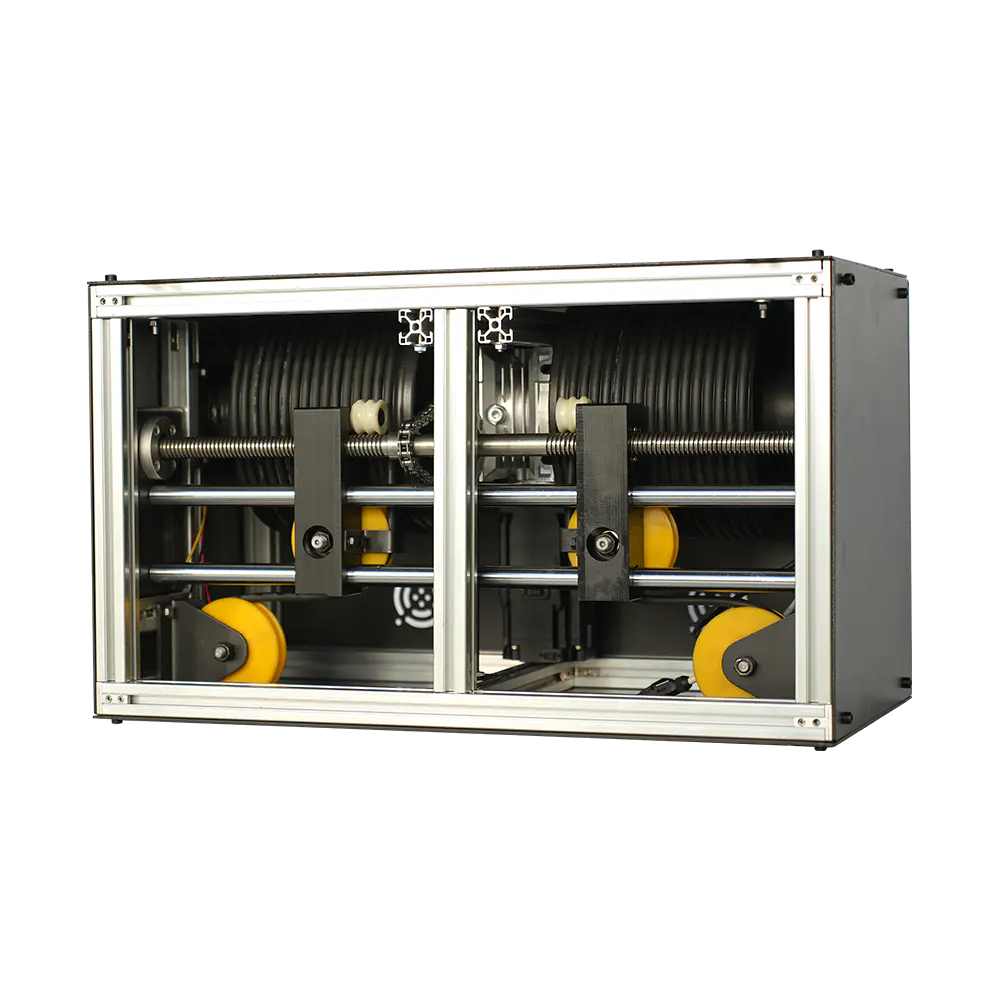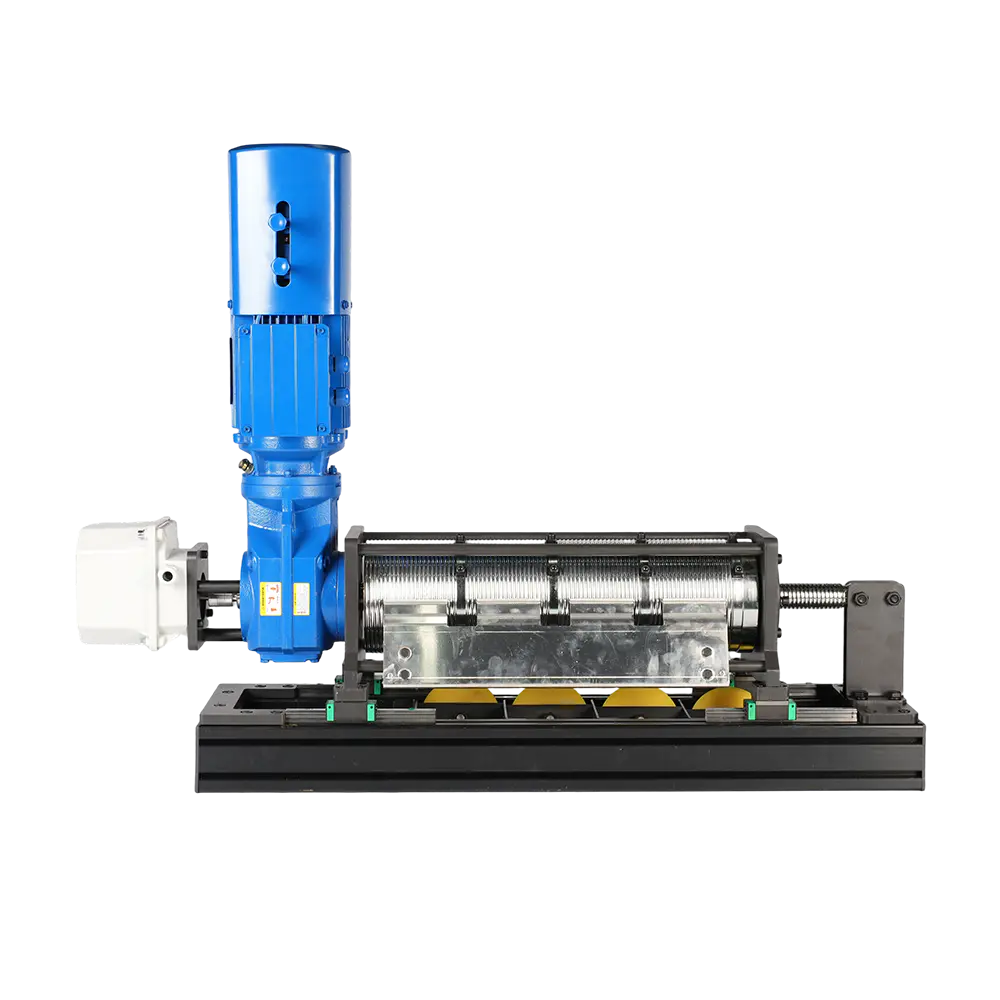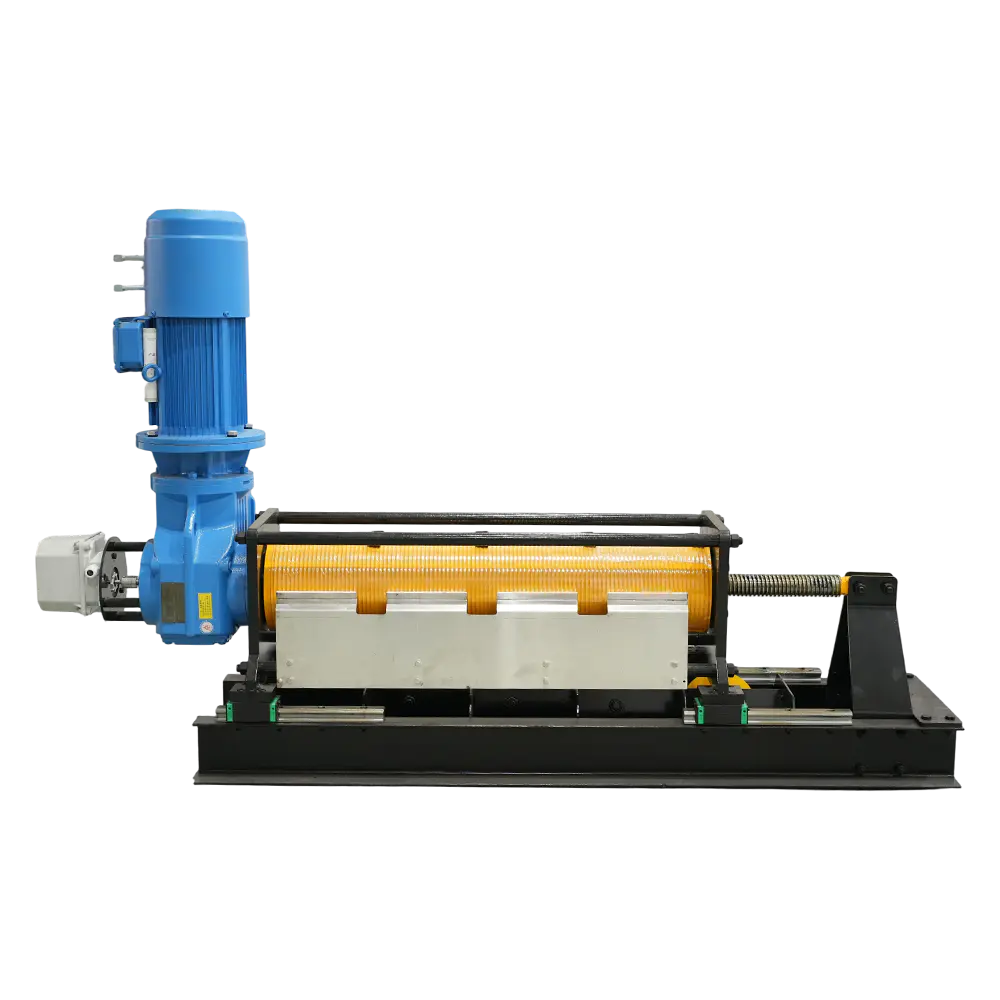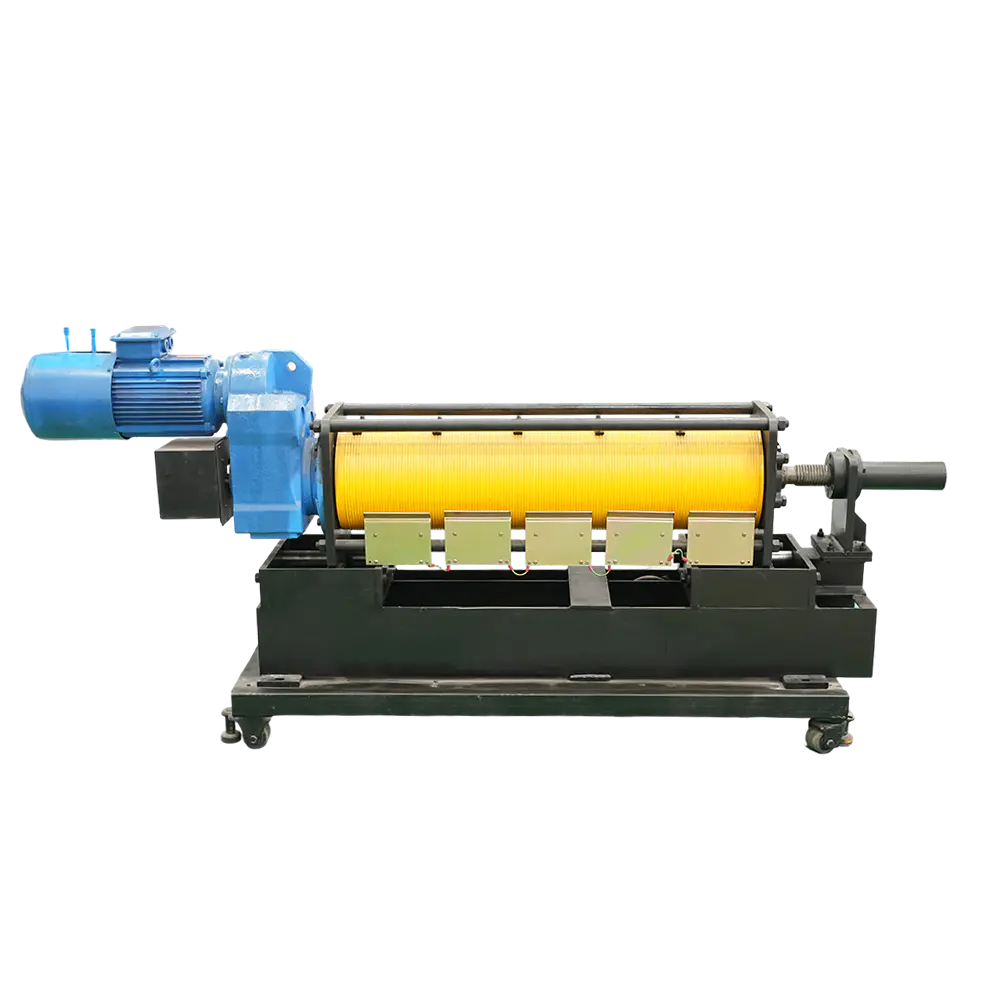
Modern performance venues require stage machinery that can move suspended scenery, lighting systems, audio equipment, projection structures, and other technical loads accurately and safely. At the same time, touring productions and temporary stages demand equipment that is lighter, faster to install, and easier to transport than conventional permanently installed machinery. The Dual-Point Zero-Fleet Stage Winch is designed to address these combined requirements through a portable structure, two-point lifting configuration, adaptive rope management, and redundant safety systems.
With a rated payload capacity of up to 500 kg, the winch combines practical lifting performance with a lightweight base assembly. Its single-layer tracked drum helps maintain organized rope movement during repeated strikes, setup operations, and venue changes. The dual-point arrangement distributes the suspended load across two lifting positions, improving balance and reducing unwanted tilting or swinging. At the same time, the zero-fleet mechanism helps maintain an optimized rope path as the wire rope moves across the drum.
This product is intended for touring shows, temporary staging, cultural venues, theaters, conference centers, stadiums, multifunctional halls, and other professional performance environments. It is also suitable for stage automation projects that require compact equipment, accurate positioning, and dependable operation over repeated movement cycles.
RenteZhihe (JiangSu) Equipment Technology Co., Ltd. develops and manufactures stage machinery, performance equipment, and intelligent control systems. Its capabilities extend from engineering design and component processing to machine assembly, installation, commissioning, operation, and maintenance. The company’s manufacturing resources, engineering experience, and project-oriented service model support customized stage lifting solutions for domestic and international customers.
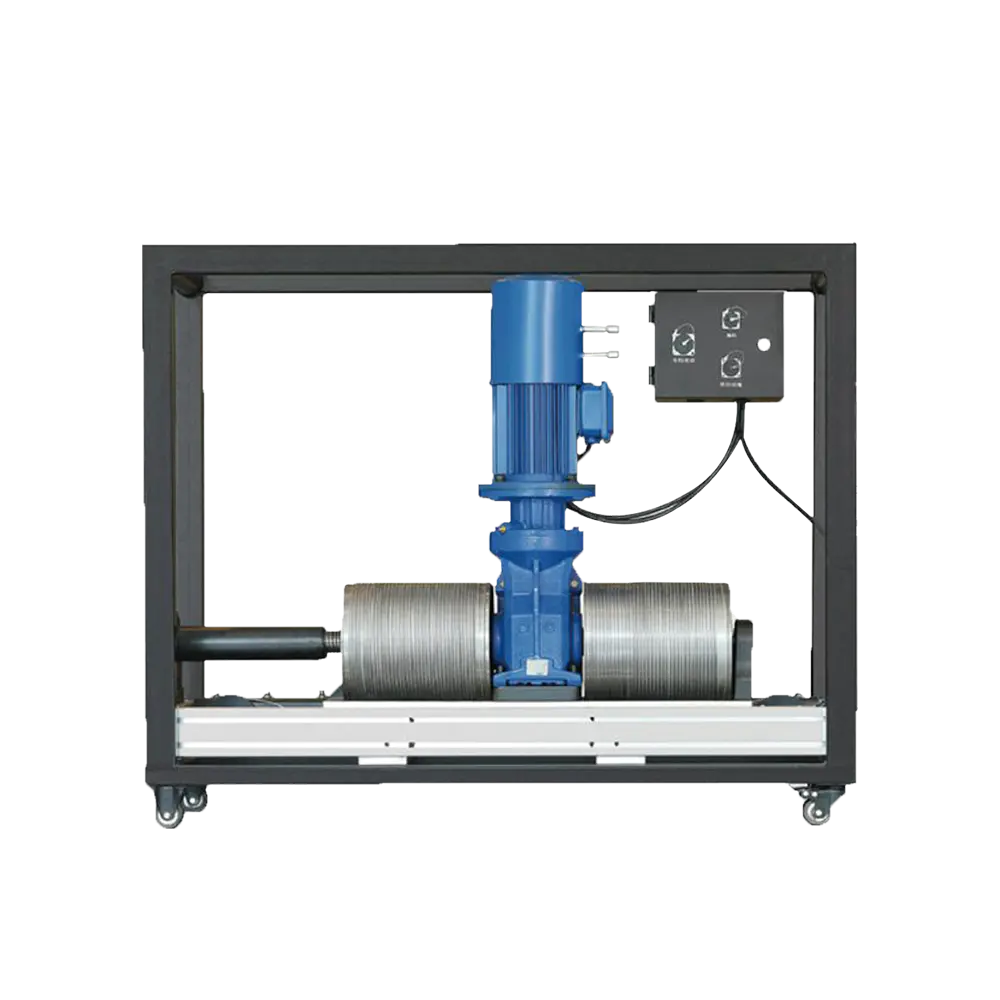
Dual-Point Zero-Fleet Stage Winch
A suspended stage load can become unstable when it is supported from only one lifting position. The load may rotate, tilt, swing, or develop uneven movement if its center of gravity changes or if the supporting structure is wide. These problems become more significant when the load contains multiple pieces of scenery, lighting fixtures, speakers, or technical equipment that must be moved together.
A dual-point configuration addresses this challenge by supporting the load from two coordinated lifting positions. The two points create a more balanced force distribution and help maintain the horizontal orientation of the suspended structure. When the winches or lifting units are correctly configured and synchronized, the system can raise, lower, and position the load with improved stability.
For stage operators, this stability provides several practical benefits. Suspended scenery can be moved with less oscillation. Lighting trusses can remain better aligned during adjustment. Audio clusters can be positioned more accurately. Wide scenic elements are less likely to twist during movement. These advantages contribute to safer operation, faster scene changes, and more consistent production results.
The dual-point principle is particularly valuable in venues where the lifting cycle is repeated many times each day. A system used for frequent rehearsals, performances, strikes, and reconfigurations must control movement reliably under changing operating conditions. It should also reduce the possibility of uneven rope behavior, excessive vibration, and unnecessary mechanical stress.
The Dual-Point Zero-Fleet Stage Winch combines two-point lifting with an adaptive rope arrangement system. Instead of treating load stability and rope management as separate functions, the design brings them together in one coordinated lifting solution. This makes the product suitable for both fixed performance venues and mobile production environments.
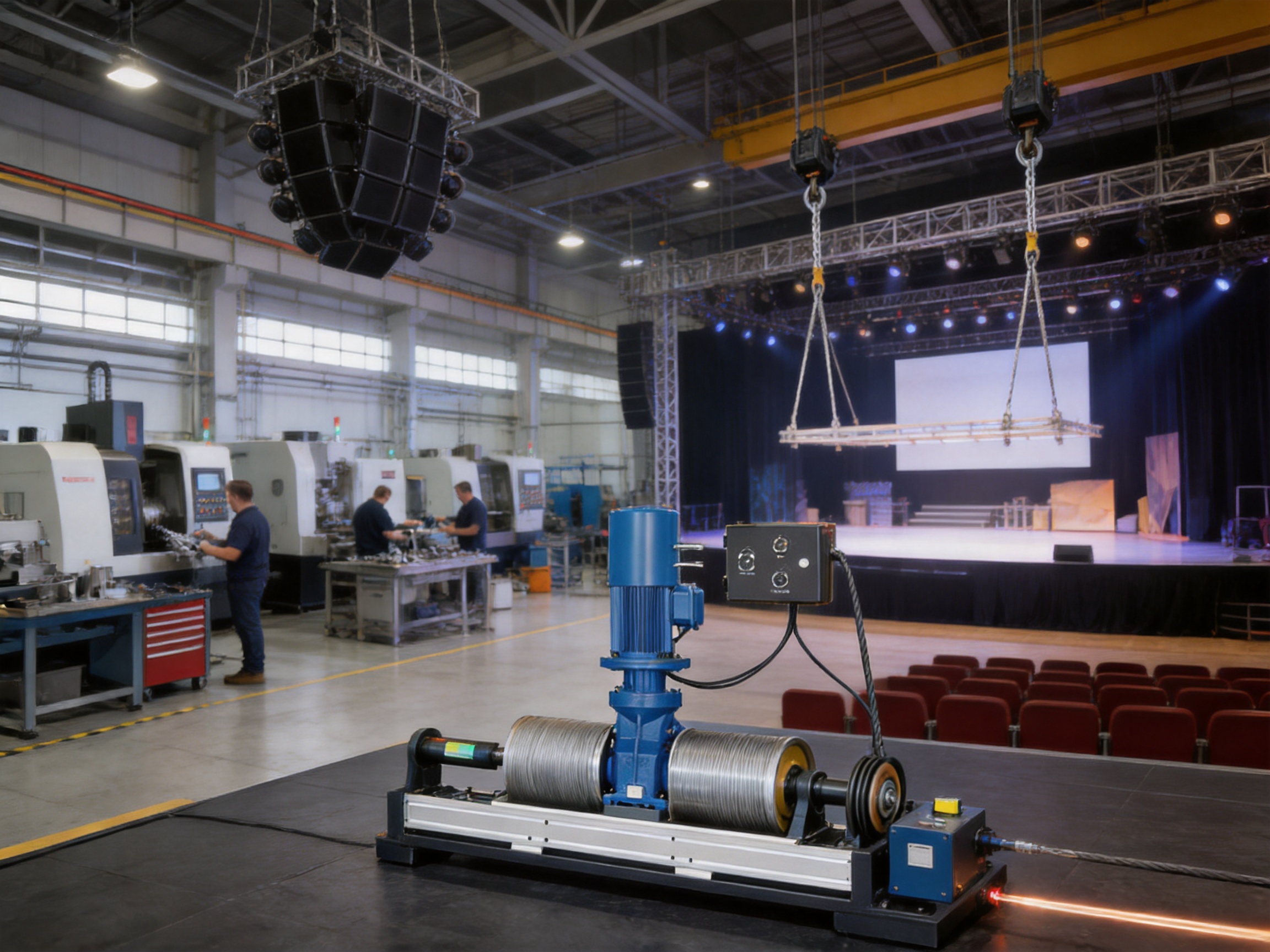
The winch is built around a group of mechanical and sensing components that work together to provide controlled lifting. The primary components include the electric motor, reducer, encoder, limit switches, travel sensor, rope arrangement sensors, base assembly, and pulleys. Each component contributes to safe motion, accurate positioning, or reliable mechanical operation.
The electric motor supplies the driving force required to lift and lower the suspended load. The reducer transfers motor power to the drum while providing the torque and rotational speed characteristics needed for stage lifting. The encoder monitors rotational or positional information, allowing the control system to identify movement and support accurate operation.
Limit switches provide defined travel boundaries. They help prevent the lifting system from exceeding its intended operating range and can be integrated into the safety logic of the overall stage automation system. Travel sensors provide additional information about movement status, while rope arrangement sensors help monitor whether the rope is following the intended path on the drum.
The base assembly provides a stable mounting structure for the winch components. In the touring version, the base is designed to reduce unnecessary weight while retaining the structural integrity required for professional stage use. Pulleys guide the rope and help maintain a controlled route between the winch and the suspended load.
This combination of mechanical strength and sensor feedback gives the product a more complete operating profile than a basic lifting device. The winch is not only a motor-driven drum. It is an integrated stage machinery unit designed to support repeatable motion, controlled rope handling, and coordinated lifting performance.
One of the main design objectives of the product is to provide a useful payload capacity without creating an unnecessarily heavy machine. Touring productions often need to move equipment between venues, load it into transport vehicles, and install it under tight schedules. Every reduction in equipment weight can simplify handling, reduce transportation demands, and improve installation efficiency.
The winch maintains a payload capacity of up to 500 kg while using a lightweight base assembly. This balance between capacity and portability makes it suitable for suspended stage structures that require professional lifting performance but do not justify the size or weight of a permanent heavy-duty installation.
A lightweight design does not mean that structural requirements are ignored. The base assembly, mounting points, drum, pulleys, and safety components must work together to withstand operating forces. The design must also account for dynamic effects caused by acceleration, deceleration, starting, stopping, and repeated movement. Proper installation, load assessment, control configuration, and inspection remain essential for safe use.
Compared with conventional fixed winches, the portable version can offer greater flexibility for productions that change venues frequently. Compared with improvised temporary lifting solutions, it provides a purpose-designed structure, integrated control components, and professional braking redundancy. This makes it a more suitable choice for organized touring and temporary staging projects.
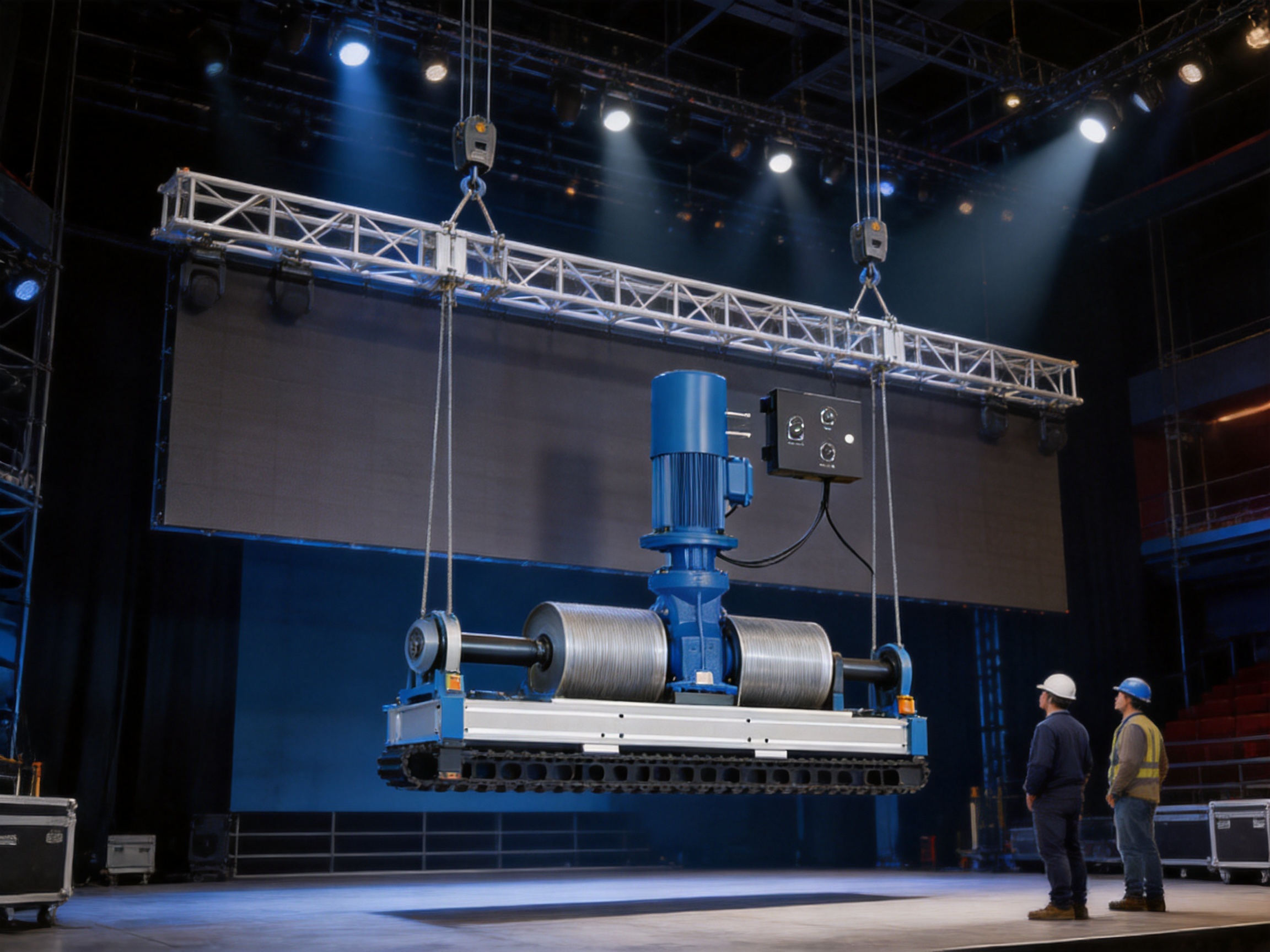
Rope management is a central consideration in any stage winch. If the wire rope does not remain properly aligned with the drum, it may overlap, pile unevenly, loosen, or experience unnecessary wear. Poor rope arrangement can affect the lifting path, reduce operational consistency, and increase maintenance requirements.
Zero-fleet technology is designed to maintain an optimized relationship between the rope and the drum. As the rope moves during winding and unwinding, the system helps control lateral displacement so that the rope remains organized on a single-layer track. This approach reduces the risk of irregular accumulation and supports more predictable movement.
The Dual-Point Zero-Fleet Stage Winch uses an adaptive rope arrangement concept supported by mechanical guidance and sensor monitoring. The tracked drum is designed for single-layer operation, helping keep the wire rope in a controlled position during frequent lifting cycles. The rope arrangement sensors provide feedback that can be used to identify operating conditions and support the control process.
For touring productions, this feature is particularly important. Equipment may be installed and removed repeatedly, often by different crews and in venues with varying spatial conditions. A rope management system that remains stable during frequent setup and strike operations can reduce the likelihood of tangling and help preserve the reliability of the lifting equipment.
The zero-fleet design also supports a cleaner and more compact installation. Because the rope path is controlled near the drum, the system can be integrated into stage machinery layouts where space is limited. This is useful for temporary stages, compact technical areas, and venues that require rapid conversion between different event configurations.
A single-layer tracked drum provides a defined winding arrangement. The wire rope is guided along a controlled path rather than being allowed to form multiple uncontrolled layers. This arrangement can reduce rope overlap, improve visual inspection, and contribute to more consistent winding behavior.
Single-layer tracking also helps operators identify potential issues more easily. A rope that is not seated correctly, shows abnormal wear, or deviates from its intended track can be detected during routine inspection. Early identification allows maintenance personnel to address the condition before it develops into a more serious operating problem.
For productions that perform repeated strikes and setups, the value of organized winding becomes clear. Each movement cycle places demands on the rope, drum, guides, motor, reducer, and braking system. Maintaining a consistent rope path reduces unnecessary disturbances and supports a longer service life when combined with correct installation and maintenance practices.
Safety is a fundamental requirement in stage lifting. Suspended equipment operates above performers, technicians, and audiences, so the lifting system must be designed with appropriate safeguards and operated according to applicable technical procedures. A reliable stage winch should provide controlled motion during normal operation and a dependable response if a primary component experiences an abnormal condition.
The Dual-Point Zero-Fleet Stage Winch incorporates dual-braking redundancy. This means the braking arrangement is designed with an additional level of holding protection rather than relying on a single braking function alone. Redundancy can improve safety resilience and provide greater confidence during stationary holding and controlled stopping.
Braking performance must be considered together with the motor, reducer, drum, rope, pulleys, sensors, and control system. A brake does not operate in isolation. The complete lifting chain must be correctly selected, installed, adjusted, and inspected. The control system must also ensure that acceleration and deceleration are appropriate for the suspended load and the venue’s operating requirements.
Limit switches, travel sensors, and encoders further support safe operation by providing information about position and movement. These components can help the control system identify operating boundaries, detect abnormal travel conditions, and support repeatable positioning. Their effectiveness depends on correct calibration, regular testing, and suitable integration with the venue’s stage automation system.
RenteZhihe’s engineering approach emphasizes the combined performance of mechanical and electrical systems. During project implementation, the company can support equipment configuration, installation, commissioning, testing, and operational verification. This integrated approach helps customers avoid the risks associated with treating the winch as an isolated component without considering the complete stage lifting system.
The product’s high safety factor is intended to support professional stage applications, but no lifting product can replace proper engineering judgment. The actual safe working load depends on the complete system configuration, including the number of lifting points, rope arrangement, support structure, operating speed, acceleration, environmental conditions, and control logic.
Before use, the installation team should verify that the supporting structure can carry the required static and dynamic loads. The rope, pulleys, attachment points, electrical supply, control system, and emergency functions should be checked. Operators should receive appropriate training and follow documented operating procedures.
Regular maintenance should include inspection of the wire rope, drum track, pulleys, brake components, reducer, motor, encoder, sensors, fasteners, and electrical connections. Inspection intervals should reflect the frequency of use, load conditions, environmental factors, and venue requirements. Any unusual noise, vibration, rope behavior, braking response, or positioning error should be investigated before continued operation.
| Design Element | Primary Function | Operational Benefit | Typical Verification Point |
| Dual-point lifting configuration | Distributes the suspended load through two positions | Improved balance and reduced tilting | Synchronization and attachment alignment |
| Single-layer tracked drum | Maintains an organized rope path | Reduced overlap and more consistent winding | Rope seating and drum condition |
| Adaptive zero-fleet system | Controls rope alignment with the drum | Lower risk of tangling and irregular wear | Sensor feedback and rope travel |
| Dual-braking redundancy | Provides additional holding and stopping protection | Greater safety resilience | Brake response and holding performance |
| Encoder and travel sensors | Monitor movement and position | Improved control accuracy | Calibration and signal consistency |
| Lightweight base assembly | Supports portable installation | Faster handling and transportation | Mounting integrity and structural condition |
Touring productions face operating conditions that are different from those of permanent theaters. Equipment must be transported between locations, installed within limited time, adapted to different rigging arrangements, and removed immediately after an event. The equipment must also withstand repeated handling without compromising performance.
The Dual-Point Zero-Fleet Stage Winch is designed around these practical requirements. Its lightweight base assembly can make transportation and positioning easier. Its compact configuration supports flexible installation. Its tracked drum helps reduce rope disorder during repeated setup and strike operations. Its dual-point lifting function supports stable movement of suspended scenic or technical elements.
Rapid deployment is another important benefit. Touring crews often work according to strict schedules, and delays during installation can affect rehearsals, technical checks, and performances. A winch that can be positioned and integrated efficiently helps reduce the time required for preparation. Clear installation procedures, suitable mounting accessories, and preconfigured control parameters can further improve deployment efficiency.
Portability also provides value beyond touring shows. Temporary stages for festivals, corporate events, cultural programs, exhibitions, and public performances may require lifting equipment for only a limited period. A portable winch can be used across multiple projects rather than remaining fixed in one venue. This can improve equipment utilization and provide a more flexible investment for production companies and event service providers.
Compared with conventional heavy fixed winches, the portable design reduces the burden associated with movement and relocation. Compared with simple temporary lifting devices, it offers stage-oriented rope management, sensor integration, and braking redundancy. These characteristics create a practical middle ground between permanent installation equipment and basic portable lifting equipment.
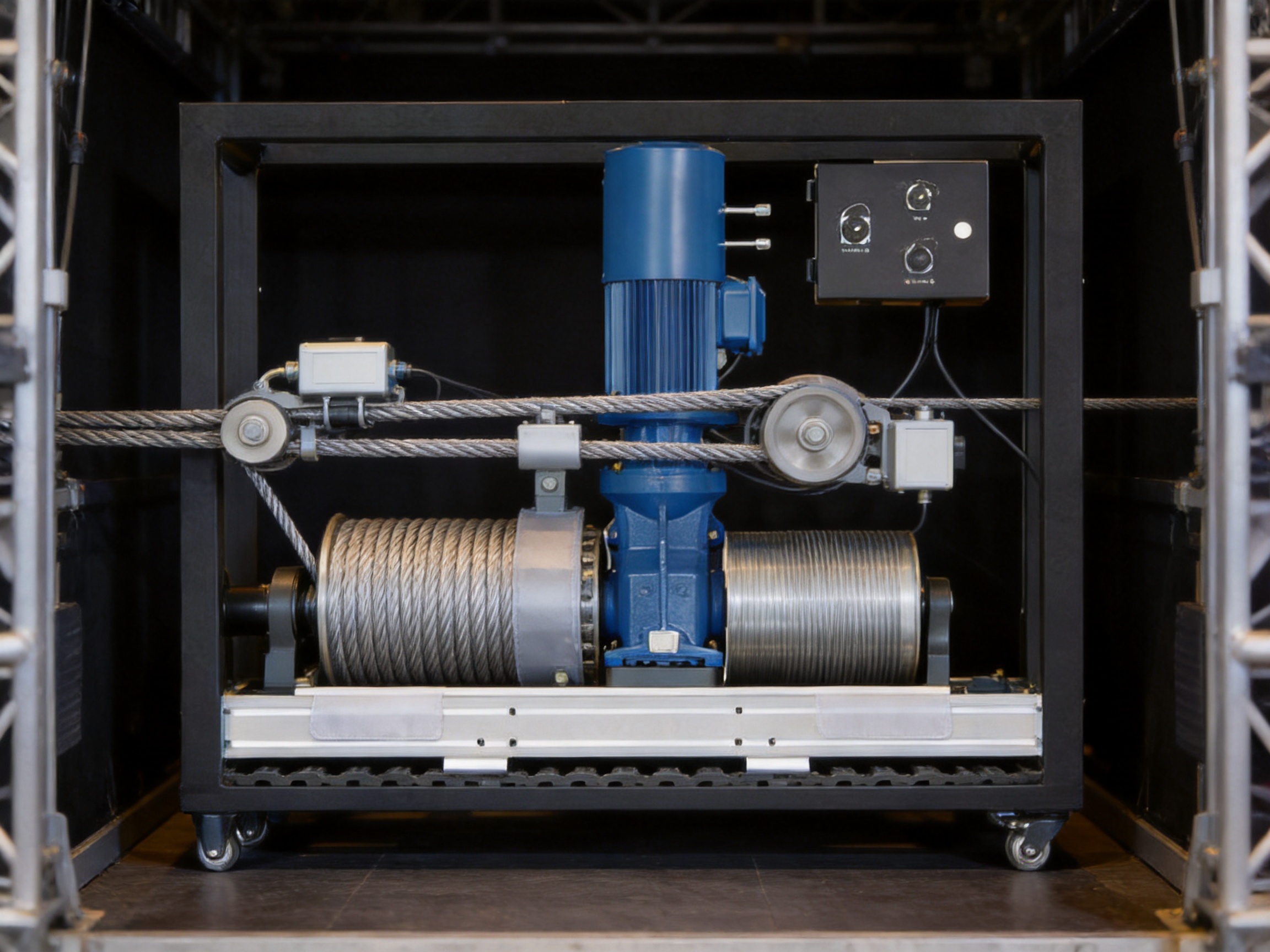
Traditional stage winches remain valuable for permanent installations, particularly where equipment can be integrated into a dedicated grid, machine room, or fixed technical infrastructure. However, their size, weight, and installation requirements may not be suitable for mobile productions. The Dual-Point Zero-Fleet Stage Winch is designed to provide a different combination of capabilities.
The first distinction is mobility. A permanent winch may be optimized for long-term fixed placement, while the touring-oriented design emphasizes manageable weight and flexible installation. This does not eliminate the need for appropriate structural support, but it can make transportation and repositioning more practical.
The second distinction is the integrated dual-point concept. A conventional single-point system may require additional hardware or separate coordination to support wide or unbalanced loads. A dual-point arrangement is better suited to suspended structures that require horizontal stability and synchronized movement.
The third distinction is rope management. Basic drums may allow the rope to accumulate in ways that require greater operator attention. The single-layer tracked drum and adaptive zero-fleet function are designed to provide more controlled rope movement, particularly during repeated operation.
The fourth distinction is the combination of portability and redundancy. Some lightweight lifting products focus primarily on reducing size or weight. The Dual-Point Zero-Fleet Stage Winch also retains a high safety factor and dual-braking redundancy, making it more appropriate for professional performance environments where equipment must be both mobile and dependable.
It is important to recognize that product selection should always be based on the actual project requirements. A permanent theater with extensive infrastructure may require a different winch configuration from a traveling production. The benefit of this product is its ability to serve applications where mobility, stable dual-point lifting, and intelligent rope control are equally important.
The performance of a stage winch depends not only on its design concept but also on the quality of its manufacturing process. Precise machining, accurate assembly, reliable electrical integration, and complete testing are essential for equipment that must operate repeatedly under load.
RenteZhihe (JiangSu) Equipment Technology Co., Ltd. operates a production system covering approximately 20,000 square meters, including manufacturing workshops and research facilities. More than 30 advanced CNC processing devices support the production of stage machinery and related components. These resources provide a foundation for precision manufacturing, customization, and controlled production efficiency.
CNC processing is particularly important for components such as drum parts, mounting plates, shafts, housings, brackets, and other precision mechanical elements. Consistent machining helps maintain dimensional accuracy and improves the compatibility of components during assembly. It also supports the production of customized parts for projects with different installation requirements.
The manufacturing process can include material preparation, CNC machining, surface treatment, component inspection, mechanical assembly, electrical installation, sensor integration, control configuration, and final testing. Each stage contributes to the reliability of the completed winch. A controlled process helps reduce variation between units and supports repeatable product performance.
Mechanical components must be checked for dimensions, fit, finish, and structural condition. Electrical components must be correctly wired, identified, and tested. Sensors must be positioned and calibrated so that they provide accurate information to the control system. Braking components must be inspected for correct installation and response. The completed system should undergo operational testing before delivery or commissioning.
Stage machinery projects often involve unusual venue conditions, limited installation space, special load requirements, or customized control interfaces. A standard product may need to be adapted to suit the building structure, production workflow, or stage automation platform. For this reason, engineering support is an important part of product value.
RenteZhihe provides services covering design, production, installation, commissioning, operation, and maintenance. This complete service process allows the company to evaluate the customer’s requirements before production and to support the equipment after delivery. It also helps ensure that mechanical, electrical, and control elements are considered together.
During the design phase, engineers can review the required payload, lifting height, movement speed, installation position, operating frequency, control method, and available support structure. They can then help determine the appropriate winch arrangement, rope routing, pulley configuration, sensor package, and control interface.
During production, the engineering team can coordinate customized dimensions, mounting features, electrical requirements, and control integration. During installation and commissioning, specialists can check alignment, configure sensors, verify travel limits, test braking functions, and confirm communication with the venue control system.
After commissioning, operating and maintenance support can help venue personnel establish inspection routines, operating procedures, and service schedules. This long-term approach is especially valuable for theaters and cultural facilities that depend on stage machinery for many years of daily or seasonal operation.
Modern stage automation requires more than mechanical lifting power. Operators need repeatable movement, accurate position information, predictable acceleration, and clear system status. Sensor feedback enables the winch to communicate its operating condition to the control system and supports better coordination between multiple lifting points.
The encoder provides movement or position information associated with the motor or drum. Limit switches define operating boundaries. Travel sensors monitor movement along the intended path. Rope arrangement sensors help identify the condition of the rope as it moves across the drum. Together, these components provide a more complete picture of winch operation.
When two lifting points are used to support one suspended structure, synchronization is essential. If one side moves faster than the other, the load may tilt or develop unwanted stress. Appropriate control logic can compare the movement of the two points and coordinate their operation. The exact control architecture depends on the project, but accurate feedback is a fundamental requirement.
Sensor-based operation also supports maintenance. A change in travel behavior, increased motor load, repeated limit activation, or irregular rope arrangement may indicate a developing issue. By monitoring operating information, maintenance personnel can identify conditions that deserve inspection before they cause a production interruption.
Intelligent control does not eliminate the need for trained operators. Instead, it gives operators and technicians better information and more predictable machine behavior. The most effective stage automation systems combine reliable hardware, well-designed software, clear procedures, and regular human oversight.
The Dual-Point Zero-Fleet Stage Winch can be adapted to a broad range of stage and event applications. Its core benefits are most useful wherever suspended loads must be moved accurately, repeatedly, and with a manageable installation footprint.
In theaters and opera houses, the winch can support scenery, lighting structures, banners, projection equipment, and other suspended technical elements. The dual-point configuration is useful for wide scenic pieces that must remain level while moving vertically. Zero-fleet rope management can support frequent changes between scenes and production formats.
Cultural centers often host concerts, theatrical productions, exhibitions, conferences, and community events. Their stage systems must adapt to different layouts and operating schedules. A flexible winch solution can help support venue conversion while reducing the need for separate lifting equipment for every event type.
Touring crews can benefit from the lightweight base assembly and rapid deployment characteristics. The winch can be included in a mobile stage machinery package for productions that move between cities or countries. The single-layer tracked drum is particularly suitable for frequent loading, unloading, setup, and strike operations.
Conference venues often need to transform rooms quickly. Suspended screens, branding structures, lighting systems, and audio equipment may need to be raised or lowered according to the event format. Portable dual-point lifting equipment can provide additional flexibility for temporary or semi-permanent installations.
Stadiums and large halls may require lifting equipment for event signage, audio clusters, lighting structures, decorative elements, or temporary performance systems. The exact application must be evaluated according to load size, lifting height, wind conditions, support structure, and control requirements. When configured correctly, dual-point lifting can improve stability for wide suspended assemblies.
Successful installation begins with a clear understanding of the lifting requirement. The project team should identify the suspended load, center of gravity, required lifting points, movement range, operating speed, installation location, and expected duty cycle. The support structure must be evaluated before the winch is mounted.
The next step is to install the base assembly and confirm that it is correctly fixed and aligned. The mounting structure must be capable of handling the expected forces, including dynamic loads created during starting and stopping. Fasteners, brackets, and support interfaces should be checked according to the approved engineering design.
The wire rope and pulley system should then be installed according to the intended routing. The rope must be properly seated on the drum track and correctly positioned through all pulleys and attachment points. The rope arrangement sensors should be installed in a way that allows them to monitor the rope path accurately.
Electrical connections should be completed by qualified personnel. The motor, encoder, limit switches, travel sensors, braking system, and control interface must be connected and identified correctly. The control system should be configured to reflect the actual lifting direction, travel limits, speed requirements, and synchronization relationship between the two lifting points.
Commissioning should begin with unloaded or low-risk testing, followed by progressive operational checks. The team should verify motor direction, brake release and engagement, sensor signals, limit switch response, emergency functions, rope movement, and travel accuracy. The two-point system should be checked for synchronization and horizontal load behavior.
Load testing should be conducted according to the project’s approved procedures and applicable requirements. The test should verify that the winch, support structure, rope path, braking system, and control system operate as intended. Any abnormal vibration, noise, delay, rope displacement, or positioning error should be investigated before the equipment is placed into production service.
Regular maintenance is necessary to preserve the performance of any stage winch. The inspection program should be based on operating frequency, load conditions, environmental exposure, transportation frequency, and the consequences of equipment failure. Touring equipment may require additional checks because it is repeatedly handled, relocated, and reinstalled.
Before operation, personnel should visually inspect the drum, wire rope, pulleys, mounting points, electrical connections, and external housing. The rope should be checked for broken wires, deformation, corrosion, unusual wear, or incorrect seating. The drum track should be kept clean and free from conditions that could affect rope movement.
Brake function should be checked according to the manufacturer’s maintenance instructions. The system should hold the intended load when stationary and stop movement in a controlled manner. Any change in brake noise, response time, holding capability, or release behavior should be reported and investigated.
Sensors should be tested at planned intervals. Limit switches must activate at the correct positions. Encoders and travel sensors must provide consistent information. Rope arrangement sensors should respond correctly when the rope moves through its operating range. Calibration records should be maintained so that changes can be identified over time.
Mechanical fasteners, pulley bearings, reducer components, and motor connections should also be inspected. Lubrication and replacement intervals should follow the technical documentation and actual operating conditions. Maintenance personnel should record inspections, repairs, component replacements, and test results.
For touring productions, a pre-departure inspection and a post-arrival inspection are both recommended. The pre-departure inspection confirms that the equipment is ready for transport. The post-arrival inspection checks for damage or misalignment caused by handling. These simple procedures can prevent installation delays and identify problems before a performance schedule is affected.
Different venues have different technical requirements. The available installation space may vary, the lifting height may change, and the load may require a specific attachment arrangement. Control systems may also need to communicate with different stage automation platforms. A flexible manufacturer should be able to evaluate these factors before finalizing the product configuration.
Customization may involve the base assembly, mounting interfaces, pulley arrangement, cable routing, sensor configuration, control integration, protection features, or installation accessories. The core principles of dual-point stability and adaptive zero-fleet rope management can remain consistent while the physical and control details are adapted to the project.
For touring customers, customization can focus on transport dimensions, handling points, power requirements, quick installation procedures, and compatibility with existing production equipment. For permanent venues, customization may focus on integration with the stage control network, service access, machine room layout, and long-term maintenance planning.
RenteZhihe’s experience in stage machinery and intelligent control systems supports this project-based approach. The company can combine manufacturing resources with engineering consultation to develop equipment that aligns with the customer’s operational goals. This is especially valuable when a standard catalog product cannot fully address the venue’s load, space, or control requirements.
Stage machinery may operate in different environments, from climate-controlled theaters to temporary outdoor event spaces. Temperature, humidity, dust, transport conditions, and installation exposure can affect equipment performance. The selection and configuration of the winch should take these conditions into account.
Temporary outdoor stages may require additional protection for electrical components, connectors, sensors, and control equipment. Wind and weather conditions may also affect the suspended load and the support structure. The winch should not be used outside its approved environmental and load conditions.
Indoor venues may have fewer environmental challenges but may place higher demands on noise control, compact installation, and visual integration. The motor, reducer, and braking system should be configured and maintained to support smooth operation without creating unnecessary disturbance during performances.
Transport and storage are also important. Touring equipment should be protected from impact, moisture, and contamination during movement between venues. Proper packaging, lifting methods, and storage procedures can help preserve the precision of the drum, sensors, pulleys, and mounting components.
The value of a stage winch is determined by more than its initial purchase price. Customers must also consider installation time, transportation effort, maintenance requirements, operating reliability, equipment utilization, and the consequences of production delays. A product that is easy to deploy and dependable in repeated service can provide value across its complete service life.
The Dual-Point Zero-Fleet Stage Winch creates value through the combination of portability, stable lifting, organized rope management, and intelligent monitoring. The lightweight base assembly can reduce handling requirements. The 500 kg payload capacity can support a wide range of suspended stage applications. The dual-point configuration can improve load balance. The tracked drum can support reliable rope movement during repeated cycles.
Its dual-braking redundancy and sensor package also support professional operation. These features can help venues establish a more controlled lifting process and reduce the risks associated with basic or improvised equipment. When combined with correct engineering and maintenance, the product can support dependable performance in both touring and fixed environments.
The manufacturer’s integrated service capability adds further value. Customers can receive support in product selection, system design, production, installation, commissioning, operation, and maintenance. This reduces the need to coordinate multiple unrelated suppliers and helps maintain consistency between the mechanical equipment and the control system.
A Dual-Point Zero-Fleet Stage Winch is a stage lifting device designed to support suspended loads from two coordinated lifting positions while maintaining controlled wire rope alignment on the drum. It combines dual-point load distribution with adaptive zero-fleet rope management.
The product is designed with a payload capacity of up to 500 kg. The actual permissible load must be determined according to the complete installation, including the support structure, rope system, lifting height, movement speed, attachment method, control configuration, and applicable safety requirements.
Two lifting points distribute the load more evenly and help maintain horizontal alignment. This can reduce tilting, twisting, swinging, and uneven movement when lifting wide scenery, lighting structures, audio equipment, or other suspended stage elements.
Zero-fleet technology helps maintain an optimized alignment between the wire rope and the drum. It reduces unnecessary lateral displacement and supports organized winding, helping lower the risk of rope overlap, tangling, and irregular wear.
A single-layer tracked drum guides the wire rope along a defined path. This is useful for touring productions because the equipment may be installed, operated, removed, transported, and reinstalled frequently. Controlled rope movement can improve consistency during repeated setup and strike cycles.
The system includes an electric motor, reducer, encoder, limit switches, travel sensor, rope arrangement sensors, base assembly, and pulleys. These components work together to provide lifting power, movement monitoring, rope control, positioning information, and safety-related functions.
Yes. Although the product is especially suitable for touring productions and temporary stages, it can also be applied in theaters, cultural centers, conference venues, stadiums, and other permanent performance facilities when its capacity and configuration match the project requirements.
The product combines a lightweight base assembly, rapid deployment characteristics, portable construction, a 500 kg payload capacity, single-layer rope tracking, and dual-braking redundancy. These features address the transportation, installation, safety, and repeated-use requirements of touring productions.
Encoders, limit switches, travel sensors, and rope arrangement sensors provide information about position, travel, operating boundaries, and rope behavior. This feedback supports accurate control, two-point synchronization, safety monitoring, and maintenance diagnosis.
Project-specific customization may include mounting interfaces, pulley arrangements, rope routing, sensor configuration, control integration, electrical requirements, and installation accessories. The appropriate configuration should be determined after reviewing the load, space, movement, support structure, and control requirements.
The installation team should verify the support structure, mounting points, rope routing, drum tracking, pulley alignment, electrical connections, motor direction, brake response, encoder signals, travel sensors, limit switches, emergency functions, and synchronization between the two lifting points. Load testing should follow the approved project procedure.
Maintenance should include inspection of the wire rope, drum, pulleys, reducer, motor, brakes, sensors, fasteners, electrical connections, and mounting structure. Inspection frequency should reflect operating conditions and transportation frequency. Any unusual movement, vibration, sound, rope displacement, or braking behavior should be investigated promptly.
RenteZhihe operates a production and research system covering approximately 20,000 square meters and uses more than 30 advanced CNC processing devices. Its capabilities include precision machining, component assembly, electrical integration, testing, customization, installation, commissioning, and ongoing technical support.
Potential applications include theaters, opera houses, cultural centers, stadiums, conference centers, multifunctional halls, touring stages, festivals, corporate events, temporary performance spaces, and other venues requiring controlled suspended load movement.
No. The product is a stage machinery solution, not a substitute for structural assessment, professional installation, operator training, inspection, or compliance with applicable regulations. Safe performance depends on the complete system and the way it is designed, installed, operated, and maintained.
The Dual-Point Zero-Fleet Stage Winch is designed for stage applications that require stable suspended load movement, organized rope management, portability, and professional safety features. Its two-point lifting configuration improves balance for wide or complex loads, while the adaptive zero-fleet system helps maintain an optimized rope path on the single-layer tracked drum.
The product’s 500 kg payload capacity and lightweight base assembly make it suitable for touring productions, temporary stages, and venues that require fast deployment. Dual-braking redundancy, encoder feedback, travel monitoring, limit protection, and rope arrangement sensors support controlled operation and repeatable positioning.
Its advantages are strengthened by the manufacturing and engineering capabilities of RenteZhihe (JiangSu) Equipment Technology Co., Ltd. With approximately 20,000 square meters of production and research facilities, more than 30 advanced CNC processing devices, and integrated services covering design through maintenance, the company can support both standard and customized stage machinery projects.
For customers comparing portable stage winches, the product offers a balanced alternative to heavy permanent equipment and basic temporary lifting devices. It combines mobility with intelligent rope control, dual-point stability, and safety-oriented engineering. When correctly selected, installed, commissioned, and maintained, it can provide dependable support for modern stage automation and the demanding workflow of professional performance production.
1. Stage Machinery Product Information: Dual-Point Zero-Fleet Stage Winch, including product features, mechanical components, payload capacity, and touring applications.
2. RenteZhihe (JiangSu) Equipment Technology Co., Ltd. Company Information: Stage machinery research, development, manufacturing, installation, commissioning, operation, and maintenance capabilities.
3. General Principles of Stage Automation Engineering: Load stability, synchronized lifting, sensor feedback, braking redundancy, and suspended equipment operation.
4. General Mechanical Handling and Wire Rope Maintenance Practices: Drum tracking, rope inspection, pulley alignment, braking checks, and preventive maintenance procedures.
5. General Production Engineering Practices for Stage Equipment: CNC machining, component verification, mechanical assembly, electrical integration, commissioning, and quality control.
We specialize in delivering advanced stage machinery, rigging systems and intelligent control solutions for performance spaces worldwide.

No. 111 Runfeng Road, Hailing District, Taizhou City, Jiangsu Province, China

rtstage@163.com

+86-139 1771 1698

+86-139 1771 1698
rtstage@163.com
 中文简体
 English
 русский
 Français
 Español
 عربى