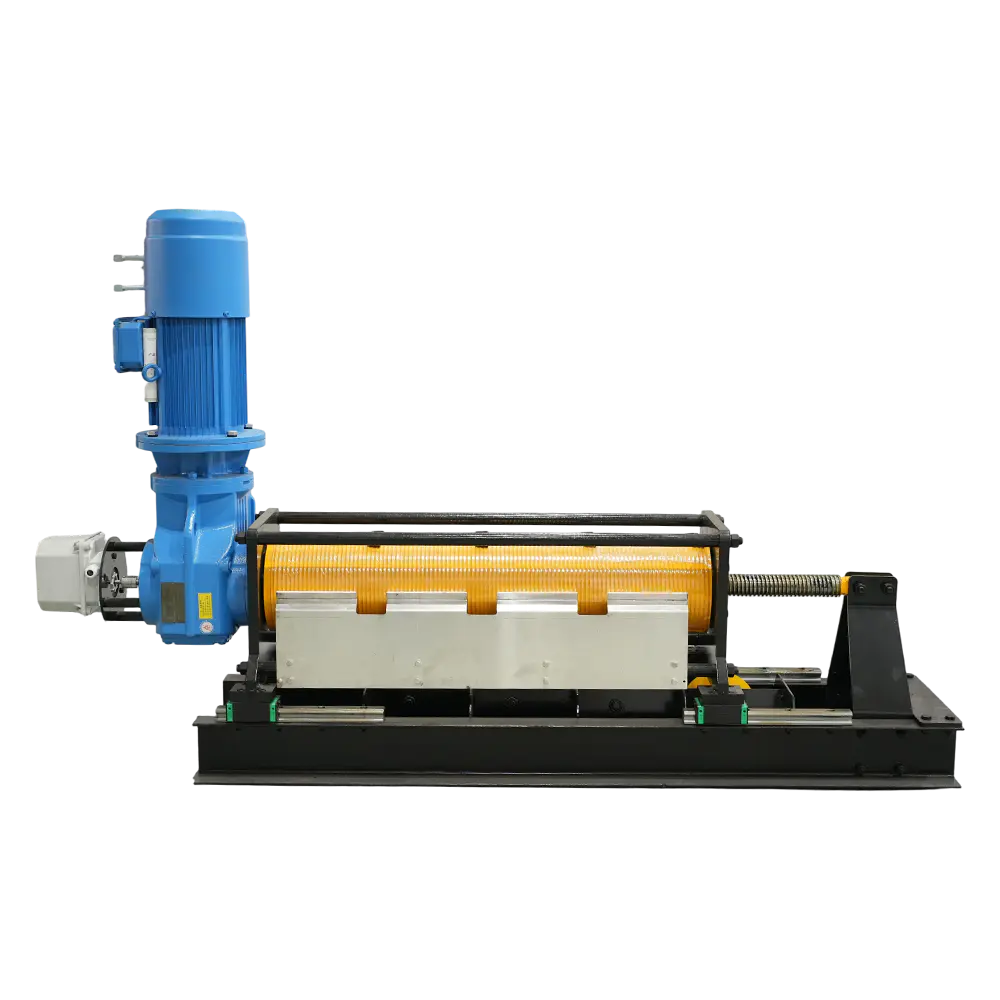
Modern performance venues depend on lifting equipment that can move heavy stage components accurately, repeatedly, and safely. Lighting trusses, scenic structures, LED displays, acoustic equipment, curtains, banners, and mechanical stage elements must often be raised and lowered within strict production schedules. When lifting equipment is undersized, difficult to maintain, or unable to communicate with a centralized control system, even a minor interruption can affect rehearsals, performances, maintenance work, and venue revenue.
The PII-Series High-Capacity Pilewind Stage Winch is designed for these demanding requirements. It combines a compact mechanical structure with a payload capacity of up to 1,000 kilograms, patented rope-aligning technology, motor self-locking functions, precision travel control, and individual or group network operation. Its design is particularly suitable for small and medium-sized theaters, auditoriums, banquet halls, cultural centers, conference venues, television studios, and other spaces where available room is limited but lifting performance cannot be compromised.
Unlike ordinary drum winches that may allow the wire rope to overlap or accumulate unevenly, a pilewind system guides the rope into organized layers across the winding assembly. This controlled arrangement improves lifting stability, reduces rope wear, supports repeatable positioning, and contributes to lower long-term maintenance costs. The result is a practical lifting solution that combines the advantages of compact equipment with the performance expectations normally associated with larger heavy-duty systems.
This article explains how the PII-Series improves lifting efficiency, how its mechanical and control technologies compare with conventional alternatives, and how professional manufacturing processes support long-term reliability.
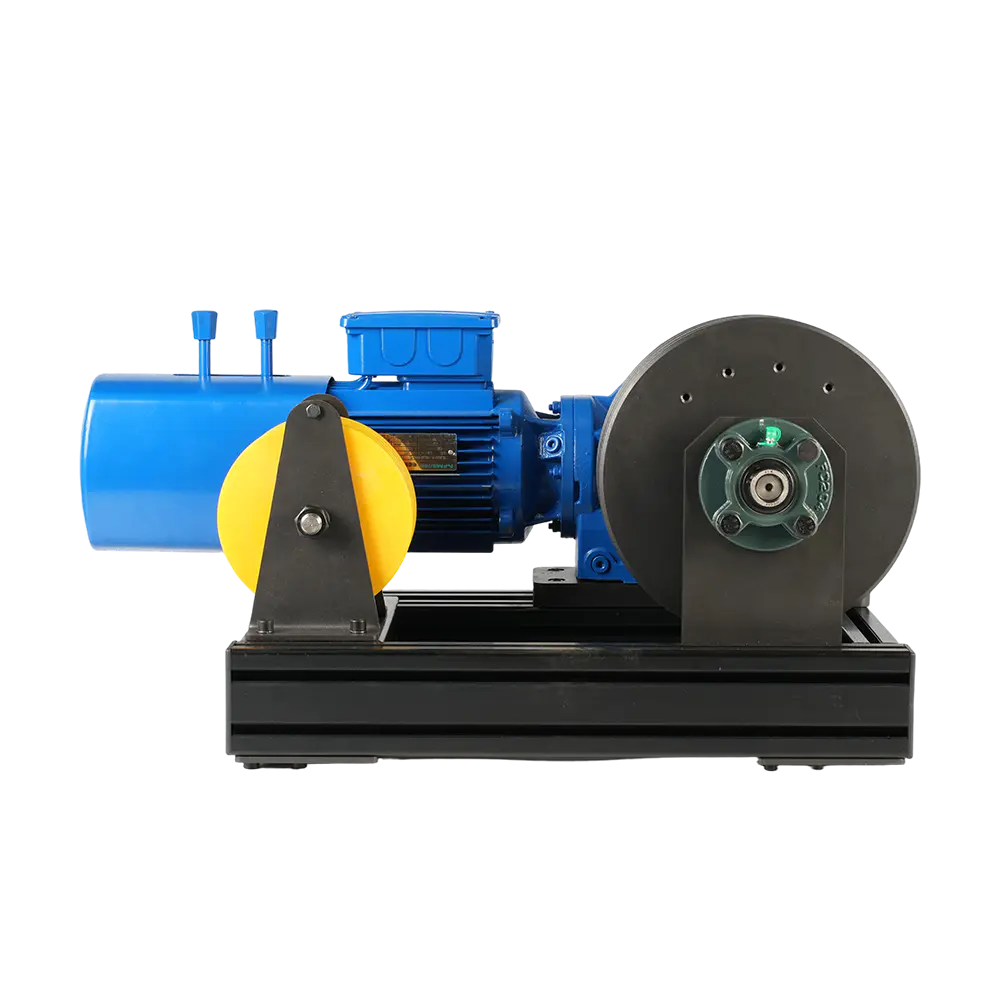
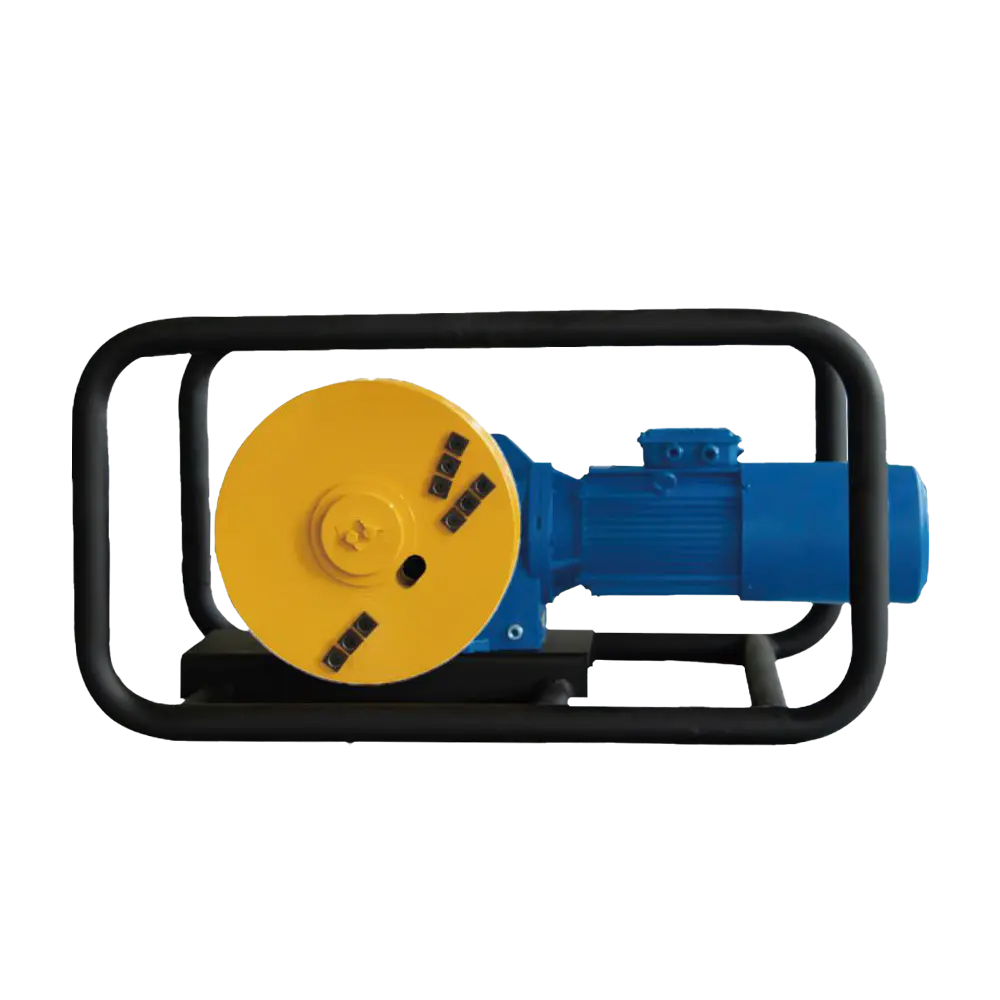
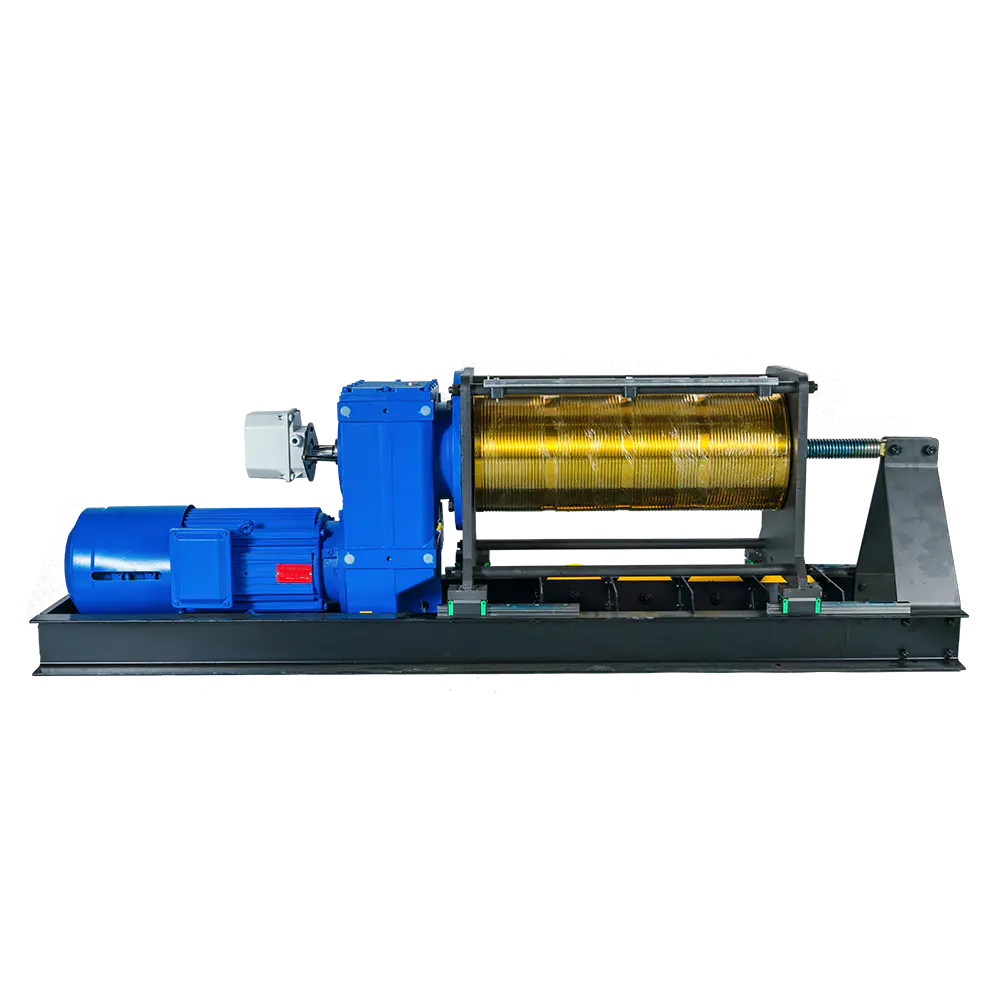
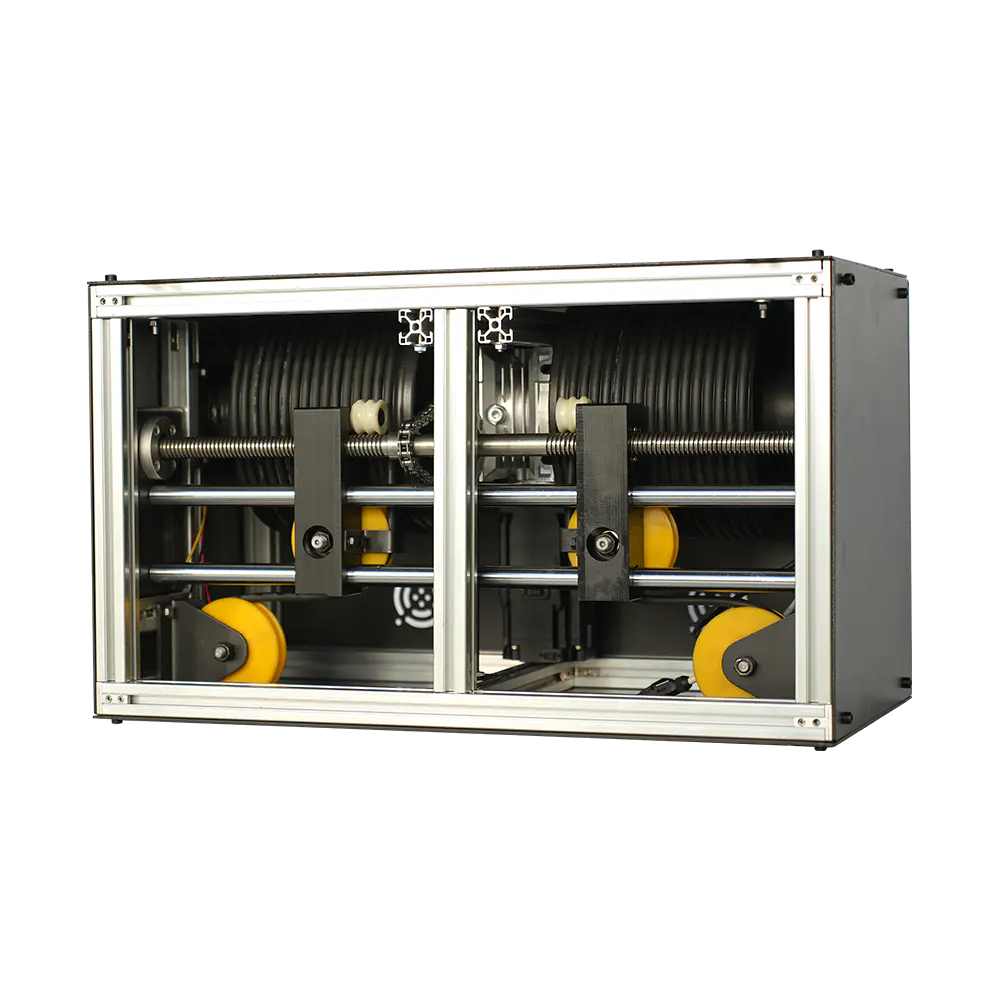
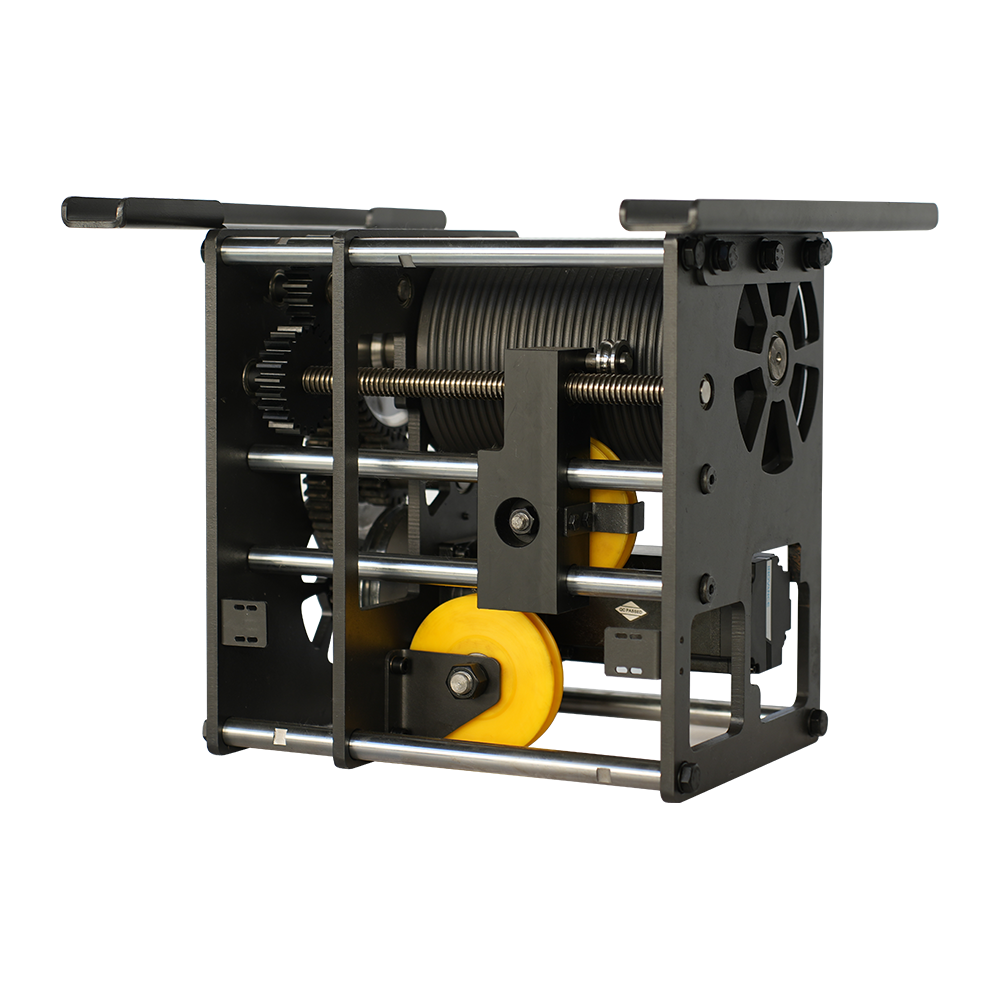
PII-Series High-Capacity Pilewind Stage Winch
Stage automation has evolved from manually operated equipment into integrated systems capable of coordinating many mechanical actions at the same time. A modern venue may need to reposition lighting equipment, video walls, scenery, curtains, projection systems, acoustic components, and decorative structures during a single production. Each movement must be completed with suitable speed, accuracy, and repeatability.
A stage winch is one of the central components in this operating environment. It converts motor power into controlled vertical or horizontal movement through a combination of an electric motor, reducer, winding assembly, wire rope, encoder, travel sensor, braking system, and control interface. The winch must not only lift a load; it must also maintain stable motion, stop at the intended position, respond to control commands, and protect the load and surrounding equipment when an abnormal condition occurs.
High-capacity equipment becomes especially important when stage components are large, dense, or distributed across multiple lifting points. A single lighting truss, LED screen, acoustic reflector, or scenic assembly may weigh several hundred kilograms. When conventional equipment lacks sufficient capacity, operators may need to use a larger number of winches. That approach can increase installation complexity, require more control channels, create additional inspection points, and make synchronization more difficult.
The PII-Series addresses this challenge by supporting payloads of up to 1,000 kilograms while maintaining a relatively compact footprint. This balance between capacity and size allows designers to use available backstage, overhead, or side-stage space more efficiently. It can also reduce the need to redesign structural layouts around oversized lifting equipment.
Compactness is not simply a matter of convenience. In many existing theaters and banquet halls, the building structure was not designed to accommodate large mechanical units. Equipment may need to fit below a stage, beside a platform, inside a technical gallery, or within a restricted overhead area. A smaller winch gives project engineers greater flexibility when planning equipment locations and cable routes.
The PII-Series High-Capacity Pilewind Stage Winch is a Type II pilewind lifting system developed for applications requiring high load capacity, orderly rope winding, and flexible control. It inherits key technologies from the Type I design while upgrading the control system to support both individual operation and group control networks.
The product is suitable for horizontal and vertical installation. This versatility allows it to serve different project layouts without requiring a completely different mechanical platform for each application. Depending on the venue design, the winch can be integrated into lifting arrangements for overhead equipment, stage components, scenic structures, curtains, or other automated systems.
Its principal product advantages include the following:
The product is not limited to a single stage application. Its design can be considered for lighting bridges, display systems, scenic elements, acoustic equipment, stage curtains, suspended structures, and other equipment that must be positioned repeatedly and safely.
Because every venue has different structural conditions and operating requirements, final system selection should be completed through an engineering review. Load characteristics, travel distance, operating frequency, rope arrangement, installation position, control architecture, safety requirements, and local regulations should all be assessed before delivery and commissioning.
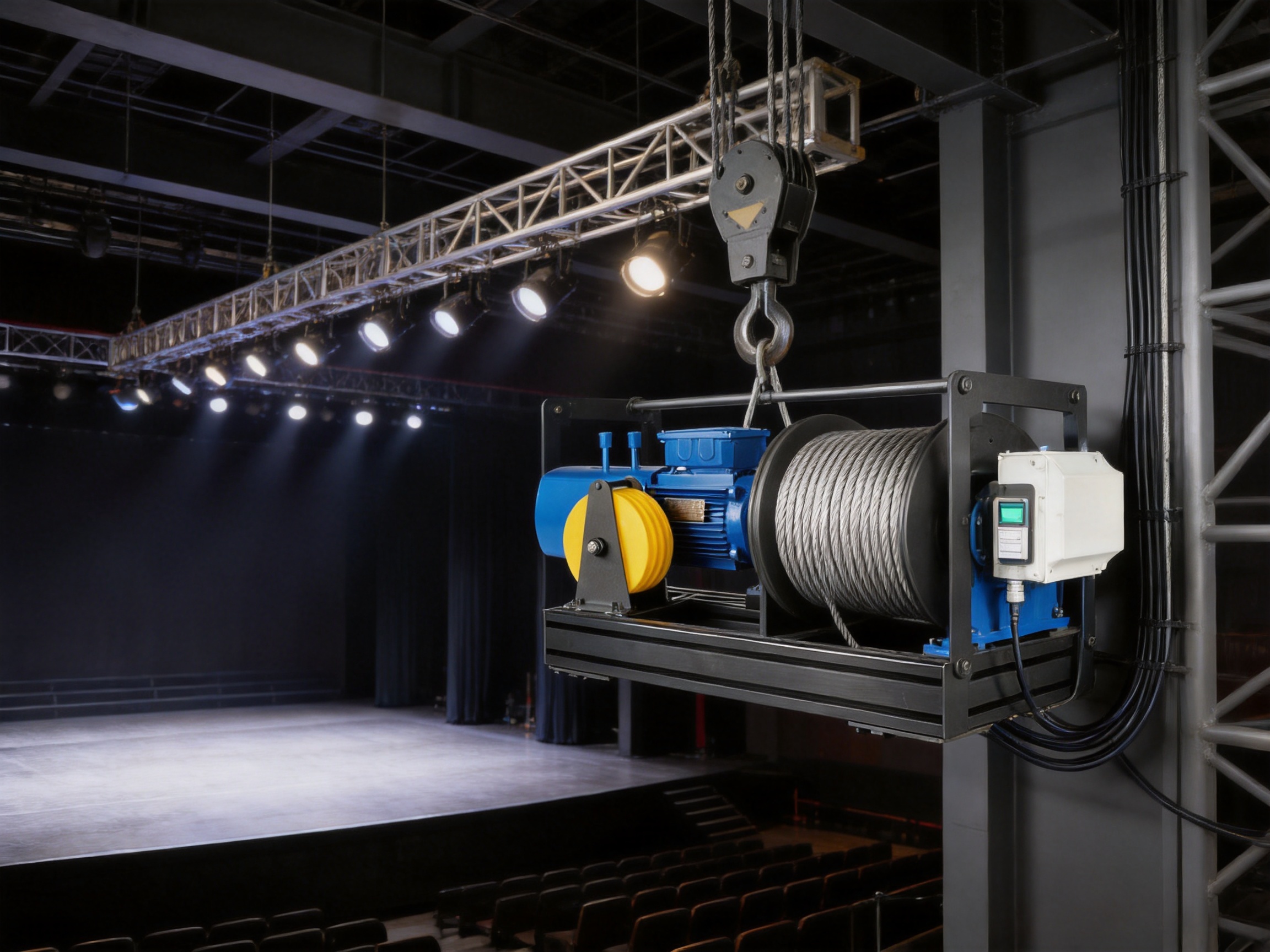
In a conventional drum winch, the wire rope is wound onto a rotating drum. If the rope does not remain properly aligned, it may overlap, cross, or accumulate unevenly. These conditions can produce localized pressure on the rope and drum surface. They may also alter the effective winding diameter, which can influence lifting speed and positioning accuracy.
Uneven winding creates several potential problems. The rope may experience higher friction in some areas than others. The drum may be subjected to an unbalanced load. The rope may rub against adjacent turns, increasing abrasion and deformation. In severe cases, poor winding can contribute to sudden stoppages, irregular movement, or accelerated component wear.
These problems become more significant when a winch is used frequently or carries a heavy load. Daily operation in a performance venue may involve hundreds or thousands of lifting cycles over the service life of the system. Small mechanical inefficiencies that appear insignificant during one cycle can become important when repeated continuously.
A pilewind system is designed to guide the wire rope into a controlled arrangement. Instead of allowing the cable to accumulate randomly on the drum, the rope-aligning mechanism distributes it in orderly layers. The alignment process helps maintain consistent contact between adjacent rope turns and reduces the possibility of crossover.
The patented rope-aligning technology used in the PII-Series is one of its most important competitive advantages. It supports stable winding even when the winch operates under significant loads. By maintaining an organized cable arrangement, the system helps protect the rope, drum, reducer, and associated mechanical components.
The benefits of orderly winding include:
In practical terms, cable management directly affects equipment availability. A winch that winds its rope consistently is less likely to require unplanned adjustment or early cable replacement. This supports smoother production schedules and helps venue operators control maintenance expenditure.
Operating cost is not determined only by the initial purchase price of a winch. A more complete evaluation should include energy use, inspection time, replacement parts, labor, downtime, commissioning, and the expected service life of ropes and mechanical assemblies.
When cable winding is stable, the rope is exposed to fewer abnormal contact conditions. Lower abrasion can reduce the frequency of replacement. Reduced drum stress may also help protect the winding assembly. When maintenance intervals become longer and faults become less frequent, the total cost of ownership can improve even if the initial equipment investment is higher than that of a basic conventional winch.
| Performance Area | Conventional Uncontrolled Winding | PII-Series Pilewind Winding | Operational Benefit |
|---|---|---|---|
| Rope arrangement | May overlap or accumulate unevenly | Guided into organized layers | More stable lifting cycles |
| Rope wear | Higher risk of localized abrasion | Reduced friction and crossover | Potentially longer rope service life |
| Load distribution | May vary across the drum | More uniform across the winding area | Lower mechanical stress |
| Maintenance | More frequent adjustment may be required | Less manual intervention during winding | Lower maintenance workload |
| Positioning consistency | Can be affected by uneven winding | Supported by orderly cable arrangement and encoder feedback | Improved repeatability |
The expression “small size, big energy” summarizes the primary design concept of the PII-Series. The winch is compact enough for restricted installation areas while providing a payload of up to 1,000 kilograms. This combination is valuable to venues that have heavy lifting requirements but limited space for mechanical equipment.
Many small and medium-sized theaters must work within existing buildings. Structural columns, ventilation systems, electrical routes, catwalks, ceiling heights, and backstage corridors can limit the dimensions and location of new equipment. A large winch may offer capacity but remain impractical to install. A smaller winch may fit the site but lack the necessary lifting ability.
The PII-Series is intended to bridge this gap. Its compact format can simplify equipment planning and reduce interference with other technical systems. It may also allow the winch to be located closer to the lifting point, reducing unnecessary cable routing and making installation arrangements more manageable.
High capacity can also reduce the number of lifting units required for selected applications. If one appropriately rated winch can perform a task that would otherwise require multiple smaller units, the project may benefit from a simpler mechanical arrangement. Fewer lifting points can mean fewer control channels, fewer inspection locations, fewer cable routes, and fewer components that must be synchronized.
However, capacity should never be considered in isolation. Load distribution, dynamic effects, lifting speed, acceleration, travel distance, structural support, and emergency stopping requirements must all be reviewed by qualified engineers. The rated payload of the winch does not automatically determine the safe capacity of the entire lifting system.
Stage machinery projects vary significantly in layout. Some equipment must be lifted vertically from the stage floor to an overhead position. Other systems may require horizontal travel along a technical track or movement between storage and performance positions. A winch that supports both horizontal and vertical installation gives designers more freedom when adapting the equipment to a particular venue.
Vertical applications may include suspended lighting equipment, scenic structures, curtains, acoustic reflectors, video displays, or stage banners. In these applications, the winch must maintain stable movement and provide dependable stopping behavior. The load path, suspension arrangement, safety factors, and emergency braking system must be carefully considered.
Horizontal applications may involve moving scenic units, suspended equipment, or technical assemblies between different positions. The installation may require a suitable rail, support frame, guide arrangement, or additional mechanical interface. The winch’s compact size can make it easier to integrate into these systems, especially where available side-stage or overhead space is restricted.
Installation flexibility also benefits renovation projects. Existing venues often cannot accommodate major structural changes. A versatile winch can be adapted to the available arrangement more easily than a system designed for only one installation orientation.
Before installation, the project team should verify mounting strength, load direction, rope path, travel clearance, electrical supply, control network design, emergency stop arrangements, access for inspection, and the relationship between the winch and any secondary safety devices.
Efficient stage automation requires more than lifting power. Equipment must stop at the correct location and repeat the same movement reliably. If a lighting truss stops too high, a display system is not level, or a scenic component requires repeated manual adjustment, production time is lost.
The PII-Series uses an encoder and travel sensor as part of its positioning and monitoring architecture. The encoder provides motion feedback, while the travel sensor supports travel-limit and position-related protection. Together with the control system, these components support more precise management of lifting movement.
Precision control can improve several operating functions:
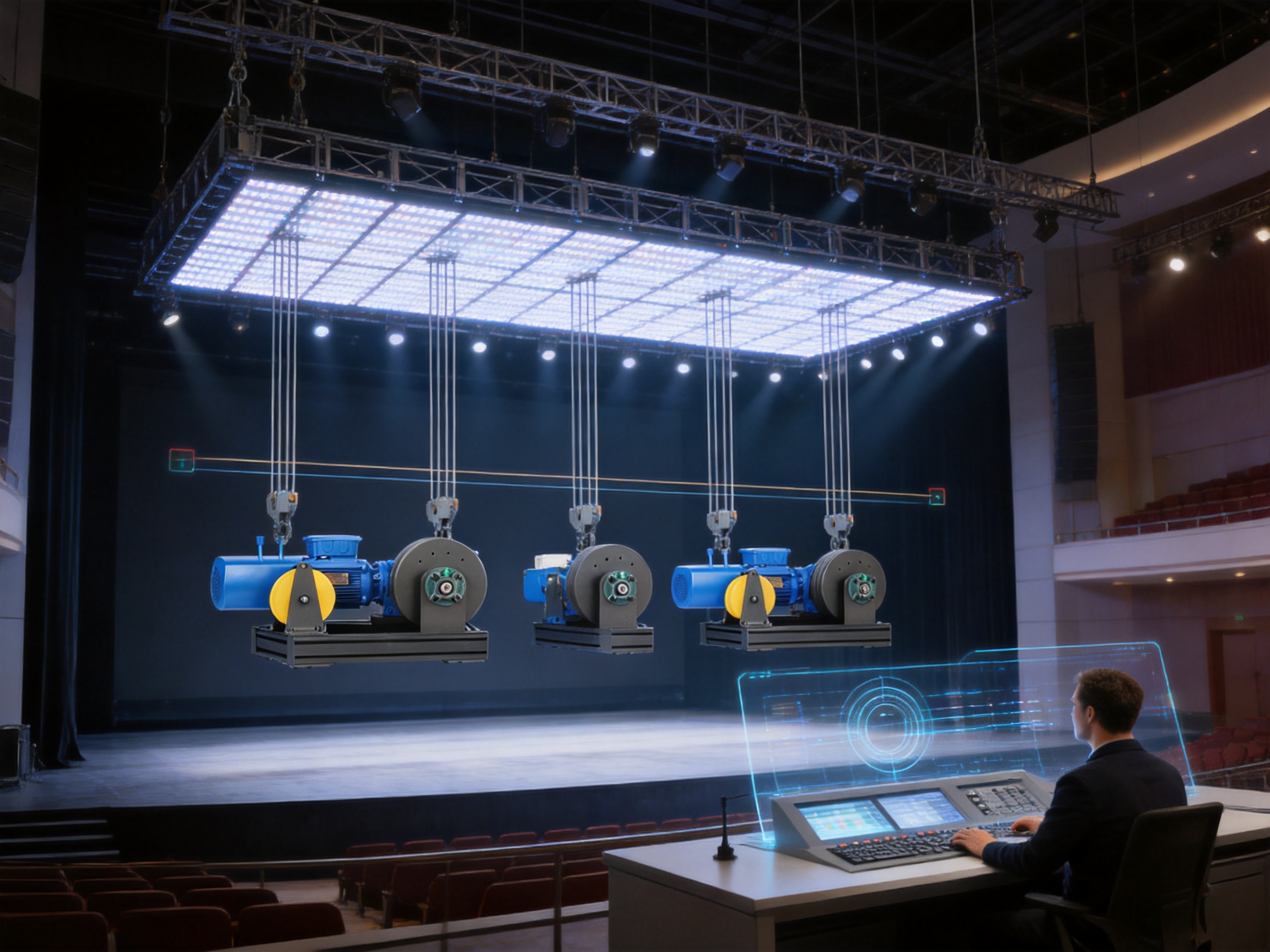
Accurate positioning is especially important for group operations. When several winches support one truss or stage structure, differences in travel can cause uneven loading or unwanted tilting. A control system that receives position feedback from each unit can improve coordination and help operators identify abnormal behavior earlier.
Positioning accuracy also contributes to faster changeovers. When automated equipment returns to known positions without repeated manual correction, technical crews can spend less time preparing the stage. This is valuable for venues that host multiple performances, conferences, exhibitions, or events in the same day.
The upgraded control architecture of the PII-Series supports both individual and group operation. Individual control allows an operator to move one winch separately for installation, testing, maintenance, or independent stage action. Group control allows multiple units to be coordinated for applications that require synchronized movement.
Individual control is useful during commissioning and troubleshooting. A technician may need to confirm the direction of rotation, inspect rope winding, test travel limits, or verify the response of a single motor. Independent operation makes these tasks easier and reduces the risk of unintentionally moving unrelated equipment.
Group control is useful when several winches work together. Examples include:
Network-based control can support centralized operation, status monitoring, and coordination with broader stage automation systems. Depending on the final control configuration, functions may include position memory, speed adjustment, group assignment, remote operation, fault indication, and real-time status observation.
Automation does not eliminate the need for trained operators. Instead, it gives trained personnel better tools for managing complex equipment. Operators must still understand load limitations, emergency procedures, inspection requirements, and the behavior of the specific installation.
Stage lifting equipment operates near performers, technicians, audiences, structures, and valuable technical equipment. Safety must therefore be treated as a complete system rather than a single component. The PII-Series incorporates several safety-oriented functions intended to support secure and controlled operation.
The product uses over-designed components intended to withstand demanding operating conditions. A high safety factor provides additional strength and durability beyond the normal working requirement. This approach helps the equipment handle repeated loading, starting and stopping forces, and the mechanical stresses associated with frequent operation.
Over-design does not replace correct installation or inspection. It is one part of a broader safety strategy that should also include suitable structural support, correct load calculation, regular maintenance, qualified operation, and compliance with applicable regulations.
The PII-Series uses a dual braking concept in which braking capability is available through independent brake functions. If an emergency occurs, the system is designed to stop the load using braking components capable of acting independently.
Redundant braking improves protection because the system does not rely on a single braking element for every emergency condition. Brake inspection remains essential, including checking response, wear, adjustment, electrical control, and mechanical condition.
Multiple sensors can monitor operating conditions and shut down the system when an emergency or abnormal condition is detected. Sensor-based protection can assist with identifying overload, unexpected movement, travel-limit conditions, or other faults, depending on the final system configuration.
Payload inspection technology is valuable because abnormal conditions may not always be visible to an operator from the control position. Automated monitoring provides an additional layer of protection and can reduce the time between fault detection and system response.
Dual encoder feedback supports more detailed monitoring of travel and movement. By comparing control commands with actual equipment behavior, the system can help identify discrepancies that may indicate slippage, abnormal motion, or a control problem.
Precise feedback is particularly important when several winches are working together. It helps the control system maintain coordinated movement and provides useful information for troubleshooting or maintenance.
Motor self-locking technology is designed to assist with load holding and emergency protection. In an emergency, the braking function responds automatically to help prevent uncontrolled movement. This feature supports safer stopping and helps protect equipment when power, control, or operating conditions change unexpectedly.
Self-locking technology should be understood as part of the complete mechanical and electrical safety design. Proper load assessment, brake inspection, rope inspection, and system testing remain necessary throughout the life of the equipment.
The PII-Series is built around a coordinated group of mechanical and electrical components. Each component contributes to lifting performance, positioning, durability, or safety.
| Component | Primary Function | Contribution to Performance |
|---|---|---|
| Electric motor | Provides driving power | Generates the torque required for lifting and travel |
| Reducer | Adjusts speed and torque | Transfers motor power in a controlled manner |
| Encoder | Measures movement and position | Supports precision control and feedback |
| Pilewind assembly | Guides and winds the rope | Maintains orderly cable arrangement |
| Travel sensor | Monitors travel limits and position | Supports safe stopping and movement control |
| Brake system | Stops and holds the load | Provides emergency and operational braking |
| Control system | Manages commands and status | Enables individual, group, and automated operation |
The motor and reducer must work together to provide suitable torque and speed. The reducer helps adapt the motor’s rotational output to the requirements of the lifting assembly. The encoder and travel sensor provide feedback for movement and limit protection. The pilewind assembly manages the rope arrangement, while the brakes and control system support safe operation.
Reliable performance depends on the compatibility of all these components. A powerful motor alone cannot compensate for poor cable management. A precise encoder cannot ensure safe operation if the braking system is neglected. A robust frame cannot deliver consistent movement if the rope path is incorrectly installed. The PII-Series is therefore best understood as an integrated lifting system rather than a collection of independent parts.
When selecting stage lifting equipment, buyers often compare the initial price of different systems. However, a professional comparison should include capacity, size, rope management, control functions, safety design, maintenance requirements, and future expansion.
Basic winches may provide acceptable performance for light-duty applications but become impractical when loads increase. The PII-Series provides up to 1,000 kilograms of payload within a compact design. This may allow more flexible placement and reduce the need for oversized equipment in restricted areas.
Many conventional winches do not provide the same level of guided cable management. The patented pilewind technology helps prevent irregular accumulation and supports more consistent operation over repeated cycles.
A basic winch may offer only local or individual control. The PII-Series supports individual and group control networks, making it more suitable for automated venues and installations with multiple coordinated lifting points.
Dual braking, sensor-based protection, encoder feedback, travel sensing, and motor self-locking provide a broader safety architecture than a simple motor-and-drum arrangement. These functions can support faster fault detection and more controlled emergency response.
Orderly winding, repeatable positioning, and network control can reduce manual adjustment, unplanned stoppages, and setup delays. For venues with frequent performances or events, this operational consistency can be more valuable than a small initial price difference.
As venues adopt centralized stage management systems, equipment must be able to communicate with broader automation platforms. The PII-Series control upgrade provides a stronger foundation for group synchronization, remote operation, position memory, monitoring, and future system integration.
The PII-Series can be applied in a broad range of professional environments.
Theaters and opera houses require repeated movement of lighting equipment, scenic units, curtains, acoustic structures, and decorative elements. The winch’s capacity and positioning functions can support both daily rehearsals and scheduled performances.
Auditoriums often have limited technical space. A compact winch can support substantial lifting requirements without occupying excessive room. The product is particularly suited to venues that need dependable automation but cannot install large industrial equipment.
Banquet halls and conference venues frequently change layouts. They may use suspended displays, banners, lighting systems, projection equipment, and decorative structures for different events. Individual and group control can help operators adapt the room efficiently.
Television studios require accurate and quiet movement of lighting, display, and scenic equipment. Repeatable positioning and reliable control can support fast changes between programs, rehearsals, and recording sessions.
Cultural centers and exhibition halls may host performances, ceremonies, displays, and public events. Their equipment must often be reconfigured for different uses. A flexible lifting system can improve the utilization of the facility.
Stadiums and arenas may use suspended displays, banners, lighting equipment, and event infrastructure. These applications may involve large loads and repeated movement. Proper engineering review is essential, but a high-capacity pilewind winch can provide a suitable foundation for selected lifting arrangements.
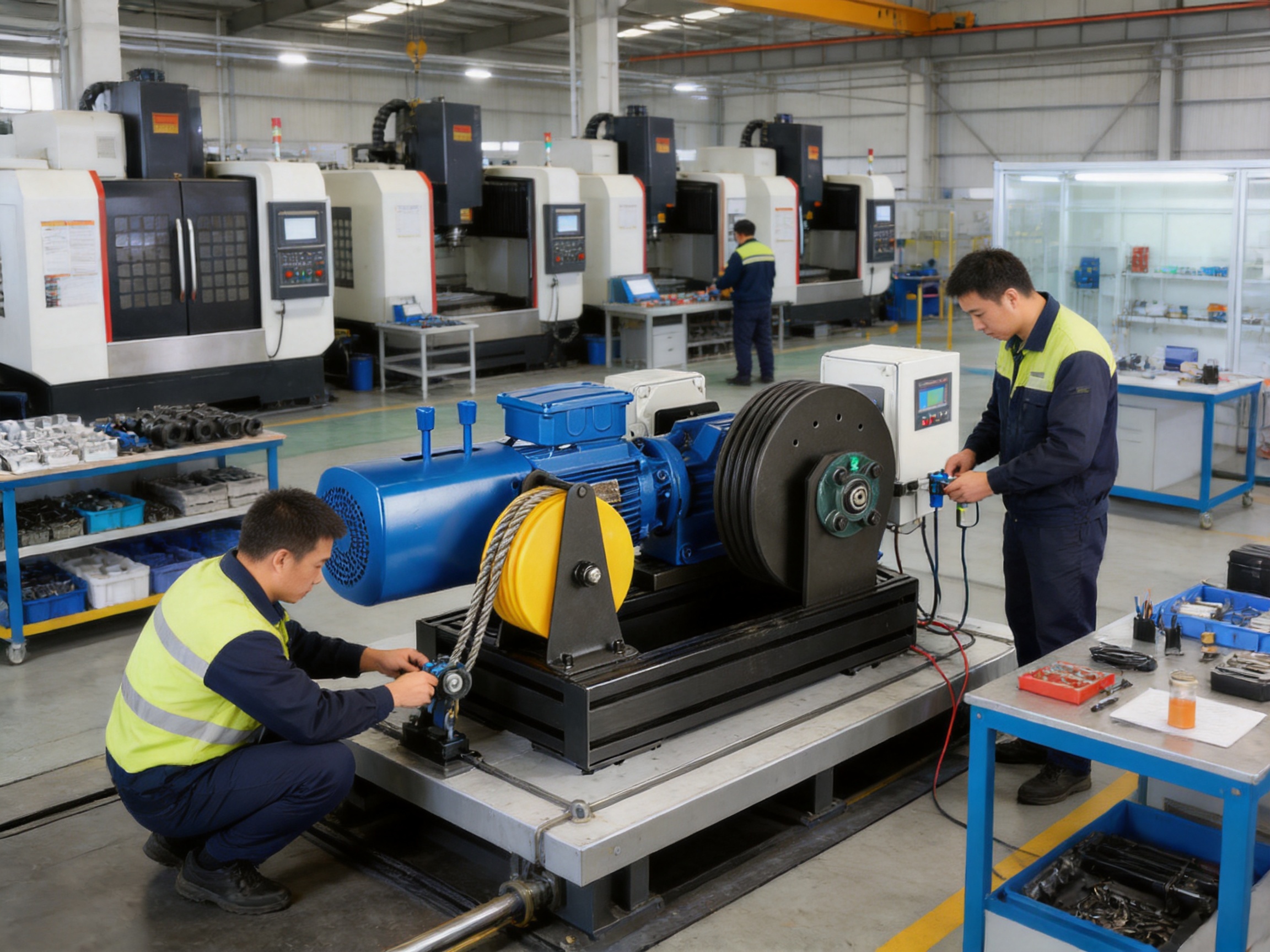
Product performance depends not only on design but also on manufacturing discipline. RenteZhihe (Jiangsu) Equipment Technology Co., Ltd. specializes in the research, development, and manufacture of stage machinery, performance equipment, and intelligent control systems.
The company provides integrated solutions covering design, production, installation, commissioning, operation, and maintenance. This full-service capability allows the manufacturer to understand how equipment performs in real venues rather than treating manufacturing as an isolated activity.
The production base covers approximately 20,000 square meters. It includes an approximately 11,000-square-meter manufacturing workshop and approximately 7,500 square meters dedicated to research, development, and office functions. This industrial foundation supports product development, component processing, assembly, testing, and project coordination.
The factory is equipped with more than 30 advanced CNC processing machines. CNC manufacturing supports accurate and repeatable processing of mechanical parts, including structural components, mounting elements, winding assemblies, and other precision parts. Consistent machining is important because small dimensional errors can influence alignment, vibration, noise, rope behavior, and long-term wear.
The manufacturing process extends from raw material processing to final assembly. Each stage provides an opportunity to verify dimensions, surface condition, component compatibility, and assembly quality. A controlled process helps reduce variation between units and supports consistent performance across different projects.
Stage machinery must respond to changing venue requirements. Customers may need different load capacities, travel distances, control interfaces, installation arrangements, or structural configurations. A manufacturer with research and development capability can adapt equipment more effectively than a supplier that only distributes standard products.
The PII-Series demonstrates this development approach by combining the Type I rope-aligning and motor self-locking technologies with an upgraded control platform. The result is not simply a larger lifting mechanism; it is a system designed to provide greater flexibility in modern automated venues.
Precision machining contributes to the fit and function of mechanical assemblies. Properly processed components can reduce alignment errors, improve assembly consistency, and support smoother operation. CNC equipment also allows manufacturers to repeat production parameters more reliably across multiple units.
For a pilewind winch, accuracy is particularly important in the relationship between the drum, rope guide, reducer, frame, bearings, and sensor mounting points. Correct geometry supports orderly rope winding and helps maintain stable operation throughout the travel cycle.
Mechanical, electrical, and control components must be integrated carefully. Assembly teams need to verify motor installation, reducer connection, brake function, encoder alignment, travel sensor position, control wiring, rope routing, and protective devices.
Integration quality can directly affect commissioning time. A system that is correctly assembled and tested before delivery is easier to install and configure at the venue. This can shorten project schedules and reduce the need for corrective work during on-site commissioning.
The company applies complete testing and commissioning before delivery. Key components undergo multiple verification procedures, while manufacturing processes are subject to process control and full-process quality inspection.
Pre-delivery testing may include checks of mechanical movement, brake response, encoder signals, travel sensors, control functions, rope alignment, abnormal-stop behavior, and communication between individual units and group control systems. The exact test program should correspond to the product configuration and project requirements.
Testing before shipment offers several advantages. It allows defects to be identified in a controlled factory environment. It provides opportunities to correct wiring, alignment, software configuration, or mechanical issues before equipment reaches the customer’s site. It also gives installation teams clearer technical documentation and commissioning information.
| Manufacturing Stage | Quality Focus | Customer Benefit |
|---|---|---|
| Material preparation | Verification of incoming materials and components | More reliable starting conditions |
| CNC processing | Dimensional accuracy and repeatability | Improved component fit and alignment |
| Mechanical assembly | Correct installation and fastening | Stable operation and reduced rework |
| Electrical integration | Wiring, sensor, brake, and control verification | More dependable system response |
| Functional testing | Movement, position, safety, and communication checks | Faster commissioning at the venue |
| Final inspection | Complete product and documentation review | Improved delivery confidence |
Stage machinery projects rarely have identical requirements. The same type of theater may require a different travel distance, control layout, mounting arrangement, rope configuration, or operating sequence from another venue. The company supports customization of multiple stage machinery specifications to address these differences.
Customization may involve mechanical dimensions, installation orientation, load requirements, control network configuration, sensor arrangements, or integration with other venue systems. Any customization should be confirmed through technical drawings, load calculations, operating descriptions, and formal approval procedures.
The company’s annual production capacity exceeds 5,000 units, supporting projects of different scales. A substantial production capacity can be valuable when multiple winches are needed for a large venue or when equipment must be delivered according to a strict construction schedule.
Project support may extend beyond manufacturing. Design assistance, installation guidance, commissioning, operation training, and maintenance recommendations help ensure that the equipment performs as intended after delivery. A complete service process is especially important for automated stage systems because mechanical reliability and control configuration must work together.
Regular maintenance is essential for every lifting system, regardless of manufacturer or capacity. The PII-Series is designed to help minimize maintenance costs through orderly rope winding, durable components, sensor-based protection, and long service-life considerations. Nevertheless, scheduled inspection remains necessary.
Maintenance programs should normally address the following areas:
Maintenance frequency should reflect operating hours, load levels, travel cycles, environmental conditions, and local safety requirements. Equipment used daily in a busy theater may require a more intensive inspection program than equipment used occasionally in a conference venue.
Maintenance records should include inspection dates, operating hours where available, observed conditions, corrective actions, replaced components, and test results. Clear records help operators identify trends before they become failures.
Because the pilewind mechanism reduces cable disorder, it can help lower the frequency of rope-related corrective work. Reduced abrasion and better load distribution may also support longer service life for the rope, drum, bearings, reducer, and related components. These benefits depend on correct installation, suitable loading, and proper maintenance.
A high-capacity stage winch should be selected and installed as part of a complete lifting system. The following factors should be evaluated during project planning:
Installation should be performed by qualified personnel familiar with stage machinery and lifting equipment. After installation, the system should undergo no-load and load testing as required by the project specification. Group operations should be tested carefully to confirm synchronization and emergency behavior.
Operators should be trained in normal operation, fault response, emergency stopping, inspection routines, and load limitations. Clear operating procedures reduce the risk of misuse and help ensure that the system remains reliable throughout its working life.
Competitive advantage in stage machinery is not created by one specification alone. A high payload is valuable, but it must be supported by stable mechanical design. A compact structure is useful, but it must remain strong and serviceable. Intelligent control is beneficial, but it must communicate reliably with sensors, brakes, motors, and group networks.
The PII-Series brings these areas together through an integrated design. The pilewind assembly addresses cable management. The motor, reducer, and structural components support lifting power. The encoder and travel sensor provide movement feedback. Dual braking and motor self-locking support emergency protection. The control system enables both individual and group operation.
Manufacturing quality determines whether these features function consistently in real applications. Precision processing affects mechanical alignment. Assembly quality influences vibration and rope behavior. Electrical integration affects sensor accuracy and control response. Factory testing identifies problems before delivery. These details distinguish a professional stage machinery manufacturer from a supplier focused only on basic equipment delivery.
RenteZhihe’s combination of research and development, CNC manufacturing, integrated production, quality inspection, testing, customization, and engineering support provides a strong foundation for supplying high-capacity pilewind winches to demanding venues.
A high-capacity pilewind stage winch is a specialized lifting device designed to move heavy stage equipment while guiding the wire rope into orderly layers on the winding assembly. It combines a motor, reducer, encoder, pilewind mechanism, travel sensor, braking system, and control system.
The PII-Series supports a payload of up to 1,000 kilograms. The final safe working load for a complete installation must also consider the supporting structure, rope arrangement, load distribution, dynamic forces, and project-specific engineering requirements.
The main advantage is controlled rope arrangement. The pilewind mechanism helps distribute the rope evenly, reduce overlap and crossover, minimize abrasion, and support more stable lifting performance over repeated operating cycles.
Yes. The product supports horizontal and vertical installation, allowing it to adapt to different venue layouts and stage automation arrangements. The mounting structure and final installation must be reviewed by qualified technical personnel.
Yes. The upgraded control system supports both individual control and group control networks. This allows one unit to be operated independently or multiple units to be coordinated for synchronized movement.
The system includes a high safety factor through over-designed components, dual braking, payload inspection technology, encoder-based precision control, travel sensing, and motor self-locking technology. The exact safety configuration depends on the project and final system design.
Typical applications include theaters, opera houses, auditoriums, cultural centers, banquet halls, conference centers, television studios, exhibition halls, stadiums, indoor arenas, and multifunctional performance venues.
Orderly rope winding helps reduce crossover, friction, localized abrasion, and uneven drum loading. These benefits can lower rope wear, reduce mechanical stress, and extend maintenance intervals when the system is correctly installed and operated.
Yes. The manufacturer supports multiple stage machinery specifications and can discuss customized requirements involving installation, load capacity, control configuration, mechanical arrangement, and project integration.
Encoder feedback provides information about movement and position. It supports accurate travel control, repeatable positioning, coordinated group operation, and the detection of discrepancies between commanded and actual movement.
Yes. Its compact design and high payload make it particularly suitable for small and medium-sized theaters, auditoriums, banquet halls, and other venues where installation space is limited but lifting capacity remains important.
Buyers should review load requirements, installation orientation, travel distance, speed, control functions, structural support, rope arrangement, safety requirements, inspection access, maintenance plans, and compatibility with existing stage automation systems.
The PII-Series High-Capacity Pilewind Stage Winch provides a practical solution for venues that need substantial lifting capability in a compact installation format. With a payload of up to 1,000 kilograms, horizontal and vertical installation flexibility, patented rope-aligning technology, precision travel feedback, motor self-locking, dual braking, and individual or group control, it addresses many of the challenges associated with modern stage automation.
Its advantages over basic conventional winches are based on the combined performance of the system. Orderly cable winding improves stability and reduces wear. Compact construction supports difficult installations. High capacity can simplify mechanical layouts. Encoder and sensor feedback improve positioning. Network control supports automated group operation. Safety functions provide additional protection during normal and emergency conditions.
The product is supported by RenteZhihe’s manufacturing strengths, including research and development, a large production base, more than 30 CNC processing machines, process control, full-process inspection, component verification, pre-delivery testing, customization capabilities, and integrated engineering services. These capabilities help transform the product from a basic lifting device into a dependable stage automation component.
For theaters, cultural centers, conference facilities, television studios, stadiums, and other professional venues, the PII-Series offers a combination of capacity, compactness, precision, safety, and long-term serviceability. When selected, installed, and maintained as part of a complete engineered system, it can improve lifting efficiency, reduce operational interruptions, and support safer and more flexible venue operations.
1. RenteZhihe (Jiangsu) Equipment Technology Co., Ltd. Product information for the PII-Series High-Capacity Pilewind Stage Winch.
2. RenteZhihe (Jiangsu) Equipment Technology Co., Ltd. Company information, manufacturing capabilities, quality management, and stage machinery service overview.
3. General principles of stage machinery design, lifting equipment safety, wire rope handling, and automated performance venue engineering.
4. General engineering practices for motorized winches, pilewind cable management, encoder feedback, braking systems, and group control networks.
5. General maintenance practices for stage lifting systems, mechanical transmission assemblies, wire ropes, sensors, brakes, and control equipment.
We specialize in delivering advanced stage machinery, rigging systems and intelligent control solutions for performance spaces worldwide.

No. 111 Runfeng Road, Hailing District, Taizhou City, Jiangsu Province, China

rtstage@163.com

+86-139 1771 1698

+86-139 1771 1698
rtstage@163.com
 中文简体
 English
 русский
 Français
 Español
 عربى