Modern performance venues require stage machinery that can move scenery, platforms, performers, vehicles, and technical equipment with accuracy and confidence. A lift table is no longer judged only by whether it can raise and lower a load. It must also provide smooth travel, repeatable positioning, structural stability, quiet operation, convenient installation, and reliable integration with digital control systems.
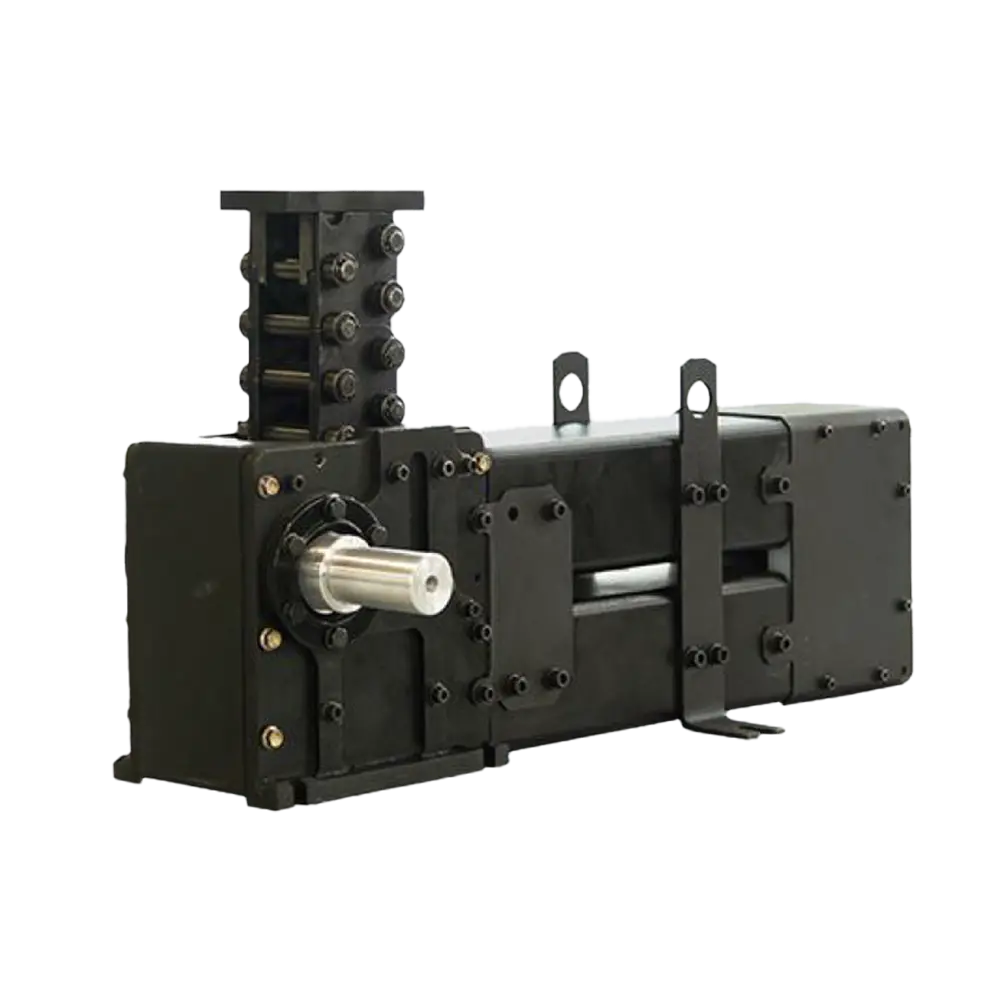
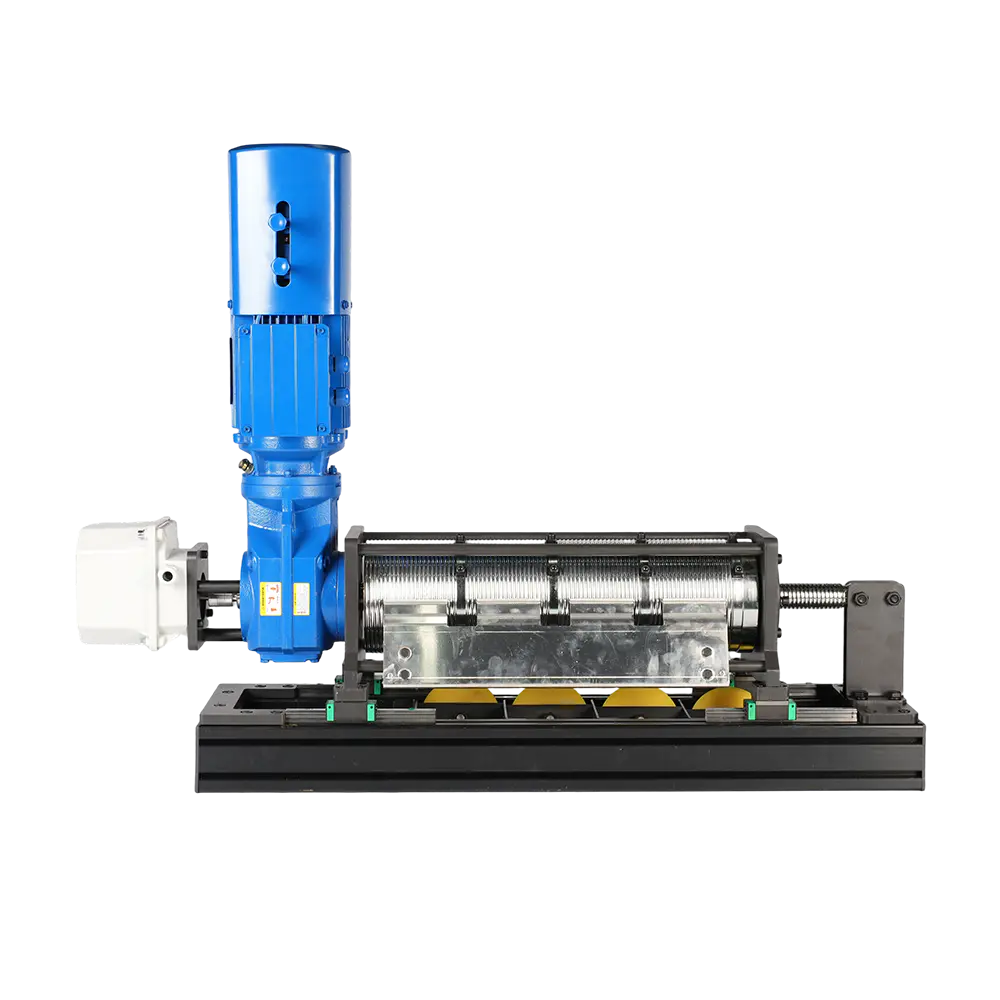
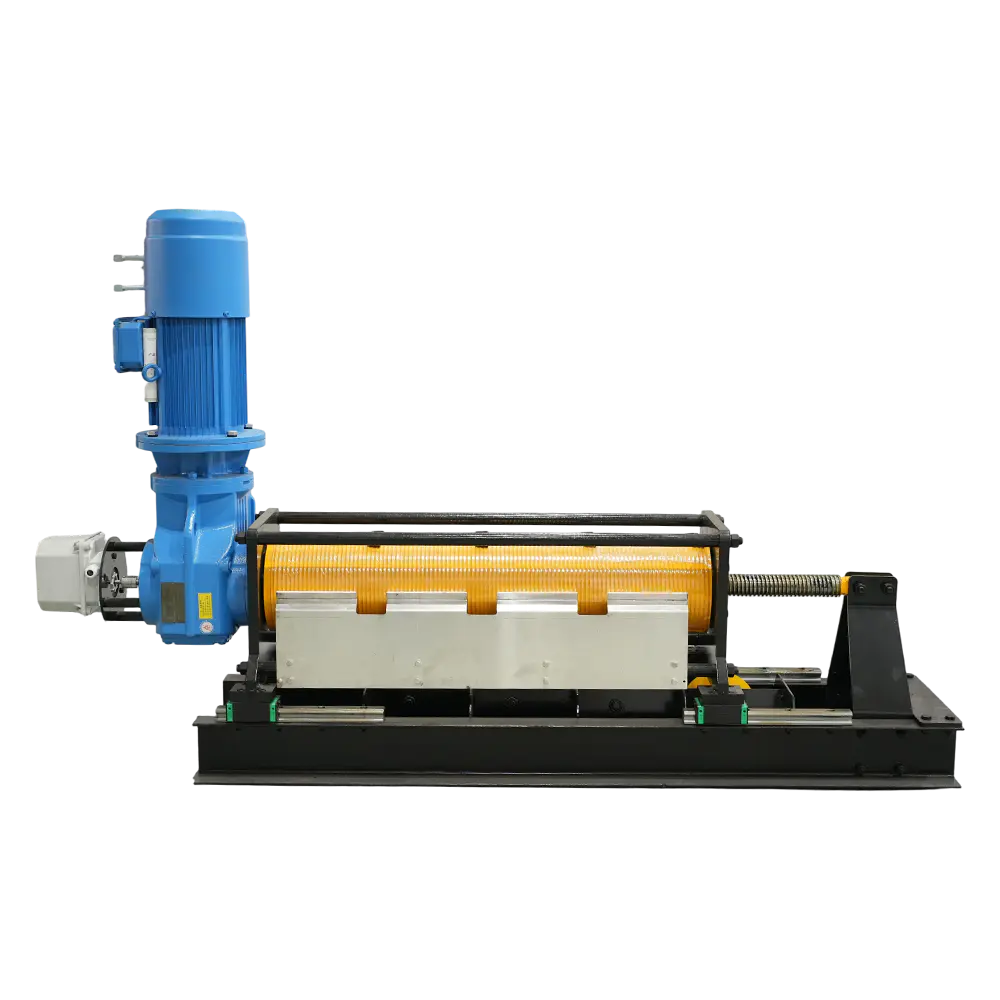
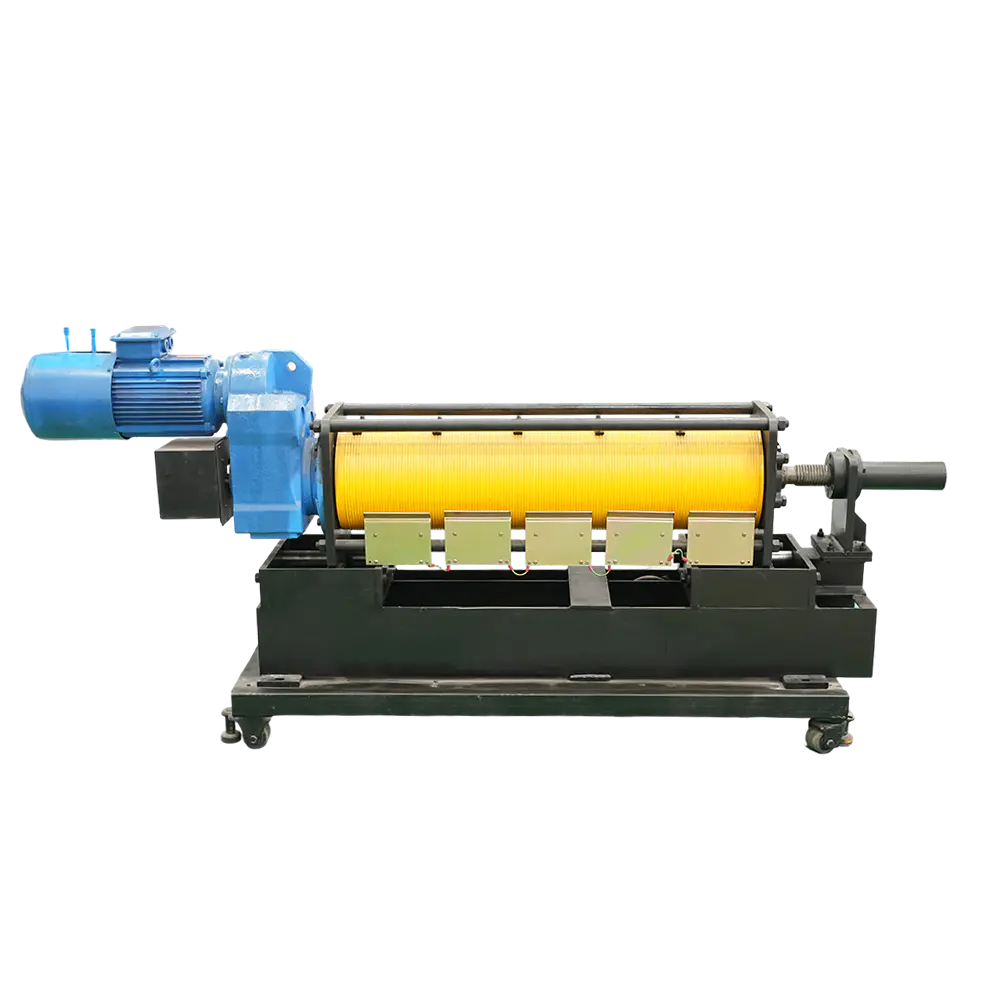
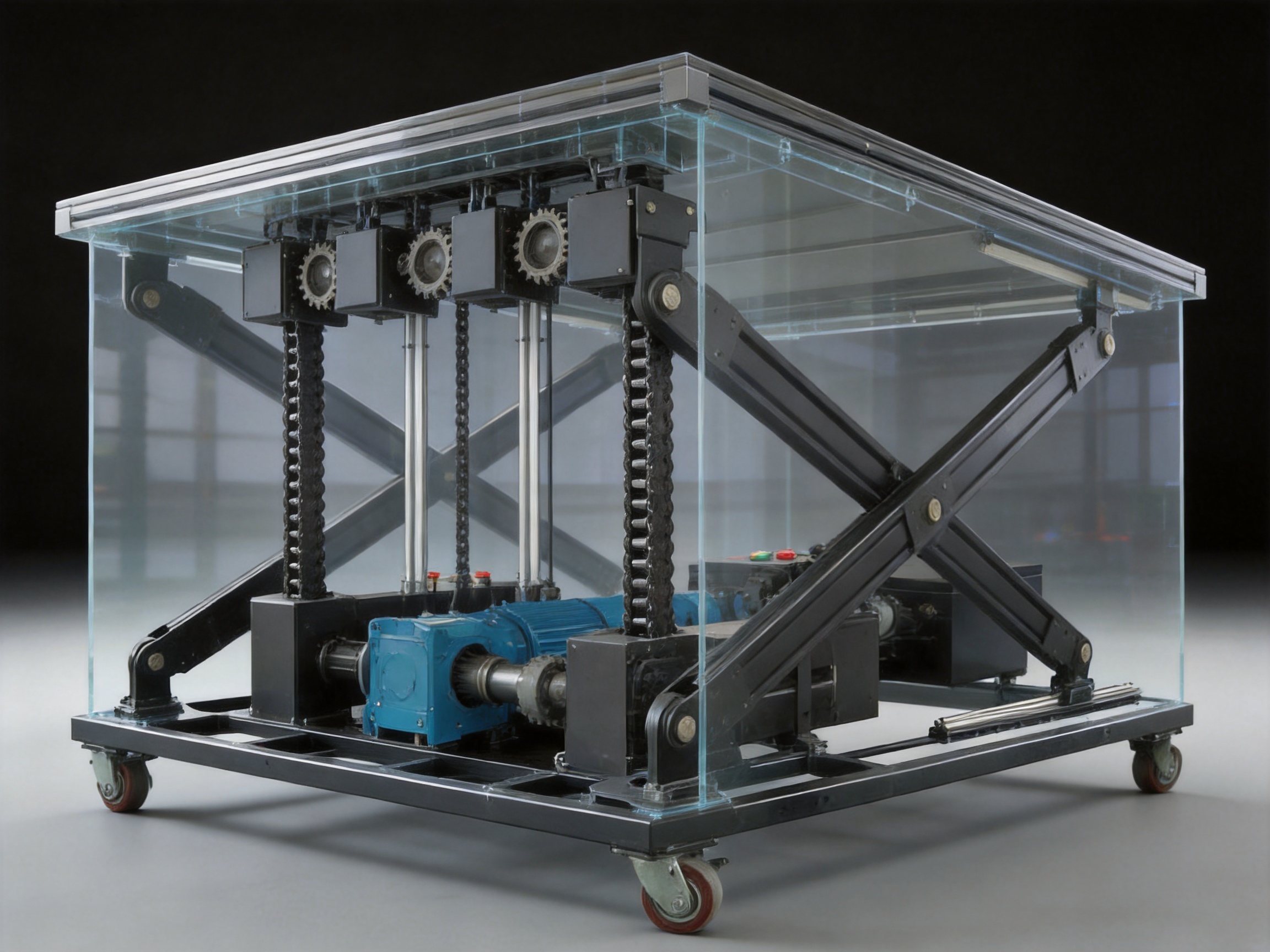
The Rigid/Screw/Rack/Chain Lifting Chain Lift Table is designed for these demanding requirements. It combines a rigid chain lifting mechanism with an electric motor, reducer, linear guiding system, stage platform, and X-tracing supports. The result is a compact and adaptable vertical lifting solution for theaters, cultural centers, conference venues, stadiums, multifunctional performance spaces, and other locations where stage levels must change safely and accurately.
With a standard lifting velocity of up to 150 mm/s, the lift table can support smooth and well-timed stage transitions. Its rigid chain system can be configured with a single chain, double chains, or multiple synchronized chains according to platform dimensions and load requirements. Unlike a cable system that depends primarily on tension from an overhead point, a rigid chain can push as well as pull, allowing the platform to be driven upward from below. This creates important advantages in platform stability, installation flexibility, and the use of available venue space.
Behind the equipment is RenteZhihe (JiangSu) Equipment Technology Co., Ltd., a high-tech enterprise specializing in stage machinery, performance equipment, and intelligent control systems. The company combines product research and development, manufacturing, installation, commissioning, operation support, and maintenance into an integrated service system. This approach allows each lift table to be considered not as an isolated machine, but as part of a complete automated stage solution.
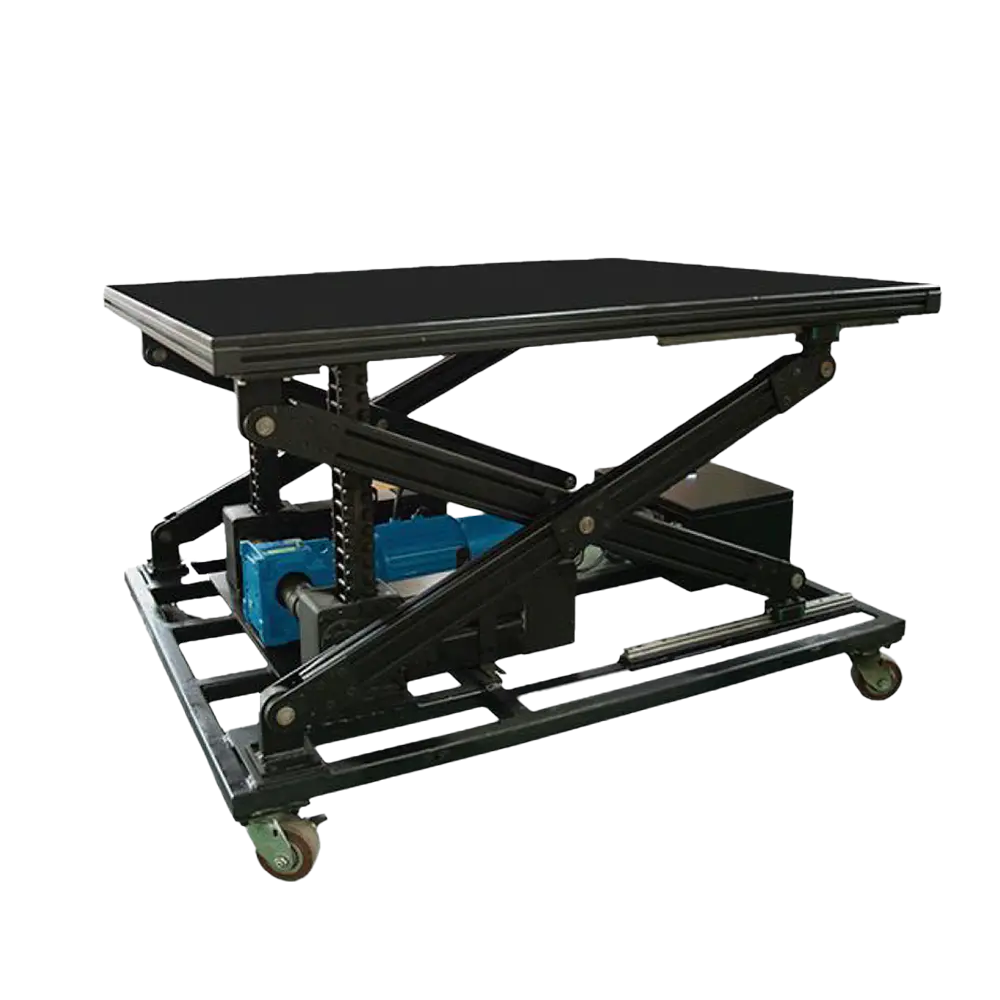
Rigid/Screw/Rack/Chain Lifting Chain Lift Table
Stage architecture has changed significantly. Traditional fixed stages are increasingly being supplemented by movable platforms, orchestra lifts, trap lifts, scenery elevators, rehearsal platforms, vehicle lifts, and multi-level performance systems. These systems allow one venue to support a greater variety of productions without requiring permanent structural changes for each event.
A lift table provides controlled vertical movement between two or more stage levels. It may lower a performer below the stage, raise a platform into the performance area, create a new scenic level, move an orchestra pit, or transport technical equipment. In each case, the lift must perform a carefully defined movement while maintaining the platform’s horizontal alignment and structural stability.
The mechanical demands are considerable. A platform may be loaded unevenly, particularly when performers, scenery, instruments, or vehicles are positioned toward one side. The system must resist twisting and lateral displacement while the platform travels. It must also stop at the intended height and remain stable when the platform is stationary under load.
For this reason, the lifting element alone is not enough. A high-quality stage lift requires a coordinated system consisting of:
The Rigid/Screw/Rack/Chain Lifting Chain Lift Table is built around this integrated principle. Its performance comes from the interaction of the drive, lifting, guiding, bracing, and control elements rather than from one component considered separately.
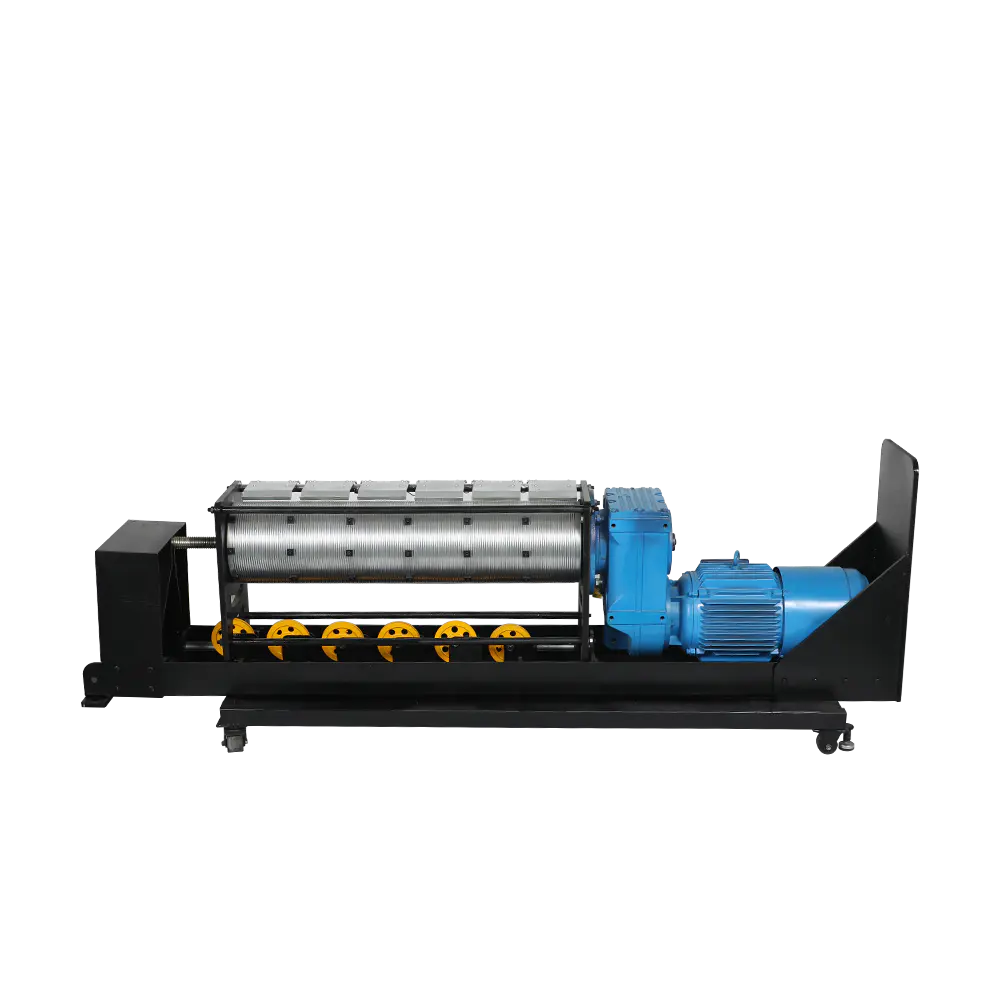
A rigid chain lift uses interlocking chain links that are compactly stored when retracted and form a self-supporting column when extended. The drive mechanism moves the chain in a controlled direction, allowing the chain to apply vertical force to the platform.
This operating principle differs from a conventional wire-rope lift. A wire rope is highly effective when it is placed under tension, but it normally requires an overhead support point, sheave arrangement, drum, or other structure capable of receiving the lifting forces. A rigid chain can transmit both pulling and pushing forces. It can therefore support a platform from below and does not necessarily require overhead rigging for the lifting action.
The push-pull characteristic is particularly useful in venues where the roof structure is crowded with lighting equipment, acoustic elements, scenery, curtains, or other technical installations. By placing the lifting mechanism near the platform or within a lower machinery zone, the project can gain greater freedom in stage planning.
When the chain extends, its links align into a rigid column. This column transfers the output of the reducer to the platform. When the chain retracts, the links fold or collect into a dedicated chain box. The compact storage arrangement helps reduce the space needed beneath or alongside the lift table.
The chain system is engineered to bear vertical loads and horizontal loads. Vertical capacity is essential for raising the platform and its payload. Horizontal load resistance is equally important because performers, equipment, and scenery can generate side forces during operation. The chain system works together with the linear guides and X-tracing supports to control these forces.
Another important feature is the relationship between reducer speed and output movement. The power and speed output remain constant during operation, and the platform speed is directly related to the reducer’s operating speed. This makes the motion easier to predict and coordinate with digital control commands.
The most fundamental advantage of a rigid chain is that it can push as well as pull. A cable-based lifting system normally depends on tension. The cable must be supported from above or routed through an appropriate drum and pulley arrangement. A rigid chain, by contrast, can form a supporting column as it extends, enabling the platform to be driven upward from beneath.
This difference affects the complete venue design. It can reduce dependence on overhead structural points and may simplify the coordination between the lift and other stage systems. It also helps designers consider installations in spaces where overhead access is restricted or where the roof structure is not intended to carry additional lifting equipment.
Performers and technicians notice platform behavior immediately. A platform that flexes, shifts, or feels unstable can reduce confidence and create safety concerns. Because a rigid chain provides a solid lifting path, the lift table can maintain a firm relationship between the drive system and the platform.
Platform deflection is also influenced by the platform frame, guide arrangement, chain quantity, load distribution, and installation conditions. The rigid chain does not eliminate the need for proper structural design, but it provides a lifting foundation that is less dependent on flexible tension members.
Many stage machinery projects must fit within existing buildings. The available space may be limited by roof height, trusses, ventilation systems, lighting bridges, acoustic treatments, or architectural elements. A rigid chain lift can offer greater freedom because the lifting force is generated from a compact mechanism that can be positioned close to the lift table.
This flexibility is valuable for renovation projects as well as new construction. The system can be evaluated according to the available pit depth, platform dimensions, required travel, payload, access route, and control architecture.
When retracted, the rigid chain is designed to be stored in a chain box. This arrangement helps organize the mechanical system and protects the chain assembly from unnecessary exposure. Compact storage is important in stage machinery rooms, where several systems may be installed in close proximity.
The chain configuration can be adapted to the application. A single-chain arrangement may be appropriate for a smaller or lighter platform. A double-chain or multiple-chain arrangement can be selected when the platform is larger, the payload is greater, or additional load distribution is required.
Modular configuration helps avoid the limitations of a one-size-fits-all design. Rather than changing the entire lifting concept for every project, the chain count and arrangement can be matched to the engineering requirements. This supports more efficient design planning and can make the equipment easier to adapt to different venue layouts.
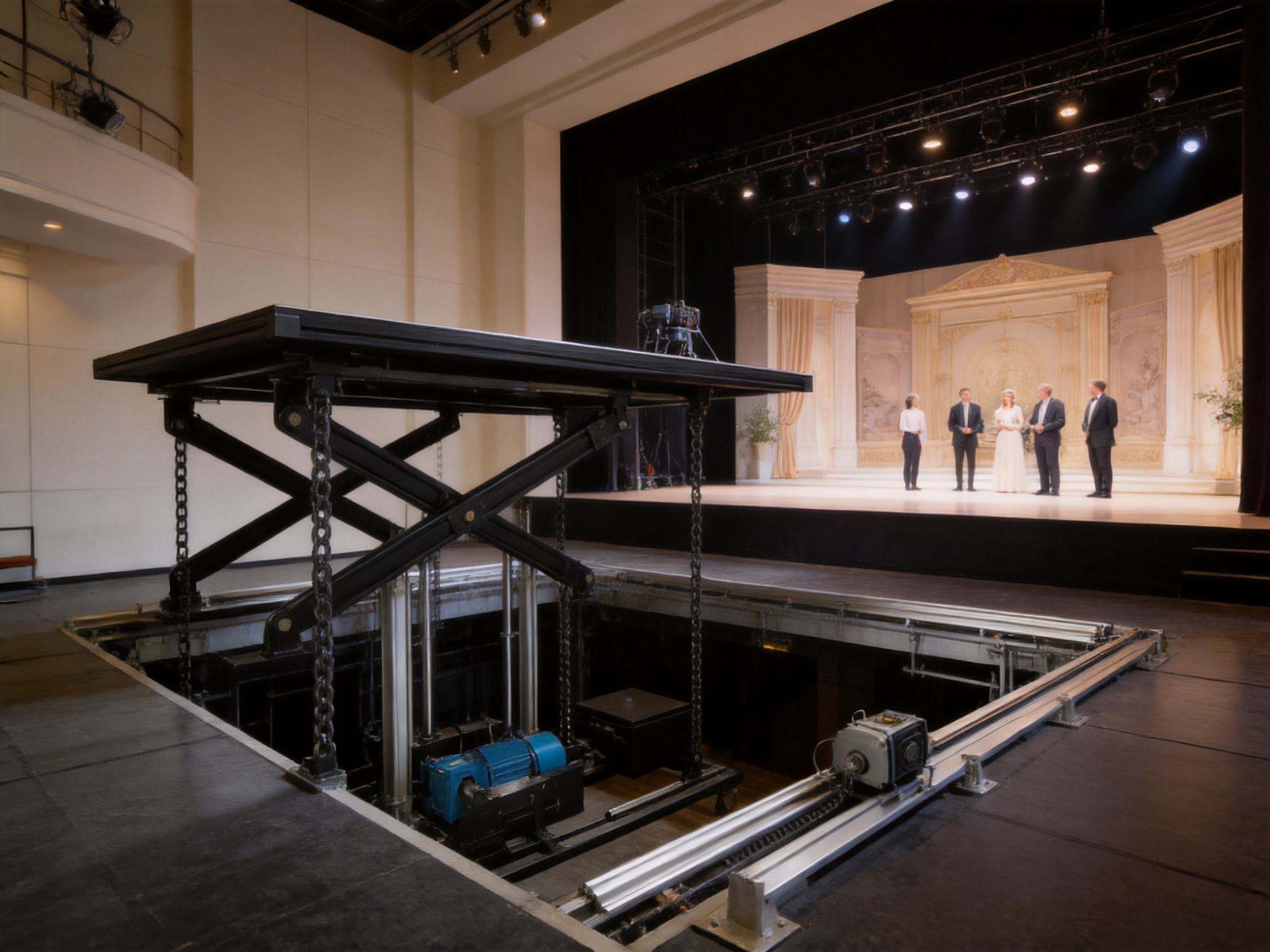
Multiple chains can only work effectively when they move in coordination. If one chain extends faster than another, the platform may become uneven, creating stress in the structure and placing additional loads on guides, brackets, and drive components. Synchronization is therefore a central engineering requirement in a multi-chain lift table.
The Rigid/Screw/Rack/Chain Lifting Chain Lift Table is designed to support single, double, or multiple synchronized chain configurations. The exact arrangement is selected according to platform size, working load, travel requirements, and the expected distribution of forces.
A single chain offers a straightforward solution for compact platforms and lighter applications. It can reduce the number of mechanical components and simplify the layout where the load is appropriately centered.
Double-chain arrangements provide a broader support pattern. They can distribute the lifting force more evenly and improve resistance to platform rotation. This may be useful for wider platforms or applications where the load is not always centered.
Multiple-chain arrangements are suited to larger platforms and heavier loads. By locating the chains at carefully selected positions, the system can create a stable lifting geometry. The configuration must be designed with attention to chain alignment, guide placement, platform stiffness, and load paths.
Synchronization also has a control dimension. The drive system and control system must ensure that the chains respond consistently throughout the travel. Digitalized control and inverter control can be used to manage speed, acceleration, stopping, and position commands according to the project’s requirements.
For stage operation, synchronization is more than a technical preference. It affects the quality of the performance. A platform that rises evenly can be timed with lighting, sound, projection, video, and performer movement. A platform that hesitates, tilts, or stops inconsistently can disrupt the production.
The rigid chain supplies the lifting force, but it should not be expected to control every aspect of platform movement. A dedicated guiding and support structure is necessary to keep the platform traveling in a straight vertical path.
Linear guides constrain lateral movement. They help prevent the platform from drifting as it rises or descends, which is particularly important when the platform has a large surface area or when the payload is positioned away from the center.
Accurate guiding also protects the mechanical components. Without appropriate guides, side loads could be transferred into the chain, drive, or platform connection points. Over time, this could increase wear and reduce positioning accuracy. By assigning the guiding function to linear guide assemblies, the system can divide the mechanical responsibilities more effectively.
X-tracing supports add diagonal reinforcement to the platform structure. Their purpose is to resist twisting, racking, and uneven movement caused by off-center loads or horizontal forces.
When a performer, vehicle, piece of scenery, or technical device is positioned toward one side of the platform, the load does not act equally on all support points. X-tracing helps distribute these forces through the structure and supports a more stable platform geometry.
The combination of chain lifting, linear guidance, and X-tracing is important because each element addresses a different mechanical challenge.
| System Element | Primary Function | Performance Contribution |
|---|---|---|
| Rigid chain | Provides vertical push-pull lifting force | Supports upward and downward platform movement without relying solely on overhead tension |
| Reducer | Controls torque and rotational speed | Creates predictable output and supports smooth movement |
| Linear guides | Constrain the platform to a straight path | Improves positioning accuracy and limits lateral drift |
| X-tracing supports | Resist twisting and racking | Improves stability under uneven and off-center loads |
| Chain box | Stores retracted chain links | Supports compact organization of the lifting assembly |
| Digital control interface | Coordinates movement commands | Allows integration with automated stage operation and inverter control |
These components form a complete mechanical system. A strong chain without adequate guides would not provide the same result, and a well-designed guide structure would not replace the need for a reliable lifting mechanism.
The standard lifting velocity of the product can reach up to 150 mm/s. In practical stage operation, the value of this rating depends not only on maximum speed but also on how consistently and smoothly the movement is delivered.
Stage machinery is often operated according to cues. A platform may need to arrive at stage level at a specific moment in a musical passage, lighting sequence, spoken line, projection transition, or choreography. Repeatable motion is therefore essential.
A high-speed movement that is rough or difficult to control may be less useful than a slightly slower movement that is predictable. For this reason, the drive system, reducer, guides, platform structure, and control system must work together to manage the complete motion cycle.
The product is designed to maintain constant force and speed output during operation, with output directly related to reducer speed. This characteristic supports stable performance over the lifting cycle. When combined with inverter control, it can provide more flexible adjustment of start, travel, and stopping behavior.
Speed should always be selected according to the actual load, travel distance, platform dimensions, safety requirements, and venue operating procedure. The stated 150 mm/s standard velocity is a reference for the product’s capability, while the final operating parameters should be confirmed during project engineering.
Noise is a significant consideration in theaters and other performance spaces. A lift may operate during a scene change, a live musical passage, a conference presentation, or a transition in which the audience is still present. Excessive mechanical sound can distract from the performance.
The product is designed with safety precautions and a quiet operating concept. The reducer-driven mechanism, controlled chain movement, linear guides, and structural supports are arranged to promote smooth operation. Proper installation, alignment, lubrication, maintenance, and load management are also essential to preserve quiet performance over the equipment’s service life.
Reliability is equally important. Stage machinery often operates repeatedly over many production cycles. A lift table must be designed for regular movement rather than occasional use only. Stable components, appropriate load selection, controlled movement, and routine inspection all contribute to long-term service.
Reliability also includes predictable behavior when the system is stopped. The platform should remain properly supported and positioned under the intended load. The rigid chain structure, guides, platform frame, and control system must be considered together when evaluating stationary stability.
Safety in stage machinery is a system responsibility. Mechanical strength, electrical control, installation quality, operator procedures, inspection, and maintenance all contribute to safe operation.
The rigid chain system is designed to bear both vertical and horizontal loads. This is important because stage platforms can be affected by movement in more than one direction. A performer walking across the platform, a vehicle entering the platform, or scenery being moved can create horizontal forces in addition to the static vertical load.
The compact chain box provides an organized storage location for retracted chain links. Keeping the chain assembly within a defined enclosure can help protect the mechanism and reduce exposure to surrounding equipment, provided that the installation includes suitable access and inspection provisions.
Digitalized control and inverter control support more precise operation. They can be used to manage movement commands and operating parameters according to the control architecture of the venue. Proper integration may include coordination with stage management systems, centralized control panels, emergency stop circuits, and other project-specific safety functions.
A safe lift table application should also include:
The final safety arrangement must be developed according to the application, local regulations, venue design, and project specifications. Product features support safety, but no mechanical system can replace proper engineering, commissioning, and responsible operation.
RenteZhihe (JiangSu) Equipment Technology Co., Ltd. specializes in the research and development and manufacture of stage machinery, performance equipment, and intelligent control systems. Its experience covers the requirements of performance venues where mechanical movement, electrical control, structural design, and operational coordination must function as one system.
The company’s manufacturing strength is reflected in its integrated approach. Instead of treating production as the final step after design, the company connects design, manufacturing, installation, commissioning, operation, and maintenance. This approach helps reduce the risk of disconnects between the equipment supplied and the environment in which it must operate.
Lift tables are not identical from one venue to another. Platform size, lifting travel, payload, pit depth, surrounding structures, access conditions, control requirements, and operating frequency can all differ. A capable manufacturer must therefore understand the application before selecting the configuration.
The modular chain concept supports this method. The manufacturer can evaluate whether a single, double, or multiple-chain arrangement is more suitable. The guide structure, X-tracing supports, platform dimensions, reducer characteristics, and control interface can then be coordinated around the operating objective.
Stage automation requires more than a mechanical product with an independent electrical panel. The movement must be compatible with digital control systems and inverter control. This makes it possible to coordinate the lift table with broader venue automation requirements.
By working across stage machinery and intelligent control systems, RenteZhihe can consider the relationship between physical movement and digital commands. This is important for applications involving programmed cues, repeatable positioning, synchronized motion, and centralized operation.
Equipment should be designed not only to operate correctly but also to be transported, installed, aligned, tested, and maintained. The lift table’s modular components and compact chain storage arrangement can assist with practical site planning.
Installation quality has a direct effect on performance. Correct alignment of the chain, guide system, platform, and supports is necessary for smooth travel. A manufacturer that remains involved through installation and commissioning can identify practical issues before the system enters regular venue operation.
Commissioning is the stage at which the assembled equipment is checked under actual operating conditions. Travel, speed, stopping, alignment, control response, and load behavior can be reviewed before handover.
RenteZhihe’s complete service system covers design, production, installation, commissioning, operation, and maintenance. This full-cycle capability gives venue owners and project contractors a single engineering partner for more stages of the equipment lifecycle.
A stage lift is a load-bearing machine, so production quality must be treated as a functional requirement rather than a cosmetic issue. The platform frame, chain components, guide assemblies, supports, motor, reducer, fasteners, and control elements must be selected and assembled in a manner consistent with the intended duty.
An effective manufacturing process begins with technical clarification. The manufacturer reviews the platform dimensions, travel, load, operating speed, chain configuration, installation environment, and control requirements. This information provides the foundation for component selection and system arrangement.
The next stage is mechanical design. The lifting points, guide locations, X-tracing supports, chain boxes, drive positions, and access areas must be coordinated. The design should also consider maintenance, inspection, transportation, and installation sequence.
Component preparation and assembly must preserve alignment. The rigid chain needs to travel through its intended path without harmful interference. Linear guides should be installed with appropriate accuracy. X-tracing supports must connect securely to the platform and supporting structure. The motor and reducer must transmit motion without creating abnormal vibration or excessive resistance.
Control integration follows the mechanical assembly. The system should respond correctly to commands and protective functions. Inverter control may be configured to support appropriate speed behavior, while travel limits and emergency functions should be checked as part of commissioning.
Testing should include no-load movement as well as controlled load testing appropriate to the project. The purpose is to confirm that the platform travels smoothly, remains aligned, stops correctly, and responds predictably. Any adjustment identified during testing should be completed before the equipment is released for venue use.
This process discipline is especially valuable for custom stage machinery. Standard components may be used where practical, but the final machine must still fit the actual application. A manufacturer’s ability to manage customization without losing control of engineering quality is a significant competitive advantage.
In theaters, lift tables can connect the main stage with backstage areas, lower scenery, introduce performers, or create changing stage levels. Quiet, stable movement is important because the equipment may operate during a live performance.
A lift table can be used to adjust the height of an orchestra platform or performance area. The ability to stop at repeatable positions helps accommodate different productions, conductor requirements, and audience configurations.
Cultural centers often host many types of events, from drama and dance to concerts, ceremonies, exhibitions, and public presentations. A configurable lift table can help the venue adapt its stage arrangement to different programs.
Large venues may require platforms capable of carrying substantial loads or moving equipment into a performance area. Multiple synchronized chains and reinforced platform structures can be considered for suitable applications.
Conference centers and multifunctional halls benefit from flexible platforms that can support presentations, product launches, ceremonies, and entertainment programs. Digital control compatibility is useful when the movement must be included in a programmed event sequence.
Lift tables can also transport scenery, instruments, stage components, and other technical equipment between levels. The platform configuration should be selected according to the dimensions, center of gravity, and handling method of the items being moved.
Selecting a lift table should begin with the operating objective rather than the product name alone. The following questions help establish the correct configuration.
The working load should include the platform, performers, scenery, equipment, vehicles, and any other items that may be carried. The load should not be estimated only from the weight of the primary object. Dynamic effects and uneven distribution should also be considered during engineering.
Platform width, length, and structural depth influence the number and location of lifting chains, guides, and X-tracing supports. A large platform may need multiple chains to maintain balanced support.
The vertical travel must correspond to the stage levels that the platform connects. The required speed should be evaluated alongside production timing, payload, stopping accuracy, and safety conditions. The standard maximum lifting velocity is up to 150 mm/s, but actual operating speed should be selected for the project.
Available pit depth, surrounding walls, access routes, overhead structures, and adjacent equipment all affect the installation. The compact storage of the rigid chain can help with layout, but the complete machine still requires sufficient space for inspection and maintenance.
The project should define whether the lift will be operated locally, from a central stage control system, through an inverter, or as part of a broader automated sequence. Digital compatibility should be considered early so that mechanical and electrical designs remain coordinated.
Frequent daily operation, touring productions, occasional events, and rehearsal use may place different demands on the machine. The expected cycle frequency should be communicated to the manufacturer during the design stage.
Correct installation begins with a prepared site. The foundation or supporting structure must be capable of receiving the imposed loads, and the installation area must be accessible for assembly and inspection.
The lift table should be positioned according to the approved layout. Chain boxes, drives, guides, X-tracing supports, and platform connections must be aligned. Electrical connections and control interfaces should be completed by qualified personnel according to the project documentation.
Commissioning should be performed in stages. Initial checks can confirm mechanical clearances, fastener security, chain routing, guide alignment, and electrical connections. The platform can then be moved at controlled speed without load. After no-load behavior is verified, controlled load testing can be performed as required.
Maintenance should include routine inspection of the chain, chain box, guide assemblies, platform structure, X-tracing supports, motor, reducer, fasteners, control components, and safety functions. Inspection intervals should reflect operating frequency and the conditions of the venue.
Operators should be trained to recognize unusual noise, vibration, uneven travel, delayed stopping, unexpected control response, or visible damage. Any abnormal condition should be reported and investigated before continued operation.
Preventive maintenance is generally more effective than waiting for a failure. Cleaning, lubrication where specified, alignment checks, fastener inspection, and control testing can help preserve the product’s smooth movement and long service life.
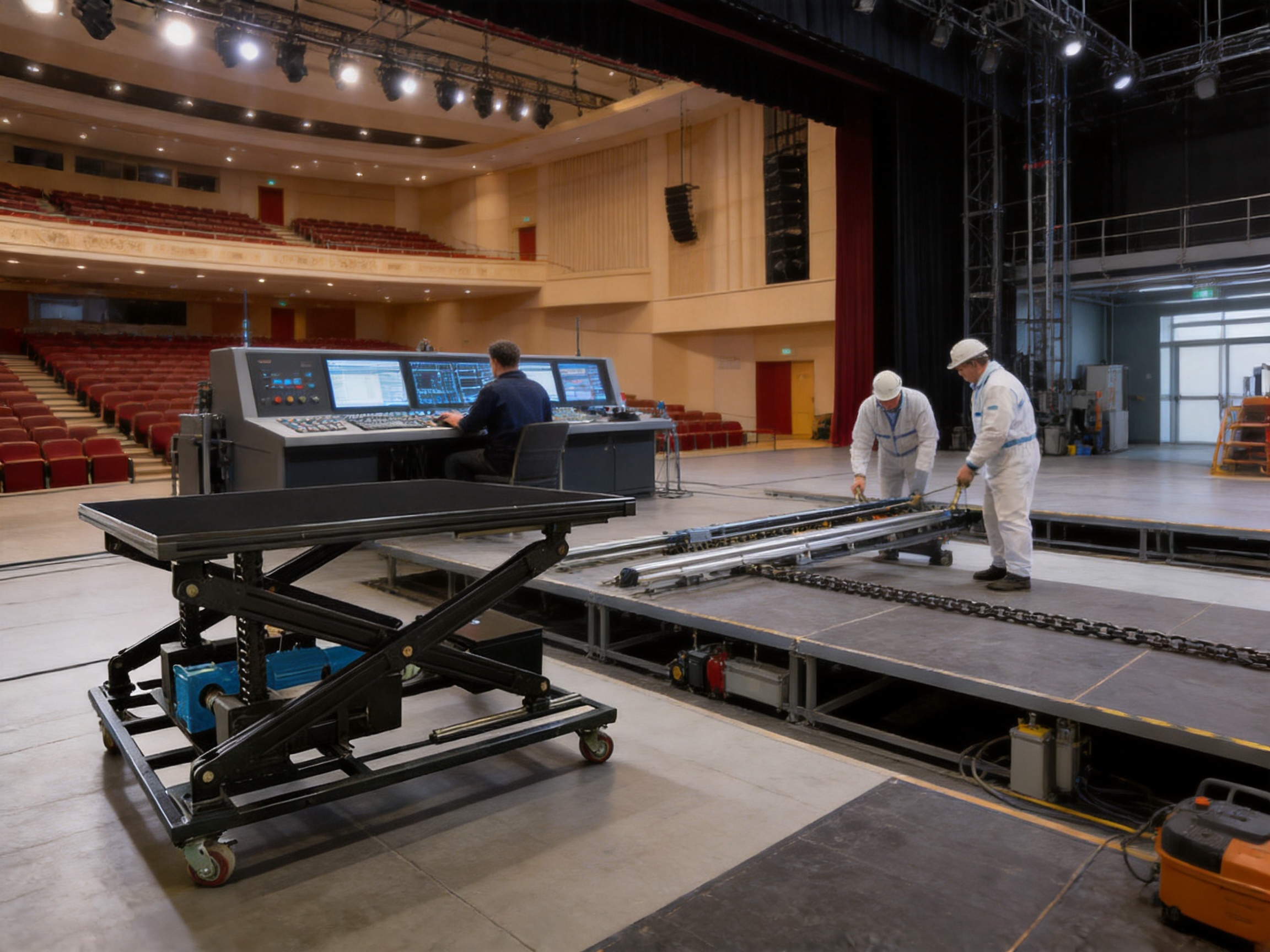
A rigid chain lift table is a vertical stage platform driven by a chain mechanism that can form a self-supporting column as it extends. The chain can transmit both push and pull forces, allowing the platform to be raised from below rather than relying exclusively on an overhead cable arrangement.
The standard lifting velocity can reach up to 150 mm/s. The appropriate operating speed depends on the platform size, working load, travel, control system, stopping requirements, and venue application.
Yes. The system can be configured with a single chain, double chains, or multiple synchronized chains. The final arrangement is selected according to platform dimensions, load requirements, stability needs, and project layout.
When multiple chains support one platform, they must extend and retract at matching rates. Synchronization helps prevent the platform from tilting, reduces uneven mechanical stress, and supports stable positioning throughout the travel.
No. The rigid chain supplies lifting force, while linear guides control the platform’s vertical path. The guides help limit lateral movement and protect the lifting mechanism from unnecessary side loads.
X-tracing supports resist twisting and racking forces. They are particularly useful when loads are distributed unevenly or positioned away from the platform center.
The rigid chain lifting principle does not rely solely on an overhead rigging point because the chain can push upward from below. The actual installation may still require suitable structural support for the platform, guides, surrounding equipment, and building interface.
Yes. The product is designed to be compatible with digitalized control systems and inverter control. The control configuration should be defined according to the venue’s automation architecture and safety requirements.
The product is designed for quiet and reliable operation. Actual sound levels depend on the installation, alignment, load, maintenance condition, operating speed, and surrounding structure.
Potential applications include theaters, cultural centers, stadiums, conference centers, multifunctional performance spaces, and other venues requiring controlled vertical movement of stage platforms or technical equipment.
The modular chain configuration and integrated engineering approach support project-based adaptation. Platform dimensions, chain quantity, guiding structure, control requirements, and installation conditions should be reviewed with the manufacturer before production.
RenteZhihe provides an integrated service system covering design, production, installation, commissioning, operation, and maintenance. This supports customers through more stages of the project lifecycle.
Purchasing a lift table is not only a matter of comparing lifting speed or nominal load. The long-term value of the equipment depends on whether the manufacturer can understand the venue, coordinate mechanical and control requirements, support installation, and provide practical service after commissioning.
An integrated manufacturer can identify relationships that may be missed when the drive, platform, control system, and installation are supplied by unrelated parties. For example, platform dimensions affect guide placement, guide placement affects chain alignment, chain configuration affects control requirements, and control requirements affect commissioning procedures.
RenteZhihe’s business covers stage machinery, performance equipment, and intelligent control systems. Its service scope includes design, manufacturing, installation, commissioning, operation, and maintenance. This combination gives project owners a clearer route from initial concept to operational stage equipment.
The company serves theaters, cultural centers, stadiums, conference centers, and multifunctional performance venues in domestic and international markets. Its stated approach emphasizes craftsmanship, integrity, innovation, and long-term development within the stage equipment industry.
For customers, the key benefit is continuity. The same engineering organization can remain involved as the product moves from specification to production, from production to installation, and from commissioning to service. This can improve communication and help ensure that the delivered lift table reflects the actual needs of the venue.
The Rigid/Screw/Rack/Chain Lifting Chain Lift Table is a practical solution for venues that require stable, precise, and automated vertical stage movement. Its rigid chain system provides push-pull lifting capability, compact chain storage, and flexible installation possibilities. Single, double, and multiple synchronized chain configurations allow the product to adapt to different platform sizes and load requirements.
Linear guides and X-tracing supports complement the chain by controlling the platform path and resisting twisting under uneven loads. The standard lifting velocity of up to 150 mm/s supports efficient stage transitions, while digitalized control and inverter compatibility make the lift suitable for modern automated performance environments.
The product’s advantages over conventional cable-focused arrangements include reduced dependence on overhead rigging points, a self-supporting lifting path, modular load sharing, and a firm platform response under load. These advantages are most valuable when combined with accurate engineering, appropriate installation, disciplined commissioning, and regular maintenance.
RenteZhihe strengthens the product through an integrated manufacturing and service model. Its capabilities cover research and development, production, installation, commissioning, operation, and maintenance. This allows the lift table to be developed as part of a complete stage machinery solution rather than as an isolated mechanical unit.
For performance venues seeking reliable stage automation, the central value of this lift table is not simply its lifting speed. It is the coordinated performance of its rigid chain, reducer, guides, X-tracing supports, platform structure, and control system. Together, these elements provide a foundation for smooth stage-level changes, accurate positioning, safe operation, and long-term service.
1. RenteZhihe (JiangSu) Equipment Technology Co., Ltd., Product Information for Rigid/Screw/Rack/Chain Lifting Chain Lift Table.
2. RenteZhihe (JiangSu) Equipment Technology Co., Ltd., Company Information and Integrated Stage Machinery Service Overview.
3. General principles of stage machinery design, vertical platform lifting, mechanical load distribution, and automated venue equipment.
4. General engineering practices for linear guidance systems, rigid chain mechanisms, inverter-controlled drives, and stage platform safety.
5. General maintenance and commissioning principles for theater automation equipment and performance venue machinery.
We specialize in delivering advanced stage machinery, rigging systems and intelligent control solutions for performance spaces worldwide.

No. 111 Runfeng Road, Hailing District, Taizhou City, Jiangsu Province, China

rtstage@163.com

+86-139 1771 1698

+86-139 1771 1698
rtstage@163.com
 中文简体
 English
 русский
 Français
 Español
 عربى