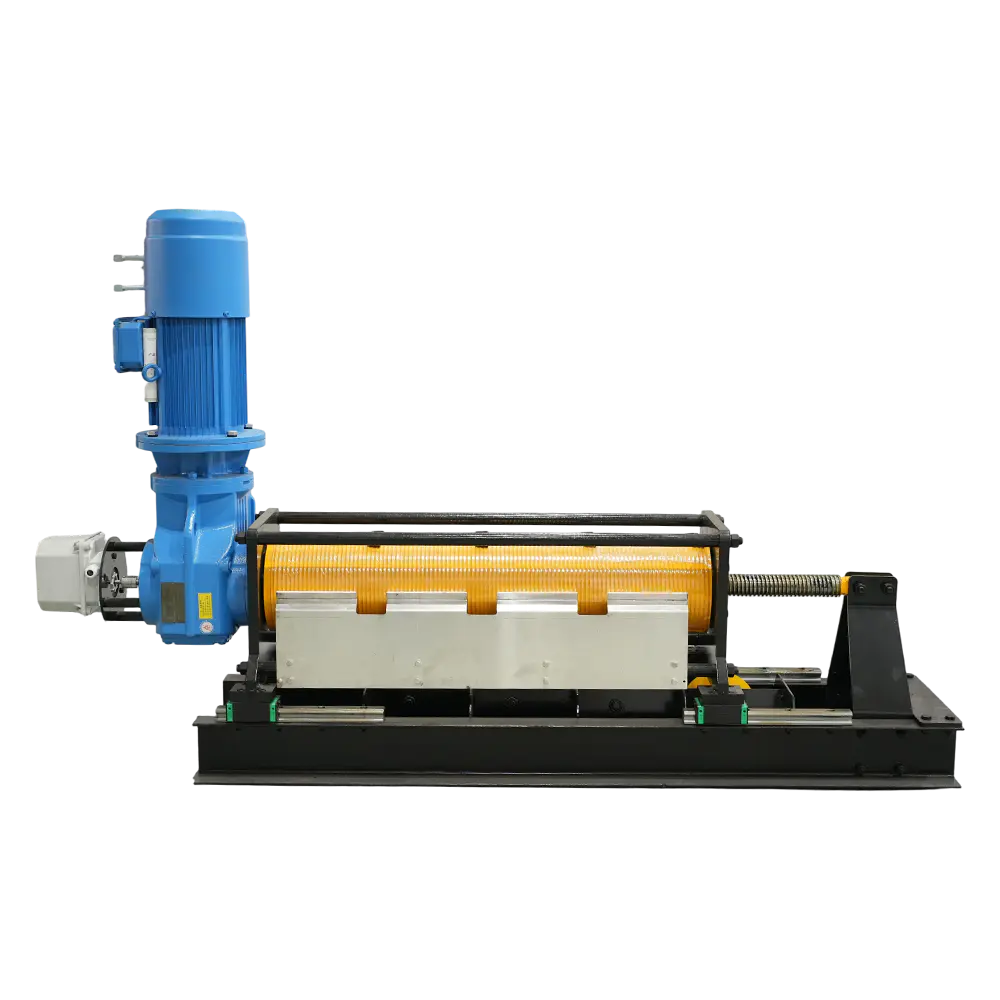
Modern performance venues depend on lifting equipment that can move heavy stage components accurately, repeatedly, and safely. Lighting trusses, LED screens, acoustic systems, scenic structures, curtains, banners, and mechanical platforms must often be positioned within strict production schedules. When a lifting system is slow, difficult to synchronize, or vulnerable to cable disorder, the effects can extend far beyond a single interrupted movement. Delays may affect rehearsals, increase labor costs, complicate maintenance, and create unnecessary safety risks.
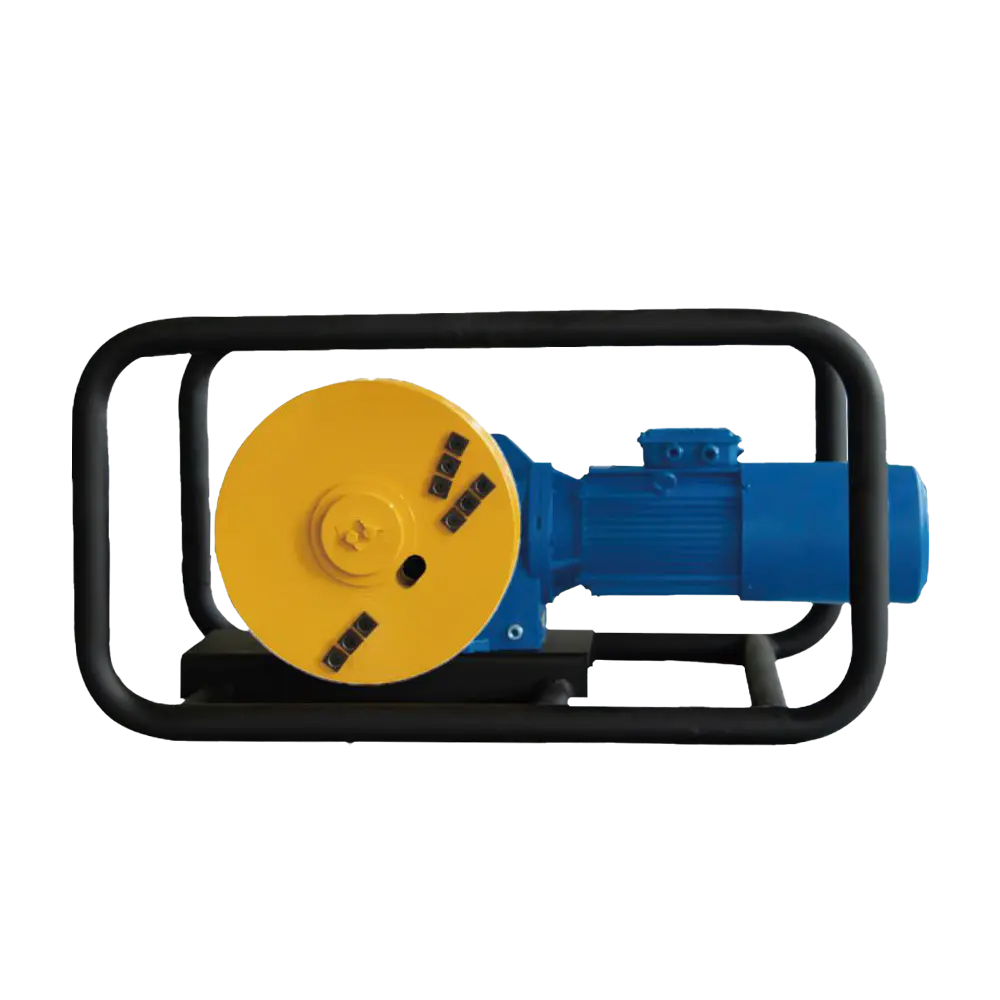
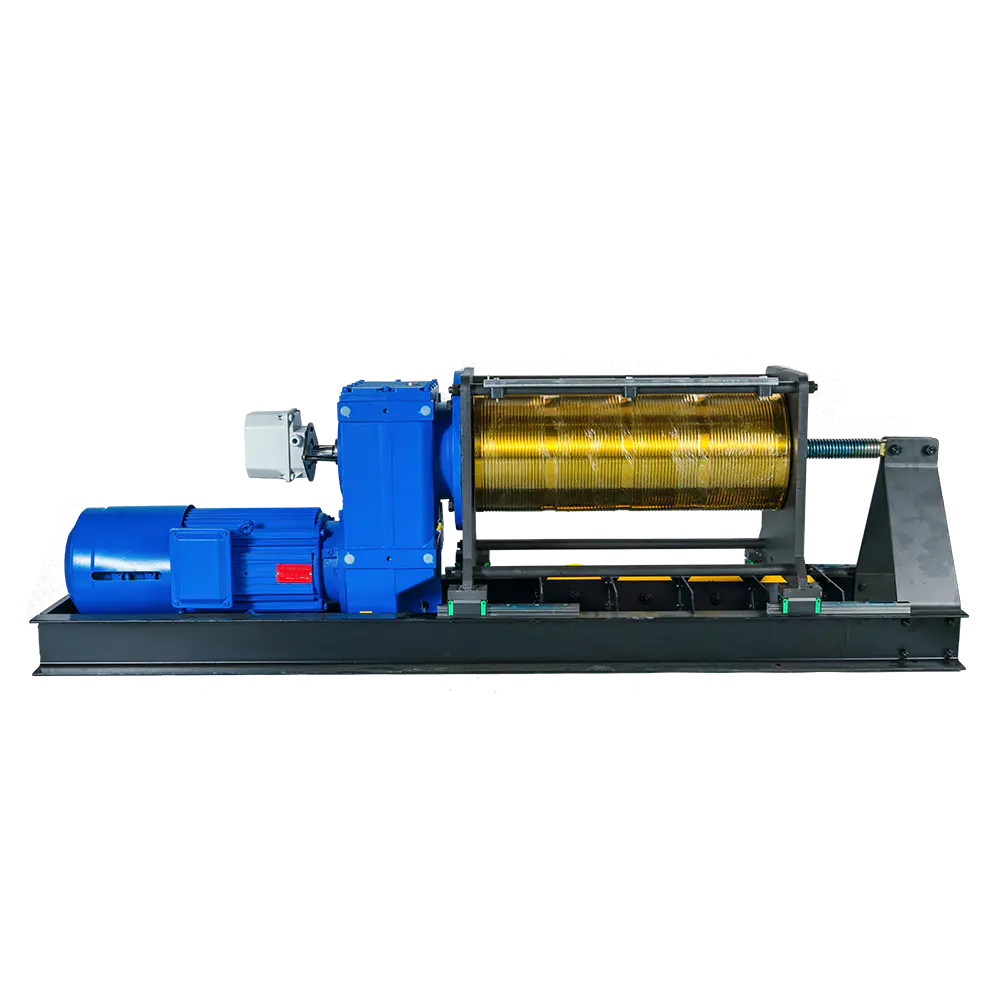
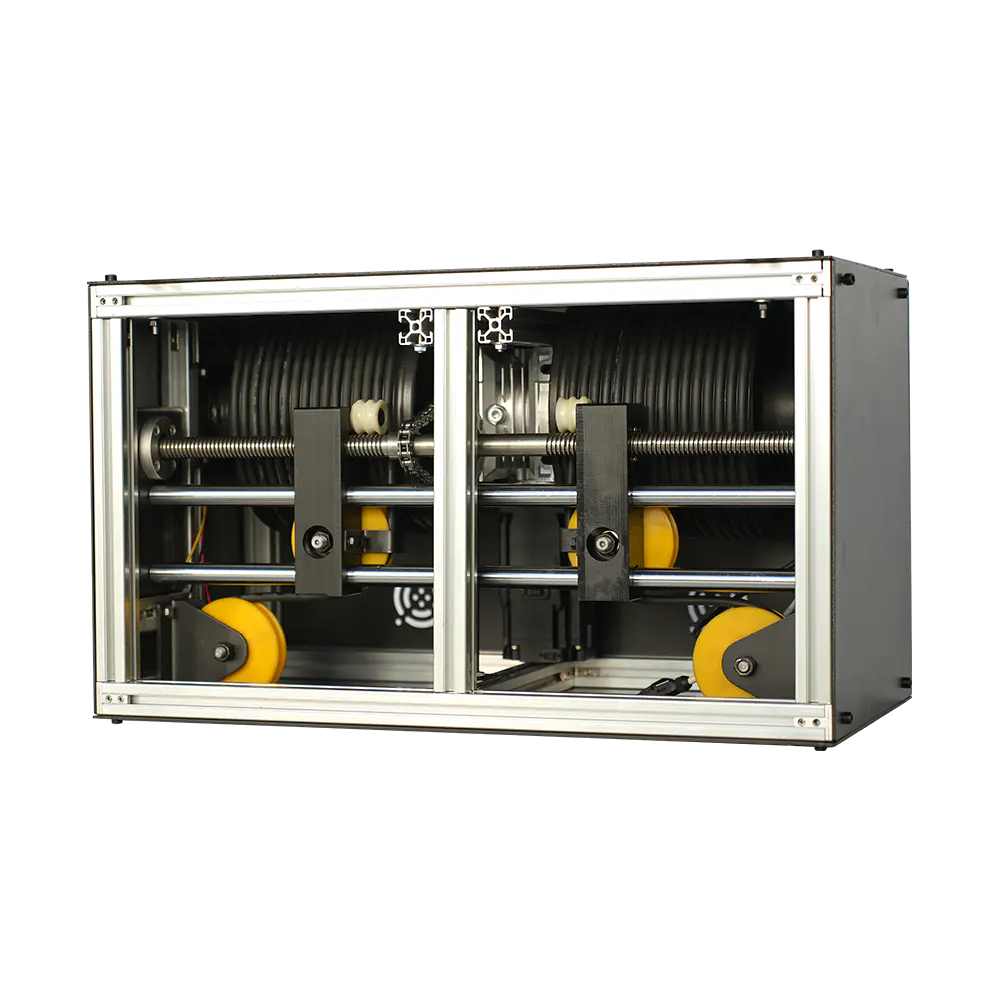
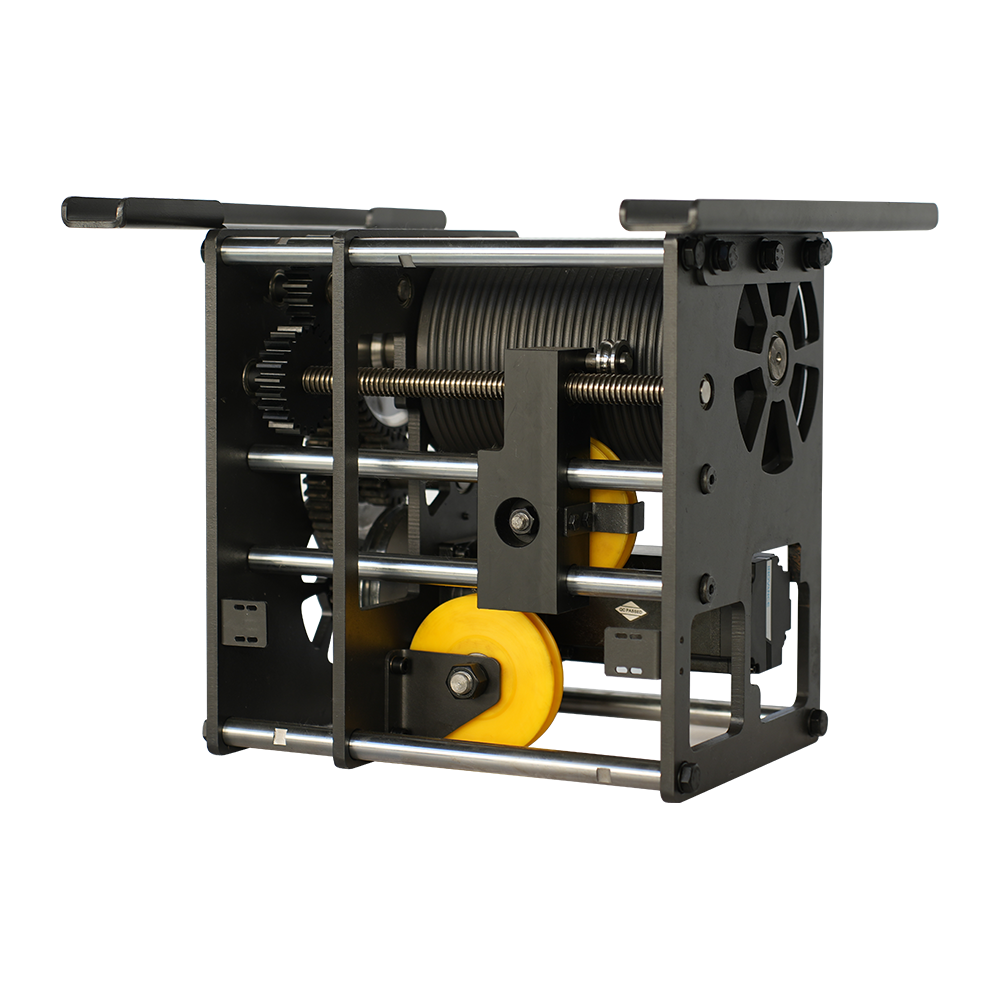
The PII-Series High-Capacity Pilewind Stage Winch is designed to address these challenges through a compact structure, a rated payload of up to 1,000 kilograms, patented rope-aligning technology, motor self-locking, precision feedback, and flexible control options. Its design combines the core advantages of a pilewind winch with the operating requirements of automated stage machinery. The result is a lifting solution intended for small and medium-sized theaters, auditoriums, banquet halls, cultural centers, conference facilities, and other venues where available installation space may be limited but lifting performance cannot be compromised.
Unlike a basic drum winch that allows the rope to accumulate without a controlled winding pattern, a pilewind system guides the wire rope into organized layers. This improves drum utilization, reduces irregular rope loading, and supports repeatable lifting performance. When combined with a robust electric motor, reducer, encoder, travel sensor, dual braking, and intelligent control architecture, the system can provide an effective balance between lifting capacity, installation flexibility, safety, and long-term operating efficiency.
This article examines the product’s construction, working principles, safety functions, control capabilities, manufacturing strengths, and competitive advantages. It also explains why high-capacity pilewind technology is becoming increasingly valuable in venues that require dependable automation without installing oversized or unnecessarily complex equipment.
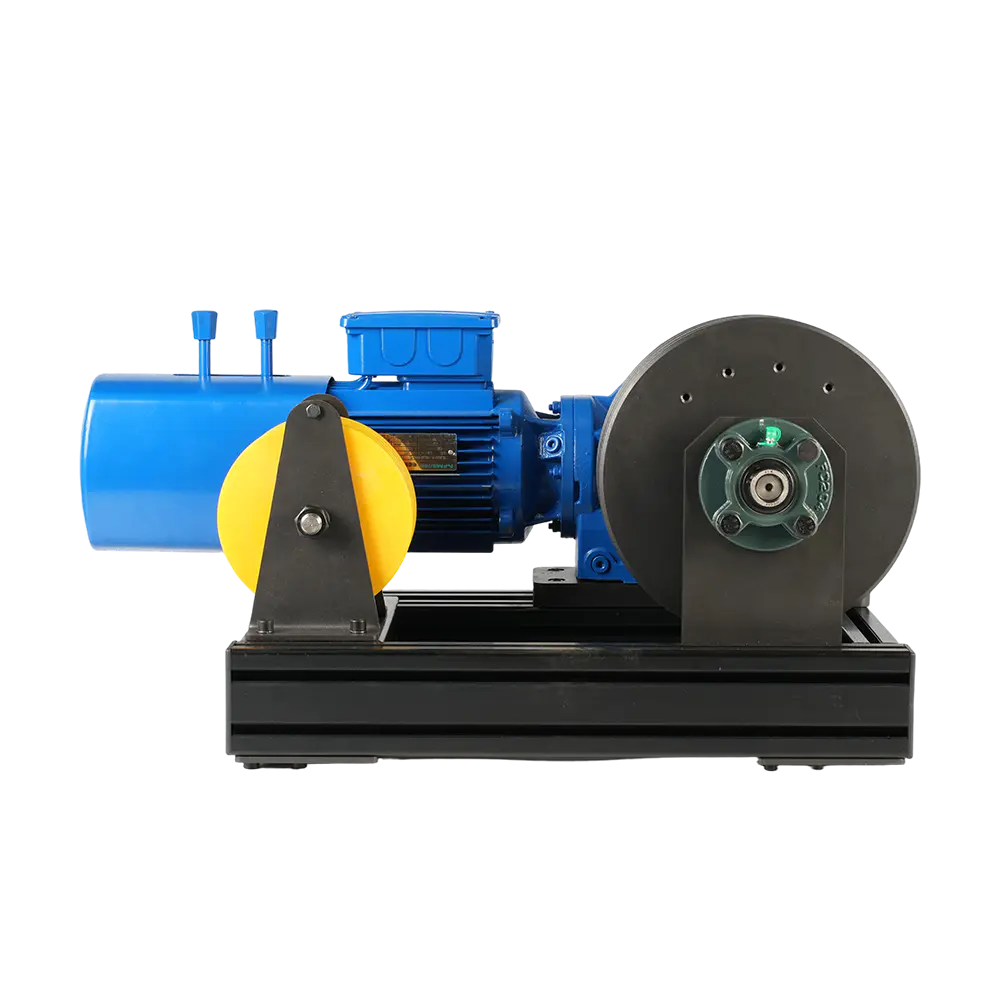
PII-Series High-Capacity Pilewind Stage Winch
Stage winches are essential components in automated theatrical and architectural environments. They convert motor power into controlled linear movement, allowing operators to raise, lower, position, or suspend equipment above and around the performance area. Although their fundamental purpose is lifting, professional stage applications demand much more than simple upward and downward movement.
A stage winch must operate smoothly under changing loads, maintain accurate positioning, respond quickly to control commands, and support repeated movement cycles. It may be used during installation, rehearsals, live performances, maintenance, or venue conversion. A single system may therefore experience frequent starts and stops, different travel distances, variable operating speeds, and extended periods of service.
Many venues also need to operate several lifting points simultaneously. A lighting truss may need to remain level as it rises. Multiple scenic elements may need to move together according to a programmed sequence. An LED display may require stable positioning with limited vibration. These applications place significant demands on mechanical synchronization and control communication.
Traditional lifting equipment can perform basic tasks, but it may create limitations when the project requires high payloads, limited installation space, or integration with an automated control network. Conventional drum arrangements can also produce uneven rope accumulation, particularly when rope alignment is not actively managed. Uneven winding increases friction and mechanical stress while making the lifting behavior less predictable.
The PII-Series addresses these requirements by combining high lifting capacity with a compact footprint. It is intended for venues that need a heavy-duty pilewind hoist but cannot allocate excessive machinery space. The design supports horizontal and vertical installation, giving engineers greater freedom when planning backstage, overhead, side-stage, or equipment-room layouts.
The central design concept of the PII-Series is straightforward: a relatively compact winch should deliver substantial lifting performance. The product supports a payload of up to 1,000 kilograms, subject to the final project configuration, installation conditions, operating parameters, and applicable safety requirements.
This capacity makes the winch suitable for lifting equipment that may exceed the practical range of smaller stage winches. Typical examples include lighting bridges, large scenic units, display systems, acoustic assemblies, suspended banners, and other production equipment. By using a higher-capacity unit, a venue may be able to reduce the number of lifting points required for a particular application.
Reducing the number of lifting points can simplify several aspects of a project. The mechanical layout may become easier to understand, electrical and control connections may be reduced, inspection procedures may be more manageable, and synchronization between lifting devices may be simplified. These benefits are especially relevant where the building structure, stage grid, or equipment room offers limited space.
The PII-Series is not designed only for large flagship theaters. Its compact arrangement makes it particularly appropriate for small and medium-sized venues that still require professional lifting performance. A banquet hall, university auditorium, multifunctional conference center, or community performance space may need to handle heavy equipment without installing the extensive stage infrastructure associated with a major opera house.
Installation flexibility is another important feature. The winch can support horizontal and vertical arrangements, allowing the engineering team to select an orientation that best matches the building structure and cable path. Flexible installation may help reduce construction modifications and make it easier to place the unit in restricted areas.
| Product characteristic | Operational value | Typical project benefit |
|---|---|---|
| Payload of up to 1,000 kilograms | Supports heavy stage equipment | Fewer lifting points may be required |
| Compact structure | Fits space-constrained installations | More efficient use of equipment areas |
| Horizontal and vertical installation | Adapts to different building layouts | Greater engineering flexibility |
| Pilewind rope arrangement | Maintains orderly cable layers | Reduced rope overlap and wear |
| Individual and group control | Supports both local and coordinated operation | Suitable for simple and automated systems |
| Motor self-locking and dual braking | Provides additional stopping protection | Improved operational safety |
The combination of these characteristics distinguishes the PII-Series from a basic lifting device. It is a complete stage automation component intended to work as part of a professional venue system.
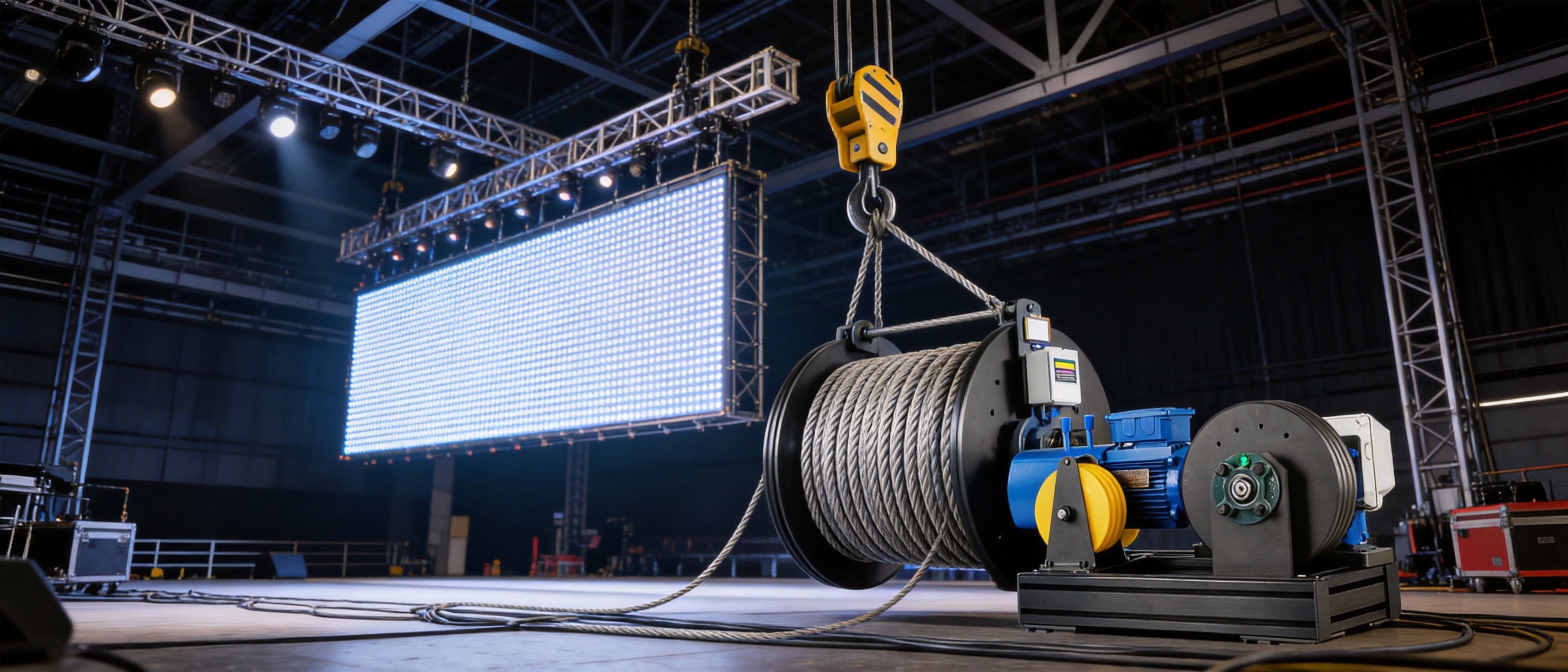
The pilewind mechanism is one of the most important features of the product. In a conventional drum winch, the wire rope may not always form consistent layers during operation. If the rope crosses itself, accumulates unevenly, or concentrates on one part of the drum, the load distribution can change. This may increase local wear, create irregular tension, and reduce the predictability of the lifting process.
A pilewind stage winch uses a controlled rope-aligning assembly to guide the wire rope into an orderly pattern. As the drum rotates, the rope is directed into an appropriate position so that each layer is arranged consistently. The patented rope-aligning technology inherited by the PII-Series is intended to support this process throughout repeated lifting cycles.
Orderly winding provides several practical advantages. First, it improves the use of the available drum surface. Second, it reduces the possibility of rope crossover and localized accumulation. Third, it helps maintain a more consistent effective drum radius. The drum radius influences the relationship between motor rotation, rope travel, and lifting speed, so a more stable winding pattern can contribute to better positioning control.
Controlled winding also helps reduce mechanical stress. When a rope is forced into irregular layers, it may experience additional bending, friction, or contact pressure. Over time, these effects can accelerate abrasion and deformation. By keeping the cable aligned, the pilewind assembly can help support longer rope service life and reduce the frequency of corrective maintenance.
For stage operators, the value of cable management is often most visible when it prevents problems. A well-managed rope is less likely to cause unexpected stoppages, uneven movement, or repeated manual adjustments. This is important in venues where equipment must be repositioned several times a day or where a production schedule leaves little room for troubleshooting.
The rope-aligning mechanism also complements the system’s precision control functions. Encoders and travel sensors can provide feedback about movement, but reliable mechanical rope handling remains necessary for that feedback to produce consistent physical results. Electronic precision cannot fully compensate for poor cable arrangement. Mechanical alignment and intelligent monitoring must therefore work together.
As a stage winch operates, the amount of rope wound on the drum changes. This can affect the effective winding diameter and, in turn, the speed and torque relationship. A controlled pilewind pattern helps make this change more orderly and predictable. The control system can then manage acceleration, deceleration, and stopping with greater consistency.
Consistent lifting behavior is particularly important when equipment must remain level. If several winches are used to raise a long lighting bridge or display structure, differences in movement can create tilt or uneven loading. A stable winding arrangement, combined with encoder feedback and coordinated control, provides a stronger foundation for synchronized operation.
Maintenance teams typically monitor rope condition, drum wear, guide components, bearings, brakes, reducers, and electrical feedback devices. Poor winding may place additional stress on several of these components at the same time. Reducing rope crossover and uneven loading can therefore contribute to lower maintenance pressure across the complete lifting assembly.
The PII-Series is designed with long-term operating efficiency in mind. Its pilewind technology does not eliminate the need for inspection, lubrication, adjustment, or replacement of wear parts. However, it is intended to reduce avoidable wear and make the condition of the rope and drum easier to evaluate during routine maintenance.
The PII-Series integrates several mechanical and electromechanical components into one coordinated lifting unit. Each component has a specific role, and overall performance depends on how these parts function together rather than on motor power alone.
The electric motor supplies the driving force for lifting and lowering. A stage motor must provide sufficient torque for the rated application while supporting controlled starting and stopping. Smooth motor behavior is important because sudden acceleration can create shock loading, rope tension changes, and unnecessary movement of suspended equipment.
The motor is also connected to the self-locking and braking functions. In emergency situations, the system can use its braking architecture to stop movement and help prevent unintended travel. The exact operating limits and braking performance must be verified as part of the project design and commissioning process.
The reducer converts motor speed into the torque and output speed required by the pilewind drum. A suitable reduction ratio allows the winch to lift a heavy payload while maintaining controlled movement. The reducer must withstand repeated operating cycles and transmit power efficiently.
Stable torque output is important in theatrical applications because equipment may need to move slowly and precisely near its final position. A well-matched reducer helps the control system achieve smooth acceleration and deceleration without excessive vibration.
The encoder provides movement feedback to the control system. It can help determine the rotational position of the drive or drum and support repeatable travel control. Encoder feedback is especially valuable when a winch is integrated into a larger automated stage system.
The product’s precision control concept uses dual encoder technology. Redundant or complementary feedback can provide improved monitoring of travel conditions and support more reliable operation across different scenarios. The final configuration should be evaluated according to the required control architecture and relevant technical standards.
The pilewind assembly guides the wire rope across the drum. It is responsible for orderly rope alignment and is central to the product’s ability to combine compact dimensions with high lifting performance. Correct installation, adjustment, and inspection of this assembly are important for maintaining reliable cable management.
The travel sensor helps monitor the movement range and operating position of the winch. It can be used as part of the limit protection and control logic to prevent operation beyond the defined travel range. Travel sensing is particularly important where equipment operates near structural elements, stage decks, lighting positions, or other suspended objects.
Stage lifting equipment operates in environments where people, equipment, and valuable productions may be located nearby. Safety must therefore be considered through multiple layers rather than a single device or function. The PII-Series includes several safety-oriented design features intended to support dependable operation.
The product uses over-designed components intended to withstand demanding operating conditions. A high safety factor provides a margin between normal working loads and the capability of critical components. This margin is important because real operating conditions may include starting loads, stopping forces, repeated cycles, installation tolerances, and environmental influences.
A safety factor does not mean that a winch can be used beyond its rated capacity. The rated payload, duty conditions, rope arrangement, support structure, speed, acceleration, and installation method must always be considered together. Proper engineering and compliance with applicable local regulations remain essential.
The dual braking design provides two braking capabilities that can stop the system independently in an emergency. Independent braking layers can improve protection if one braking path experiences a fault or requires maintenance. They also provide additional confidence during stopping and holding operations.
Braking systems must be regularly inspected and tested. Brake response may be affected by wear, contamination, incorrect adjustment, electrical faults, or changes in operating conditions. The product’s dual-braking architecture is therefore most effective when supported by a documented inspection and testing program.
Multiple sensors can monitor operating conditions and respond when an emergency or abnormal situation is detected. Payload inspection technology may help identify conditions such as overload, unexpected resistance, abnormal travel, or other faults recognized by the control system.
Sensor-based protection reduces dependence on manual observation alone. It can help initiate a controlled stop or system shutdown before a developing problem causes more serious equipment damage. However, sensor protection should complement, not replace, correct load calculation, operator training, inspection, and safe working procedures.
Precision control supports fine travel management in different operating scenarios. Dual encoder feedback can help the system monitor position and movement more accurately, improving repeatability during programmed or manually controlled operation.
Accurate control is a safety benefit as well as an efficiency benefit. When equipment stops at the intended position, there is less need for manual correction and less likelihood of collision with nearby structures. Smooth deceleration can also reduce movement of suspended loads.
The motor self-locking function is designed to support automatic braking in an emergency. If a fault or emergency command occurs, the braking action helps prevent uncontrolled movement. This feature is particularly important for suspended equipment that must remain stable when power or control conditions change.
Self-locking technology should be understood as one part of the complete safety system. Safe operation also requires correctly selected ropes, appropriate structural supports, effective limit protection, emergency stop functions, regular inspection, and trained personnel.
The PII-Series supports both individual and group control networks. This gives venue operators flexibility when configuring the winch for different applications. A single unit can be controlled independently for a straightforward lifting task, while multiple units can be coordinated for synchronized movement.
Individual control is useful during installation, maintenance, testing, and simple production operations. An operator may need to move one curtain, adjust one lighting position, or service a single scenic component without activating other equipment. Independent operation can simplify troubleshooting and reduce unnecessary movement.
Group control is valuable when several lifting points must move together. Examples include raising a truss, maintaining the level of a wide screen, positioning multiple scenic pieces, or coordinating a group of acoustic elements. A networked control arrangement can provide common commands, coordinated speed management, and synchronized stopping behavior.
Intelligent control can also support position memory, speed adjustment, remote operation, real-time monitoring, and fault diagnosis, depending on the overall control system selected for the project. These functions can reduce repetitive manual tasks and help operators manage complex performances more efficiently.
Control flexibility is a competitive advantage because venues do not all have the same technical requirements. A small auditorium may initially need only individual operation but later expand into group automation. A multifunctional venue may use independent control for daily events and synchronized control for major productions. Supporting both modes allows the same basic winch platform to serve different operating strategies.
| Control mode | Suitable application | Primary advantage |
|---|---|---|
| Individual control | Maintenance, testing, single equipment movement | Simple and direct operation |
| Group control | Trusses, screens, scenic structures, synchronized lifting points | Coordinated movement |
| Position control | Preset stage locations | Repeatable setup and faster changeovers |
| Speed control | Different equipment and production sequences | More adaptable movement behavior |
| Monitoring and fault diagnosis | Automated venue management | Earlier identification of abnormal conditions |
The control network should be designed in accordance with the application, risk assessment, local electrical requirements, and the selected supervisory system. Proper commissioning is essential to verify direction, travel limits, encoder signals, emergency stops, group relationships, and fault responses.
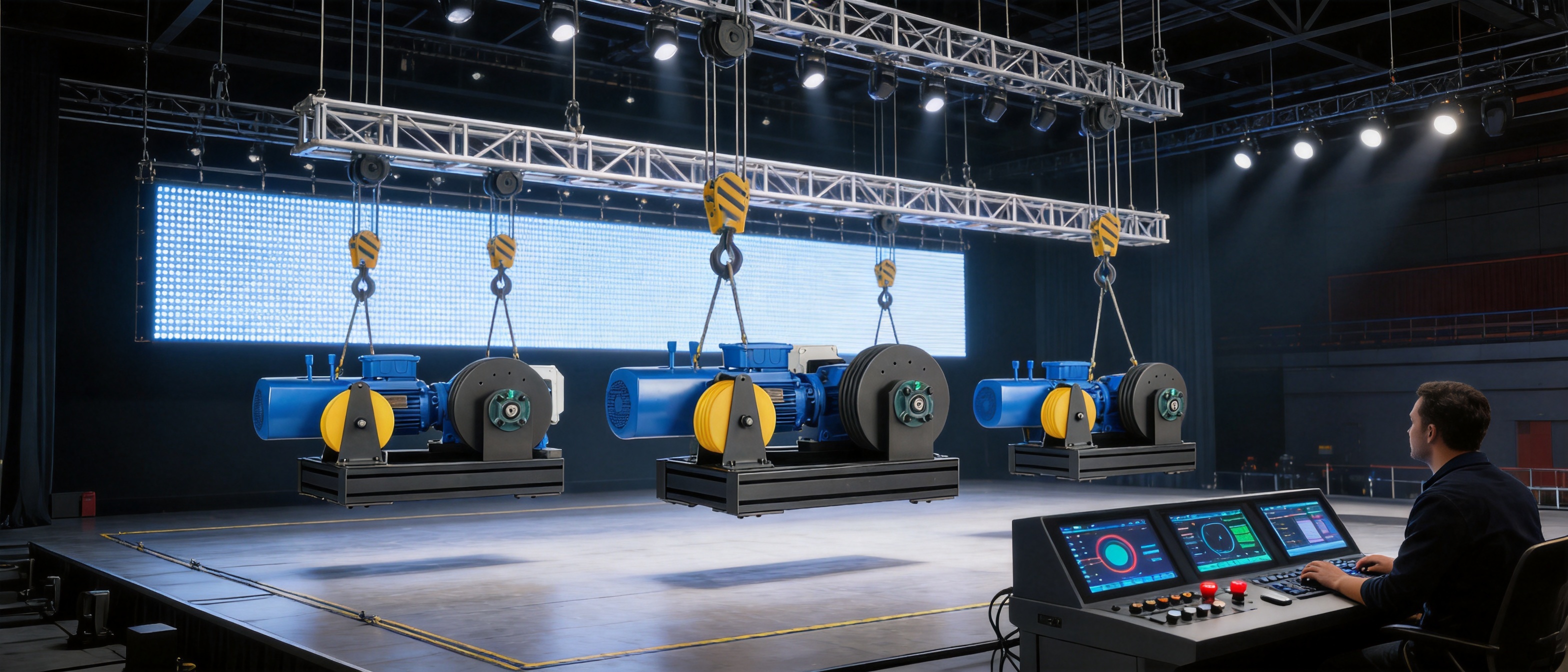
Lifting efficiency is not defined only by maximum speed. In a professional venue, efficiency also includes reliable positioning, predictable operation, short setup times, low maintenance demand, and the ability to complete repeated movements without interruption. The PII-Series contributes to these goals through several integrated design features.
A winch capable of handling up to 1,000 kilograms can reduce the need to divide a heavy load among too many lifting devices. Fewer units may simplify the mechanical arrangement and reduce the number of components that need to be installed, wired, inspected, and synchronized.
Compact dimensions are equally important. Equipment rooms and stage grids often contain ventilation systems, electrical cabinets, structural beams, curtains, counterweight systems, and other machinery. A high-capacity winch that occupies less space can give project designers more options when allocating equipment.
The combination of capacity and compactness may be more valuable than either feature alone. A large winch may provide sufficient payload but be difficult to install in a restricted area. A compact winch may fit easily but lack the required capacity. The PII-Series is intended to balance both requirements.
Accurate positioning reduces the time needed to prepare a venue. When lighting equipment, screens, acoustic elements, or scenic structures can move to repeatable positions, operators spend less time making manual adjustments. This is useful during rehearsals, touring productions, corporate events, exhibitions, and venue conversions.
Position memory and coordinated control can further improve setup speed. An operator may recall a predefined position or initiate a programmed movement sequence instead of controlling each unit separately. Repeated configurations can therefore be restored more consistently.
Cable disorder is a common source of inefficiency in drum-based lifting systems. Rope crossover, uneven loading, and abrasion can produce abnormal noise, increased resistance, or movement irregularities. The pilewind system helps prevent these conditions by maintaining an orderly rope pattern.
Reducing cable-related interruptions has a direct operational value. The venue may experience fewer stoppages, fewer emergency inspections, and fewer unplanned rope adjustments. Over the life of the equipment, this can improve availability and reduce maintenance expenditure.
Stage equipment often includes fragile lighting instruments, screens, sensors, scenic surfaces, and audio components. Sudden starts, abrupt stops, or uneven lifting can create unnecessary vibration. Smooth control of acceleration and deceleration helps reduce movement disturbance.
The interaction between the motor, reducer, encoder, pilewind assembly, and control system is important here. Mechanical components provide stable power transmission, while feedback devices allow the controller to regulate the movement. The result is a more controlled lifting cycle than a simple on-off motor arrangement can provide.
When selecting stage machinery, project teams often compare products according to capacity, size, installation method, control compatibility, safety functions, maintenance needs, and manufacturer support. The PII-Series offers several advantages over conventional or less specialized lifting systems.
The most direct difference is the controlled rope arrangement. A conventional drum winch may depend heavily on installation accuracy, operator attention, and favorable operating conditions to maintain an acceptable winding pattern. A pilewind winch uses a dedicated mechanism to guide the rope, providing a more consistent result during repeated operation.
This can improve cable service life, reduce irregular loading, and support more stable travel behavior. For venues that operate frequently, the long-term value of controlled rope management can be substantial.
Some high-capacity lifting systems require large equipment rooms or extensive structural modifications. The PII-Series is designed around a compact form factor, which may make it easier to integrate into restricted spaces. This is a particularly important advantage for renovations, small theaters, banquet halls, and multipurpose buildings where the original architecture was not designed for large stage machinery.
The ability to install the unit horizontally or vertically provides more freedom than a system restricted to one orientation. Engineers can evaluate the available support structure, rope route, service access, and maintenance space before selecting the most appropriate arrangement.
Installation flexibility may also help reduce project changes. When equipment can adapt to the building, fewer compromises may be required in the stage layout or surrounding facilities.
A basic lifting device may rely on a single brake, manual observation, or limited travel protection. The PII-Series combines a high safety factor, dual braking, payload inspection, dual encoder feedback, travel sensing, and motor self-locking. The integrated approach provides multiple layers of protection rather than depending on one isolated feature.
Some winches are suitable only for independent operation, while others require a complex central system even for simple tasks. The PII-Series supports both individual and group control, allowing the configuration to match the venue’s operational scale. This flexibility can reduce unnecessary complexity for smaller projects while leaving room for future automation.
Stage machinery is rarely a one-size-fits-all product. Payload, travel distance, installation orientation, speed, control method, rope configuration, structural support, and operating environment may vary from one project to another. A manufacturer with engineering and production capabilities can adjust the solution to project conditions more effectively than a supplier that only distributes standard equipment.
Theaters and opera houses often operate multiple pieces of suspended equipment, including lighting bridges, scenery, curtains, acoustic reflectors, and stage effects. These venues require accurate movement and reliable repeatability because equipment positions may change between scenes or productions.
The PII-Series can support heavy equipment while maintaining controlled cable winding. Its individual and group control functions are useful when one component must move independently or several units must work together.
Smaller venues may have fewer technical resources and more limited equipment areas. They still need professional lifting capability for concerts, school productions, conferences, and community events. A compact high-capacity winch can provide the performance of a heavy-duty system without requiring the space associated with larger installations.
Banquet halls and conference centers frequently change their layouts. A suspended display, projection surface, banner, lighting system, or decorative structure may need to be raised or lowered according to the event. Reliable automation allows staff to perform these changes efficiently while keeping equipment organized above the occupied area.
Cultural centers may host exhibitions, concerts, public ceremonies, theatrical performances, and educational programs. Each application may require different lifting behavior. The PII-Series provides a flexible platform that can operate individual devices or coordinate groups according to the event requirements.
Television studios and exhibition halls value quiet, accurate, and repeatable positioning. Camera-related equipment, display structures, lighting systems, and suspended scenic components may need frequent adjustment. The pilewind mechanism and precision feedback help support consistent operation over repeated cycles.
Stadiums and indoor arenas may use lifting systems for LED displays, banners, temporary lighting, acoustic equipment, and event infrastructure. These applications can involve large loads and wide operating areas. High-capacity equipment, network control, and dependable fault monitoring are valuable when several lifting points must be coordinated.
Product performance depends not only on the design concept but also on manufacturing accuracy, process control, assembly discipline, testing, and after-sales support. RenteZhihe (JiangSu) Equipment Technology Co., Ltd. specializes in the research, development, and manufacture of stage machinery, performance equipment, and intelligent control systems.
The company operates a production base of approximately 20,000 square meters. This includes an approximately 11,000-square-meter manufacturing workshop and around 7,500 square meters dedicated to research, development, and office activities. The scale of the facility provides space for material processing, component production, assembly, testing, engineering development, and project coordination.
More than 30 advanced CNC processing machines support precision manufacturing across the production process. CNC equipment can improve repeatability when producing structural parts, transmission components, mounting surfaces, drum elements, and other critical items. Accurate machining is important because misalignment can influence noise, vibration, rope tracking, bearing loading, and overall service life.
Stage machinery must respond to changing venue requirements. Research and development activities allow the manufacturer to improve mechanical designs, refine control functions, adapt products to different project conditions, and develop customized specifications. The PII-Series reflects this approach by combining a compact mechanical structure with advanced control and safety functions.
Engineering teams can evaluate the relationship between payload, rope arrangement, motor performance, reducer selection, braking, travel sensing, and control communication. This integrated approach is important because changing one part of a winch can affect the performance of other parts. For example, increasing payload may influence torque requirements, braking capacity, drum design, structural loading, and control parameters.
Precision processing supports the accurate assembly of the reducer, drum, rope-aligning system, bearings, motor, encoder, and travel sensor. CNC machining can help maintain dimensional consistency between production batches. Consistent dimensions make assembly more predictable and support the interchangeability of suitable components.
Machining quality also contributes to serviceability. Properly produced mounting points and inspection surfaces can make alignment checks, component replacement, and routine maintenance more manageable. For stage equipment expected to operate for many years, maintainability is an important part of total value.
The company implements quality management throughout the manufacturing process. This includes process control, inspection of key components, multiple verification procedures, final assembly checks, and testing before delivery. Such controls are intended to identify problems before a product reaches the installation site.
Quality assurance is particularly important for lifting machinery because several components influence safety at the same time. A motor, brake, rope guide, encoder, or structural connection that does not meet its required condition can affect the complete system. Inspection must therefore address both individual components and the assembled machine.
Complete testing and commissioning before delivery help verify the operating condition of the winch. Depending on the project requirements, testing may include mechanical movement, rope alignment, motor rotation, brake action, travel sensing, encoder feedback, emergency stop response, control communication, and abnormal-condition handling.
Factory testing does not replace on-site commissioning. Site conditions can influence the final result, including support structures, cable routes, control cabinets, power supply, environmental conditions, and interactions with other stage equipment. However, factory testing provides a stronger starting point and helps reduce the risk of discovering basic manufacturing or assembly issues after installation.
The company reports an annual production capacity exceeding 5,000 units. This capacity supports projects of different sizes and can help improve delivery planning when several systems are required. Production capability is especially valuable for large venue projects, multi-site developments, or contractors that need consistent equipment across several installations.
Capacity must be matched with quality control and engineering support. High output alone does not guarantee performance. The value comes from combining production resources with process inspection, technical documentation, testing, and project coordination.
| Manufacturing capability | How it supports the product |
|---|---|
| Dedicated manufacturing workshop | Provides space for organized production and assembly |
| CNC processing equipment | Improves dimensional accuracy and repeatability |
| Research and development facilities | Supports design refinement and customization |
| Process quality control | Helps identify defects during production |
| Key-component verification | Confirms the condition of important mechanical and electrical parts |
| Factory testing and commissioning | Verifies operation before shipment |
| Annual capacity exceeding 5,000 units | Supports projects with different equipment quantities |
Different performance venues have different structural, electrical, operational, and regulatory conditions. A reliable stage machinery supplier must therefore provide more than a catalog product. Project support may begin with an application review and continue through design, production, installation, commissioning, operation, and maintenance.
Potential customization considerations include payload, lifting speed, travel distance, installation orientation, drum and rope configuration, control interfaces, emergency functions, environmental conditions, access for maintenance, and the number of winches operating in a group. Each factor can affect the final equipment specification.
RenteZhihe provides customization for multiple stage machinery specifications. This capability allows project engineers and venue operators to discuss the actual application rather than selecting equipment based only on a general product category. The objective is to ensure that the winch, support structure, control system, and operating procedures are compatible.
Engineering cooperation is also important during installation. The equipment must be positioned correctly, the rope route must be free from unintended interference, and the support structure must be capable of handling the expected loads. Electrical connections, encoder signals, travel sensors, emergency circuits, and group-control communication must be checked before operation.
After installation, commissioning should verify all movement directions and limits. Operators should receive training in normal operation, emergency stopping, fault response, inspection, and maintenance. A professional supplier can contribute to this process by providing technical documentation and engineering assistance.
The purchase price of a stage winch is only one part of its total cost. Operators must also consider installation, energy consumption, inspections, spare parts, downtime, rope replacement, brake maintenance, and the labor required to manage the system. A design that reduces avoidable wear and simplifies control can provide greater value over its service life.
The pilewind mechanism supports this objective by reducing cable overlap and uneven loading. Lower rope abrasion may extend replacement intervals, while stable winding can reduce stress on the drum, reducer, bearings, and guide components. The product’s extra-long service-life design is intended to support continued operation with minimized maintenance cost.
Routine maintenance should include visual inspection of the rope, drum, rope-aligning assembly, motor, reducer, brakes, encoder, travel sensor, mounting structure, and electrical connections. Operators should also monitor abnormal noise, vibration, unusual heat, irregular movement, delayed braking, unexpected position errors, or repeated fault messages.
Preventive maintenance is more effective than waiting for a failure. Inspection schedules should be based on operating frequency, payload, duty cycle, environmental conditions, manufacturer recommendations, and local regulations. Records should be maintained so that changes in performance can be identified over time.
When a component requires replacement, the correct specification must be used. Braking parts, ropes, sensors, encoders, and control components influence safety and should not be substituted with unsuitable alternatives. Qualified personnel should perform repairs, adjustments, and safety tests.
A high-capacity winch performs properly only when the complete installation is correctly engineered. The supporting structure must be evaluated for static and dynamic loads. The rope path must be planned to prevent rubbing, sharp bends, unintended contact, and interference with other machinery.
Horizontal or vertical installation should be selected according to the structure, cable route, service access, and operating direction. Adequate space should be reserved for inspection and component replacement. Equipment should not be installed in a way that makes brake testing, rope observation, or emergency intervention impractical.
Before first operation, commissioning personnel should verify motor direction, travel limits, encoder signals, sensor operation, brake engagement, emergency stops, group-control logic, and load behavior. Test movements should begin under controlled conditions. The system should not be placed into production service until the operating sequence and safety responses have been confirmed.
Operators should understand the rated payload and must not exceed it. Loads should be properly distributed and attached. Any suspended equipment must be checked for secure connections, clearance, and balance before movement begins. The winch should not be used to lift people unless the complete system has been specifically designed, certified, and approved for that purpose.
When multiple winches work as a group, the control system should be configured so that abnormal movement, position differences, or sensor faults can be detected. Operators should know how to stop the group safely and how to isolate an individual unit for inspection.
Purchasers of stage machinery are not simply buying a motor and drum. They are investing in a system that may support expensive production equipment, tight event schedules, and the safety of venue personnel. Manufacturing quality affects every stage of ownership, from installation and commissioning to daily operation and long-term maintenance.
Accurate structural components help the machine remain aligned. Reliable electrical components help maintain stable feedback. Correctly assembled brakes support controlled stopping. Properly manufactured rope-guiding parts help maintain the pilewind pattern. Thorough testing helps identify errors before the equipment enters service.
A manufacturer with experience in stage machinery also understands that the equipment must integrate with a complete venue environment. The winch may need to communicate with lighting control, stage management, building management, emergency systems, or a centralized automation platform. Mechanical reliability and control compatibility must therefore be considered together.
RenteZhihe’s manufacturing and engineering capabilities are organized around this integrated requirement. Its activities include research and development, production, quality control, testing, installation support, commissioning, and maintenance-related services. This complete service structure can be beneficial for customers seeking a long-term project partner rather than a standalone equipment shipment.
Before selecting a winch, project teams should define the actual operating requirements. Important questions include the maximum working load, lifting frequency, desired speed, travel distance, installation orientation, number of lifting points, control method, available power, environmental conditions, and required safety functions.
The structure supporting the winch must also be evaluated. A product with a 1,000-kilogram payload does not mean that every building or mounting point can support that load. Structural engineering must account for the equipment weight, lifted load, dynamic forces, support connections, and any applicable safety factors.
Control requirements should be considered early. If the venue expects future automation, selecting a system that supports group control and position feedback can avoid costly upgrades later. If the installation is small and manually managed, individual control may be sufficient at first, while the ability to expand remains valuable.
Maintenance access is another key consideration. Equipment should be installed where technicians can inspect the rope, brake, motor, reducer, encoder, and travel sensor. A compact product should not be placed in a location where its smaller footprint prevents safe service access.
Finally, buyers should evaluate the manufacturer’s engineering resources, factory testing, customization capability, delivery capacity, documentation, and after-sales support. The best product choice is not necessarily the unit with the highest nominal capacity. It is the system that matches the venue’s actual requirements and can be supported throughout its operating life.
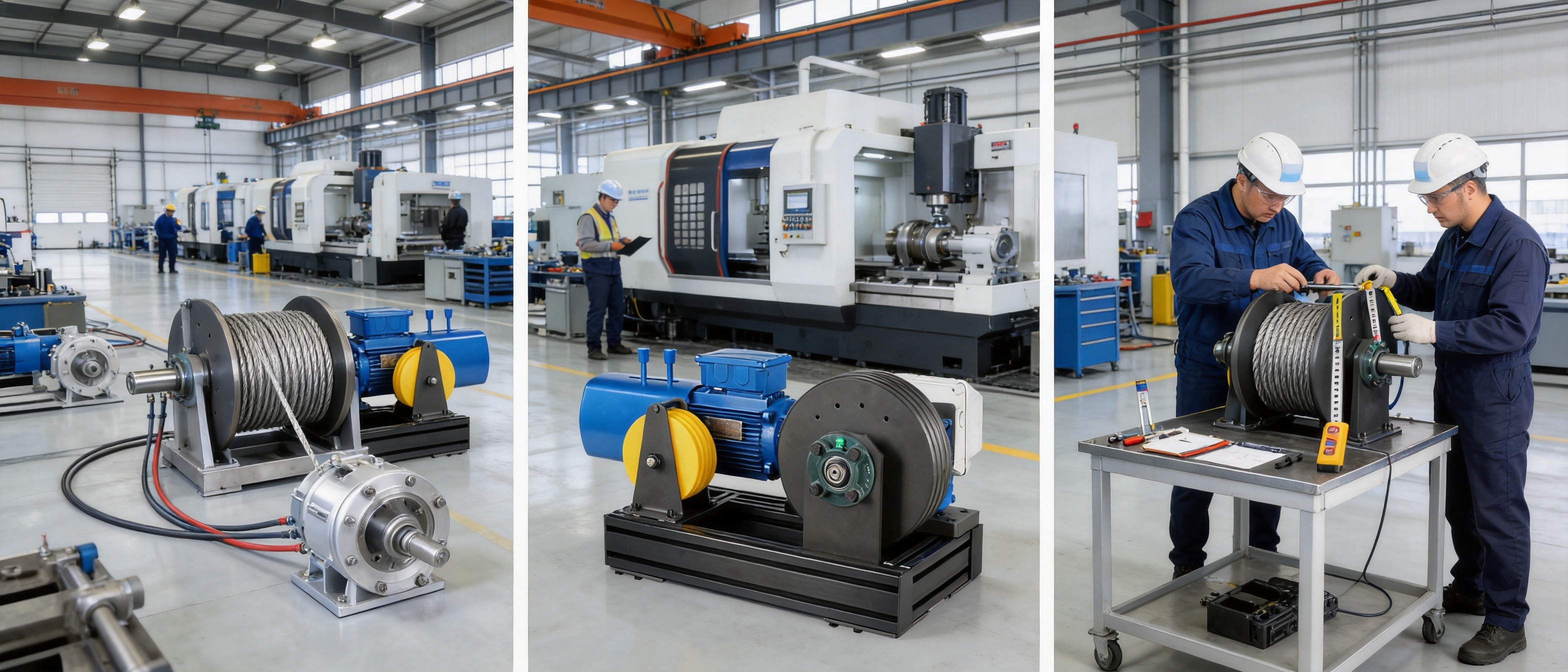
A high-capacity pilewind stage winch is a specialized lifting machine designed to move heavy stage equipment while arranging the wire rope into controlled layers on the drum. It combines a motor, reducer, drum, rope-aligning assembly, encoder, travel sensor, braking system, and control functions in one integrated unit.
The PII-Series is designed to support a payload of up to 1,000 kilograms. The appropriate working load must be confirmed according to the final model, installation arrangement, rope configuration, duty cycle, structural support, and applicable safety requirements.
Pilewind technology guides the wire rope into orderly layers instead of allowing irregular accumulation on the drum. This helps reduce rope crossover, uneven loading, abrasion, and mechanical stress while supporting smoother and more repeatable lifting behavior.
Yes. The product supports horizontal and vertical installation arrangements. The preferred orientation depends on the building structure, rope route, service access, control position, and project engineering requirements.
Yes. Its compact structure and high lifting capacity make it suitable for small and medium-sized theaters, auditoriums, banquet halls, conference centers, cultural facilities, and other venues where space is limited but heavy lifting capability is required.
Yes. The PII-Series supports both individual and group control networks. A single winch can be operated independently, while several winches can be coordinated for synchronized lifting of trusses, screens, scenic structures, acoustic equipment, or other suspended loads.
The product includes a high safety factor through over-designed components, dual braking, payload inspection technology, dual encoder precision control, travel sensing, motor self-locking technology, and individual or group control. These functions must be combined with proper installation, inspection, operator training, and compliance with local regulations.
Dual braking provides two braking capabilities that can stop the system independently during an emergency. This creates an additional layer of protection and helps support safe stopping and holding of the suspended load.
Motor self-locking technology is designed to engage braking automatically in an emergency or abnormal condition. It helps prevent unintended movement, although it must be supported by correct system commissioning, regular inspection, and other required safety measures.
Encoders provide movement and position feedback to the control system. This supports accurate travel measurement, repeatable positioning, smooth acceleration and deceleration, and improved synchronization between multiple lifting points.
Typical applications include lighting trusses, LED displays, acoustic equipment, stage curtains, scenic elements, suspended banners, mechanical stage components, and other professional performance equipment within the approved working load and installation conditions.
The pilewind assembly distributes the rope evenly across the drum, helping reduce abrasion, crossover, uneven loading, drum wear, and stress on related mechanical parts. Regular preventive inspection is still required to maintain safe and reliable performance.
Yes. Stage machinery projects may require different payloads, speeds, travel distances, installation orientations, control interfaces, and environmental arrangements. The manufacturer supports customization of multiple stage machinery specifications according to project requirements.
The manufacturer operates a production base of approximately 20,000 square meters, including a manufacturing workshop and research, development, and office facilities. More than 30 advanced CNC processing machines support precision manufacturing, while process inspection, key-component verification, assembly testing, and commissioning are used to support product quality.
Project teams should evaluate the maximum load, structural support, rope path, installation orientation, power supply, control system, emergency functions, maintenance access, travel distance, and applicable regulations. Final installation and commissioning should be performed by qualified personnel.
The PII-Series High-Capacity Pilewind Stage Winch is designed for venues that require substantial lifting performance without accepting an oversized or inflexible machine. Its payload of up to 1,000 kilograms, compact structure, horizontal and vertical installation options, patented rope-aligning technology, and support for individual or group control make it a practical solution for a broad range of professional stage applications.
Its advantages are not limited to lifting capacity. The controlled pilewind mechanism improves cable management, the dual encoder system supports precision positioning, the braking and self-locking functions provide additional protection, and the intelligent control architecture supports both simple and advanced automation. Together, these features can reduce setup time, improve operational consistency, minimize cable-related downtime, and support long-term equipment availability.
The product is also supported by the manufacturing and engineering capabilities of RenteZhihe (JiangSu) Equipment Technology Co., Ltd. Its research and development resources, CNC processing equipment, structured production facilities, quality management procedures, factory testing, customization capability, and project service system provide a strong foundation for dependable stage machinery production.
For theaters, auditoriums, banquet halls, cultural centers, exhibition venues, conference facilities, television studios, stadiums, and multifunctional performance spaces, the selection of a lifting system should be based on the complete operating environment rather than on capacity alone. A high-capacity pilewind stage winch offers the greatest value when mechanical strength, cable management, precision control, safety architecture, manufacturing quality, installation support, and maintenance planning are considered as one integrated solution.
1. Product technical information for the PII-Series High-Capacity Pilewind Stage Winch.
2. Manufacturer information for RenteZhihe (JiangSu) Equipment Technology Co., Ltd.
3. General engineering principles for stage machinery, suspended loads, and automated lifting systems.
4. General practices for wire rope inspection, drum winding, braking systems, and preventive maintenance.
5. General safety principles for theatrical equipment, entertainment technology, and venue automation.
6. General manufacturing practices for CNC machining, process inspection, equipment assembly, and factory commissioning.
We specialize in delivering advanced stage machinery, rigging systems and intelligent control solutions for performance spaces worldwide.

No. 111 Runfeng Road, Hailing District, Taizhou City, Jiangsu Province, China

rtstage@163.com

+86-139 1771 1698

+86-139 1771 1698
rtstage@163.com
 中文简体
 English
 русский
 Français
 Español
 عربى