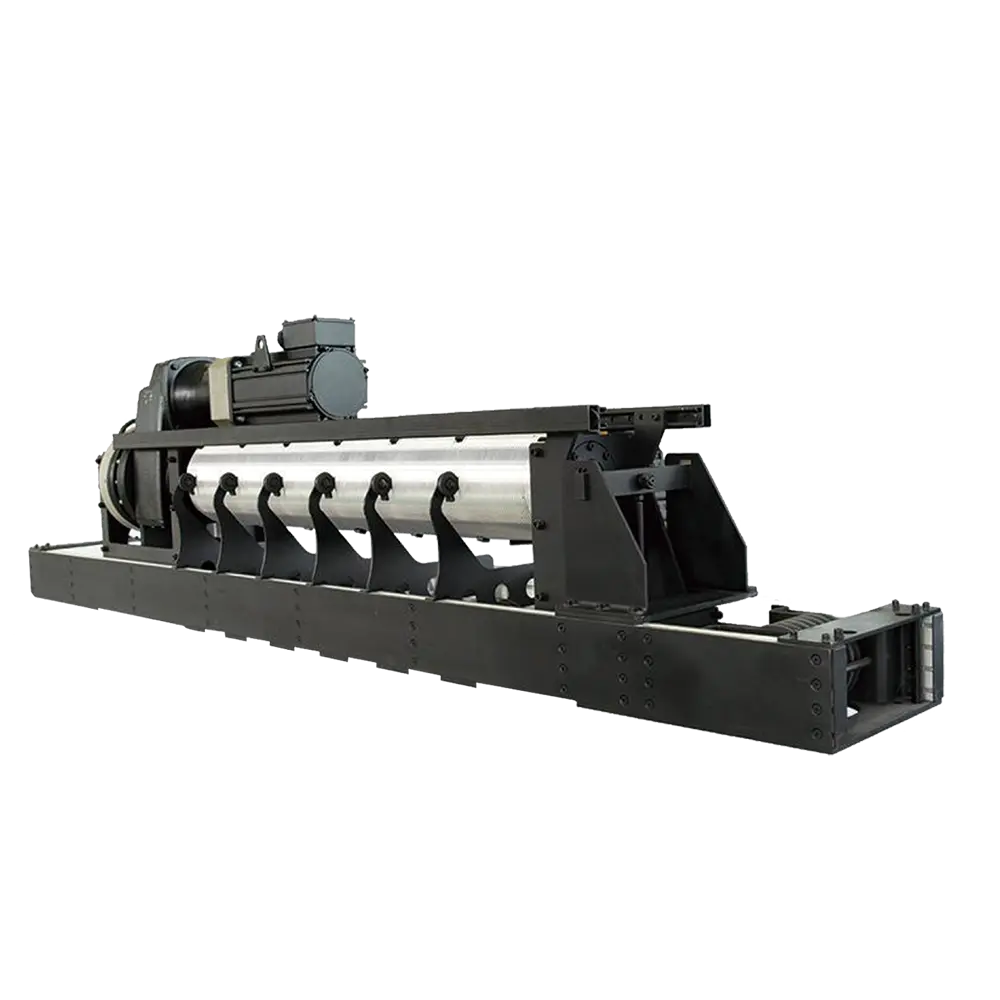
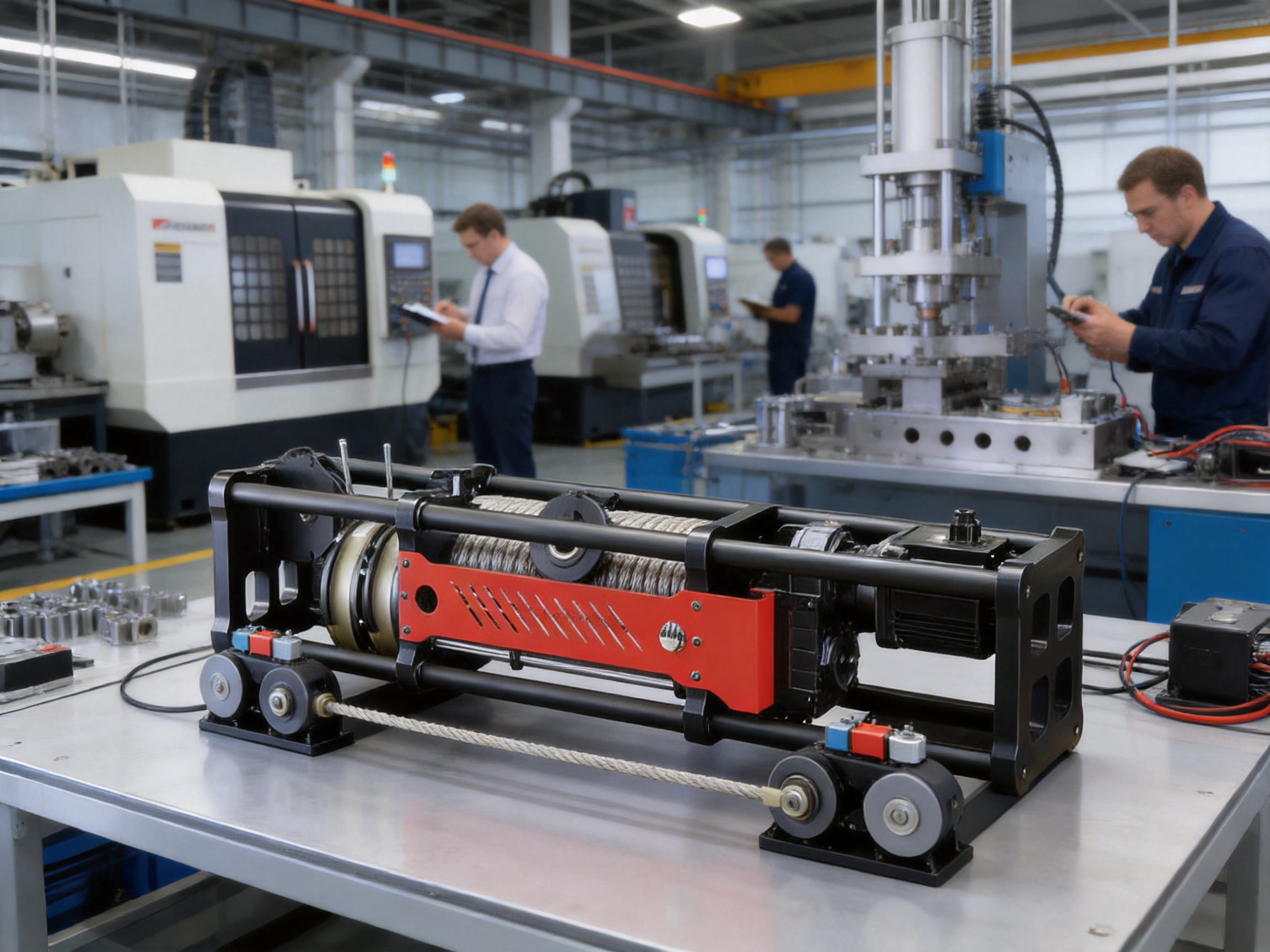
Modern stage production increasingly depends on equipment that can move as quickly as the performance itself. Touring productions, temporary theaters, cultural events, exhibition venues, conference centers, and multipurpose halls frequently change their layouts and technical requirements. In these environments, stage machinery must do more than lift a suspended load. It must be easy to transport, fast to install, precise during operation, safe under demanding conditions, and adaptable to different production workflows.
The Mobile Zero-Fleet Stage Winch is designed to address these requirements through a compact mechanical structure, servo-driven motion, controlled rope management, and a portable form factor. It is intended for applications in which a lifting point may need to be installed, removed, repositioned, or transported repeatedly. Instead of relying on a large fixed installation with complex alignment equipment, the winch combines essential lifting and control components into a streamlined unit that supports efficient rigging and dependable operation.
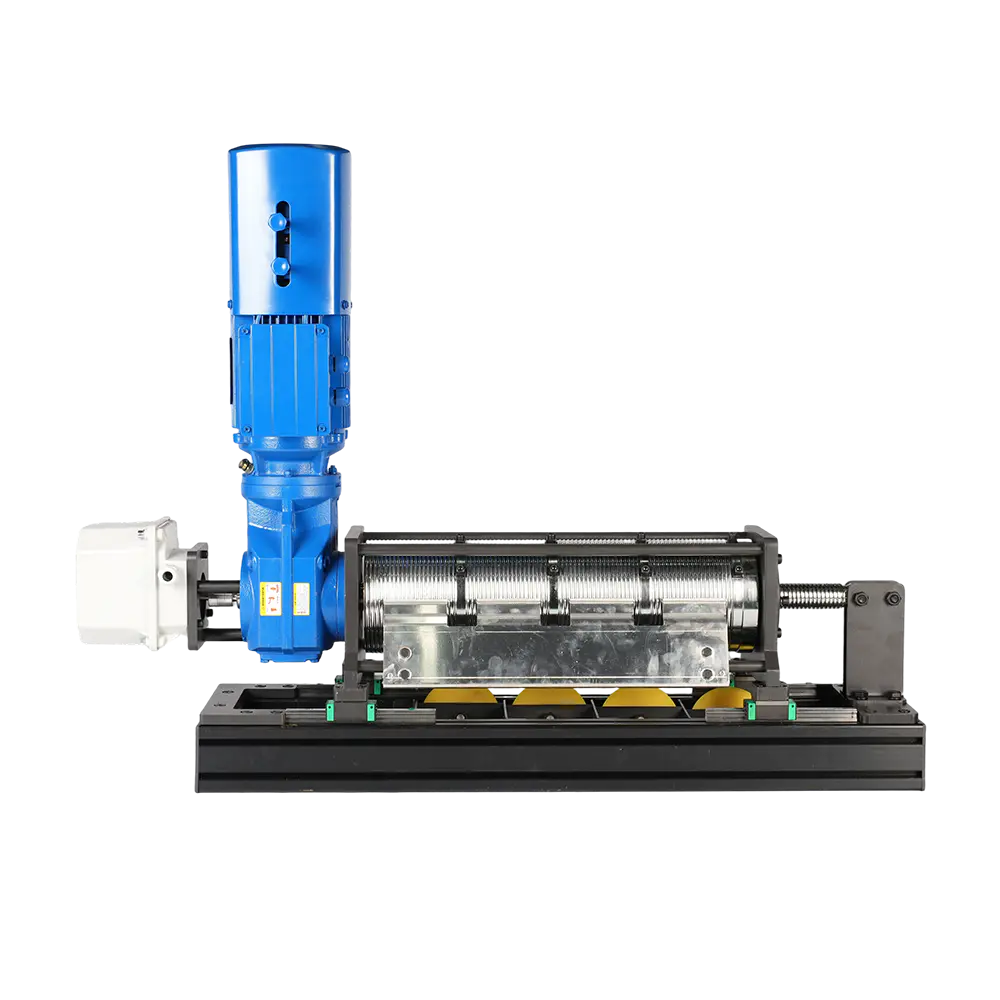
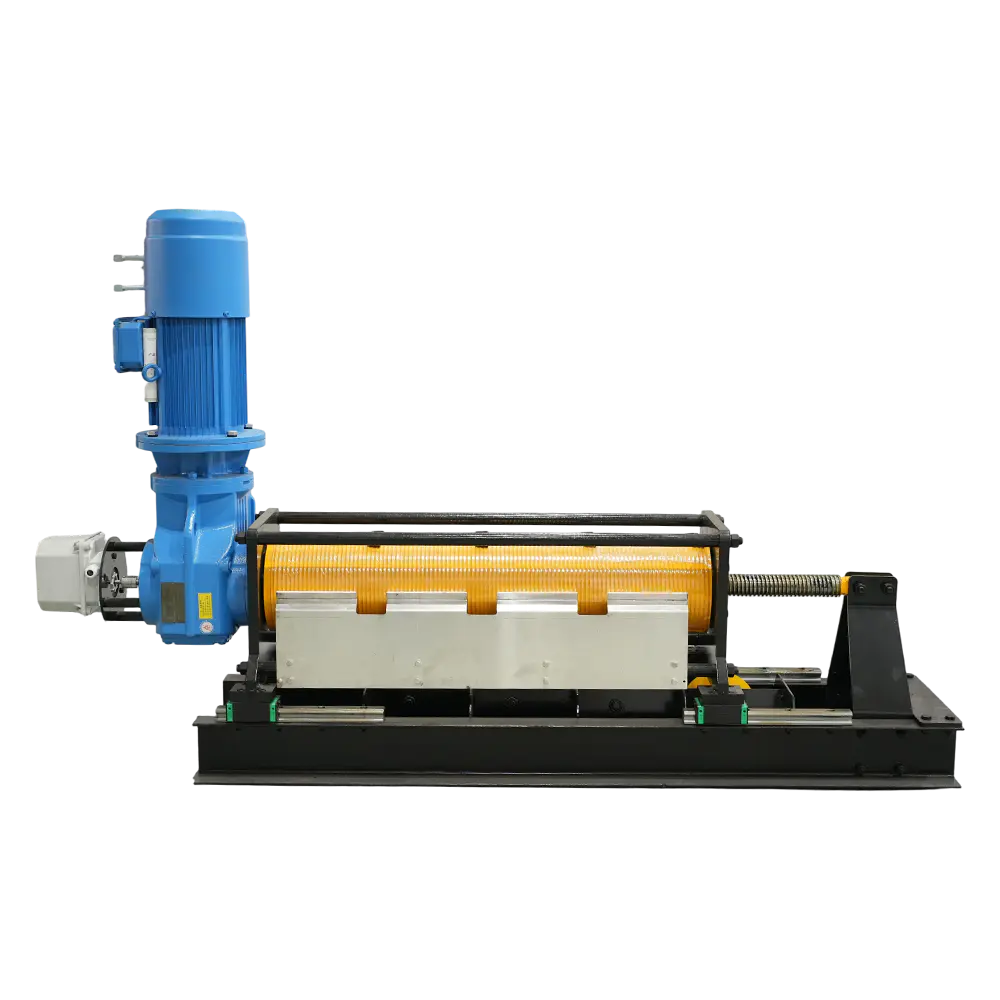
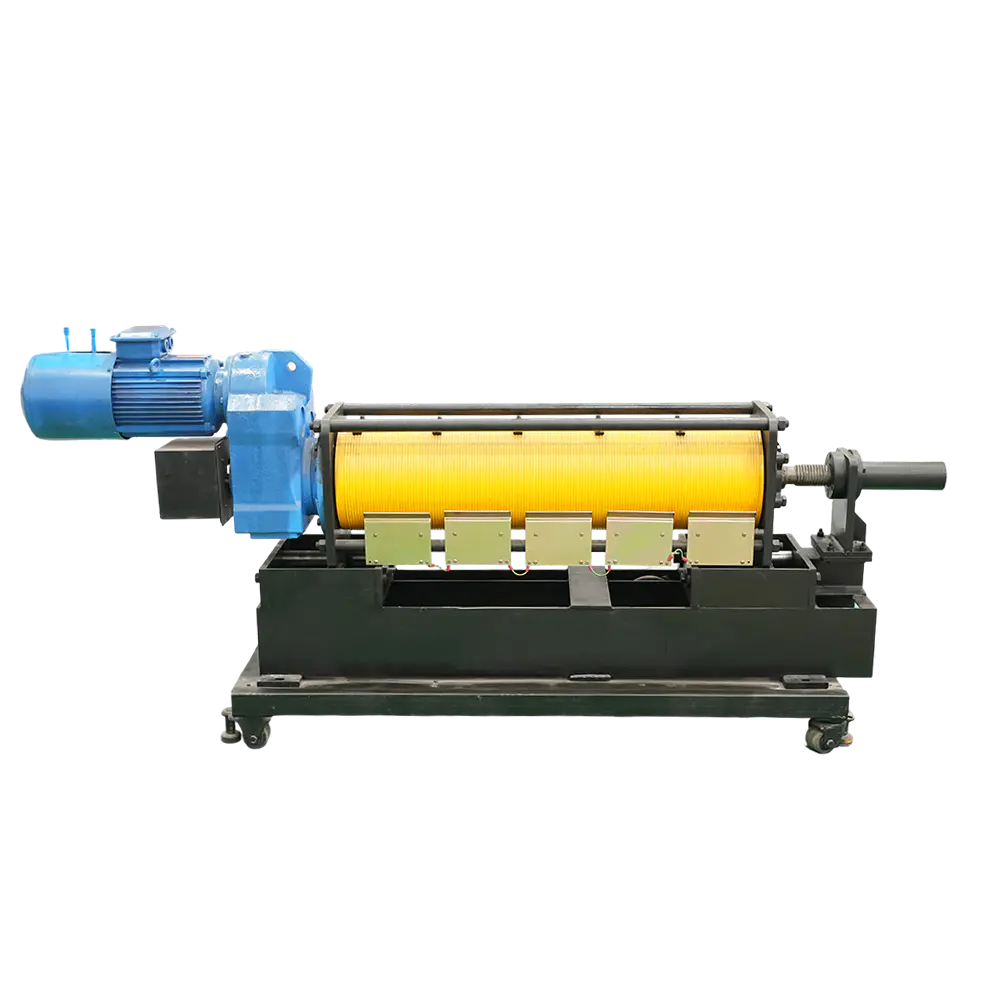
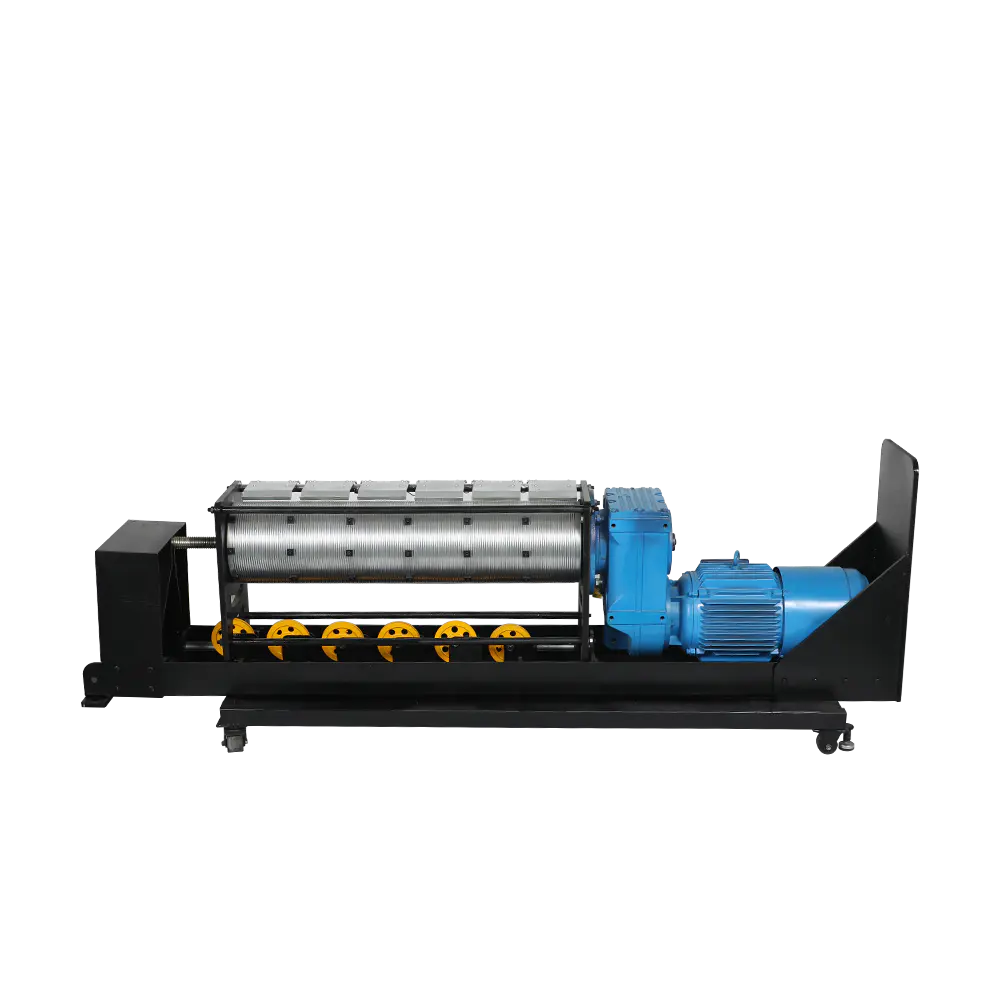
Its core design includes an electric servomotor, roller drum, single-layer rope arrangement, rope pressing rod, pulleys, limit switches, and dual external brakes. Together, these components help maintain a predictable rope path while providing controlled lifting movement and additional protection for suspended payloads. The result is a stage winch that balances portability with the performance expectations of professional entertainment equipment.
For venues and production companies seeking a practical alternative to bulky fixed lifting systems, the Mobile Zero-Fleet Stage Winch offers a valuable combination of mobility, precision, simplified installation, and manufacturing support. It is especially suitable for touring shows and temporary stage structures where equipment must be deployed efficiently without sacrificing operational control.
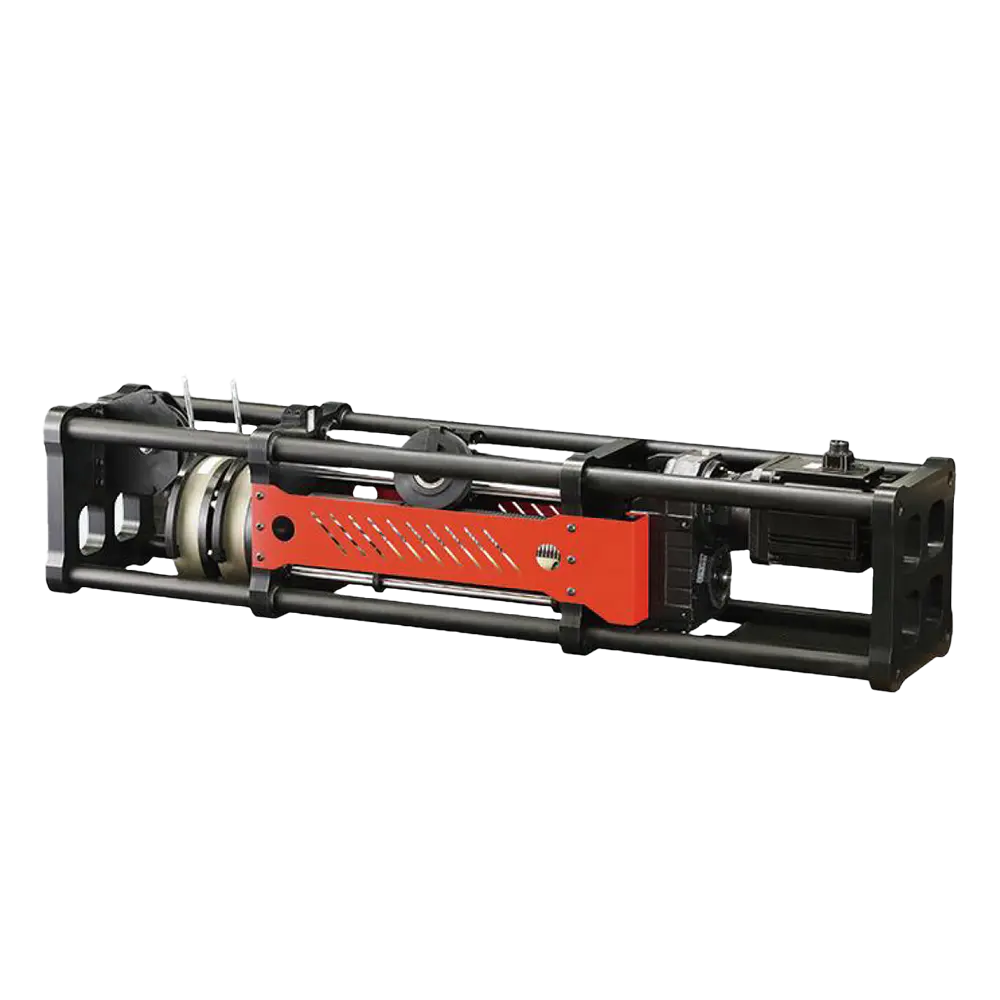
Mobile Zero-Fleet Stage Winch
Stage machinery has traditionally been associated with permanent installations. Large theaters often use dedicated hoists, fixed control systems, steel support structures, and carefully planned equipment rooms. These systems can provide excellent performance when the building, stage layout, and production program remain stable. However, the needs of modern performance production are changing.
Many productions now travel between venues. A touring show may operate in theaters with different ceiling heights, rigging points, available working space, and technical infrastructure. A cultural event may use a temporary stage in a public square, exhibition hall, or sports facility. Corporate events may require a lifting system for a short installation period before the entire production is dismantled and transported to another location.
In these situations, equipment mobility becomes a major part of technical planning. A winch that is difficult to move, complicated to position, or dependent on extensive external alignment systems can increase labor costs and prolong installation. It may also reduce the number of venues where the production can operate efficiently.
Portable stage machinery responds to this challenge by emphasizing compact dimensions, reduced handling requirements, and a simplified arrangement of mechanical components. The goal is not merely to make equipment smaller. A successful portable winch must retain stable operation, controlled motion, and appropriate safety provisions while reducing the time and effort needed for transportation and setup.
The Mobile Zero-Fleet Stage Winch is developed around this principle. Its design integrates a lifting mechanism, rope guidance arrangement, control-related components, and braking protection into a relatively compact unit. This makes it appropriate for production teams that require a repeatable installation process across multiple venues.
Portability can also improve the utilization rate of stage equipment. A fixed system may remain unused when a venue is not hosting a production that requires it. A mobile winch, by contrast, can be allocated among different projects, stored when not needed, and deployed according to the production schedule. This can help organizations obtain more value from their technical equipment investment.
The Mobile Zero-Fleet Stage Winch uses a servo-driven lifting arrangement. The electric servomotor provides controlled rotational movement to the roller drum, while the rope pressing rod and pulley system help maintain the desired rope path. The single-layer drum configuration is important because it supports orderly rope winding and reduces the irregular buildup that can occur when multiple rope layers are allowed to overlap unpredictably.
During operation, the rope is guided onto the drum in a controlled manner. The rope pressing rod helps maintain contact and alignment, while the pulleys support the movement of the rope toward the lifting point. The design is intended to reduce rope deviation and limit the need for manual correction during repeated operation.
Limit switches provide position-related protection by helping define the permitted travel range of the lifting system. They are an important part of the overall control and safety arrangement because they can help prevent movement beyond the intended operating limits. The exact control configuration should be selected according to the venue, payload, travel distance, installation method, and applicable safety requirements.
Dual external brakes provide an additional layer of protection. In live production environments, suspended equipment must remain controlled not only during normal movement but also when the system stops, pauses, or experiences an unexpected interruption. The use of two external braking units supports a higher level of operational confidence and can provide redundancy within the stopping arrangement when properly configured and maintained.
The mechanical structure is intentionally direct. Instead of adding unnecessary components, the design concentrates on the functions most relevant to a mobile stage winch: controlled drive, orderly rope handling, travel limitation, and secure stopping. This approach can reduce the number of parts that technicians must position and adjust during installation.
| Component | Primary Function | Operational Benefit |
| Electric servomotor | Drives the lifting movement | Controlled and responsive operation |
| Roller drum | Stores and releases the rope | Supports stable single-layer winding |
| Rope pressing rod | Maintains rope contact and alignment | Reduces rope deviation and adjustment work |
| Pulleys | Guides the rope toward the lifting point | Helps maintain a consistent rope route |
| Limit switches | Monitors travel boundaries | Supports controlled operating limits |
| Dual external brakes | Stops and holds the lifting mechanism | Adds safety protection during operation |
The term zero-fleet describes a rope management concept intended to reduce lateral rope movement and maintain a controlled relationship between the rope and the drum. In conventional arrangements, rope alignment may depend on the position of the winch, the angle of approach, the winding pattern, and the use of additional guide equipment. If these factors are not properly controlled, the rope may move sideways, wind unevenly, or require repeated manual adjustment.
A zero-fleet approach seeks to simplify this relationship. Through the combination of a single-layer drum, rope pressing rod, and guided pulley arrangement, the Mobile Zero-Fleet Stage Winch is designed to maintain a more stable rope route. This can reduce the effects of side movement and help create a more predictable lifting process.
The advantage is particularly relevant to temporary and touring applications. A production team may not have the same amount of time or installation space available at every venue. If the rope path can be established with fewer alignment steps, the team can complete the rigging process more efficiently and move on to testing and production preparation.
Stable rope management can also support consistency during repeated stage transitions. Lighting bars, scenic elements, projection equipment, and other suspended components may need to be raised and lowered several times during a performance or event. A controlled rope route helps reduce unnecessary variation in the operation of the winch.
Zero-fleet technology does not eliminate the need for correct installation, inspection, and operator training. The winch must still be installed according to the approved configuration, and the rope, pulleys, support points, payload, and control system must be checked before use. However, by reducing mechanical complexity, the design can make it easier for qualified technicians to achieve a correct installation.
Compared with a conventional winch that requires extensive manual rope correction or separate alignment equipment, an integrated zero-fleet arrangement may provide several practical advantages. These include fewer setup steps, a cleaner mechanical layout, reduced adjustment time, and improved suitability for mobile operations.
Stage winches are available in many configurations, and each configuration has an appropriate field of use. Large fixed hoists may be ideal for permanent theaters with dedicated structural support and centralized technical systems. However, their size and installation requirements can become disadvantages when equipment must be moved frequently. The Mobile Zero-Fleet Stage Winch is positioned as a solution for projects where flexibility is as important as lifting performance.
A compact structure can reduce the amount of working space required around the lifting point. This is useful in venues where technical areas are crowded or where equipment must be installed temporarily without extensive modification to the building. The integrated arrangement of the servomotor, drum, rope pressing rod, and safety components gives technicians a clearer equipment footprint.
Compared with larger fixed systems, the mobile winch may require fewer separate mechanical assemblies to be transported, positioned, and aligned. This can reduce handling time and help production teams organize their equipment more efficiently. A smaller installation footprint can also be valuable when several lifting points must be installed close to one another.
Touring productions often face strict loading schedules. Equipment must be moved from transportation cases to the stage, installed, tested, operated, and removed within a limited time. A lightweight and portable winch can contribute to a more efficient workflow by reducing the physical burden on technicians and simplifying equipment logistics.
The product is suitable for touring performances, temporary stages, exhibition installations, cultural events, conference venues, and other projects where the lifting system is not intended to remain permanently installed. It can be stored between events and redeployed according to operational needs.
The servo-driven configuration supports responsive movement and precise control. Servo systems can be integrated with suitable control equipment to manage speed, position, acceleration, and stopping behavior according to the needs of the installation. This is valuable when suspended equipment must move smoothly or when several stage elements need to operate in a coordinated sequence.
Compared with a basic motor arrangement that offers limited control flexibility, a servo system can provide more refined operating behavior. It may also support more consistent performance during repeated movement cycles, provided that the control system is correctly configured and the equipment is maintained according to its technical requirements.
The single-layer drum is another important differentiating feature. Multi-layer winding can create variations in effective drum diameter and may introduce additional rope management challenges. A single-layer arrangement is intended to keep the rope in a more consistent position as it winds and unwinds.
This design can improve the predictability of the lifting movement and support the zero-fleet rope management concept. It also creates a straightforward inspection path because technicians can more easily examine the rope winding condition and identify irregularities.
Safety is a central concern in any stage lifting application. The Mobile Zero-Fleet Stage Winch uses dual external brakes to support secure stopping and holding. External brake placement can make inspection and maintenance more accessible compared with enclosed components that are difficult to examine without extensive disassembly.
Two brakes also provide an additional protective arrangement for live-event operation. The exact braking capacity, holding requirements, and control logic must be evaluated for every project, but the presence of dual external brakes demonstrates that the product is designed with more than basic movement in mind. It is intended to support controlled lifting and secure suspension under professional operating conditions.
Complexity can create additional opportunities for installation errors, adjustment delays, and maintenance difficulties. By concentrating on essential components, the winch presents a more direct mechanical architecture. The reduced component count can help technicians understand the system more quickly and may shorten the time needed for routine inspection.
This does not mean that the winch is a basic product. Its value comes from integrating mechanical simplicity with servo control, rope management, travel monitoring, and braking protection. The objective is to achieve a high level of practical functionality without creating an unnecessarily complicated installation.
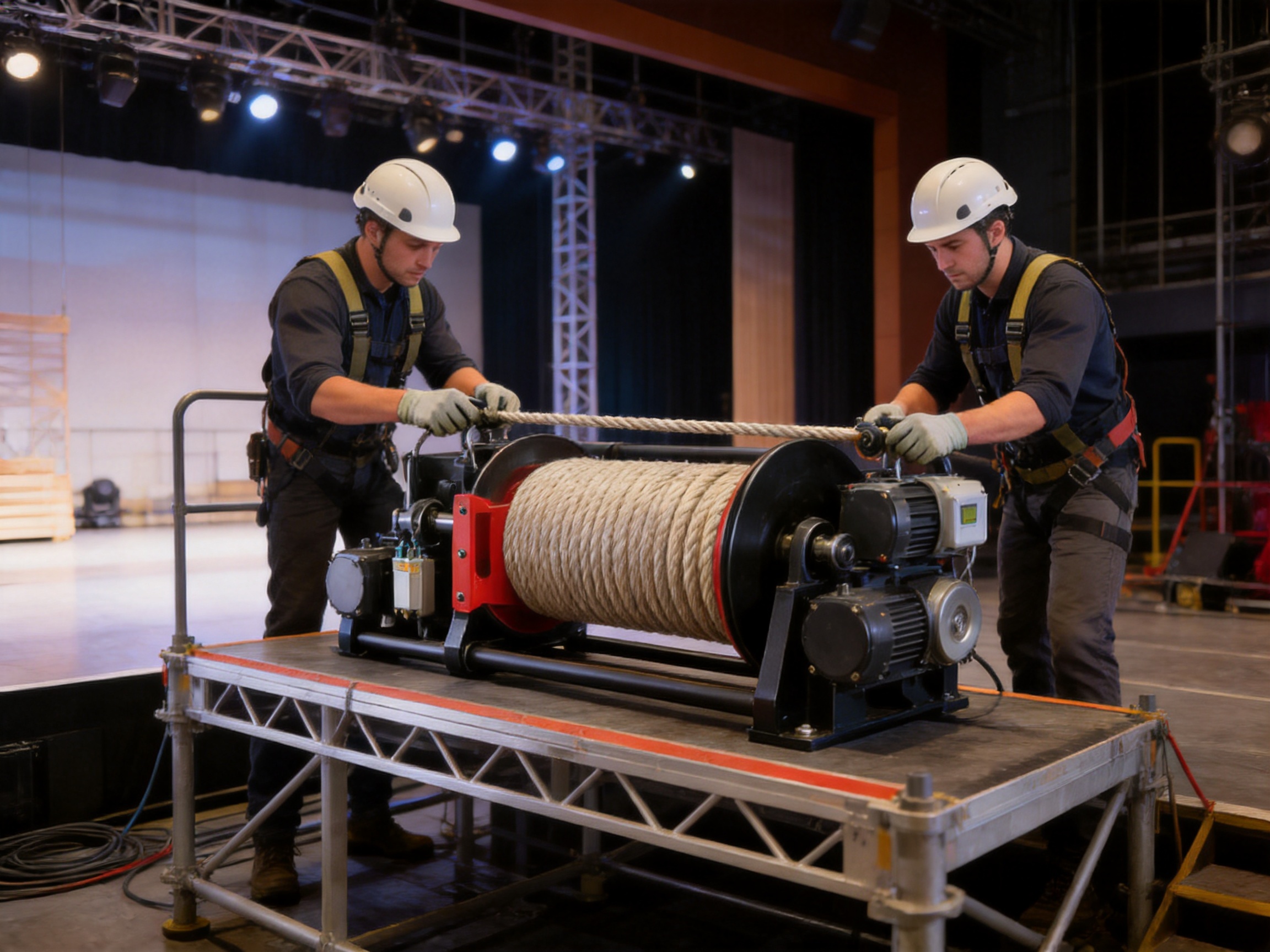
Rigging is not limited to attaching a device to a support point. It includes equipment transportation, positioning, rope routing, component alignment, electrical connection, control-system setup, inspection, testing, and operational approval. Each additional step requires time and qualified labor. A product that reduces unnecessary preparation can make a measurable difference to a production schedule.
The Mobile Zero-Fleet Stage Winch simplifies rigging by bringing several functions into a compact unit. The roller drum handles rope storage, the rope pressing rod supports rope contact, the pulleys guide the rope, and the limit switches help establish travel boundaries. The resulting arrangement can reduce the need for separate alignment devices and extensive manual correction.
A typical installation process begins with reviewing the venue and confirming that the structure, support point, lifting path, payload, and operating environment are suitable. The winch is then positioned according to the approved rigging plan. The rope is routed through the relevant pulley arrangement, and the mechanical connections are checked for correct placement.
After the mechanical installation, the control and electrical connections are verified. Technicians check the direction of movement, operating limits, brake response, emergency stop functions, and communication with any central control system. The winch should then be tested without a production payload before a controlled load test and final inspection are completed.
The compact structure is helpful throughout this process because it can reduce congestion in the working area. When technicians have a clearer view of the drum, rope pressing rod, pulleys, brakes, and limit switches, they can complete inspections more efficiently. The simplified layout can also make it easier to identify whether a component has been installed or adjusted incorrectly.
Fast rigging does not mean skipping safety procedures. The primary benefit is that qualified technicians can spend less time solving avoidable alignment problems and more time performing meaningful inspection and testing. A shorter installation process should still include a complete verification of mechanical, electrical, and control functions.
Touring shows are among the most suitable applications for a mobile zero-fleet winch. A touring production may need to install lifting equipment in several venues within a short period. The equipment must be durable enough for repeated transport while remaining simple enough to install under different local conditions.
The winch can be used for lighting fixtures, scenic elements, banners, display structures, and other approved suspended equipment. Its portable design supports a production model in which technical equipment travels with the show rather than being permanently assigned to one building.
Temporary stages are often assembled for festivals, public performances, cultural celebrations, and outdoor events. The installation period may be brief, and the site may not include the permanent technical infrastructure found in a theater. A mobile winch can offer a flexible lifting option when the structural and safety conditions have been properly assessed.
Because temporary stages can experience changing weather, environmental exposure, and unusual access conditions, project managers must select suitable protection, operating procedures, and inspection routines. The winch should be used only within its approved environmental and load limitations.
Although the product is designed for mobility, it can also be useful in theaters and cultural centers. A venue may need supplementary lifting points for special productions, renovations, exhibitions, or temporary scenic arrangements. A mobile system can provide additional flexibility without requiring permanent changes to the building.
It can also support smaller performance spaces that do not justify a large fixed stage machinery installation. In such venues, equipment that can be stored and deployed when required may provide a more efficient use of technical resources.
Conference centers and exhibition venues frequently change their layouts. Suspended signs, lighting systems, projection screens, decorative structures, and event branding may need to be installed for a short period and removed after the event.
A compact stage winch can support these changing requirements when the suspended load and installation method are approved by qualified personnel. Its neat mechanical configuration may also be helpful in locations where the technical equipment must have a limited visual impact.
Large event spaces may use mobile lifting equipment for special ceremonies, temporary presentations, concert production, and sports entertainment. These applications can involve demanding schedules and complex coordination between structural, electrical, production, and safety teams.
The mobile winch can serve as part of a broader stage machinery solution. Its use in a large venue should be based on a complete engineering assessment, including structural capacity, load paths, control integration, weather conditions, access, emergency procedures, and the required number of lifting cycles.
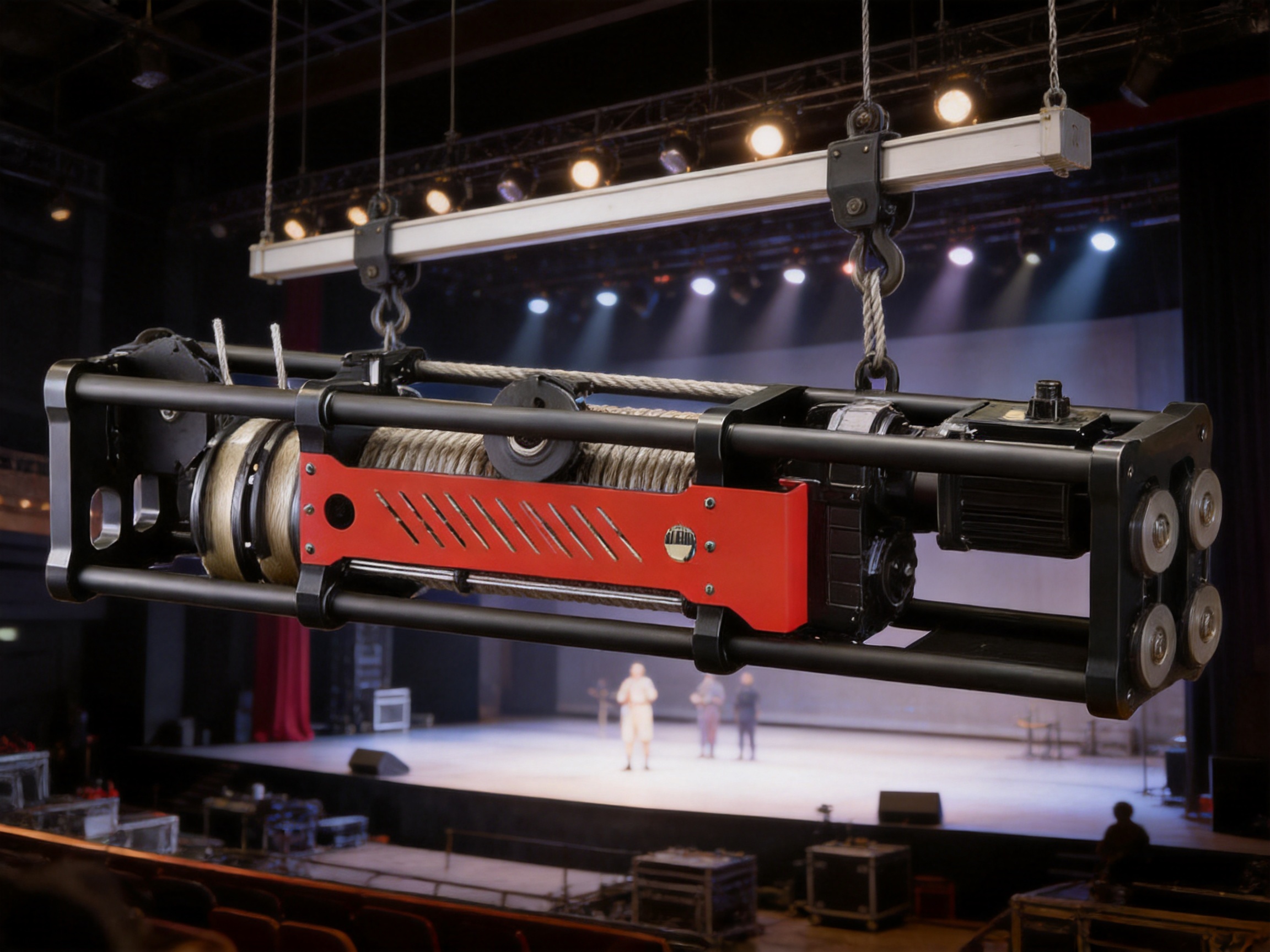
The performance of a stage winch depends not only on its visible design but also on the manufacturing discipline behind it. Precision machining, material control, assembly accuracy, electrical testing, inspection procedures, and commissioning all contribute to the reliability of the finished product.
Rentezhihe (Jiangsu) Equipment Technology Co., Ltd. specializes in the research, development, and manufacturing of stage machinery, performance equipment, and intelligent control systems. Its capabilities cover product design, manufacturing, installation, commissioning, operational guidance, and maintenance support. This integrated approach allows the company to consider the complete life cycle of a stage machinery project rather than focusing only on the delivery of a single mechanical unit.
The company operates a manufacturing facility of approximately 20,000 square meters. The facility includes production workshops, research areas, offices, and supporting spaces for equipment assembly and inspection. More than 30 advanced CNC processing devices are used to support accurate component production.
CNC processing is important for stage winch manufacturing because drums, brackets, shafts, mounting surfaces, and other mechanical parts must meet controlled dimensional requirements. Consistent machining helps improve assembly accuracy and reduces variation between batches. It also supports the repeatability required when products are used as part of a larger stage machinery system.
The manufacturing process begins with technical design and component selection. Engineers review the intended application, lifting configuration, operating conditions, and control requirements. The mechanical structure is then developed to balance strength, weight, accessibility, and manufacturability.
During raw material processing, appropriate materials are prepared according to the approved design. Components are machined, drilled, shaped, and finished using controlled production procedures. Critical dimensions and interfaces are inspected before parts are transferred to the assembly stage.
Assembly involves the installation of the servomotor, roller drum, rope pressing rod, pulleys, limit switches, brakes, and associated mechanical and electrical components. Technicians verify the alignment of the drum and rope path, confirm the position of the braking units, and check that the moving parts operate without abnormal resistance.
Electrical and control testing follows mechanical assembly. The motor response, direction of movement, limit switch signals, brake action, emergency functions, and control interfaces are checked. Where required, the complete winch can undergo operational testing under controlled conditions before delivery.
Inspection and commissioning are important parts of the company’s manufacturing strength. A stage winch is not finished simply because it has been assembled. It must demonstrate that its components work together as intended. Testing helps identify issues before the equipment reaches the venue and provides technical information for installation and operation.
The company’s service system extends beyond production. It can support customers through project design, equipment configuration, installation, commissioning, operation guidance, and maintenance. This is particularly valuable for clients who need a complete stage machinery solution rather than a standalone product shipment.
Quality control should be applied at multiple stages of production. Incoming materials and purchased components must be reviewed before use. Machined parts require dimensional checks. Assemblies need alignment verification. Electrical systems require functional testing. The completed winch should be inspected as an integrated machine.
This layered approach helps reduce the risk that a problem will remain undetected until installation. It also creates a more reliable record for production management and customer support. For professional stage machinery, traceability and repeatability are valuable because equipment may operate in demanding environments and may be integrated into larger control systems.
Stage machinery continues to evolve as productions demand greater flexibility, quieter operation, more accurate positioning, improved safety monitoring, and easier integration with intelligent control systems. Research and development capability allows a manufacturer to respond to these changing requirements.
The Mobile Zero-Fleet Stage Winch reflects an engineering approach that combines mechanical optimization with electronic control. The use of servo technology, controlled rope management, travel monitoring, and external braking demonstrates how different technical disciplines can be integrated into one compact product.
Every venue has different structural, operational, and production requirements. A manufacturer that can participate in design review, equipment selection, installation, commissioning, and maintenance can help reduce coordination problems between different suppliers.
Rentezhihe provides an integrated service model for theaters, cultural centers, stadiums, conference centers, and multifunctional performance spaces. This allows the company to adapt the product configuration and supporting service to the project rather than treating every installation as identical.
Stage lifting equipment must be operated under a documented safety management process. Before installation, the responsible technical team should confirm the rated capacity, lifting height, rope specification, support structure, pulley arrangement, control configuration, and environmental conditions. The equipment must not be used outside its approved design parameters.
Before each production, technicians should inspect the rope, drum, rope pressing rod, pulleys, brakes, limit switches, fasteners, electrical connections, and control system. They should look for visible damage, unusual wear, corrosion, contamination, loose components, abnormal noise, and irregular rope winding.
The rope should sit correctly on the drum and pass through the pulley arrangement without unexpected deviation. The rope pressing rod should be securely positioned and free from damage. The drum should rotate smoothly, and the brakes should engage and release according to the approved operating sequence.
Limit switches should be tested at appropriate intervals. A limit switch that fails to detect the intended position can create a serious operational risk. The control system should also be checked for correct direction, speed response, emergency stop performance, and communication with other equipment.
Brake inspection is especially important. Both external brakes should be examined for wear, correct mounting, secure connections, and proper response. Maintenance intervals should be based on the manufacturer’s instructions, operating frequency, environmental conditions, and the consequences of a potential failure.
Maintenance records should document inspections, repairs, replacement parts, test results, and any abnormal operating events. A structured record helps the technical team identify trends and make informed decisions about continued use, adjustment, or replacement.
Operators should receive appropriate training before using the winch. Training should cover normal operation, emergency procedures, load limitations, inspection requirements, and communication with other members of the production team. The winch should not be operated by unqualified personnel.
Stage machinery projects rarely have identical requirements. The same winch may need to operate in a theater, touring production, exhibition hall, or temporary outdoor structure, but the installation conditions can differ significantly. Customization allows the product and supporting system to be adapted to the intended use.
Configuration discussions may include lifting capacity, travel distance, rope length, pulley arrangement, mounting method, control interface, operating speed, environmental protection, power supply, and integration with existing stage automation. These factors should be reviewed during the design phase rather than after equipment delivery.
For a touring application, weight, portability, packing efficiency, and quick connection may be the highest priorities. For a theater installation, integration with the building’s existing control system and maintenance access may be more important. For a temporary event, installation time, weather protection, and rapid removal may require additional attention.
A customized solution should always preserve the basic safety and mechanical principles of the winch. Modifications must be reviewed by qualified engineers and implemented using approved components and procedures. Customization should improve suitability without compromising structural integrity, rope control, braking performance, or travel limitation.
| Evaluation Area | Mobile Zero-Fleet Stage Winch | Large Fixed Hoist | Basic Portable Winch |
| Primary Use | Touring, temporary, and flexible stage applications | Permanent theater and venue installations | General light-duty lifting applications |
| Rope Management | Single-layer drum with rope pressing rod and guided pulleys | May use fixed alignment or centralized rope systems | Often requires greater manual positioning |
| Mobility | Designed for repeated transportation and redeployment | Usually remains installed in one location | Generally portable but may have fewer stage-specific features |
| Motion Control | Servo-driven configuration | May use centralized motor and automation systems | May provide basic motor control |
| Safety Features | Dual external brakes and limit switches | Depends on the fixed system design | Safety configuration varies by model |
| Installation Workload | Reduced through compact integrated construction | Higher due to structural and system integration | May require manual alignment and additional accessories |
| Best Advantage | Balance of portability, precision, and controlled rope movement | High integration for permanent venues | Simple transport for less demanding applications |
This comparison is not intended to suggest that one category is suitable for every project. A large fixed hoist may be the correct choice for a permanent theater with high production frequency and dedicated infrastructure. A basic portable winch may be suitable for applications with modest lifting requirements. The Mobile Zero-Fleet Stage Winch is most valuable when a project requires professional stage functionality together with mobility and fast setup.
The value of a mobile stage winch should be measured over its full operating life rather than only by its initial purchase price. Equipment that can be transported efficiently, installed quickly, and reused across multiple projects may reduce labor and logistics costs over time.
Shorter installation periods can help production teams meet venue schedules. Reduced adjustment work can lower the need for additional technical labor. A compact structure can reduce storage and transport requirements. Reliable rope management can support more consistent operation and decrease interruptions caused by alignment problems.
Maintenance accessibility also affects long-term value. Components that can be inspected clearly and reached without unnecessary disassembly may help technicians complete routine service more efficiently. External brakes, visible rope management components, and a direct mechanical arrangement can support this goal.
Long-term value also depends on the manufacturer’s ability to provide technical support. A stage winch is part of a wider production system, and its performance may be affected by installation, control programming, structural support, and maintenance practices. Access to design assistance, commissioning, operational guidance, and replacement support can help protect the customer’s investment.
It is a compact and portable stage lifting device designed to maintain controlled rope movement through a single-layer drum, rope pressing rod, and guided pulley arrangement. It uses a servo-driven system and includes limit switches and dual external brakes for controlled operation and additional safety protection.
Zero-fleet refers to a rope management approach intended to minimize lateral rope movement and maintain a controlled rope position relative to the drum. The purpose is to improve winding consistency, reduce manual alignment work, and support more predictable lifting operation.
It can be used in touring shows, temporary stages, theaters, cultural centers, conference venues, exhibition spaces, stadium events, and multifunctional performance environments. The suitability of a specific installation depends on the structural support, payload, travel requirements, control system, and applicable safety procedures.
The compact mechanical arrangement combines the servomotor, roller drum, rope pressing rod, pulleys, limit switches, and brakes into an integrated unit. The single-layer drum and controlled rope path can reduce alignment work, while the portable design makes transportation and positioning easier.
A single-layer drum keeps the rope in a more controlled winding arrangement. It can help reduce variations associated with multiple rope layers and supports the zero-fleet rope management concept. It also makes visual inspection of the winding condition more straightforward.
Servo control can provide responsive movement, adjustable operating behavior, and more accurate coordination with a stage automation system. It is particularly useful when suspended equipment must move smoothly or when repeated stage transitions require consistent performance.
The dual external brakes provide an additional stopping and holding arrangement for the lifting mechanism. They are designed to support secure operation during normal movement, stopping, and temporary holding. Their performance must be inspected and maintained according to the approved technical procedures.
It may be suitable for selected permanent or semi-permanent installations, depending on the project requirements. Its strongest advantage is flexibility, so it is particularly appropriate where equipment may need to be relocated or used for different production configurations.
Configuration can be discussed according to lifting capacity, travel distance, rope arrangement, mounting method, control interface, power supply, environmental conditions, and integration requirements. Any modification should be reviewed and approved by qualified technical personnel.
The manufacturer operates an approximately 20,000-square-meter facility with more than 30 CNC processing devices. Its capabilities include research and development, precision component production, mechanical assembly, electrical testing, inspection, commissioning, installation, and maintenance support.
Technicians should check the structural support, mechanical fasteners, rope condition, drum winding, rope pressing rod, pulleys, brakes, limit switches, electrical connections, control direction, emergency functions, and payload configuration. A complete test should be performed before production use.
The winch should be operated only by trained and authorized personnel who understand the equipment, the approved load configuration, the control system, the emergency procedures, and the inspection requirements of the installation.
The Mobile Zero-Fleet Stage Winch responds to a clear need in modern performance production: professional lifting capability in a portable and efficient format. Its compact design, servo-driven operation, single-layer drum, rope pressing rod, guided pulley system, limit switches, and dual external brakes create a balanced solution for touring and temporary stage applications.
Its advantages over more conventional arrangements include reduced installation complexity, improved mobility, controlled rope management, accessible safety components, and compatibility with flexible production workflows. Rather than competing only on size, the winch combines portability with the precision and protection expected from professional stage machinery.
The strength of the product is further supported by the manufacturing and engineering capabilities of Rentezhihe (Jiangsu) Equipment Technology Co., Ltd. The company’s research and development experience, CNC processing resources, integrated assembly procedures, inspection systems, commissioning services, and project support provide a foundation for reliable equipment delivery.
For theaters, cultural centers, touring companies, event organizers, and technical production contractors, the product offers a practical way to improve deployment flexibility without abandoning controlled operation. When selected, installed, and maintained correctly, it can support safe and efficient lifting for a wide range of professional stage environments.
1. Rentezhihe (Jiangsu) Equipment Technology Co., Ltd. Product Information: Mobile Zero-Fleet Stage Winch.
2. Rentezhihe (Jiangsu) Equipment Technology Co., Ltd. Company Profile and Stage Machinery Manufacturing Information.
3. General Principles of Stage Machinery Design, Installation, Inspection, and Maintenance.
4. Professional Practices for Suspended Loads and Entertainment Rigging Operations.
5. Servo Motor Applications in Automated Lifting and Positioning Systems.
6. Mechanical Rope Management and Single-Layer Drum Design in Lifting Equipment.
7. Safety Considerations for Temporary Stages, Touring Productions, and Performance Venues.
8. Quality Control Practices for CNC-Machined Components and Integrated Stage Equipment.
We specialize in delivering advanced stage machinery, rigging systems and intelligent control solutions for performance spaces worldwide.

No. 111 Runfeng Road, Hailing District, Taizhou City, Jiangsu Province, China

rtstage@163.com

+86-139 1771 1698

+86-139 1771 1698
rtstage@163.com
 中文简体
 English
 русский
 Français
 Español
 عربى