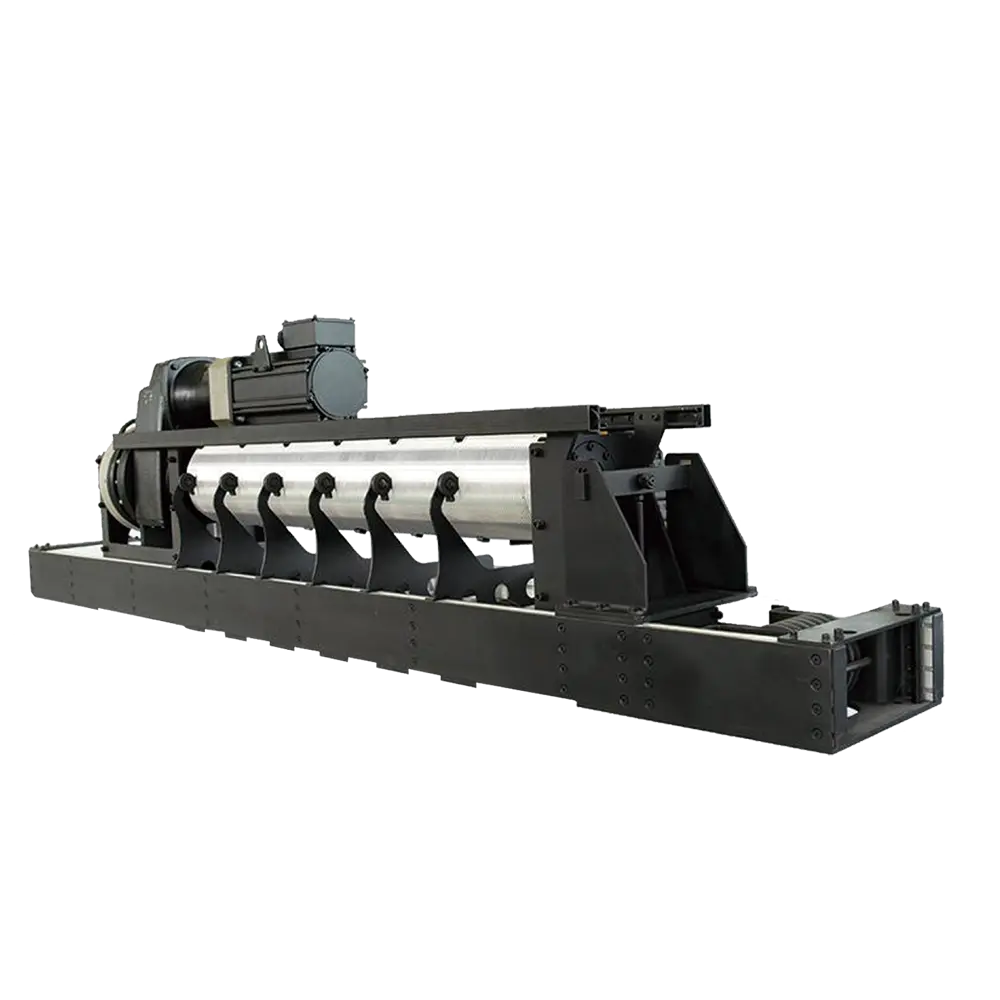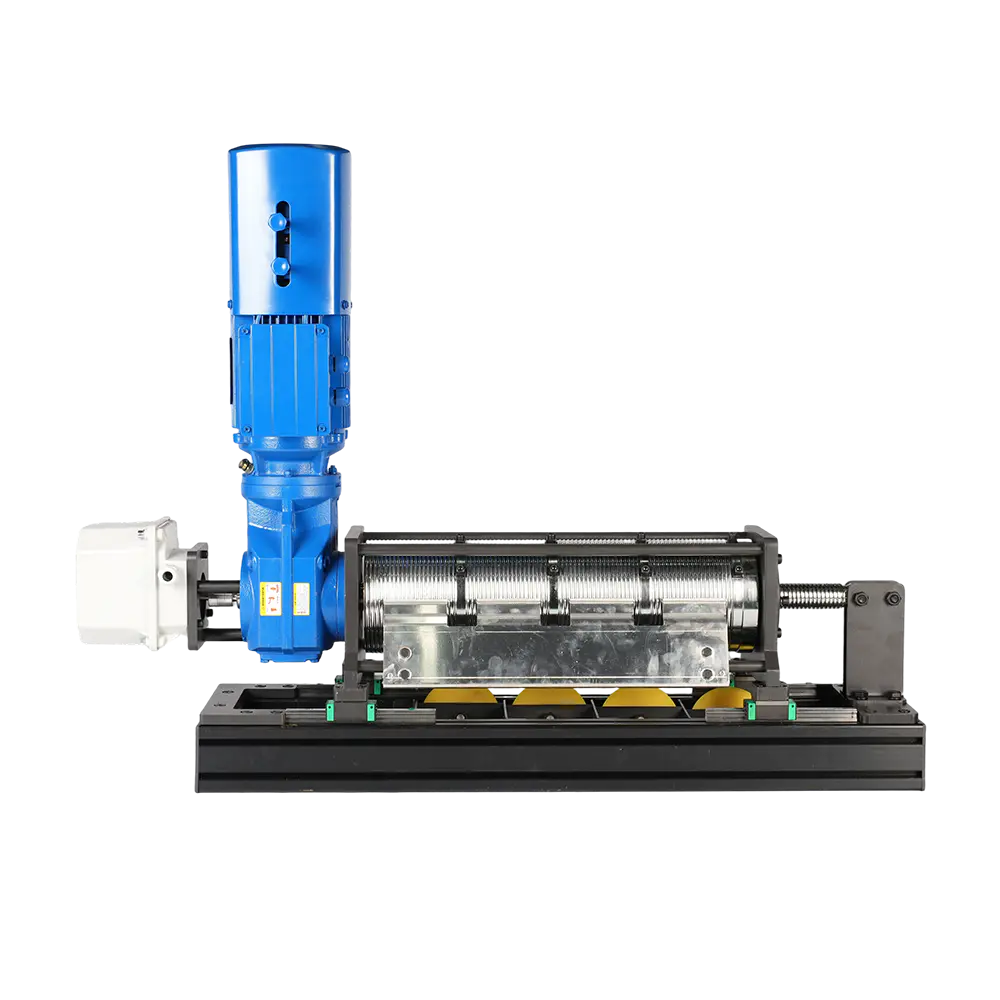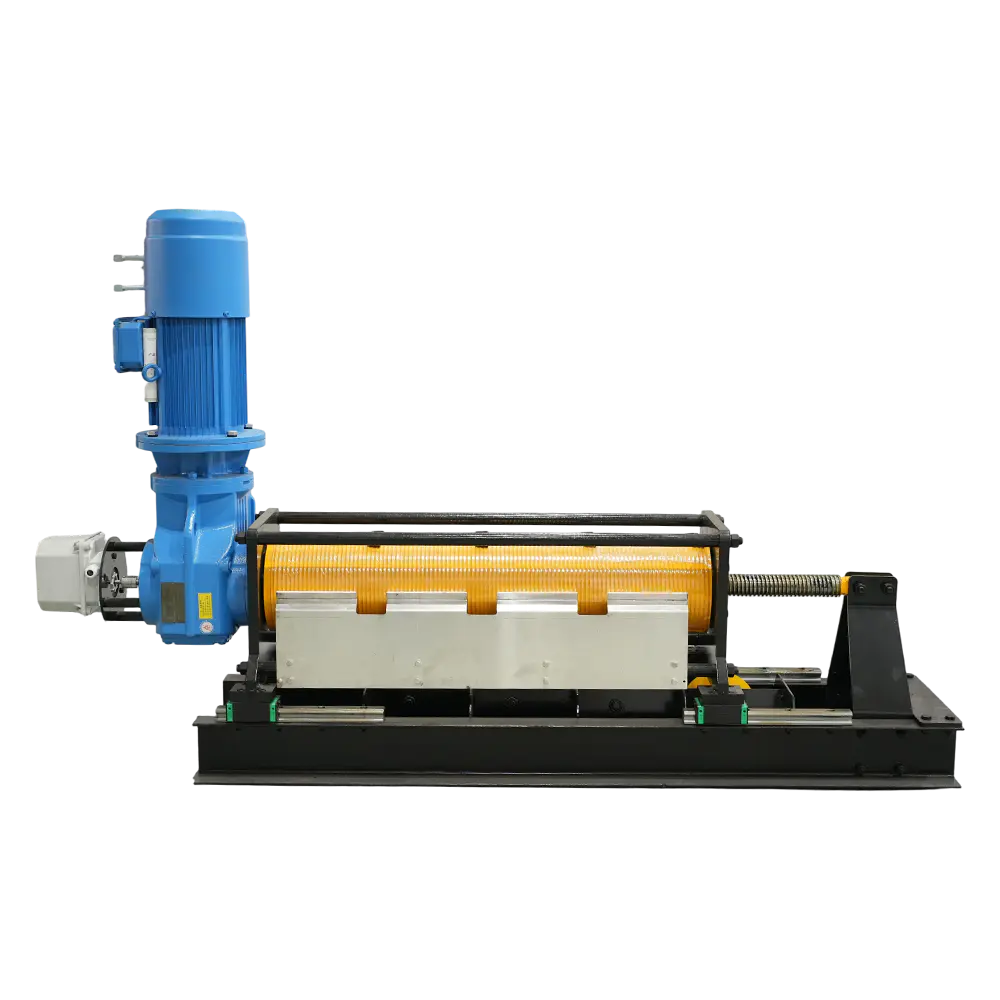
Modern stage design is no longer limited to fixed scenery, traditional drapes, and manually operated curtains. The development of projection mapping, immersive entertainment, virtual-real overlays, and synchronized scenic movement has created new demands for stage machinery. Curtains must now move with predictable speed, accurate positioning, stable tension, and reliable coordination with lighting, audio, video, and show-control systems.
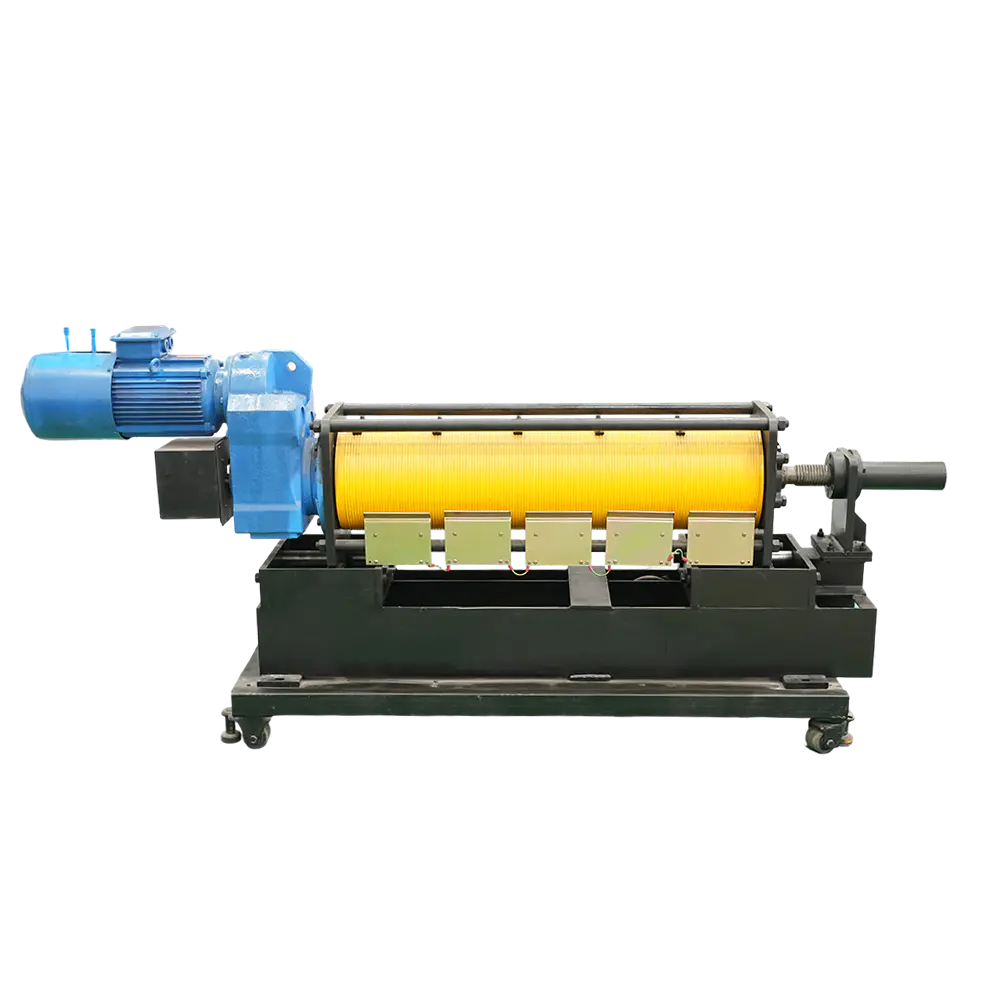
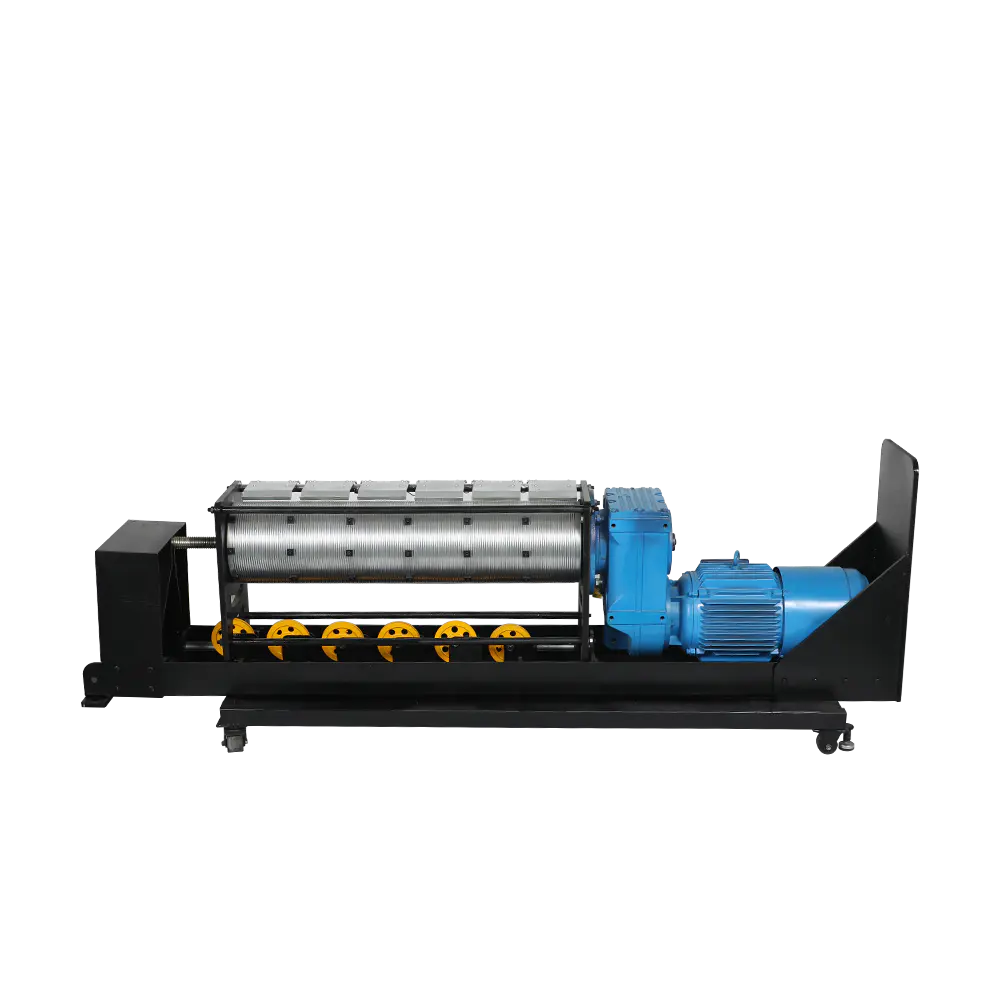
The Servo CNC Curtain Winding Machine is engineered for this environment. It combines servo-driven motion, encoder feedback, DMX512 control, mechanical stability, and flexible speed adjustment in one integrated stage curtain solution. Designed for scrim curtains and other precision applications, the machine supports controlled vertical movement across a lifting range of up to 10 meters, with a maximum curtain width of 6 meters and a lifting speed from 0 to 0.3 meters per second.
Rather than treating a curtain as a simple fabric covering, this system treats it as a programmable visual surface. Its role is not only to open or close a performance area. It can help create the illusion of disappearance, reveal hidden performers, support projection mapping, coordinate layered scenic effects, and transition between physical and virtual imagery. For theaters, concerts, immersive night tours, product launches, film production, banquet halls, bars, convention centers, and multifunctional performance venues, this level of control can make the difference between an ordinary movement cue and a precisely timed visual event.
The system is manufactured by RenteZhihe (JiangSu) Equipment Technology Co., Ltd., a specialist in stage machinery, performance equipment, and intelligent control systems. The company provides solutions covering design, production, installation, commissioning, operation, and maintenance. This integrated capability allows the product to be developed not simply as an isolated winch, but as part of a complete stage automation system.
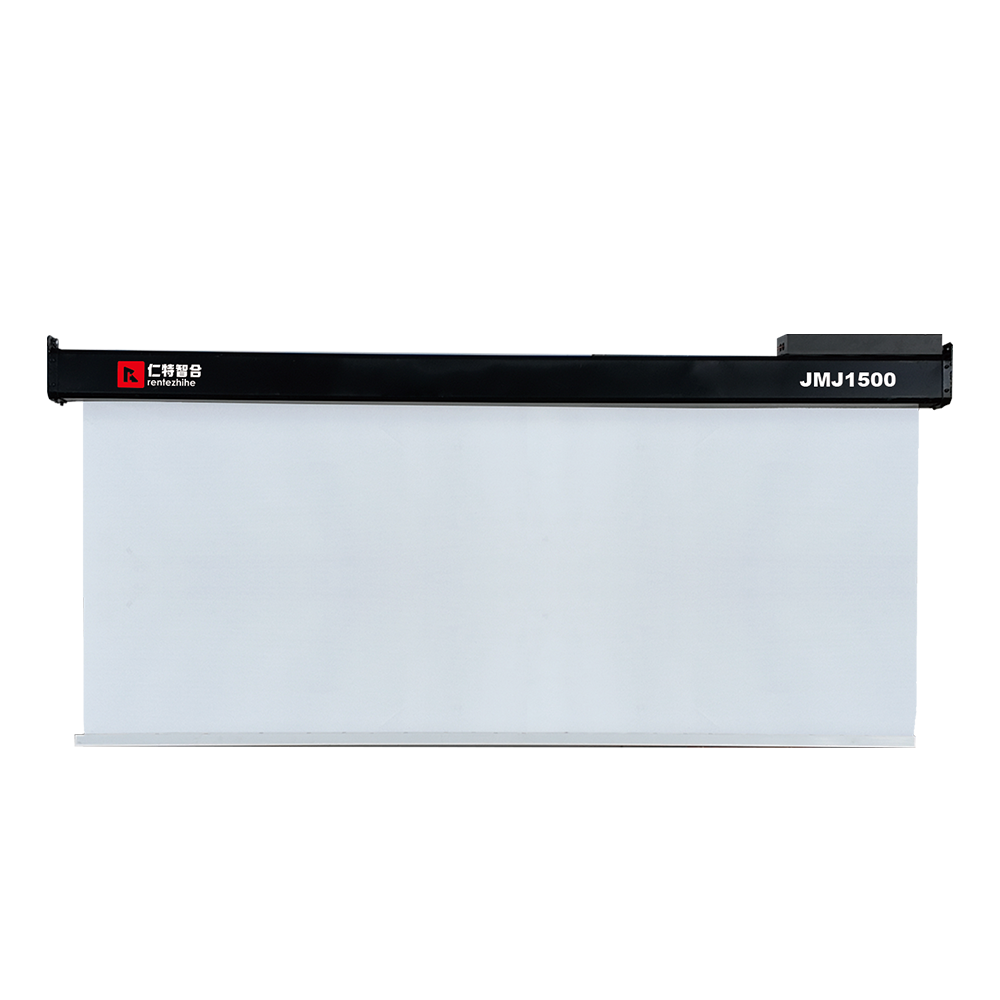
Servo CNC Curtain Winding Machine
A stage curtain has traditionally been judged by simple criteria: whether it opens, whether it closes, and whether it can repeat those actions safely. Those criteria remain important, but they are no longer sufficient for advanced performance applications. Contemporary productions increasingly require curtains to move at controlled speeds, stop at exact positions, coordinate with projection content, and repeat the same motion reliably throughout a performance schedule.
In a conventional theatrical scene, a few centimeters of positional variation may not be noticeable. In a projection-mapped production, that same variation can shift the projected image away from its intended visual surface. In a scrim-based illusion, uneven movement can expose a performer too early, distort a projected image, or interrupt the transition between transparency and opacity.
Precision curtain machinery therefore has to perform several functions at the same time. It must provide mechanical lifting power, preserve fabric tension, respond to control commands, monitor actual movement, and stop safely at defined limits. It also needs to fit into the wider control architecture of the venue, where lighting consoles, media servers, show-control systems, and other stage machines may already use DMX512.
The Servo CNC Curtain Winding Machine addresses these requirements through an integrated architecture. Its servo drive supplies controlled motor performance, the encoder provides feedback about movement, the planetary gearbox transfers torque efficiently, and the roller tube manages the winding or unwinding of the curtain. A tension sensor and limit switch add further control and protection functions.
This combination gives the machine a role beyond basic curtain handling. It becomes a programmable motion device that can support scenic timing, image alignment, layered reveals, and repeatable visual sequences.
Basic curtain equipment normally focuses on the final position: open or closed. A CNC-controlled curtain system also focuses on the path between those positions. The speed can be adjusted over a broad range, movement can begin smoothly, and the curtain can be positioned for intermediate scenic states. This is valuable when the curtain is used as part of choreography rather than as a simple room divider.
For example, a production may require a scrim to descend slowly while a performer remains hidden behind it. At a programmed position, front lighting may fade while rear lighting rises, changing the audience’s perception of the fabric. The same system may then pause, continue moving, or coordinate with projected content. These cues depend on controlled travel rather than an uncontrolled start-and-stop action.
With a lifting range of 0 to 10 meters and a speed range of 0 to 0.3 meters per second, the machine can accommodate both gradual scenic transitions and comparatively quick curtain movements. The exact operating profile can be selected according to fabric, load, venue geometry, and artistic requirements.
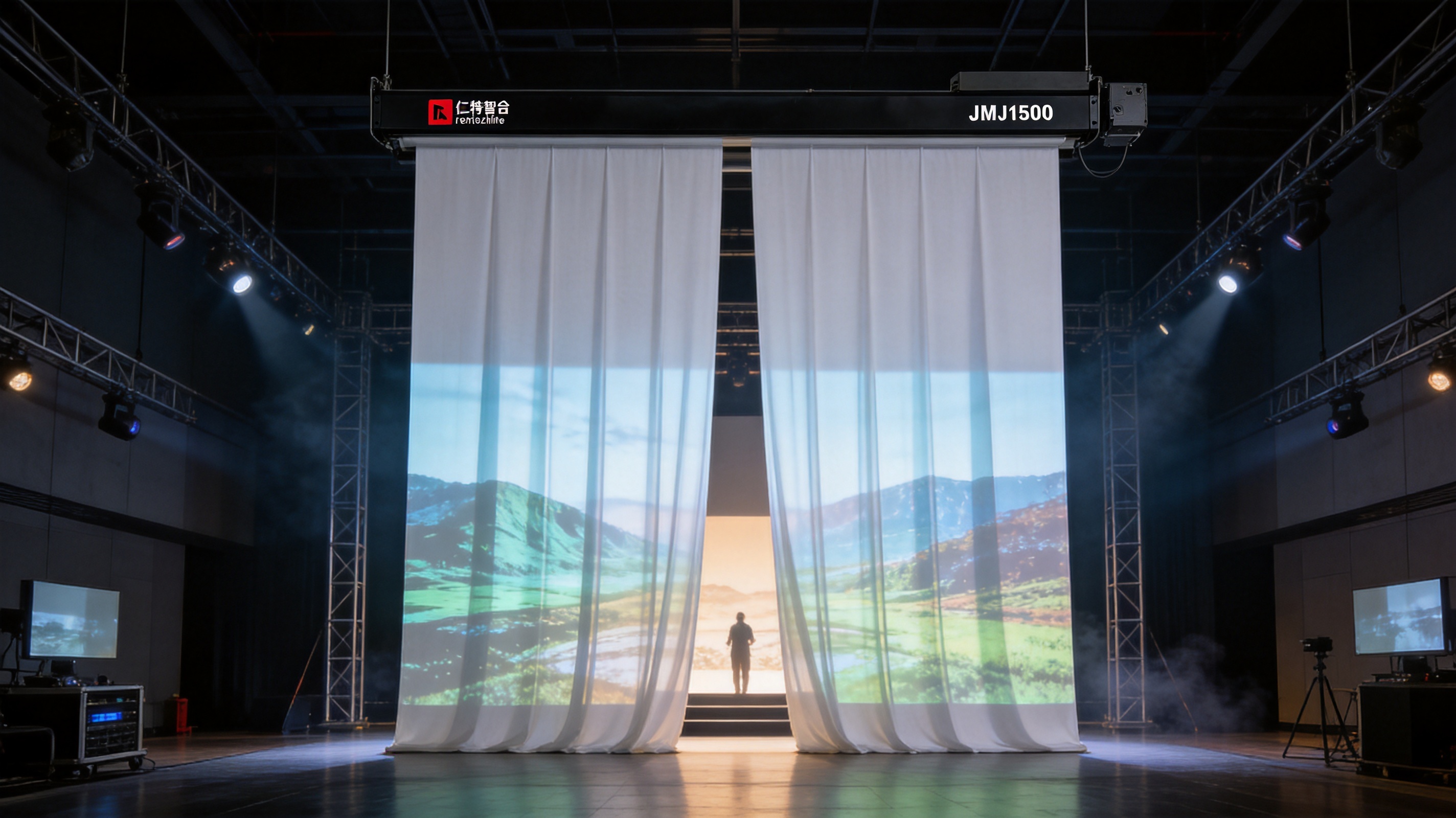
Scrim is widely used in theatrical and immersive applications because its visual appearance changes according to lighting conditions. When illuminated from the front, it can appear relatively solid and can provide a surface for projection. When the front light is reduced and the space behind the fabric is illuminated, the scrim can become visually transparent, allowing performers, scenery, or projected images to appear behind it.
This behavior supports stage illusions that are difficult to create with ordinary opaque curtains. A performer may appear to materialize behind an apparently solid surface. A set may seem to emerge from an empty stage. A projected environment may merge with a physical scene. These effects are often described as virtual-real overlays because they combine real objects, performers, fabric, light, and projected images in a single visual composition.
However, scrim is also less forgiving than a conventional heavy curtain. The audience can notice wrinkles, uneven tension, lateral movement, and irregular acceleration. A heavy opaque curtain may conceal small variations in fabric behavior, while a translucent scrim can reveal them as distortions across the entire visual field.
For this reason, the curtain winding machine must support controlled movement from the beginning of a cue to the end. The machine should not merely generate enough force to move the fabric. It must help maintain a stable and repeatable relationship between the roller tube, the fabric, the tension system, and the programmed position.
Visual consistency is particularly important when a scrim is used with projection. A projection system calculates content for a defined surface or spatial position. If the fabric shifts, sags, or stops at a different point from one performance to another, the projected image may no longer align correctly.
The Servo CNC Curtain Winding Machine is designed around closed-loop movement control. Instead of assuming that a particular motor run time always produces the same curtain position, the encoder reports movement information to the control system. The machine can then compare commanded movement with actual movement and make corrections where necessary.
This method is fundamentally different from relying only on open-loop motor operation. Open-loop control can be suitable for simpler applications, but it is more vulnerable to changes caused by load, friction, winding diameter, fabric resistance, or repeated operating cycles. Closed-loop servo control is better suited to professional installations where a cue must be repeatable and where visual alignment matters.
The main competitive advantage of the Servo CNC Curtain Winding Machine is the integration of servo precision with stage-oriented control. Many curtain systems can provide movement, and some can accept external signals, but advanced applications need more than movement alone. They need accurate positioning, repeatable behavior, low operating noise, and compatibility with the rest of the performance system.
A servo motor is suitable for this role because it operates as part of a feedback-controlled system. The motor does not simply receive power and rotate at an approximate speed. It works with an encoder and drive to regulate motion according to the requested position, speed, and operating profile. This makes it possible to create more predictable movement across the full travel range.
Projection mapping and scenic automation depend on timing and position. A projected image can be synchronized with the opening of a curtain only when the curtain’s movement is known and repeatable. Similarly, a multi-layer reveal requires each curtain to reach its programmed location at the correct moment. Servo control provides the foundation for this repeatability.
Accurate positioning also supports intermediate stops. The curtain may need to remain partially lowered, create a narrow visual opening, or reveal only a section of a performer or set. A system designed only for fully open and fully closed states would not provide the same creative flexibility.
Abrupt starts and stops can produce fabric flutter, mechanical stress, and unwanted noise. They may also disturb the visual effect of a projection or cause the curtain to oscillate after reaching its target position. The adjustable speed range of the machine allows operators and system designers to select a movement profile appropriate to the curtain material and the intended artistic result.
Smooth movement is also important for equipment longevity. Reducing sudden changes in load can limit stress on the drive system, gearbox, roller tube, support structure, and curtain attachment points. When the machine is installed correctly and operated within its rated conditions, controlled motion can contribute to stable long-term performance.
Noise is a practical concern in theaters, conference venues, studios, museums, night-tour installations, and other environments where machinery operates near an audience. Mechanical sound can interrupt dialogue, music, recorded audio, or the emotional impact of a reveal.
The product is designed for smooth and low-noise operation. Its servo drive, planetary gearbox, mechanical structure, and controlled movement profile work together to reduce unnecessary vibration and abrupt mechanical activity. This makes it better suited to performance environments than equipment intended primarily for industrial lifting, where noise and movement refinement may be less important.
Basic motorized curtains may use a fixed-speed motor, mechanical stops, or time-based commands. Such arrangements can be practical for simple installations, but their accuracy may be affected by changes in load, fabric winding, friction, or operating conditions. A servo CNC system adds a higher level of feedback and control.
This does not mean that every installation requires millimeter-level performance under every condition. The final result depends on the mechanical installation, curtain construction, structural alignment, control configuration, and commissioning process. However, the machine architecture is designed to support repeatable, fine-control applications in which a basic motorized solution may not be sufficient.
The machine incorporates several mechanical and electrical components that work together as a coordinated motion system. Each component contributes to stability, control, or protection. The integration of these parts is important because a high-quality servo motor cannot compensate for poor fabric handling, weak mechanical support, or inadequate limit protection.
| Component | Primary Function | Value in Stage Applications |
|---|---|---|
| Servo drive | Controls motor speed, torque, and movement response | Supports accurate and smooth curtain travel |
| Encoder | Reports actual motor or system movement | Enables closed-loop positioning and repeatable cues |
| Planetary gearbox | Transfers and manages torque | Provides stable mechanical output for winding operations |
| Roller tube | Winds or unwinds the curtain material | Creates controlled vertical curtain movement |
| Tension sensor | Monitors fabric or system tension | Helps reduce sag, flutter, and uneven handling |
| Limit switch | Defines travel boundaries | Supports safe stopping and equipment protection |
The servo drive is the control interface between the command system and the motor. It regulates the motor according to the desired movement profile and receives feedback from the encoder. In a stage environment, this allows the machine to respond to programmed cues instead of operating only at a fixed speed.
The drive also supports controlled transitions. When configured correctly, the curtain can begin movement progressively, reach its target speed, and slow down before reaching the final position. This improves the appearance of the movement and reduces mechanical shock.
The encoder provides information about actual movement. This feedback is essential when the machine must repeat the same position over many cycles. It also helps the control system identify differences between commanded and actual motion.
Encoder feedback is particularly valuable for productions that rehearse projection content against the curtain. Once the content and curtain position have been coordinated, consistent movement helps preserve that relationship during live operation.
The planetary gearbox contributes to torque transmission, compact mechanical design, and stable output. Winding a curtain requires controlled force, especially when the fabric width, height, attachment method, and winding layers change the operating load.
A suitable gearbox helps transfer motor power to the roller tube while maintaining the required movement characteristics. It also supports the machine’s ability to operate at controlled speeds rather than simply producing fast rotation.
The roller tube is the direct mechanical interface with the curtain winding action. Its alignment, surface condition, and relationship to the fabric are important for smooth operation. The tension sensor adds another layer of control by monitoring the forces associated with the curtain material.
Stable tension helps limit sagging and flutter. This is especially relevant to scrim because the fabric must often remain visually consistent while moving through a projection or lighting environment. Tension management also helps reduce the risk of uneven winding and irregular curtain travel.
Limit switches define the permitted travel boundaries of the machine. They are important for preventing the system from continuing beyond its intended upper or lower position. In a professional stage installation, limit protection should be considered together with software limits, emergency-stop functions, structural safeguards, and operating procedures.
The use of both control feedback and physical limit protection creates a more complete approach to movement management. No single component should be treated as a substitute for proper installation and commissioning, but the combination supports a stronger safety framework.
DMX512 is widely used in stage lighting and entertainment control. By supporting DMX512 control, the Servo CNC Curtain Winding Machine can communicate within a familiar control environment. This reduces the need to create a separate command structure solely for curtain movement.
Integration with DMX512 allows curtain cues to be coordinated with lighting changes, color transitions, moving lights, projection content, audio events, and other automated equipment. A single show-control sequence can therefore manage multiple aspects of a performance with more consistent timing.
Layered scrim effects may use several curtains positioned at different depths. Each curtain can reveal or conceal part of the stage at a carefully selected moment. If the units move independently without a common control strategy, the effect can become visibly unbalanced.
With DMX512 coordination, multiple curtain units can receive related cues. One curtain may begin moving first, a second may follow after a programmed delay, and a third may stop at an intermediate position. This creates depth and progression rather than a simple simultaneous opening.
Projection content may be created for a particular curtain position or movement. The curtain can act as a projection surface at one point, become transparent at another, and then reveal a physical object or performer. To achieve the intended effect, the motion cue and the media cue must be coordinated.
DMX512 does not replace a media server or video-control system, but it provides a practical communication path within the overall show-control environment. The curtain machine can be included in a cue sequence where lighting and physical movement are triggered in relation to the visual content.
Scrim effects depend heavily on light direction and intensity. Front lighting can make the fabric appear solid, while rear lighting can reveal what is behind it. A curtain movement that is perfectly timed mechanically may still fail artistically if the lighting transition occurs too early or too late.
Coordinating the curtain machine with lighting control helps synchronize these changes. The production can create a sequence in which the curtain descends, front light fades, rear light rises, and projection content changes in a controlled progression.
| Production Requirement | Curtain Action | Related Control Cue |
|---|---|---|
| Reveal a performer behind scrim | Move curtain to a defined position or hold it stationary | Reduce front light and increase rear light |
| Create a projected surface | Position scrim consistently within the mapped area | Trigger projection content and suitable front illumination |
| Build a layered reveal | Move several units with programmed timing offsets | Coordinate lighting, audio, and media transitions |
| Conclude a scene | Raise or wind the curtain to its programmed upper position | Fade projection and restore stage lighting |
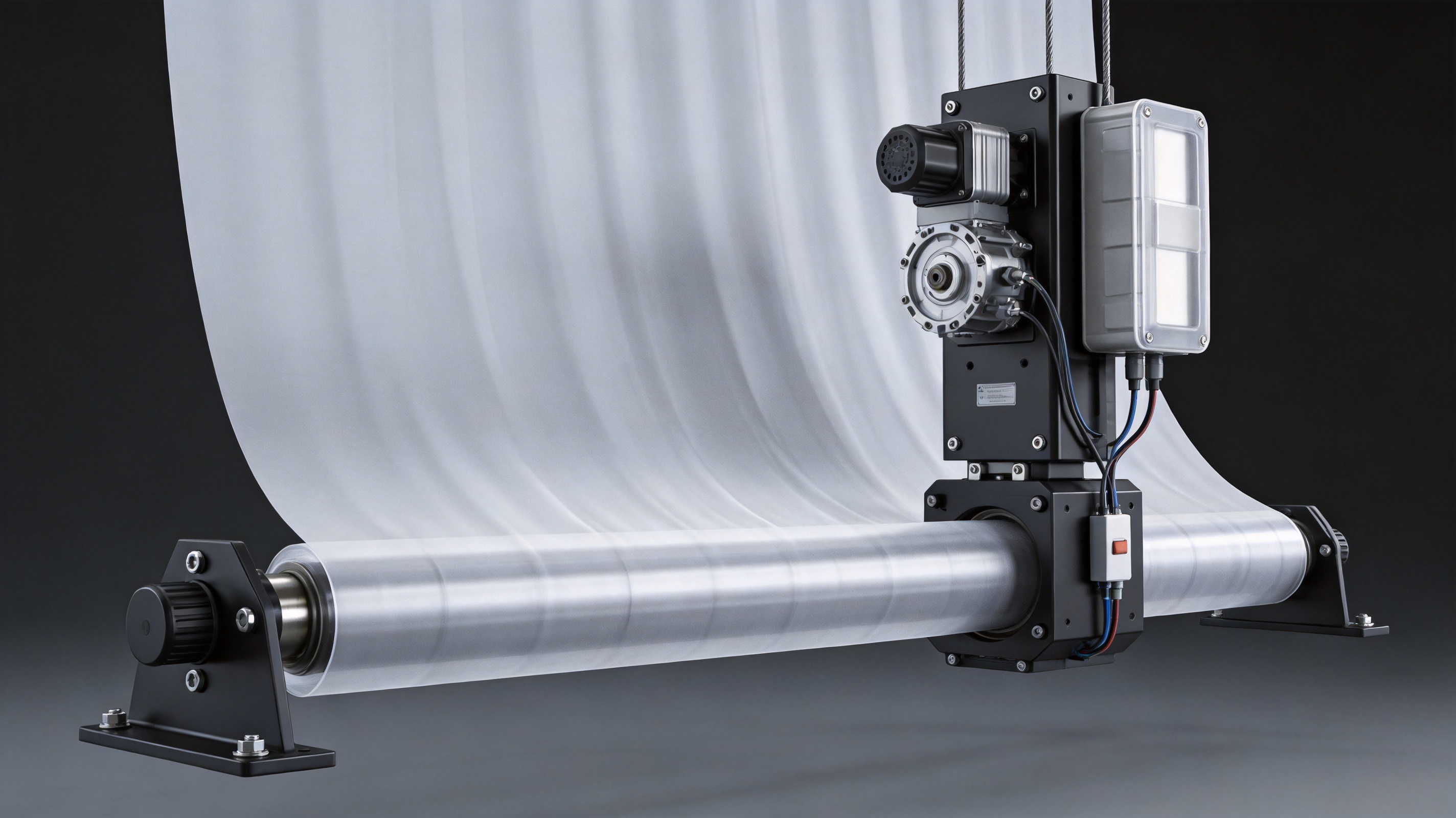
The listed technical specifications provide a practical starting point for system planning. The lifting range is 0 to 10 meters, the rated power is 200 watts, the control method is DMX512, the maximum width is 6 meters, and the lifting speed is adjustable from 0 to 0.3 meters per second. The specified installation method is vertical suspension.
| Specification | Listed Value | Planning Significance |
|---|---|---|
| Lifting range | 0–10 m | Suitable for a broad range of stage heights and vertical scenic movements |
| Power | 200 W | Provides the stated drive power for the designed operating configuration |
| Control method | DMX512 | Supports integration with common entertainment control systems |
| Maximum width | 6 m | Defines the stated curtain-width application range |
| Lifting speed | 0–0.3 m/s | Allows adjustable movement for different visual and operational requirements |
| Installation method | Vertical suspension | Supports suspended curtain applications in suitable structures |
Vertical suspension requires careful consideration of the supporting structure, attachment points, curtain weight, winding direction, service access, and surrounding stage equipment. The machine should be installed on a structure that is appropriate for the total operating load and dynamic forces. The installation should also provide sufficient clearance for the curtain, roller tube, fabric path, and any adjacent scenery or lighting equipment.
Because scrim effects often involve front and rear lighting, the machine’s physical placement should be considered during the design of the entire visual system. The curtain should be able to move without contacting lighting fixtures, projection surfaces, truss elements, scenic pieces, or performers.
The curtain material has a direct effect on operating performance. Fabric weight, width, height, flexibility, attachment method, edge treatment, and winding characteristics all influence the required torque and tension. Scrim fabric in particular should be installed with attention to alignment and even distribution.
Before commissioning, the system designer should confirm that the curtain dimensions and mass are compatible with the selected machine configuration. The machine’s stated maximum width is 6 meters, but the final application should also account for fabric density, mounting arrangement, winding layers, and site-specific conditions.
Commissioning is a key stage in achieving the product’s expected performance. It normally involves checking the mechanical alignment, setting travel limits, configuring speed profiles, confirming encoder response, verifying tension behavior, assigning DMX512 addresses, and testing the complete cue sequence.
Calibration should be performed with the actual curtain installed rather than with the machine operating without its intended load. The curtain may behave differently as the fabric winds onto the roller tube, and the final movement profile should be adjusted to match the material and visual requirements.
RenteZhihe’s service capability covers design, production, installation, commissioning, operation, and maintenance. This integrated support is an important strength for customers who require more than a stand-alone device. A coordinated engineering process can reduce the risk of incompatibility between the machine, the fabric, the control system, and the venue structure.
The performance of a precision stage machine depends on the quality of its engineering and manufacturing process. A product may include a servo motor and digital control, but the final result also depends on mechanical rigidity, component matching, assembly accuracy, electrical integration, and quality inspection.
RenteZhihe (JiangSu) Equipment Technology Co., Ltd. positions itself as a high-tech enterprise specializing in research and development, manufacturing, stage machinery, performance equipment, and intelligent control systems. Its product development approach combines mechanical equipment with control technology for professional performance venues.
One advantage of an integrated manufacturer is the ability to consider the mechanical and control systems together. The roller tube, gearbox, servo drive, encoder, sensor, limit switch, and DMX512 interface should not be selected as unrelated parts. They need to function as one coordinated machine.
Integrated development makes it easier to evaluate the complete movement chain. The motor must provide suitable torque, the gearbox must transfer that torque appropriately, the roller tube must handle the curtain, the sensor must provide useful feedback, and the control system must interpret commands accurately.
This approach can provide an advantage over suppliers that focus only on generic lifting hardware or only on electronic control components. Stage applications have special requirements, including low noise, smooth movement, compact integration, visual repeatability, venue compatibility, and operator-friendly control.
The product features include excellent structural rigidity and a high protection grade. Structural rigidity helps the machine maintain alignment during operation and reduces the possibility that vibration or deformation will affect the curtain path. A suitable protection level helps the equipment operate more reliably in the practical conditions of a performance venue.
Protection requirements vary by installation. Dust, humidity, temperature, transport, maintenance access, and surrounding equipment should all be considered. The machine’s protection features should be evaluated as part of the complete project specification rather than viewed independently from the venue environment.
The product is described as having a simple and intuitive operating method and a maintenance-free design. In practical terms, this means that the machine is intended to reduce routine maintenance demands through integrated components and stable operation. Even so, professional stage equipment should still receive regular inspection.
Operators should check the curtain attachment, roller tube condition, cable connections, limit functions, emergency controls, mounting structure, and unusual noise or vibration. A maintenance-conscious design can reduce the frequency and complexity of service tasks, but it does not eliminate the need for responsible inspection and safe operating procedures.
Stage machinery often has to fit a specific venue rather than a standard industrial layout. Curtain dimensions, suspension height, control architecture, access limitations, scenic design, and audience sightlines can vary significantly between theaters, concerts, film studios, and immersive installations.
The company’s engineering and manufacturing capabilities support custom stage machinery solutions. A project-based approach allows technical teams to examine the intended curtain material, lifting distance, movement speed, control requirements, installation method, and venue conditions before final configuration.
Customization should always be based on clearly defined technical requirements. It may involve mechanical dimensions, control settings, mounting arrangements, cable routing, limit positions, commissioning parameters, or integration with a larger stage automation system.
The Servo CNC Curtain Winding Machine offers several advantages when compared with simpler curtain automation systems. These advantages are most valuable in applications where visual accuracy, synchronization, or repeatability is more important than merely moving a curtain from one end position to another.
Conventional systems may estimate position based on motor run time or rely mainly on mechanical stops. The servo CNC system uses encoder feedback to monitor movement. This supports more consistent positioning and makes the system better suited to projection and multi-unit applications.
A fixed-speed curtain machine may limit artistic options. The adjustable range from 0 to 0.3 meters per second allows the movement to be adapted to the scene. Slow motion can support a suspenseful reveal, while a faster profile can support a transition between program segments.
DMX512 control allows the curtain to become part of the venue’s wider show-control system. This is more practical than operating the curtain through an isolated control method when the production already depends on synchronized lighting, projection, and automated equipment.
Scrim fabric reveals movement irregularities more easily than an opaque curtain. Servo control, tension monitoring, and smooth mechanical operation make the machine more suitable for applications in which fabric behavior affects the audience’s perception.
Low-noise performance is beneficial in theatrical dialogue, musical performances, conferences, film production, immersive installations, and quiet scenic transitions. A machine designed specifically for stage use can provide a more refined movement profile than equipment intended for general lifting duties.
A supplier that provides design, manufacturing, installation, commissioning, operation, and maintenance support can help customers manage the complete life cycle of the equipment. This is an advantage for projects where successful performance depends on correct coordination between machinery, fabric, structure, and control software.
Theater productions can use the machine for traditional curtain movements, scrim reveals, scene transitions, projection surfaces, and layered scenic effects. The ability to program intermediate positions allows directors and designers to develop more complex stage pictures.
In a theater, the machine may operate several times during a performance and may repeat the same cue across many shows. Consistent positioning and low-noise movement are therefore important for both artistic quality and operational reliability.
Concert productions often combine large-scale lighting, video, scenic automation, and live performers. A precision curtain system can support opening moments, artist reveals, visual transitions, and projection effects. DMX512 compatibility makes it easier to include curtain movement in an existing entertainment-control workflow.
Immersive night tours use light, sound, projection, architecture, and movement to transform public spaces. Scrim curtains can be positioned within historic buildings, themed environments, gardens, or temporary scenic structures. The curtain can appear and disappear according to lighting conditions, creating an atmosphere that changes as visitors move through the space.
Because visitors may experience the effect from different angles, movement quality and fabric tension are important. Uneven motion can be more noticeable in an immersive environment where the audience is not restricted to one fixed viewing position.
Product launches frequently use reveal effects to create anticipation. A scrim can conceal a product while projection and lighting build visual information around it. At the selected cue, the fabric can move or become transparent, allowing the physical product to appear in relation to the projected image.
The repeatability of servo-controlled movement is valuable when the event includes rehearsals, multiple sessions, or simultaneous installations. The production team can test the cue in advance and expect the machine to reproduce the programmed behavior during the live presentation.
Film production can use precision curtain systems as part of an in-camera visual environment. A scrim may separate performers from scenery, provide a controlled projection surface, or support transitions that would otherwise require extensive digital compositing.
In a studio, low operating noise and accurate movement are particularly useful because machinery may operate close to microphones, cameras, and lighting equipment. The curtain can be incorporated into a shot or used during a controlled change between takes.
Banquet halls and convention centers often host different types of events. A single venue may need to support conferences, award ceremonies, concerts, exhibitions, weddings, and product presentations. Flexible curtain automation helps the space adapt to different layouts and presentation styles.
The machine’s vertical suspension method and DMX512 control can support integration with existing venue infrastructure, subject to structural review and project-specific installation requirements.
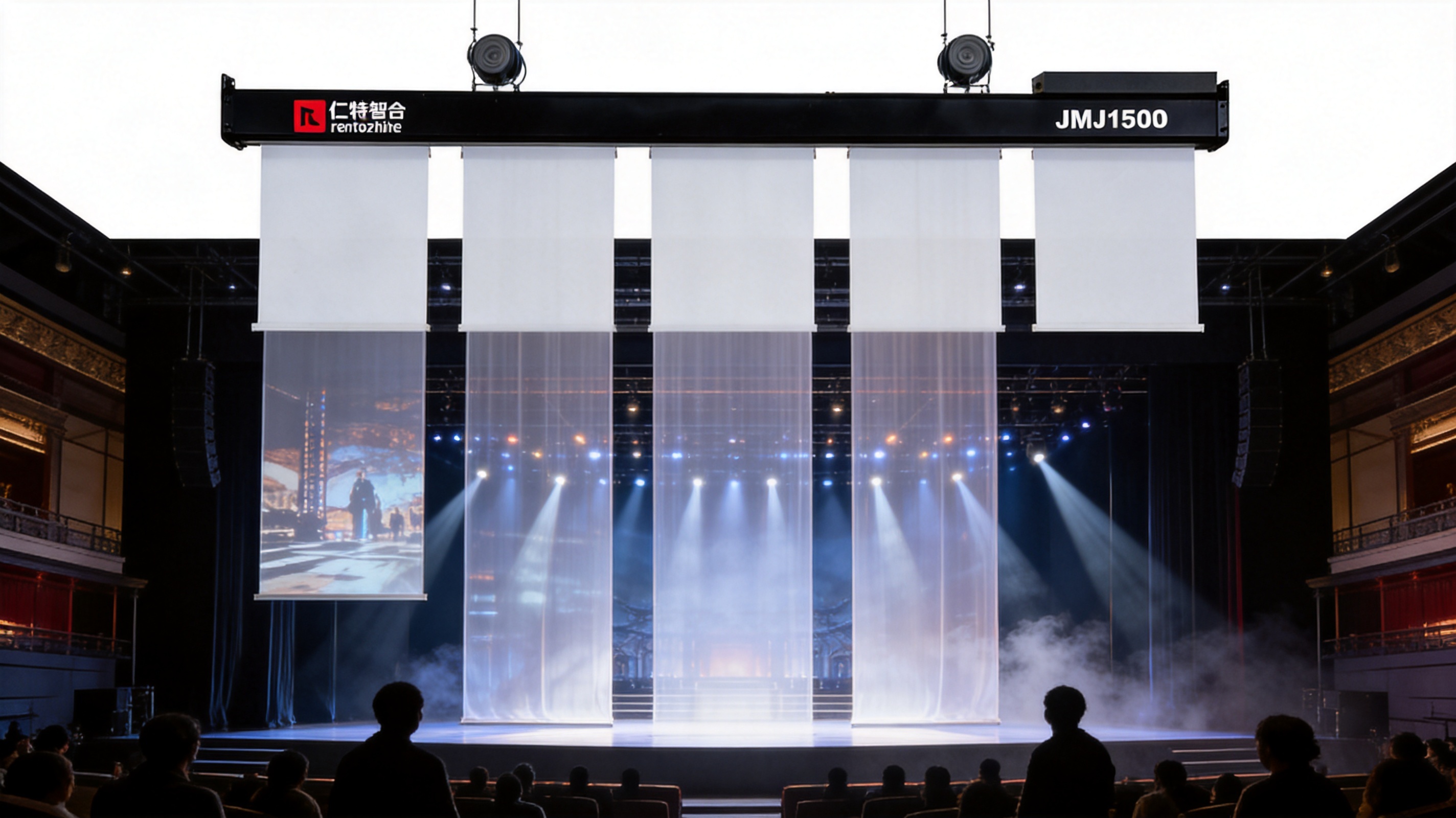
Professional stage equipment must deliver value over repeated use rather than only during initial demonstrations. Reliability includes mechanical endurance, stable control response, predictable positioning, manageable maintenance, and access to technical support when the installation requires adjustment.
The Servo CNC Curtain Winding Machine is designed for repeated operation in professional venues. Its closed-loop control helps reduce positional drift, while the gearbox and roller system support controlled mechanical output. The tension sensor and limit switch contribute to stable and protected operation.
Repeated performance is one of the most important benefits of a programmable curtain system. A production may run the same cue dozens or hundreds of times. If the curtain stops at a different location on each cycle, the effect becomes difficult to rehearse and difficult to trust.
Encoder feedback and programmed control support consistency. Repetition also depends on installation quality, fabric condition, environmental factors, and regular inspection. A complete approach combines accurate machinery with proper commissioning and operational discipline.
When the curtain is controlled through the same general stage-control environment as lighting and other effects, operators can manage cues more efficiently. This can reduce the need for separate manual interventions and make the show sequence easier to document and repeat.
A simple and intuitive operating method is especially valuable in venues with changing crews or multiple production teams. Clear control assignments, defined limit positions, and documented movement profiles help reduce setup time and operating errors.
Long-term value also depends on the manufacturer’s ability to support the product after delivery. RenteZhihe provides services related to design, production, installation, commissioning, operation, and maintenance. This broad service model can be useful for customers who need technical assistance during project development or system expansion.
Customers should establish a maintenance schedule appropriate to the operating frequency and venue conditions. Inspection records can help identify changes in noise, vibration, movement speed, tension, or stopping accuracy before they develop into larger problems.
Selecting a precision curtain machine should begin with the intended visual effect and the physical requirements of the installation. The machine should not be selected only according to motor power or lifting distance. Curtain material, control architecture, structural conditions, audience position, and show schedule all influence the final configuration.
Project teams should identify the curtain type, width, height, weight, winding direction, required travel distance, desired speed, intermediate positions, and number of operating cycles. Scrim applications should also describe the intended front-light and rear-light behavior.
The control design should specify whether the machine will operate through a lighting console, a dedicated show-control system, a media server, or a combination of systems. DMX512 addressing, cue timing, synchronization requirements, and operator access should be reviewed before installation.
The supporting structure, attachment points, access routes, service clearances, emergency stops, travel limits, and surrounding equipment should be reviewed by qualified technical personnel. A precision machine can only perform properly when the installation structure and curtain path are suitable.
Commissioning should include mechanical adjustment, control configuration, speed testing, limit verification, tension checks, and full cue-sequence testing. Operators should be trained in normal operation, emergency procedures, inspection requirements, and basic troubleshooting.
It is a servo-controlled stage machine designed to wind, unwind, raise, or lower curtains with programmable speed and positioning. The system uses servo drive technology, encoder feedback, a roller tube, a planetary gearbox, tension monitoring, limit protection, and DMX512 control.
A standard curtain machine may focus mainly on opening and closing the curtain. The Servo CNC Curtain Winding Machine is designed for more precise movement, repeatable positioning, adjustable speed, closed-loop feedback, and coordination with lighting and projection systems. These features are particularly valuable for scrim and projection-based visual effects.
Projection mapping depends on a predictable surface position. Servo control with encoder feedback measures actual movement and helps the curtain return to a consistent programmed location. This reduces the risk of positional variation that could cause the projected image to become misaligned with the fabric.
Yes. The system is especially suitable for scrim-based effects because it supports controlled movement and tension management. Scrim should be selected, installed, and configured according to the project’s dimensions, weight, winding behavior, and lighting design.
The listed lifting range is 0 to 10 meters. The final usable range depends on the actual installation, curtain dimensions, structure, control settings, and project requirements.
The listed maximum width is 6 meters. The final configuration should also consider fabric weight, height, winding layers, attachment method, and the required movement profile.
The listed control method is DMX512. This allows the machine to be incorporated into many existing stage and entertainment-control environments alongside lighting and other automated equipment.
Yes. Multiple units can be coordinated through DMX512 for layered scrim effects, synchronized reveals, projection-to-physical transitions, and other multi-unit applications. The system design should define cue timing, addressing, movement profiles, and installation alignment.
Yes. It is intended for professional performance environments, including theaters, concerts, immersive night tours, product launches, film production, bars, banquet halls, convention centers, and other multifunctional venues.
Although the product is designed for simple operation and reduced maintenance demands, regular inspection is still recommended. Operators should check the curtain attachment, roller tube, tension behavior, cable connections, limit switches, mounting structure, and any changes in noise or vibration.
The company provides custom stage machinery and engineering services. Project customization may address dimensions, installation method, curtain characteristics, control integration, commissioning parameters, and venue-specific requirements.
Customers should confirm the curtain material and dimensions, total load, lifting distance, required speed, installation structure, control method, number of units, operating environment, travel limits, and desired visual effects. These details help determine the appropriate configuration and commissioning plan.
The Servo CNC Curtain Winding Machine is designed for stage environments in which curtain movement is part of the visual language of the production. Its value comes from the combination of servo precision, encoder feedback, DMX512 integration, controlled speed, tension monitoring, mechanical stability, and professional installation support.
For scrim applications, accurate movement is not a luxury. It helps preserve the relationship between fabric, light, projection, and physical scenery. For multi-unit installations, synchronized control allows several curtains to function as one coordinated visual system. For theaters, concerts, immersive tours, product events, and film production, low-noise operation and repeatable positioning help improve both artistic control and operational confidence.
Compared with basic curtain automation, the machine offers a more advanced approach to positioning and synchronization. It is intended not merely to move a curtain, but to provide a dependable motion platform for projection mapping, virtual-real overlays, layered scenic reveals, and programmable performance effects.
Its manufacturing strength is supported by RenteZhihe’s focus on stage machinery, performance equipment, intelligent control systems, engineering integration, and lifecycle service. By combining product development with design, production, installation, commissioning, operation, and maintenance capabilities, the company can address the complete requirements of professional venue projects.
When correctly specified, installed, commissioned, and maintained, the Servo CNC Curtain Winding Machine can become a central component of a modern automated stage. It gives designers greater control over movement, gives operators a more familiar control interface, and gives audiences more convincing transitions between the physical and the virtual.
1. DMX512-A Digital Data Transmission Standard for Stage Lighting and Entertainment Control.
2. Professional Stage Automation and Scenic Motion Control Principles.
3. Projection Mapping and Surface-Position Synchronization Practices.
4. Technical Guidance for Theatrical Scrim, Translucent Fabrics, and Lighting-Based Illusions.
5. Servo Motor Applications in Closed-Loop Motion Control Systems.
6. Stage Machinery Installation, Commissioning, and Maintenance Procedures.
7. RenteZhihe (JiangSu) Equipment Technology Co., Ltd. Product Information for Servo CNC Curtain Winding Machine.
We specialize in delivering advanced stage machinery, rigging systems and intelligent control solutions for performance spaces worldwide.

No. 111 Runfeng Road, Hailing District, Taizhou City, Jiangsu Province, China

rtstage@163.com

+86-139 1771 1698

+86-139 1771 1698
rtstage@163.com
 中文简体
 English
 русский
 Français
 Español
 عربى