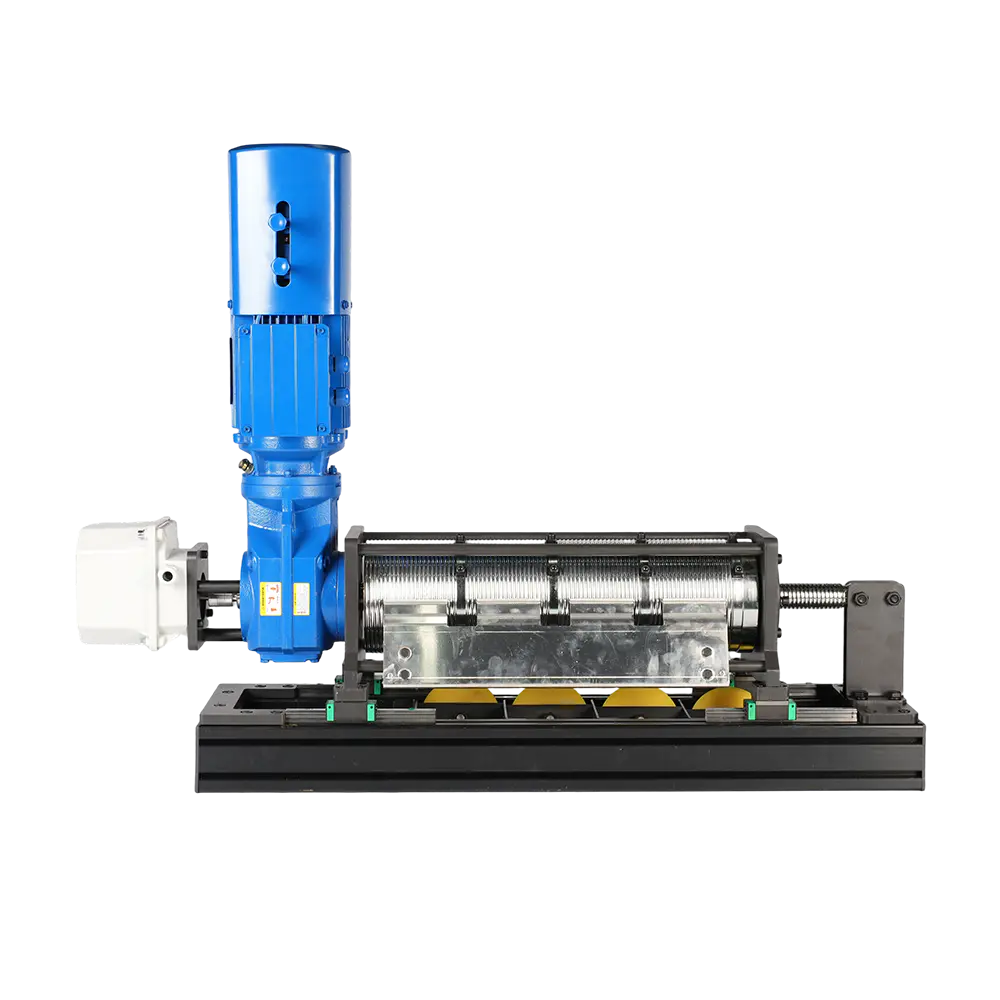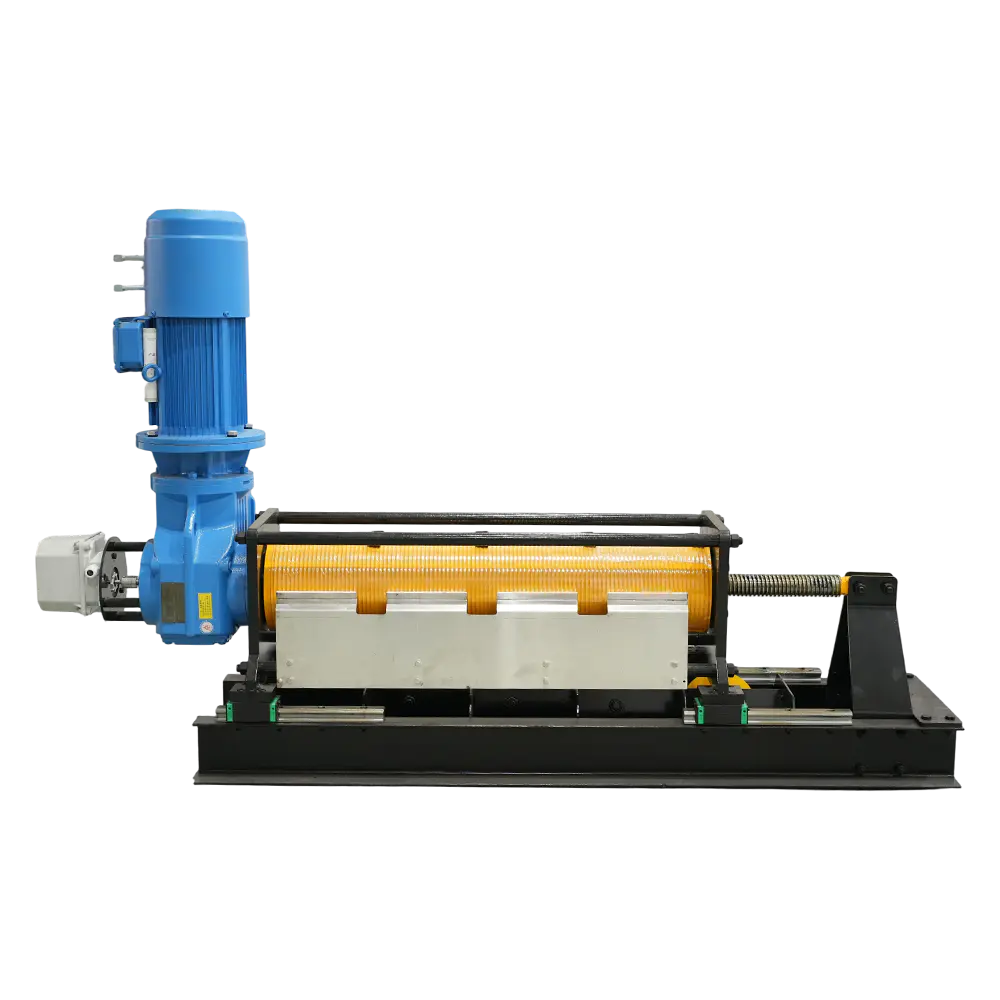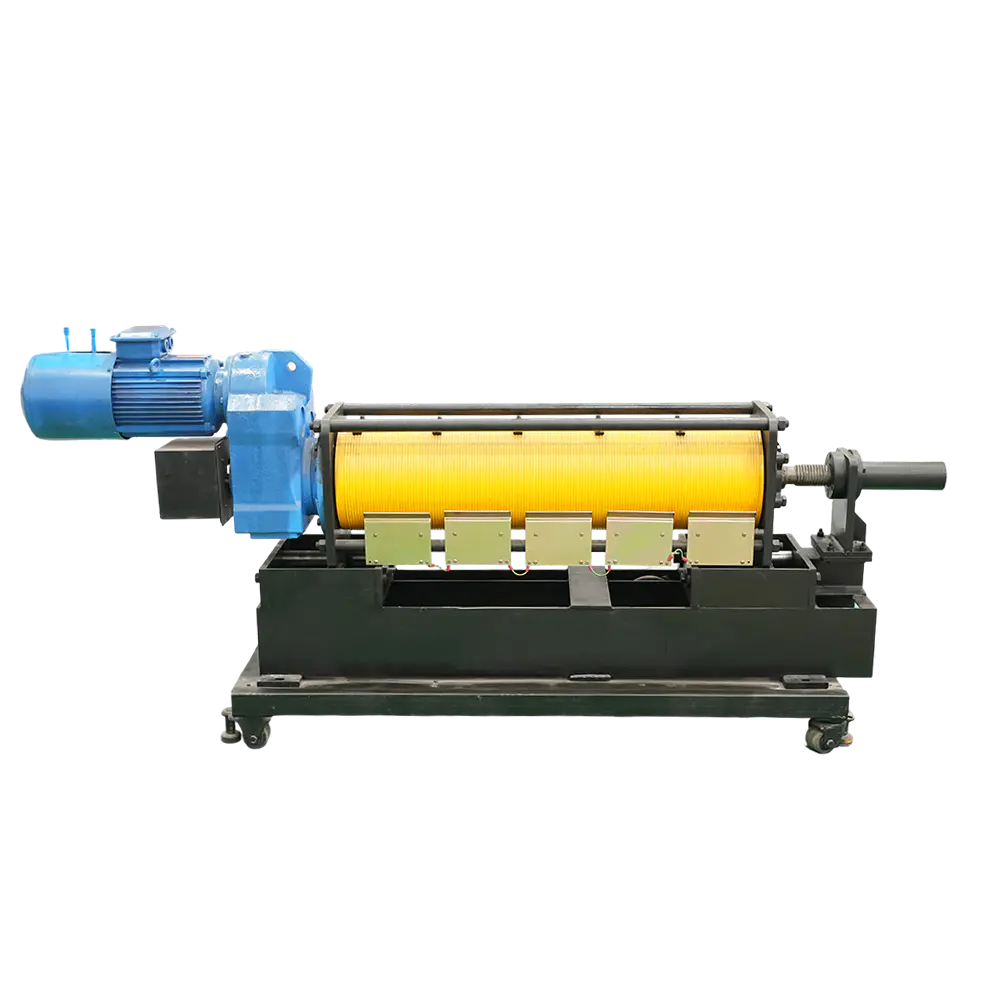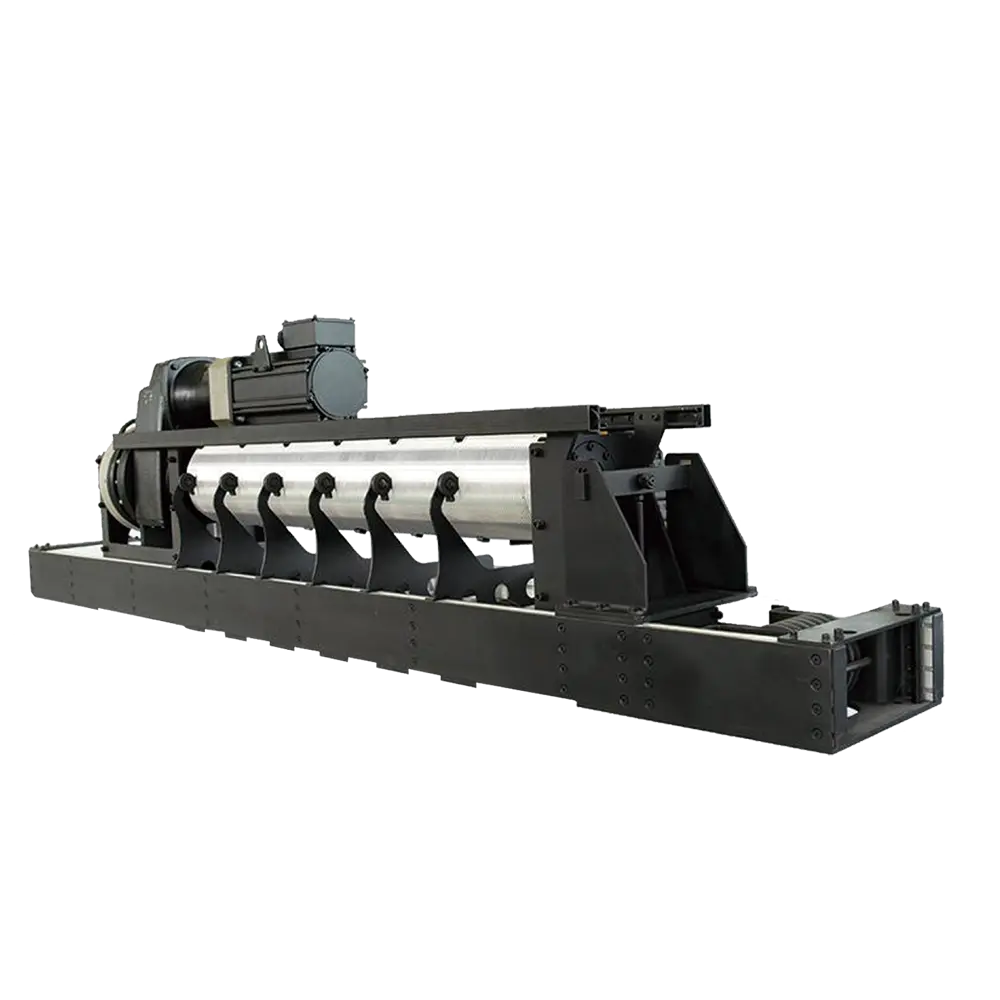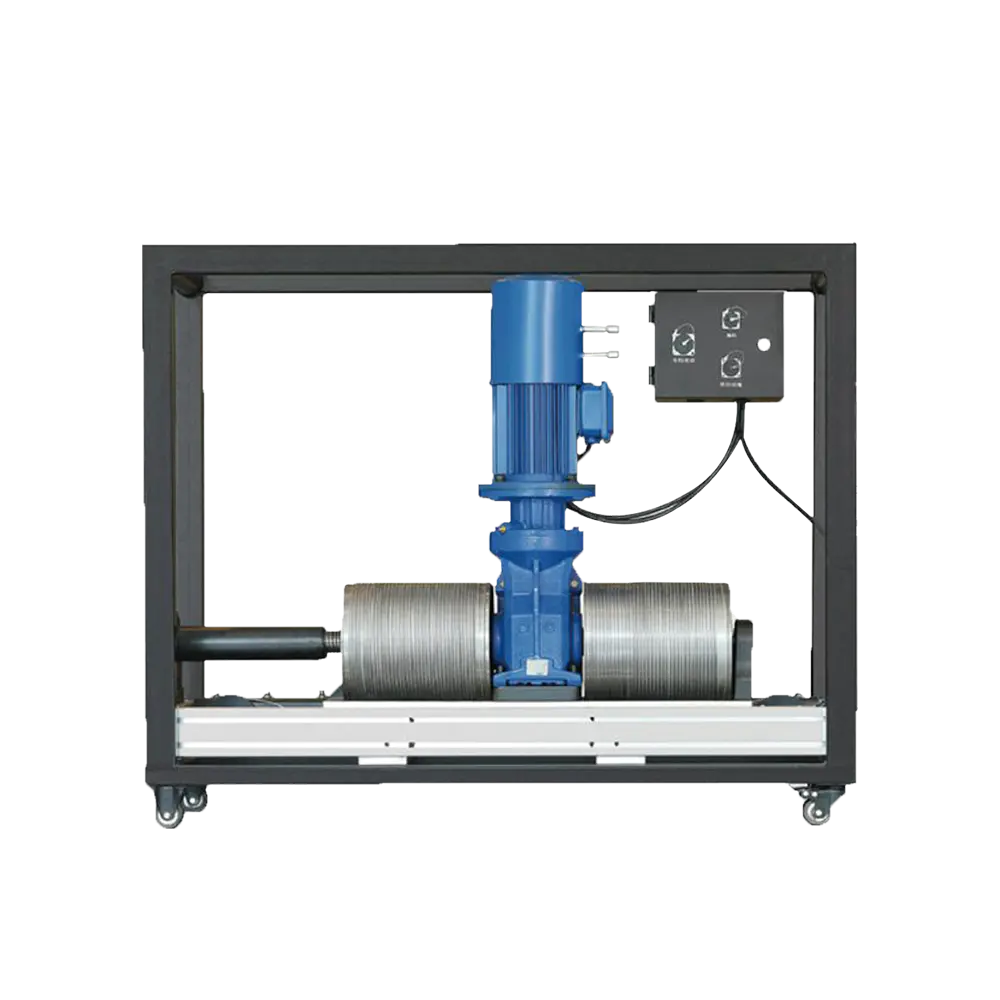
Modern performance venues require stage machinery that can deliver accurate movement, high operating speed, dependable safety, and efficient use of limited installation space. As theaters, cultural centers, conference facilities, and multifunctional venues become more technically advanced, traditional lifting arrangements are increasingly being replaced by compact, intelligent, and highly integrated systems. The vertical zero-fleet stage winch is designed for this changing environment. It combines a vertical sheave-up configuration, coaxial screw and roller drum technology, automatic rope spooling, dual braking, encoder-based positioning, and multi-sensor protection in one space-efficient stage automation solution.
The system is especially suitable for projects where overhead clearance is restricted or where the equipment layout must be carefully coordinated with architecture, lighting, scenery, acoustic systems, and other stage infrastructure. Instead of relying on a large horizontal footprint, the vertical zero-fleet stage winch organizes its primary mechanical elements in a compact vertical arrangement. This approach helps stage designers use available space more effectively while maintaining strong lifting capability and accurate travel control.
Beyond its compact form, the product is supported by a complete engineering and manufacturing process. RenteZhihe (JiangSu) Equipment Technology Co., Ltd. develops stage machinery, performance equipment, and intelligent control systems for professional venues. Its capabilities cover design, component processing, machine assembly, control integration, installation, commissioning, operation support, and maintenance. This integrated approach enables the company to coordinate the mechanical, electrical, software, and safety requirements of a stage automation project rather than treating the winch as an isolated component.
This article examines the construction, operating principles, safety systems, manufacturing strengths, application value, and maintenance requirements of the vertical zero-fleet stage winch. It also explains how the product compares with more conventional vertical or horizontal lifting solutions and why a carefully integrated manufacturing process can improve long-term reliability.
Vertical Zero-Fleet Stage Winch
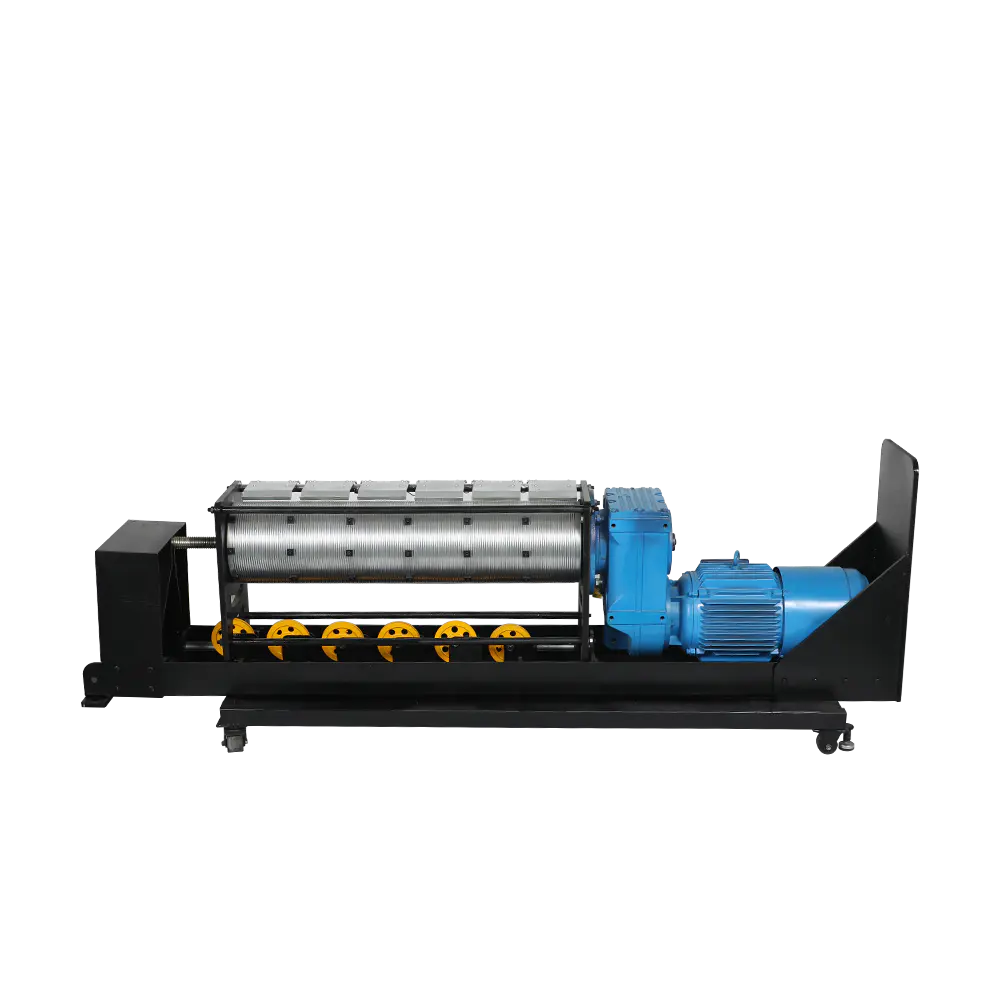
A vertical zero-fleet stage winch is a lifting and movement device designed to control stage-related loads while keeping the rope path, drum arrangement, and installation footprint as compact as possible. The term “zero-fleet” refers to a rope management concept in which the rope is controlled so that it winds onto and leaves the drum with minimal lateral movement. This reduces unnecessary side loading and supports more orderly rope storage during operation.
The vertical configuration places the main lifting arrangement in an upright orientation. A vertical sheave-up installation can be advantageous when the available floor area is restricted or when the venue design requires machinery to fit within a narrow technical zone. In comparison with some conventional horizontal winch layouts, this arrangement can reduce interference with adjacent systems and simplify the planning of compact machinery rooms or stage-side equipment areas.
The product uses a coaxial screw and roller drum design. This structure is intended to combine efficient transmission with controlled rope handling. The screw mechanism supports organized movement of the rope alignment assembly, while the roller drum provides a dedicated surface for winding and unwinding. The combined arrangement can help achieve higher operating velocities than some traditional vertical configurations while maintaining a controlled rope path.
The vertical zero-fleet stage winch is not simply a motor and drum. It is a coordinated system that includes an electric motor, reducer, roller drum, limit switches, rope aligning assembly, pulleys, brakes, sensors, encoders, structural supports, and control electronics. Every component contributes to the final operating result. The motor supplies rotational energy, the reducer manages torque and speed, the drum handles the rope, the alignment assembly controls winding position, and the control system coordinates movement and protection functions.
Its applications may include stage lifting, scenery movement, theatrical rigging, performance automation, and other controlled vertical movement tasks. The exact application, payload, travel distance, speed, duty cycle, installation arrangement, and control architecture must be confirmed through project engineering. A professional stage machinery manufacturer can adjust the system configuration according to the requirements of a particular venue.
Space is one of the most important factors in the design of contemporary theaters and performance venues. A stage automation system must share its environment with lighting bridges, projection systems, curtains, scenery storage, sound equipment, access passages, fire protection infrastructure, and maintenance areas. A large machine footprint may create conflicts that are difficult and expensive to solve after construction has begun.
The vertical zero-fleet stage winch addresses this challenge through a compact upright installation concept. By using a vertical sheave-up arrangement, the equipment can be positioned in locations where a larger horizontal assembly would be impractical. This may help preserve valuable floor space and provide greater flexibility when machinery is installed near stage walls, technical galleries, or specialized lifting zones.
Vertical installation can also support cleaner coordination between the winch, guide track, pulleys, and moving stage components. When the equipment is designed as a complete system, engineers can define the rope path and support structure in advance. This improves the possibility of achieving stable movement without unnecessary changes in direction or excessive mechanical interference.
However, compact installation does not mean that maintenance can be neglected. A vertical system requires accurate alignment, reliable fastening, and careful inspection of its support points. The guide track, pulley arrangement, rope aligning assembly, and mounting brackets must remain correctly positioned throughout the service life of the equipment. The benefits of compact design are therefore strongest when supported by disciplined manufacturing, installation, commissioning, and maintenance procedures.
Compared with some traditional equipment, the vertical configuration may also provide more options for projects with unusual architectural constraints. A venue may have sufficient vertical clearance but limited horizontal space. In this situation, an upright winch can make better use of the available dimensional profile. It can also support a more organized technical layout when several stage machinery systems must be installed in a concentrated area.
The reduced footprint of a vertical zero-fleet stage winch can provide several practical benefits. First, it may reduce competition for floor area between lifting machinery and other technical equipment. Second, it can help engineers reserve clearer access paths for inspection and servicing. Third, it may simplify the arrangement of multiple winches when the stage requires several independently controlled movement lines.
Space efficiency is particularly important in renovation projects. Existing venues often have fixed walls, limited machinery rooms, and structural restrictions that make it difficult to add large horizontal assemblies. A compact vertical system may be easier to adapt to these conditions, although every project still requires a detailed assessment of load paths, structural capacity, service access, and safety clearance.
The coaxial screw and roller drum design is intended to support higher velocity than traditional vertical arrangements while retaining controlled rope handling. The speed of a stage winch must always be considered together with payload, travel distance, acceleration, deceleration, stopping accuracy, and safety requirements. High speed alone does not represent good performance. The system must provide smooth and predictable movement throughout the operating cycle.
Dual encoder control contributes to precise travel management. Encoder feedback allows the control system to monitor the movement position and compare actual travel with the commanded position. This supports fine control in different operating conditions and can improve repeatability when the equipment is used for scenery, stage platforms, or other automated movements.
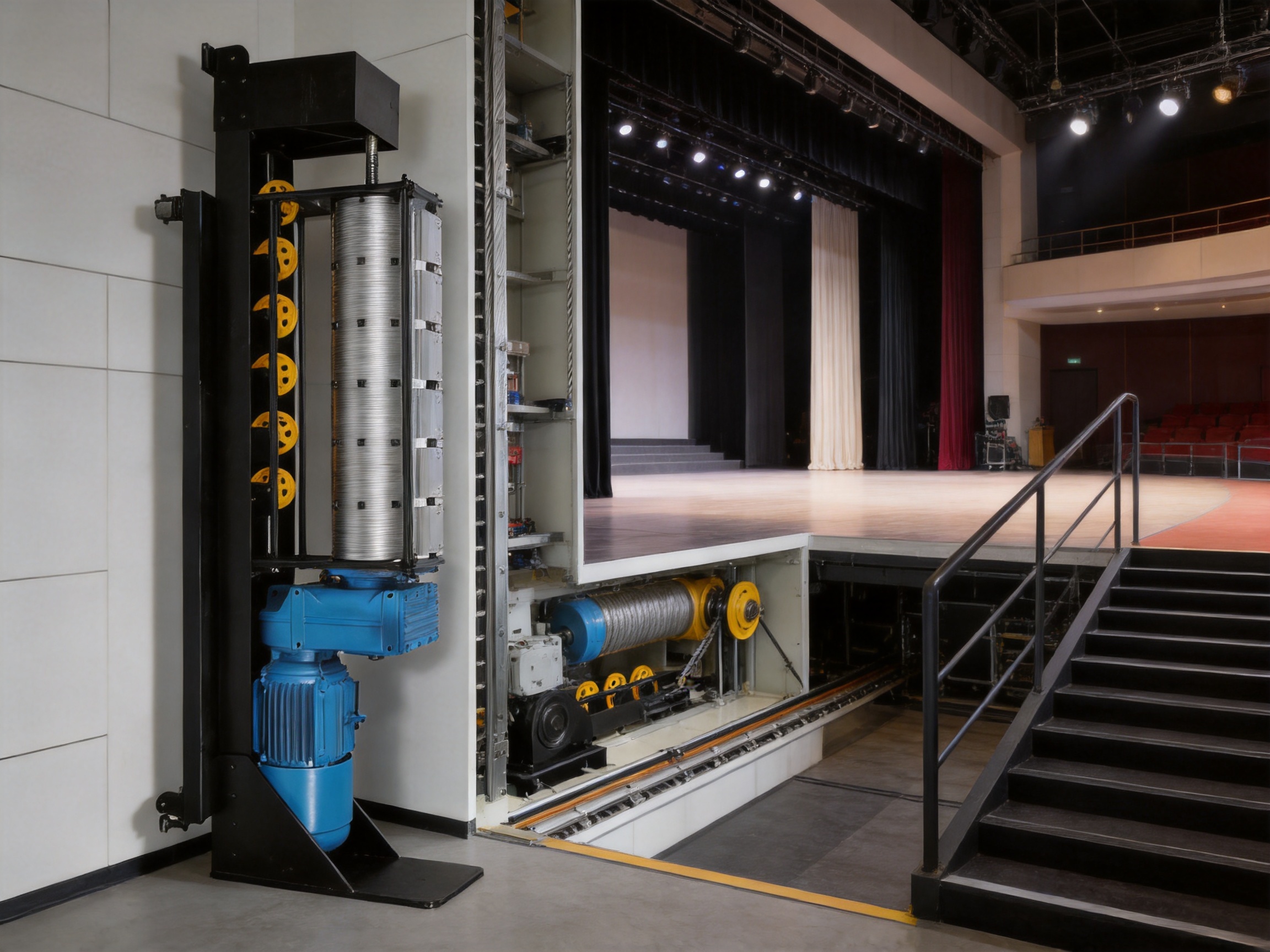
The performance of the vertical zero-fleet stage winch depends on the coordination of several mechanical components. Each part must be selected, processed, assembled, and tested according to the intended duty requirements. The primary components include the electric motor, reducer, roller drum, limit switches, rope aligning assembly, pulleys, braking units, guide structures, and mounting elements.
The electric motor provides the driving force for the winch. It must be matched to the required payload, operating speed, duty cycle, acceleration profile, and environmental conditions. In professional stage machinery, motor selection is not based only on nominal power. Engineers must also consider starting torque, thermal performance, braking coordination, control compatibility, noise, service life, and the number of expected operating cycles.
A properly selected motor supports stable acceleration and deceleration. This is important because sudden changes in motion can affect the load, rope, supporting structure, and stage components. Controlled movement improves both performance quality and mechanical durability.
The reducer converts the motor’s speed and torque into an output suitable for the roller drum. It is a critical transmission component because it affects lifting force, operating speed, efficiency, noise, and mechanical reliability. The reducer must be correctly lubricated and aligned with the motor and drum assembly. Any abnormal vibration, unusual sound, temperature increase, or oil leakage should be investigated during maintenance.
The reducer also contributes to the system’s ability to control heavy loads. A well-matched transmission arrangement can provide the necessary torque without requiring an oversized motor. The final design must be confirmed through engineering calculations and project-specific load analysis.
The roller drum stores and releases the rope in a controlled manner. Its surface, diameter, material, machining accuracy, and connection to the transmission system all influence rope service life and winding quality. The drum must be capable of withstanding repeated loading without unacceptable deformation or surface damage.
In a zero-fleet arrangement, the roller drum works with the rope aligning assembly to reduce irregular winding. Proper rope storage helps prevent overlap, side loading, abrasion, and uneven tension. The drum and alignment mechanism should be inspected regularly, particularly in systems that operate frequently or handle high-cycle performance schedules.
The rope aligning assembly guides the rope as it moves onto and away from the drum. It is essential for maintaining an orderly winding pattern and reducing unnecessary lateral movement. If the alignment system becomes loose, damaged, contaminated, or incorrectly adjusted, the rope may wind unevenly. This can affect load movement and increase wear on the rope, drum, and pulley system.
Because the rope aligning assembly is closely related to the zero-fleet principle, its installation accuracy is especially important. The assembly must be correctly aligned with the drum, pulley path, and load direction. During commissioning, technicians should verify its movement throughout the complete travel range rather than checking only one position.
Pulleys redirect and support the rope path. Their groove profile, bearing condition, rotation, alignment, and mounting strength must meet the operating requirements of the system. A pulley that does not rotate freely may create friction and heat. A misaligned pulley may cause side loading or uneven rope wear.
The guide structure and guide track support the moving mechanism and help maintain stable travel. They must be clean, straight, securely fastened, and free from excessive wear. The guide track is not an independent accessory; it forms part of the complete motion system and must be maintained together with the winch, drum, pulleys, sensors, and control equipment.
Limit switches define or monitor travel boundaries. They provide an important layer of protection by helping prevent movement beyond the intended operating range. Limit switches must be positioned accurately and tested at scheduled intervals. Their signals should be confirmed through the control system, and any inconsistent feedback should be treated as a maintenance issue rather than ignored.
Stage machinery operates in environments where people, scenery, equipment, and structural components may be present near moving loads. Safety must therefore be designed into the mechanical system, control system, inspection process, and operating procedures. The vertical zero-fleet stage winch incorporates multiple safety concepts, including over-designed components, dual braking, payload inspection technology, dual encoder control, and individual or group operation.
The system uses over-designed components intended to withstand loads beyond normal operating demands. A high safety factor provides additional capacity for expected variations in use, dynamic effects, and long-term service conditions. It does not eliminate the need for correct operation or inspection, but it can provide a stronger engineering margin when the equipment is properly specified and maintained.
Structural elements, drums, shafts, brackets, pulleys, and transmission parts must all be assessed as part of the load path. A strong individual component cannot compensate for a weak connection, inadequate support, or incorrect installation. For this reason, professional engineering must evaluate the complete system rather than focusing only on the motor or drum.
Dual braking is one of the key safety features of the stage winch. The brakes are designed to provide independent stopping capability in an emergency. If one braking path is unable to perform as expected, the second braking function can provide additional protection, subject to the system design and applicable safety requirements.
Brake inspection should include physical condition, response time, stopping performance, wear, electrical control, and coordination with the encoder and limit switch systems. Brakes should never be considered maintenance-free. Regular testing is necessary to verify that the stopping behavior remains within the required performance range.
The Proload Inspection Technology, supported by OCY-MULTI Sensors, is designed to detect assembly abnormalities or overload conditions. When the system identifies a potentially unsafe condition, it can automatically trigger a shutdown. This provides an additional protective layer beyond ordinary operator observation.
Sensor-based protection is valuable because some abnormal conditions may not be immediately visible. For example, a load may experience unexpected resistance, a mechanical connection may shift, or a component may behave differently from its normal operating pattern. A properly configured sensor system can identify changes and initiate a protective response before the condition becomes more serious.
Sensor protection depends on correct installation, calibration, signal processing, and testing. The sensors must be positioned according to the equipment design, and technicians must verify that the control system receives accurate feedback. Maintenance records should document sensor tests, alarm responses, shutdown behavior, and any corrective actions.
Dual encoder control supports accurate travel positioning and provides additional movement feedback. By comparing encoder signals, the control system can monitor whether the actual movement corresponds with the commanded movement. This is especially useful in applications where repeatable positioning is important.
Encoder inspection should include mechanical mounting, cable condition, signal stability, calibration, and communication with the control system. A control system cannot compensate for a damaged encoder, loose coupling, or incorrect parameter setting. Mechanical and electronic maintenance must therefore be coordinated.
The stage winch can be configured for individual or group control, depending on the requirements of the venue. Individual control is useful when one movement line must be adjusted independently. Group control is valuable when several winches must operate together according to a synchronized movement sequence.
Group control requires careful attention to synchronization, load distribution, position feedback, emergency stopping, and fault handling. If one unit detects an abnormal condition, the control system must be configured to respond appropriately to protect the complete group and the connected stage equipment.
| System Element | Primary Function | Operational Benefit | Maintenance Priority |
| Electric motor | Provides driving power | Controlled lifting and movement | Temperature, noise, insulation, and connection checks |
| Reducer | Converts speed and torque | Suitable output force and controlled operation | Lubrication, alignment, vibration, and leakage inspection |
| Roller drum | Stores and releases the rope | Organized rope handling and compact layout | Surface condition, deformation, and winding inspection |
| Rope aligning assembly | Maintains rope position | Reduced side movement and improved winding quality | Alignment, cleanliness, fastening, and wear checks |
| Dual braking system | Stops the load independently | Additional emergency protection | Brake response, wear, and stopping performance testing |
| OCY-MULTI Sensors | Detects overload or abnormal assembly conditions | Automatic shutdown and enhanced monitoring | Calibration, signal verification, and alarm testing |
| Dual encoders | Monitors movement and position | Fine travel control and positioning accuracy | Signal stability, coupling, and calibration inspection |
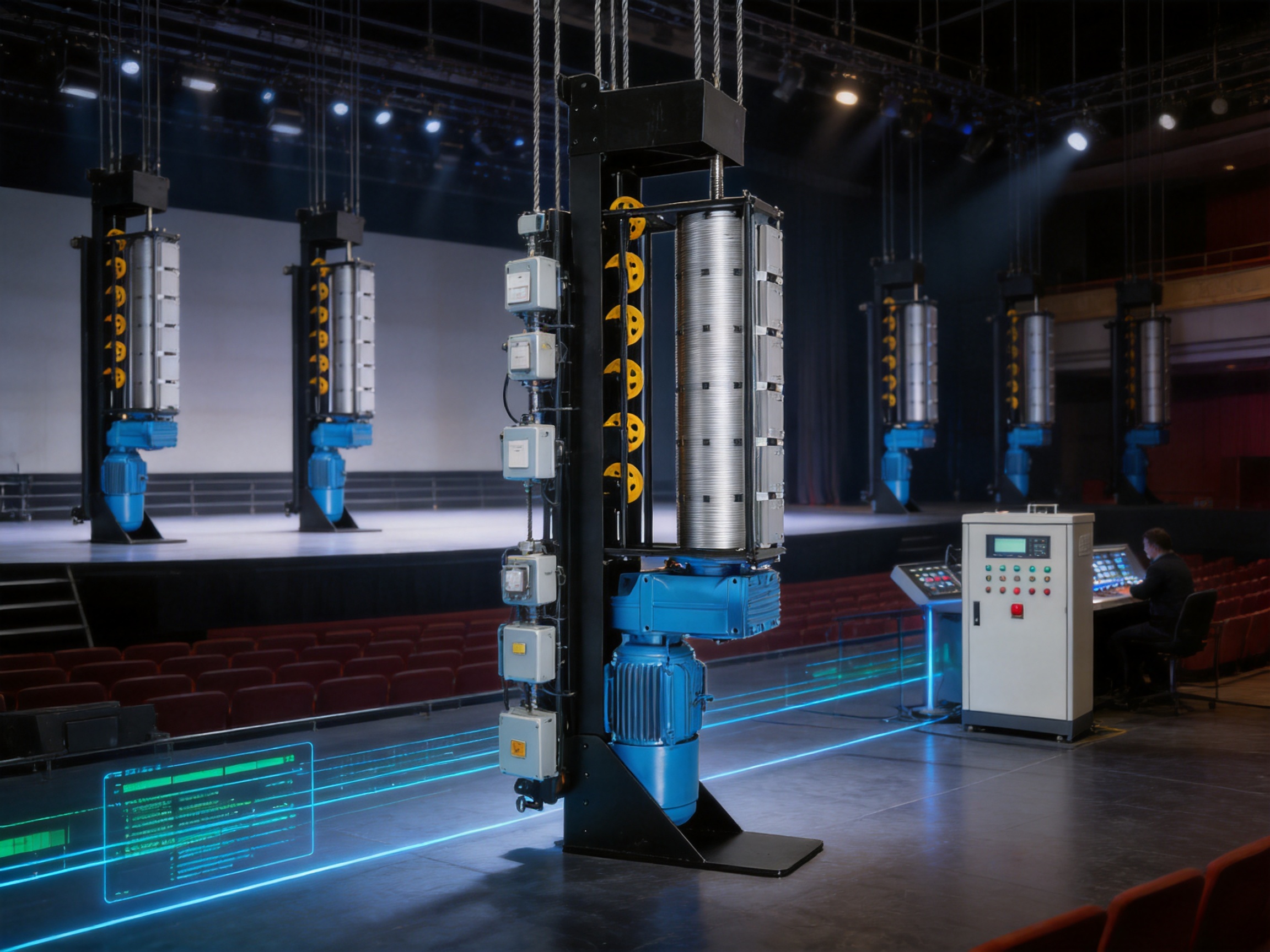
The vertical zero-fleet stage winch provides several advantages when compared with conventional systems that use larger horizontal layouts, simpler rope winding arrangements, or fewer integrated monitoring functions. These benefits are most meaningful when the equipment is correctly selected for the application and installed by qualified personnel.
The most visible advantage is the compact vertical arrangement. Traditional horizontal winches may require more floor area for the motor, reducer, drum, and rope path. A vertical sheave-up system can reduce the horizontal footprint and support more efficient use of technical space.
This advantage is particularly relevant in theaters with limited machinery rooms, renovation projects with fixed architectural conditions, and venues that require multiple movement systems in one area. Space saved by the winch can be used for access, inspection, control cabinets, storage, or other technical functions.
The coaxial screw and roller drum design supports orderly rope handling. By controlling the rope position as it winds, the system can reduce the risk of irregular accumulation and excessive lateral movement. This may help reduce wear and improve the predictability of the lifting process.
Rope management is a major factor in the service life of a stage winch. Poor winding can create uneven layers, localized pressure, abrasion, and unstable movement. A zero-fleet arrangement is designed to address these issues through coordinated drum and alignment mechanisms.
The product is designed to achieve higher velocities than traditional vertical setups. This can improve the efficiency of scene changes and automated stage operations, provided that the load, travel, acceleration, braking, and control parameters are correctly configured.
Higher speed can be valuable in professional performance environments where rapid scene transitions are required. At the same time, the control system must maintain smooth acceleration and deceleration so that the load does not experience unnecessary shock or oscillation.
Many basic lifting arrangements rely heavily on operator observation and separate protective devices. The vertical zero-fleet stage winch integrates multiple safety functions into the product architecture. Dual brakes, overload and abnormality detection, encoders, limit switches, and control logic work together to improve operational awareness and response.
Integrated monitoring can also simplify system management. Instead of treating each safety device as a separate unit, the control system can collect information from several sources and coordinate an appropriate response. This approach supports more systematic fault diagnosis and maintenance documentation.
Individual and group control options allow the equipment to adapt to different stage layouts. A venue may require single-unit operation for one piece of scenery and synchronized operation for a larger stage element. Flexible control architecture makes it easier to coordinate the winch with broader stage automation systems.
Extra-long service life is one of the stated design objectives. Durable components, proper manufacturing, accurate assembly, effective sensor monitoring, and regular service can reduce the frequency of major corrective maintenance. The goal is not to eliminate maintenance but to make maintenance more predictable and less disruptive to performance schedules.
The reliability of a stage winch begins before installation. It depends on material selection, machining accuracy, welding and fabrication quality, component inspection, assembly control, electrical integration, software configuration, and complete machine testing. RenteZhihe (JiangSu) Equipment Technology Co., Ltd. supports these activities through an integrated manufacturing and engineering system.
The company operates a modern production facility covering approximately 20,000 square meters, including manufacturing workshops and research and development office areas. This scale provides space for component processing, machine assembly, electrical integration, testing, engineering coordination, and project support.
A dedicated facility also allows different production stages to be organized more effectively. Raw materials can be received and inspected before entering processing. Machined parts can be checked before assembly. Completed machines can be commissioned in a controlled environment before shipment to the customer.
The company has more than 30 advanced CNC processing devices. CNC equipment supports repeatable machining of shafts, brackets, housings, drum-related components, mounting parts, and other precision elements. Consistent machining is important because small dimensional deviations can influence alignment, bearing load, rope position, vibration, and assembly accuracy.
Computer-controlled processing also helps maintain repeatability between production batches. This is especially valuable for customized stage equipment, where multiple units may need to operate together or where replacement parts must match the original equipment accurately.
Machining accuracy should be supported by process inspection. Critical dimensions, surface condition, hole positions, concentricity, flatness, and connection interfaces must be verified according to the design requirements. This reduces the risk that assembly technicians will need to compensate for inaccurate parts during installation.
The company maintains a manufacturing process that extends from raw material processing to machine assembly. A complete flow may include material preparation, cutting, forming, welding or fabrication, CNC machining, surface treatment, component inspection, mechanical assembly, electrical installation, control integration, testing, and final commissioning.
Managing the full process within an integrated organization improves coordination between departments. Mechanical engineers can communicate directly with production teams. Electrical and control specialists can work with assembly technicians. Quality personnel can inspect key stages rather than waiting until the final product is complete.
This approach is particularly important for a vertical zero-fleet stage winch because the mechanical and control systems are closely connected. The drum, rope alignment assembly, encoder, brake, sensor, and control cabinet must work as one coordinated unit. A manufacturing process that separates these elements without effective integration can create avoidable commissioning problems.
Quality control is applied to key components, production processes, and complete machines. Incoming material inspection helps verify that raw materials and purchased components meet the required specifications. Process inspection monitors machining, fabrication, assembly, and wiring. Final testing evaluates complete machine performance before delivery.
For a stage winch, final commissioning may include no-load operation, loaded operation where applicable, braking tests, limit switch tests, encoder feedback verification, sensor alarm tests, emergency stop tests, rope winding inspection, movement accuracy checks, and abnormal noise or vibration assessment.
Testing before delivery provides several advantages. It allows technical issues to be identified in a controlled factory environment. It reduces the number of problems that must be solved during installation at the venue. It also creates an opportunity to confirm that documentation, control parameters, safety settings, and mechanical adjustments are consistent with the project requirements.
Stage machinery projects are rarely identical. A customer may require a particular payload, travel distance, control mode, installation direction, lifting speed, structural interface, or communication protocol. The company’s engineering capabilities support customized stage equipment production rather than limiting customers to a single standard configuration.
Customization should be handled through a structured process. First, the project requirements are analyzed. Next, engineers define the mechanical and electrical configuration. Drawings, calculations, control logic, and safety requirements are reviewed. Production follows the approved design, and testing confirms that the completed equipment meets the intended operating conditions.
Customization is valuable when a venue must coordinate the winch with existing stage equipment. It can also be important in historic theaters, compact cultural centers, touring facilities, and multifunctional spaces where standard equipment may not fit the available architecture.
RenteZhihe (JiangSu) Equipment Technology Co., Ltd. provides services covering design, production, installation, commissioning, operation, and maintenance. This integrated service model can improve project coordination because the same technical organization can remain involved from the initial concept through practical operation.
Installation requires more than positioning the winch. Technicians must verify the structure, rope path, guide track, pulley alignment, electrical connections, control communication, emergency functions, and operating clearances. Commissioning then confirms that the equipment performs correctly under the intended operating conditions.
After handover, operation and maintenance support help venue personnel understand inspection procedures, alarm responses, daily checks, and scheduled service requirements. This long-term relationship can help protect the original performance of the equipment.
The guide track is a fundamental mechanical support element in a vertical zero-fleet system. It helps maintain the direction and stability of moving components. If the guide track is dirty, misaligned, loose, deformed, or excessively worn, the winch may experience increased friction, vibration, positioning errors, or abnormal loading.
Dust, metal particles, stage debris, and other contaminants can accumulate on the guide track and contact surfaces. Regular cleaning reduces friction and helps prevent abrasive wear. Cleaning methods should be selected according to the material, finish, and manufacturer’s maintenance instructions. Aggressive tools or unsuitable chemicals should not be used if they may damage the surface.
Lubrication supports smooth movement and reduces friction between compatible moving surfaces. The lubricant type, quantity, and service interval must follow the equipment documentation and the actual operating environment. Excessive lubrication can attract dust, while insufficient lubrication can increase wear and heat.
Technicians should record lubrication work and observe whether the lubricant remains clean and evenly distributed. A sudden change in lubricant condition may indicate contamination, unusual wear, or a developing mechanical problem.
The guide track must remain correctly aligned with the moving assembly. Technicians should inspect track position, supporting brackets, fastening points, and connection structures. Any sign of displacement, deformation, looseness, or abnormal contact should be investigated before the equipment returns to service.
Alignment should also be checked in relation to the roller drum, rope aligning assembly, and pulley path. The guide track may appear acceptable when inspected alone but still create problems if it is not coordinated with the rest of the rope and movement system.
Wear should be evaluated over time rather than only during emergency repairs. Maintenance personnel can compare current observations with previous inspection records to identify gradual changes. Scratches, grooves, discoloration, deformation, unusual noise, vibration, or increased motor load may indicate developing wear.
Vibration and repeated movement can affect fasteners. Bolts, brackets, clamps, and structural connections should be checked according to the maintenance schedule. Loose fasteners can allow small movements that gradually damage alignment and increase stress on other components.
After guide track maintenance, the complete system should be operated through an appropriate test cycle. The test should confirm smooth movement, correct positioning, normal noise and vibration, proper limit switch response, brake performance, encoder feedback, and sensor operation. Maintenance is not complete until the mechanical and control functions have been verified together.
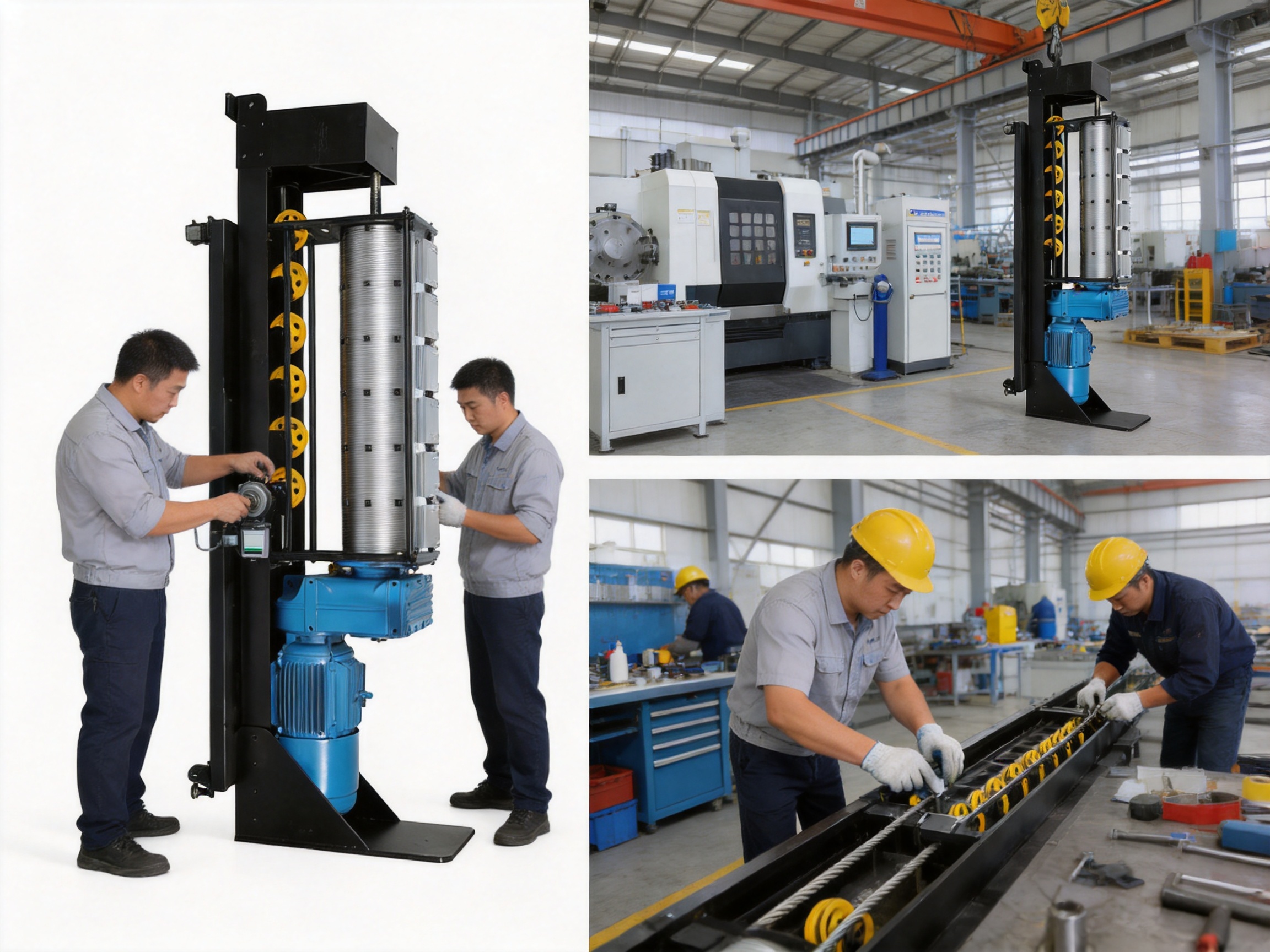
Correct installation is essential to realizing the benefits of the vertical zero-fleet stage winch. Before the equipment arrives, the project team should confirm structural supports, access routes, electrical supply, control interfaces, safety clearances, maintenance space, and lifting or handling arrangements.
The supporting structure must be capable of carrying static and dynamic loads. Mounting surfaces should be prepared according to the approved drawings, and connection points must be accurately located. The equipment should not be forced into position through improvised modifications because this may affect alignment and load distribution.
The rope path must be inspected from the drum to the moving load. Pulleys should rotate freely and remain aligned. The rope aligning assembly must move correctly across the intended winding range. The guide track should be checked for straightness, cleanliness, and secure fastening.
Electrical installation includes motor connections, brake wiring, sensor circuits, encoder cables, limit switch circuits, control cabinet connections, grounding, and communication interfaces. Cable routing should protect conductors from mechanical damage, excessive bending, heat, and interference.
Commissioning should proceed in stages. Initial testing may begin with mechanical inspection and low-risk operation. Technicians can then verify direction, limit positions, brake response, encoder feedback, sensor signals, and emergency stop functions. Further testing can evaluate operating speed, acceleration, deceleration, positioning accuracy, and group synchronization where applicable.
All commissioning results should be documented. Records may include measured travel, stopping performance, alarm behavior, load test results, control parameters, inspection findings, and corrective actions. These records provide a useful baseline for future maintenance and troubleshooting.
The vertical zero-fleet stage winch is suitable for a range of professional environments. In large theaters and performance halls, it can support automated scenery and stage movement while conserving technical space. In cultural centers, it can provide flexible equipment for different performances and event formats. In conference venues, it can assist with controlled movement of banners, screens, curtains, or other stage-related elements when properly engineered for those loads.
Multifunctional venues often require adaptable systems because the stage may be used for concerts, theater, ceremonies, exhibitions, lectures, and public events. A compact winch with individual or group control can support different operating arrangements, provided that the control software and operating procedures are configured for each application.
Renovation projects can also benefit from compact vertical machinery. Existing buildings frequently have limited space and unusual structural conditions. A vertical installation may provide more flexibility than a large horizontal winch, although the project must still confirm available clearance, support strength, access, ventilation, and maintenance requirements.
Automated stage environments depend on accurate coordination between machinery and control systems. The vertical zero-fleet stage winch can be integrated into broader intelligent stage management systems through appropriate control interfaces. This may allow operators to monitor movement, position, alarms, and operating status from a centralized control environment.
Intelligent control does not replace mechanical quality. Instead, it extends the ability of the system to monitor and manage mechanical movement. The control system receives information from encoders, limit switches, load or abnormality sensors, brakes, and other devices. It then uses this information to regulate movement and respond to unsafe conditions.
Digital monitoring can improve fault identification. For example, if an encoder signal becomes inconsistent, if an overload sensor activates, or if a limit switch does not respond as expected, the control system can generate an alarm and stop or restrict movement according to its configuration. This helps technicians understand the nature of a problem before beginning physical inspection.
Maintenance teams should treat electronic information as a supplement to direct inspection. A normal signal does not prove that every mechanical component is in perfect condition. Guide tracks, pulleys, drums, fasteners, brakes, and rope assemblies still require physical checks. Conversely, mechanical inspection should be supported by signal testing to confirm that the control system responds correctly.
Long-term maintenance documentation can include operating hours, movement cycles, alarm history, brake tests, sensor calibration, encoder checks, lubrication activities, guide track inspections, rope condition, and replacement parts. A complete record helps the venue identify trends and plan service before a problem affects a performance.
A practical maintenance strategy should combine daily observation, scheduled inspection, preventive service, and professional examination. The exact interval depends on operating frequency, payload, environment, travel speed, duty cycle, dust levels, humidity, temperature, and the importance of the equipment to venue operations.
Before important performances, operators should confirm that the equipment area is clear, the rope path is unobstructed, the guide track shows no visible problem, and the control system indicates normal status. Abnormal noise, unusual vibration, unexpected movement, or alarm messages should be reported immediately.
Scheduled mechanical inspection should cover the motor, reducer, roller drum, rope aligning assembly, pulleys, guide track, mounting brackets, fasteners, brakes, and structural connections. Technicians should look for wear, looseness, corrosion, deformation, leakage, overheating, and changes in operating sound.
Electrical service should include motor connections, grounding, brake circuits, limit switches, encoder signals, sensor feedback, control cabinets, cable routing, emergency stop circuits, and communication interfaces. Dust should be removed from suitable cabinet areas according to electrical safety procedures.
Functional tests should confirm movement direction, speed, acceleration, deceleration, stopping accuracy, limit response, brake action, alarm behavior, and emergency shutdown. Where required by the project or applicable regulations, load tests should be conducted using approved procedures and suitable test equipment.
A qualified technical team should conduct a comprehensive review at defined intervals. This examination can include structural assessment, rope and drum inspection, brake testing, sensor calibration, encoder verification, control parameter review, and analysis of maintenance records. Professional service is especially important for high-cycle systems or equipment that performs critical movement functions.
When selecting a stage winch, buyers should assess more than the initial purchase price. Total project value includes installation space, engineering compatibility, safety functions, control flexibility, manufacturing quality, maintenance needs, spare parts support, commissioning, and expected service life.
The vertical zero-fleet stage winch can create value by solving space constraints while providing higher movement efficiency and integrated monitoring. Its compact configuration may reduce the need for extensive machinery areas. Its controlled rope arrangement may support longer component life. Its dual brakes and sensor-based protection may improve operational confidence. Its encoder control may support more accurate stage automation.
Manufacturing capability is equally important. A supplier with CNC processing resources, complete assembly facilities, quality control procedures, and integrated commissioning capability is better positioned to deliver consistent customized equipment. The company’s approximately 20,000-square-meter facility and more than 30 advanced CNC processing devices provide a foundation for this work.
Buyers should also consider the supplier’s ability to provide design, production, installation, commissioning, operation, and maintenance services. A complete service system can reduce communication gaps between different contractors and make it easier to resolve technical issues throughout the project life cycle.
A vertical zero-fleet stage winch is a compact stage lifting and movement system installed in an upright configuration. It uses a controlled rope path, roller drum, rope aligning assembly, pulleys, and intelligent control functions to support accurate and efficient vertical movement.
The main advantage is efficient use of space. A vertical sheave-up installation can reduce the horizontal footprint compared with some traditional layouts. This is useful in venues with limited machinery room space, restricted floor area, or complex architectural conditions.
The coaxial screw and roller drum arrangement supports organized rope winding and efficient transmission. It is designed to provide higher velocity than some traditional vertical setups while maintaining controlled rope handling and stable movement.
The system includes over-designed components, dual braking, Proload Inspection Technology with OCY-MULTI Sensors, dual encoder control, limit switches, and individual or group control options. These functions work together to support emergency stopping, overload detection, abnormality monitoring, and accurate travel control.
The sensor system monitors for conditions such as overload or assembly abnormality. When a potentially unsafe condition is detected, the control system can trigger a shutdown according to its configuration. Sensors must be correctly installed, calibrated, and tested as part of regular maintenance.
The guide track requires regular cleaning, suitable lubrication, alignment inspection, fastening checks, wear monitoring, and functional testing. It should be maintained together with the winch, pulleys, roller drum, rope aligning assembly, and control system.
Customization can be developed according to project requirements such as payload, travel distance, speed, control mode, installation conditions, structural interfaces, and venue layout. The final configuration should be confirmed through professional engineering and project-specific testing.
The manufacturer operates a production and research facility of approximately 20,000 square meters and has more than 30 advanced CNC processing devices. Its process covers raw material processing, component manufacturing, mechanical assembly, electrical integration, quality inspection, and complete machine commissioning.
Yes. The system can be configured for individual or group control. Group operation requires proper synchronization, position feedback, load assessment, emergency stopping logic, and commissioning to ensure that the connected units operate safely and consistently.
Factory commissioning allows the manufacturer to inspect mechanical operation, brake response, sensor signals, encoder feedback, limit switches, control logic, rope winding, and abnormal noise or vibration before delivery. This reduces the risk of discovering basic problems during venue installation.
The vertical zero-fleet stage winch provides a comprehensive solution for modern venues that require compact installation, efficient movement, accurate positioning, and intelligent protection. Its vertical sheave-up arrangement helps reduce the equipment footprint, while the coaxial screw and roller drum design supports controlled rope handling and higher operating velocity than some conventional vertical configurations.
Its safety architecture combines high-strength components, dual braking, Proload Inspection Technology with OCY-MULTI Sensors, dual encoder control, limit switches, and flexible individual or group operation. These features provide multiple layers of protection and support reliable stage automation when properly engineered, installed, operated, and maintained.
The product’s value is strengthened by the manufacturing capabilities of RenteZhihe (JiangSu) Equipment Technology Co., Ltd. With an approximately 20,000-square-meter production and research facility, more than 30 advanced CNC processing devices, complete manufacturing procedures, quality control at key stages, and integrated services from design through maintenance, the company is positioned to support customized stage machinery projects.
For theaters, cultural centers, conference facilities, stadiums, and multifunctional performance spaces, the vertical zero-fleet stage winch can help solve installation constraints while improving the efficiency and intelligence of stage movement. Its long-term performance will depend on correct project design, accurate installation, professional commissioning, disciplined operation, and regular maintenance of the guide track, rope system, mechanical components, brakes, sensors, encoders, and control equipment.
1. RenteZhihe (JiangSu) Equipment Technology Co., Ltd. Product information for vertical zero-fleet and vertical mount stage winch systems.
2. RenteZhihe (JiangSu) Equipment Technology Co., Ltd. Company information concerning stage machinery, performance equipment, intelligent control systems, manufacturing facilities, and engineering services.
3. General principles of stage machinery design, mechanical lifting systems, rope handling, braking systems, and automated performance equipment maintenance.
4. General guidance on preventive maintenance for guide tracks, pulleys, drums, limit switches, encoders, sensors, and industrial control equipment.
5. General engineering practices for the design, installation, commissioning, operation, and inspection of automated stage machinery.
We specialize in delivering advanced stage machinery, rigging systems and intelligent control solutions for performance spaces worldwide.

No. 111 Runfeng Road, Hailing District, Taizhou City, Jiangsu Province, China

rtstage@163.com

+86-139 1771 1698

+86-139 1771 1698
rtstage@163.com
 中文简体
 English
 русский
 Français
 Español
 عربى